Corobrik Student of the Year Awards- 2010

The Corobrick Student of the Year -2010 finalists were exhibited at the Wanderes Club, Illovo in Johannesburg in April this year.

Several of us ‘bou-kinders’ and other students were fortunate enough to attend the exhibition and the accompanied lecture by Paragon Architecture’s Henning Erasmus.

The choices we all face
Architecture Karate

Being heavily involved in my dissertation at the moment, this was a great opportunity to see what the country’s finest architecture students of 2010 had to offer.

*
THE FINALISTS
INTERPRETATION CENTER

PJ Klippie De Toit
Tshwane University of Technology

    \    

The opportunity that this unique site of natural and cultural heritage presents, for establishing a new ecological paradigm of connectivity and interdependence, is utilised by this design through spherical geometry and a cyclical narrative. The crater, if properly understood, reminds us of our common origin and place in the universe as well as the essential unity of all existence. 
The thesis maintains that the building will be a heuristic or didactic device that reinforces this connection. The narrative, an elliptical walkway referencing the cycle of eternal return and metaphor for the timeline of the universe and earth, explains the evolution of the universe through various interpretation venues, each creating an experience analogous as well as symbolic of the event that occurred at that point in the history of creation.
excerpt taken from http://www.keepitgreen.co.za 

  
INNER CITY INTERCHANGE
Cazir Naroth
The University of Kwa-Zulu Natal


The projects aims to bring the possibility of a fully integrated modal interchange facility to the South African city. The site, which is already zoned for public transport, is situated in the Durban CBD at the intersection of existing major road and rail infrastructure, with the interchange forming the backbone of a greater urban scheme.
Global environmental and economic issues, along with local cultural and social history provide a solid justification for the promotion of public transport and the scheme seeks to create a thriving hub at a key point in a city that is thirsty for an injection of activity. The proposed complex allows for the seamless integration of busses, taxis and trains whilst attempting to use transport as a tool to create civic spaces wherein socioeconomic integration can naturally occur. The potential of such a facility calls for a solution on a greater urban level, and my scheme seeks to promote both the rejuvenation and development of the surrounding areas by proposing a precinct master plan that suggests new development whilst reinforcing the existing infrastructure.
In essence the design provides a spine of pedestrian life and a spectrum of positive development, which radiate from a contemporary urban transport landmark. 
excerpt taken from http://www.keepitgreen.co.za  

ECHOES IN ARCHITECTURE
Pierre De Lange
University of the Free State

Echoes in Architecture was an investigation into a how the intervention of a new building can reconciliate a neglected historical structure. Specifically, the old Rissik Street Post Office in the Johannesburg City Centre which was devastated by a fire in November 2009. The project aimed to marry contemporary and historic architecture to achieve an equilibrium between preserving cultural heritage and providing a memorable urban space. The result was a subtle geometric insertion so that the new appears to be hugged by the existing ruin. This created a building with two fronts; the face of memory (old) and hope (new).
excerpt taken from http://www.keepitgreen.co.za 

SECURING OUR FUTURE
Nikhil Tricam
Nelson Mandela Metropolitan University

Close Ups…


My project focuses on introducing urban spatial and formal hierarchy into the township through the introduction of an Urban Health Precinct with emphasis on the detailed design of a Mother & Child Centre, in the township of KwaZakhele, Port Elizabeth. The choice of building type stems from the addressing of current social concerns, namely the lack of adequate healthcare facilities in our township areas as well as alarmingly low infant care standards. The treatise focuses on the investigation of the constituents of nurturing & healing space, as well as the introduction of identity and a sense of place within a historically segregationalist, architectural identity-devoid context. The components of the building include a pre- and post- natal facility, delivery and recovery as well as an educational component focused on, but not limited to, the empowerment of women form the community, drawing on their experience as mothers and caregivers to educate younger and first time mothers.
Nikhil also won the best use of clay brick for his entry. He says, “I chose to make extensive use of brick masonry in my design due primarily to the sense of permanence conveyed through it’s tectonic, which was integral to the conceptual direction my design has taken. The spatial and formal possibilities afforded by bricks are well documented and it was my intention to exploit these. The environmental imperative, affordability and relative ease of construction were all factors in the selection of brick masonry as a building material. Personal preference and a predilection for the works of Louis Kahn and Rogelio Salmona was influential in the manner in which the brickwork was employed in my design.  
excerpt taken from http://www.keepitgreen.co.za 
  

PROXIMITY
Calayde Davies
University of Pretoria 

Close Ups…

The thesis generates an architectural model for vertical hydroponic agriculture for the city of Pretoria on the existing industrial heritage site of the Old Pretoria West Power Station. The project aims to aid in the development of a new productive urban building, productive urban landscape and ultimately a productive urban society for South Africa in the 21st century. The design also caters for an urban market and agriculture park as part of the food factory concept. The project is sustainable and resource-efficient and aims to become a model for urban reform through urban agriculture across the city of Pretoria. The design is a seven-storey indoor food-growing building, constructed entirely from contemporary and experimental building materials in the forms of structural bamboo, structural steel and bamboo-reinforced concrete. 
excerpt taken from http://www.keepitgreen.co.za 
 

QUARANTINE
Catherine De Souza
University of Witwaterstrand 

I believe that may be Catherine De Souza peeping up from behind the model…


Close Ups…

My project explores the conditions of quarantine of patients infected with drug-resistant TB at Sizwe Infectious Diseases Hospital on the east of Johannesburg. 
It does not seek to liberate them, to do away with the institution, or to integrate the hospital with its surrounding suburban context, but rather recognises the irrefutable need for such institutions in the face of the very serious public health threat posed by drug-resistant TB. 
The project thus has two interrelated aims.

I To change the nature and quality of quarantine
II To capitalise on the natural resources of the site  This involves improving the quality of life of patients, creating a sense of connectedness to the world outside, and providing possibilities for income-generating work.  


However, it contends that equally important is the need to pay attention to the human rights and dignity of the people who find themselves, through no fault of their own, held in these institutions in conditions not unlike prison.
The second aim is to rehabilitate, conserve and make accessible to the public the grasslands and watercourses of the site by incorporating them into a nature reserve.
The architectural design works with the idea of territorialising the boundary, layering thresholds and creating new possibilities for passage; it exploits non-mechanised means to create infection-safe living environments; and it explores possibilities of landscape integration which are uncharacteristic of modern institutions.

excerpt taken from http://www.keepitgreen.co.za

KL-METAMATIC (Winner)
Stefan Van Biljon
University of Cape Town

Close Ups…
 The Structure
Supporting Models

The tension between an industrial site and natural forces inspired the project at Cape Town’s Duncan Dock.
A seawall manifold reintroduces water to the reclaimed site. The tide is choreographed to create a changing landscape that registers the passage of time as the sea gradually consumes the site. The effects of the flood are used to amplify the atmosphere of the site.
The flood machine communicates in gesture, compelling guests to interpret its response to the elements. Atmospheric restlessness is used to create a place of contemplation.
Facing systematic destruction, the building haunts KL-Berth. This haunting is a function of patience and risk. The site becomes a barometer for wider environmental issues.

excerpt taken from http://www.keepitgreen.co.za

*
As a mid-masters student the exhibition was incredibly inspirational while simultaneously very daunting…
There was much debate amongst the boukinders after the exhibition, especially around the winning entry.
Many felt the project wasn’t a true architectural project for an Masters in Achitecture (Prof) degree, while others were simply too impressed to see anything wrong with the project.

There is unconfirmed talk that the student was awarded 100% by his final jury panel during is masters presentation, and was told by one of his own faculty that if he, the faculty member, had it his way – he would have failed him.
I guess that is the nature of these designs of architectural poetry, some people will love every expressive piece of the work while others will fail to see the point; you’ll never know until the last minute whether the project is what you hoped, or if it was worth putting in all your chips for the win.
 *

Pre Masters Building Study

Every December my family’s evacuation from Durban to the relatively drier and calmer Western Cape takes us through the Transkei, Eastern Cape and Western Cape at break neck speed to lessen the hassle of the trip, a 1660km journey through the N2.
*Note 1

Having been involved in this pilgrimage for most of my life, and hardly experiencing more than a 5 minute fast food breakfast en route, I was determined to see what the N2 had to offer me as a student, a South African and Durbanite living in Pretoria with attachment issues from his time in Cape Town. 
The Blue Book
After a brief online look into what information was available on line for an Architectural Tourist, a flip through through Ora Jouberts Blue Book and a Friday bunny chow session with my former undergraduate lecturer Derek Van Heerdan I had mapped out a rough assortment of stops along the N2.

The focus of the trip began as a quite broad look into contemporary Architecture in developing settlements of South Africa – I had no specific question to answer, I felt the journey was more a search for a question rather than a search for an answer.

*
*NOTE: All images from Author unless indicated. *Note 1 IMAGE: adapted from http://www.gallerytours.net/images/1time-Map.gif
SOUTHERN KWA-ZULU NATAL/EASTERN CAPE

Shayamoya

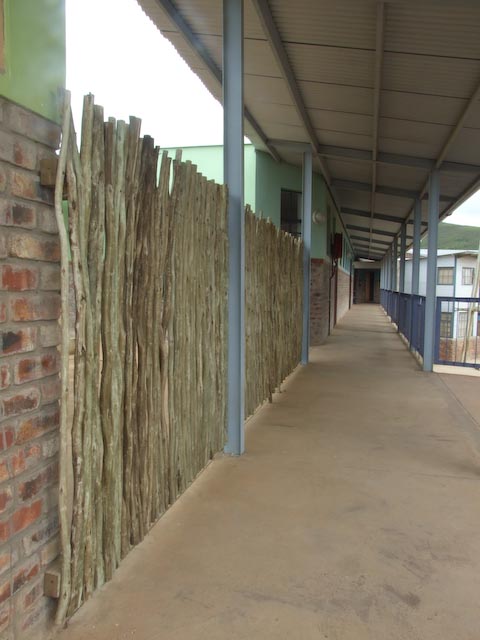
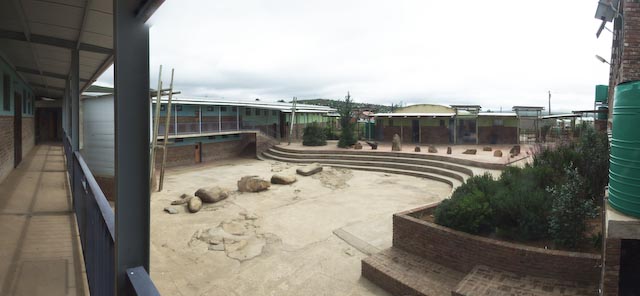
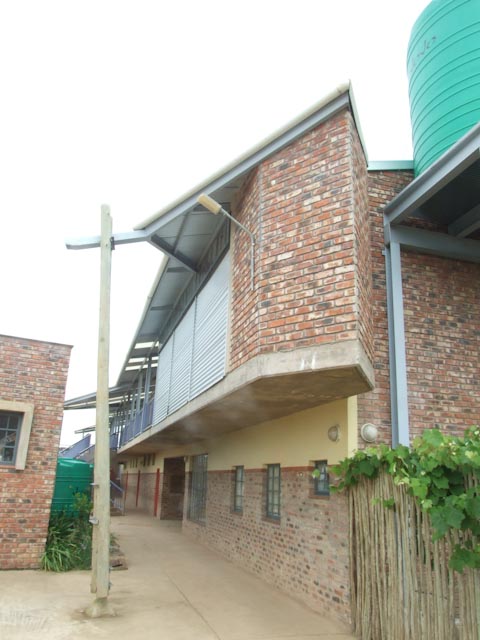
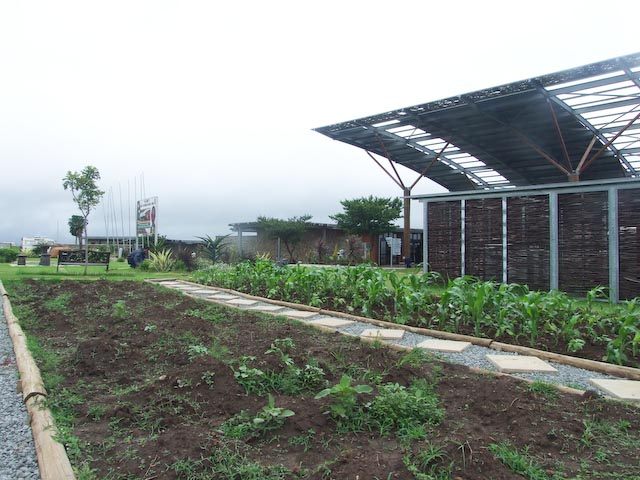
The first stop was just outside Kokstad, Kwa-Zulu Natal in the small settlement of Shayamoya to visit  the 7 Fountains Primary School.

 
The primary school was designed by East Coast Architects  and commissioned by Oprah’s Angel Network as part of their community involvement in South Africa.


An East Coast Architect scheme would not be complete a Jojo Tank or an indigenous garden
 
The Nelson Mandela Heritage Trail

While searching for Architectural Tourist sites online, I came across several links to a Nelson Mandela Historical Route.

The articles described a network of famous sites related to Nelson Mandela’s life such as Qunu, the place of Mandela’s birth, Mveso, Mthata and highlighting points such as University of Fort Hare in Alice, where he was educated, and going further into Pretoria and Johannesburg as well as Cape Town. The route also mentions Steve Biko’s grave site in King Williams Town.
Many of these featured on the N2, with the closest stop being the Youth & Heritage Centre in Qunu. Designed by Stauch Vorster Architects.
At this point in the trip there were some technical issues with the camera, to illustrate the points I have added a one or two referenced images.
A vegetable garden at the center
IMAGE: Pg 392; 10 Years 100 Buildings, Joubert Et Al


The route included the Nelson Mandela Museum in Mthata, curated by Mashabane Rose Architects. This museum is located in the heart of Mtatha but seemed to only be frequented by European tourists.
IMAGE: http://www.southafrica.info/travel/cultural/mandela-route.htm
IMAGE:http://www.southafrica.info/travel/cultural/mandela-route.htm
The next intended stop was the Mveso Museum Pavilion, designed by Cohen and Judin Architects but the bad condition of the road leading to the heritage site and quickly fading daylight forced us to move on.
IMAGE: Pg 389; 10 Years 100 Buildings, Joubert Et Al
IMAGE: Pg 388; 10 Years 100 Buildings, Joubert Et Al
PORT ELIZABETH

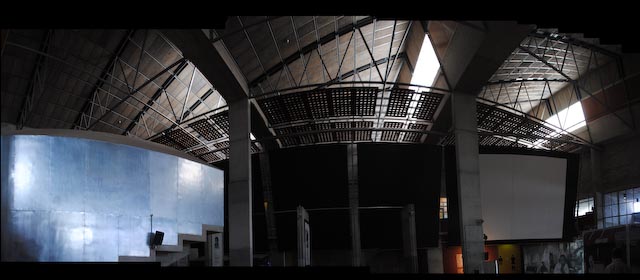
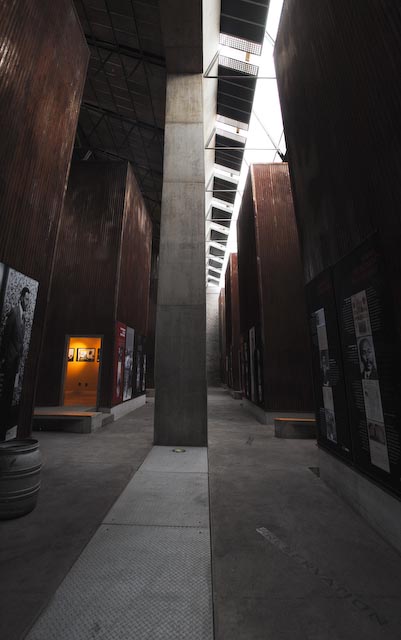
After a restless night on a University digs couch in Grahamstown and a in situ camera repair stint, we headed towards Port Elizabeth to visit the Red Location Museum of Struggle by by the Cape Town firm of Noero & Wolff Architects.
Memory Boxes, intended to symbolise the twilight of memory
The Museum sits in the heart of New Brighton

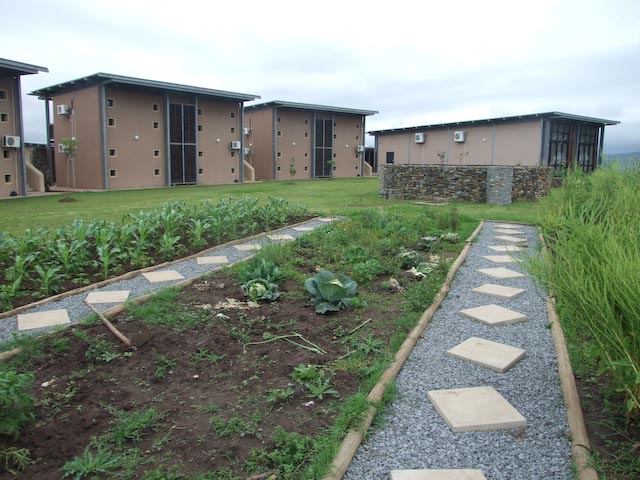
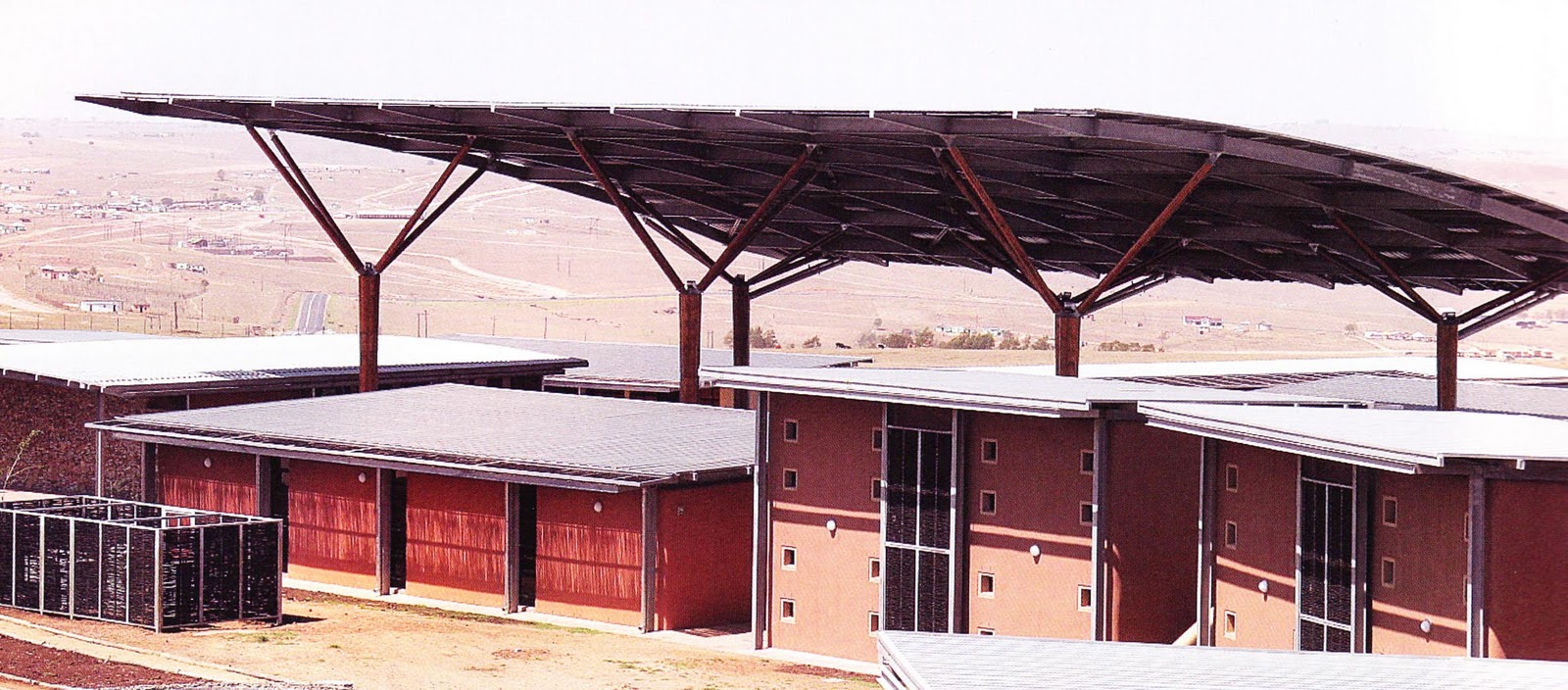
The Ubuntu Center

While in Red Location I we came across a recently completed building, the Ubuntu Center by South African born and now California based firm, Field Architecture .

SOMEWHERE ON THE N2…

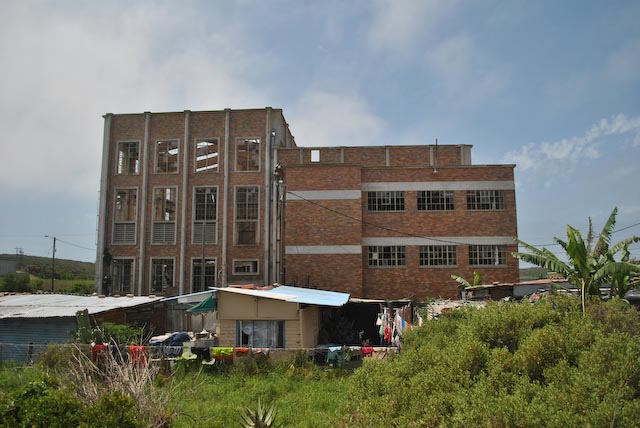
I’ve come across this building many times before and every time I see it I feel this would make quite an interesting project to work on. Unfortunately I can’t remember exactly where it is but its somewhere between Knysna and Mossel Baai on the N2.

There appears to be a whole community that has settled around this former Industrial building. I didn’t get close enough to see the extent of their interaction with the structure itself , but a large tree is growing inside.

CAPE TOWN

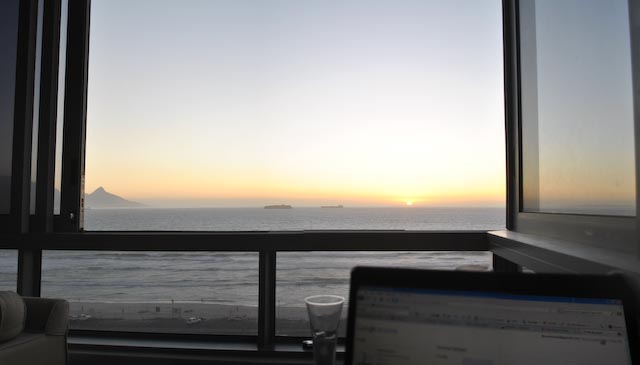
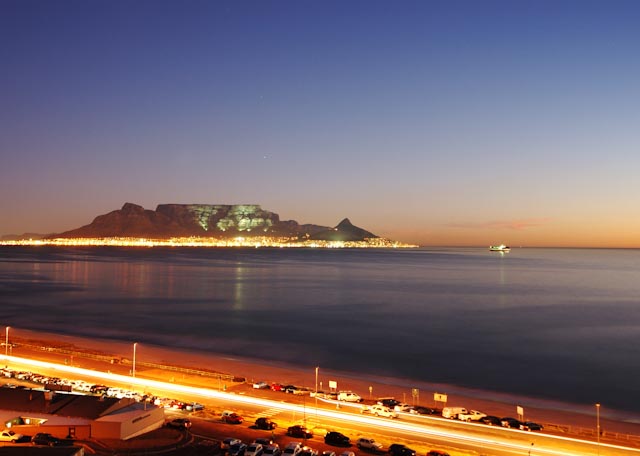
Arriving in the mother city I found accommodation with a former classmate from the University of Kwa-Zulu Natal, who happened to have a spectacular view from his beautiful home in Blouberg. Courtesy of my host I had a breathtaking view from my ‘Cape Office’ while preparing for the year ahead.

Cape Office View. Average.
IMAGE: BY JOSHUA PUTZ

The Cape stop was a twofold affair. In one regard I had much administrative issues to resolve from my former life in the Mountain City, on the other hand I had met many people during my time with Architecture for Humanity who were involved in projects in Kayalitsha and other developing areas in the Cape that I felt would be of interest towards my pre-masters resarch.

Kirstenbosch Gardens

  
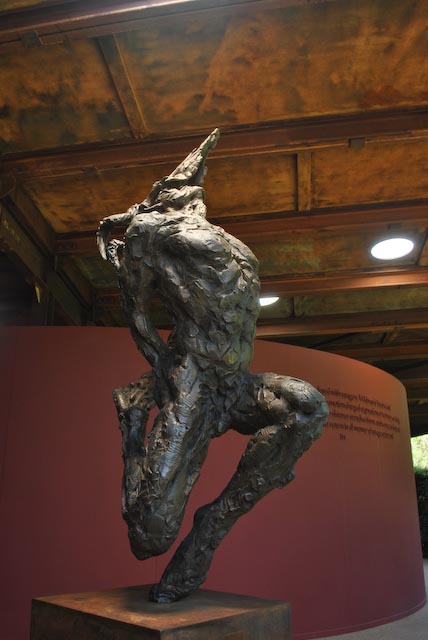
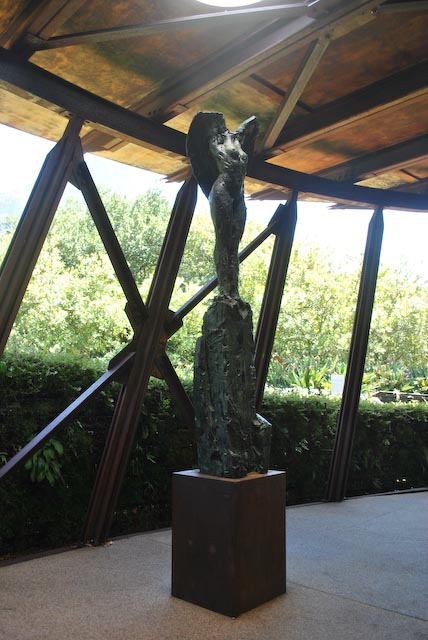
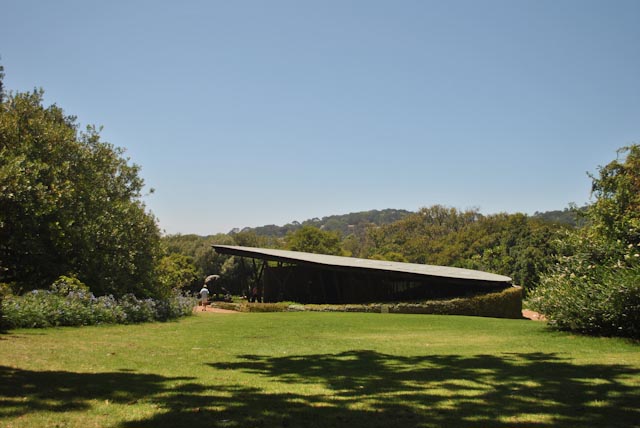
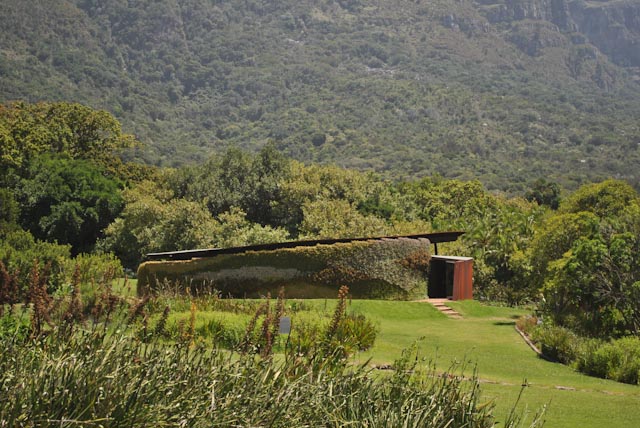
Between my administrative obligations I found time to visit Kirstenbosch for some mountain time and came across this very interesting exhibition building in the gardens.  Dylan Lewis‘s sculptures have always fascinated me and this building together with his work was well worth the surprise.

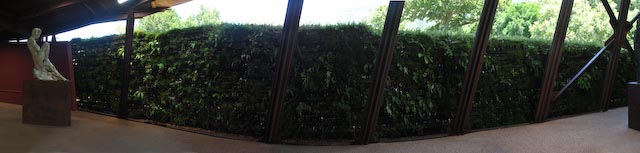
A planted wall wraps around the exhibition centre
The UNTAMED exhibition is a collaboration between sculptor  Dylan Lewis, Architect Enrico Daffonchio and Poet Ian Mcullum

Kayalitsha

I was fortunate enough to attend a trip in Kayalitsha planned by one such contact, Verena Grips, whose involvement with an NGO called MatchBox was of great interest towards my now narrowing focus on developing areas of South Africa.

MatchBox aims towards improving the quality of life and learning of children in townships. Verena had arranged a trip with another student who was looking into Township Tourism in South Africa.

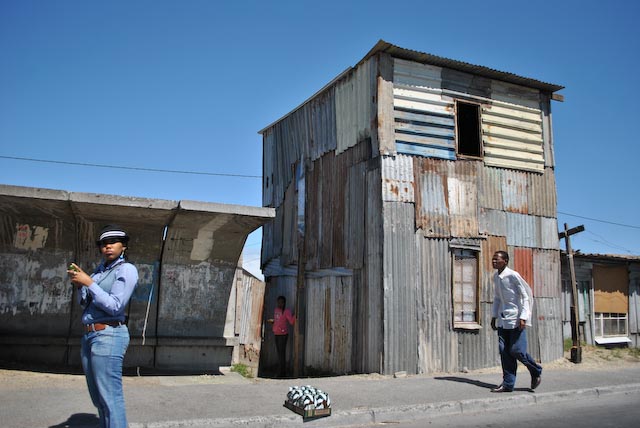
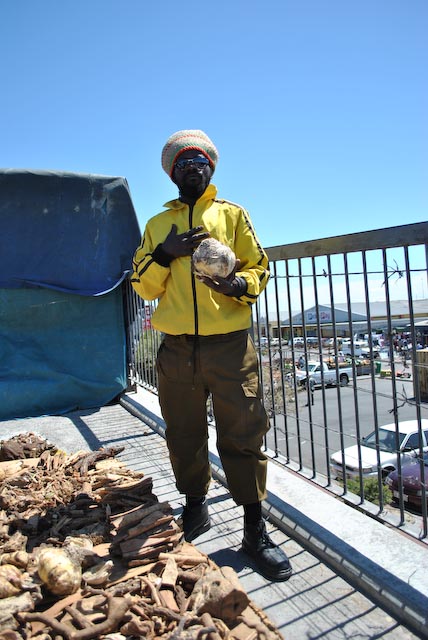
The first stop in that trip was the Look Out Hill Visitor Information Centre, here we met a local tour guide  from Coffee Bean Routes tours.

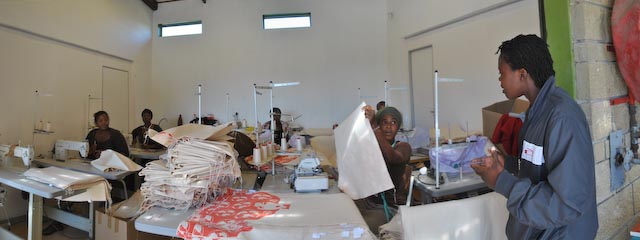
Our tour guide took us through the centre, where we met some of local ladies who work with another group to produce hand bags to sell in market.

As the name implies the centre is overlooked by one of the higher points in Kayalitsha and offers a panoramic view of the settlement.


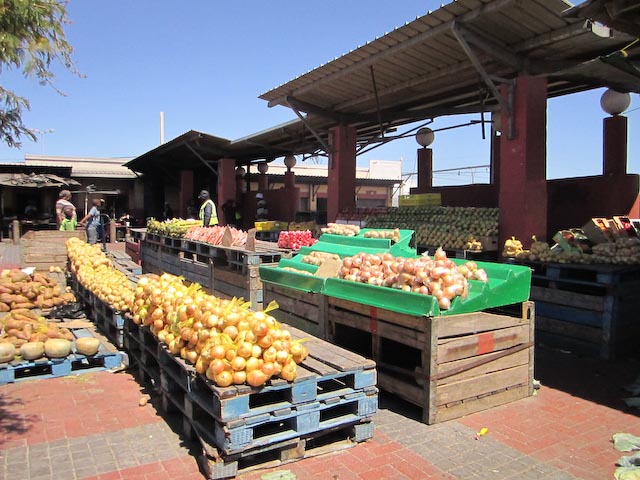
From here we visited the largest shopping mall in the area, the Nonqubela Link Mall , this mall sits adjacent to a train stop and between is serviced by a local market. What we found interesting was that an informal market could exist with a formal mall and still function.

The ‘formal’
The ‘informal’
View from the station platform

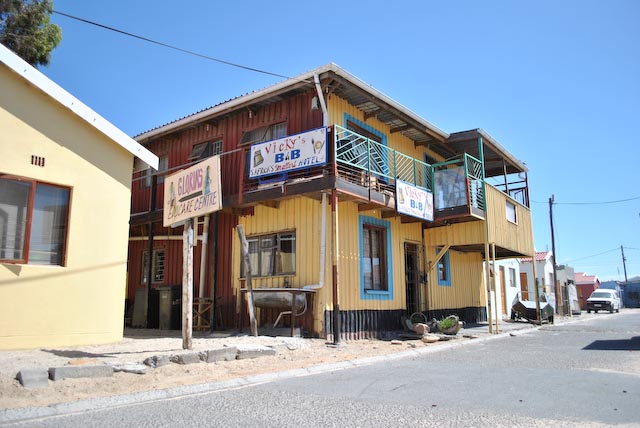
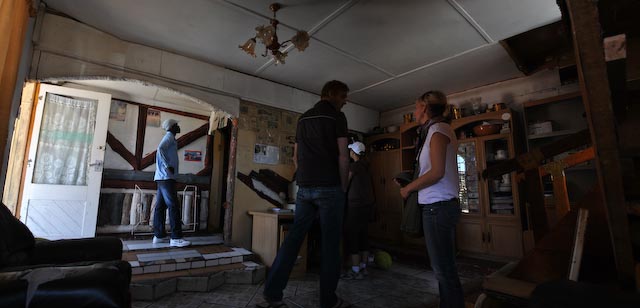
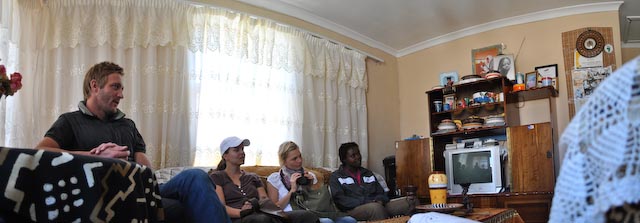
As part of the township tourism our guide had planned the next few stops at woman run local B&B’s. These ladies were running successfull lodging facilities and invited us in for a cup of tea and some interesting stories of foreign visitors, radio talks shows and how they share their skill base with others in the same business field.

Vicki’s Bed and Breakfast


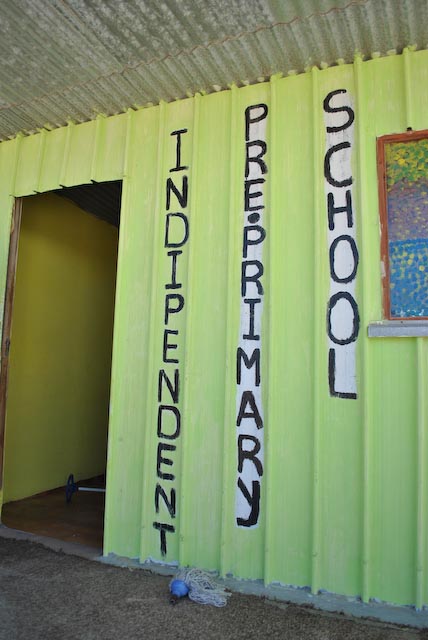
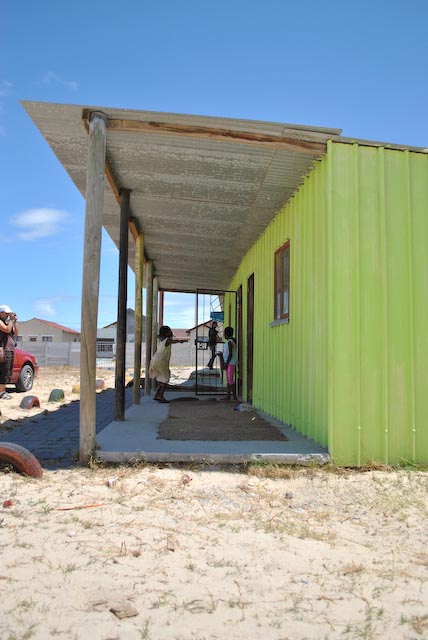
Verena’s personal focus on creche’s and day care facilities that have been adapted from donated containers such as the Zanoxolo Educare Creche took us to some of these spots in Kayalitsha.


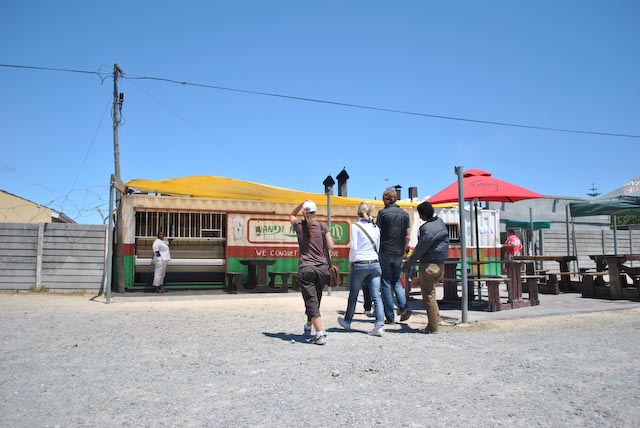
In true township tourism fashion we finished the day off with a visit to a local shebeen. While Mzoli’s in Gugelthu is probably the most well known of Cape Town’s township hotspots, it was Kayalitsha’s less known counterpart Ace’s that we chose as our lunchtime destination.


STELLENBOSCH

Transdiciplinary Workshop

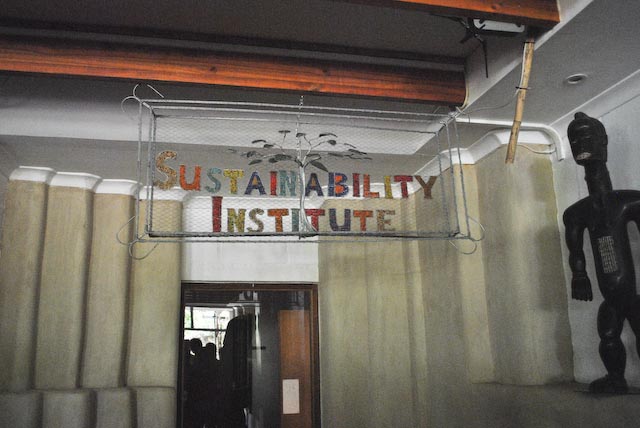
The final stop in the trip was planned for Stellenbosch’s Lynedoche Village. Here, I was registered for a week long workshop seminar on Interdisciplinary Sustainability at the Sustainability Institute.

The workshop itself was intended for PHD candidates, but the organisers were happy to accommodate me at a pre-masters level.

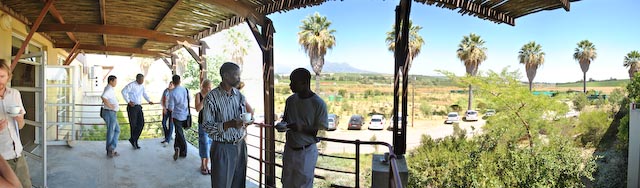
The balcony of the institute became the place of dissemination of the course’s content

The workshop was attended by a diverse cross section of professionals who, like me, were interested in learning of cross-disciplinary approaches towards sustainability.

The disciplinary spectrum included; a physchologist, a graphic designer, microbiologist, nutritionists, industrial designer, IT economists, social scientists, geological and environmental scientist and even a hydrologist to name a few.


The course was run by two representatives from the Stockholm Resilience Centre and overseen by John Van Breda from the Sustainability Institute.

The week included definitions and discussions around Transdisciplinary Work with local and foreign case studies and exercises in defining roles and outcomes of the various parties in Transdisciplinary Work. 

Part of the exercises involved defining the research questions and role playing processes on ascertaining how to set up a research project around a Transdisciplinary team. This exercise proved to undo much of how I had planned on tackling my thesis topic and gave me a clear insight of where to go in my masters year.

While the exercises and explanations of what Transdisciplinary Work  appeared to be much in the scope of how Architects and other designers work through problems the center itself held an interest for me.

The Sustainability Institute

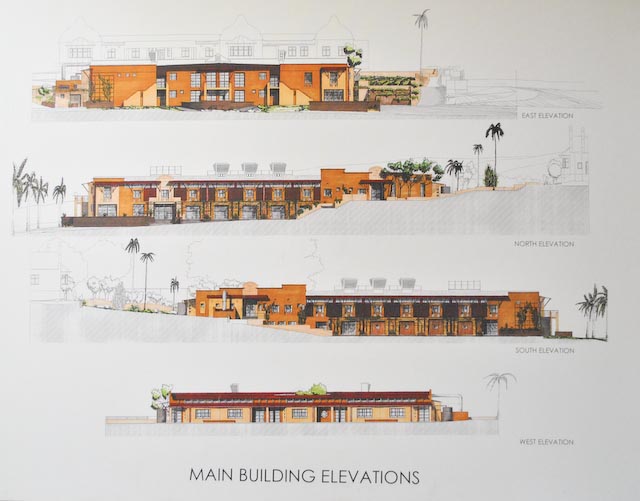
A render of the built structure as presented on the walls of the center on canvas

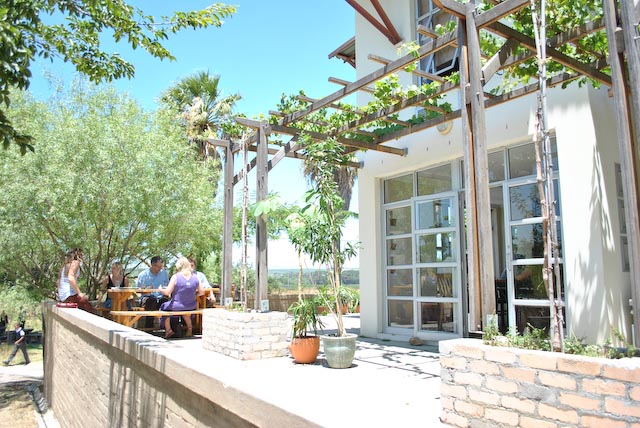
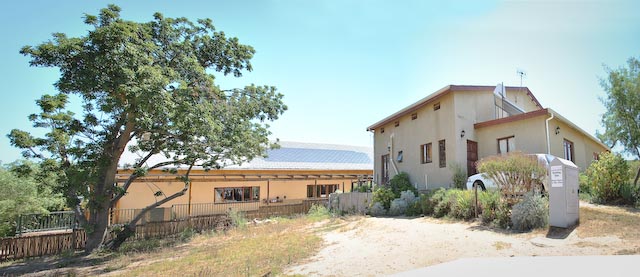
The building is located in the area of Lynedoch, adjacent the train station and according to the staff, the site was historical a weekend hotel for the upper echelon of Cape Society to ‘escape’ the city and enjoy a game of croquet in the Boland.

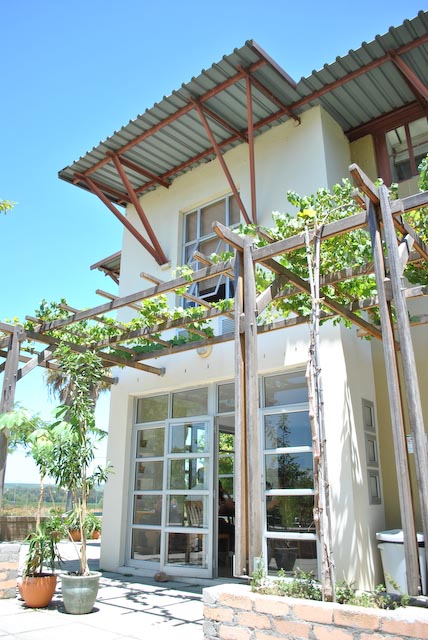
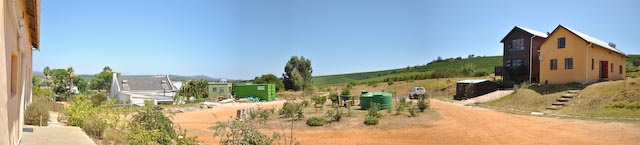
The center and the surrounding gardens
The existing hotel and new centre in contrast

The center now is a research hub for Sustainability in South Africa and is globally recognised as a leader in the field headed by Mark Swilling. For the detailed story of the Sustainability Institute click here.


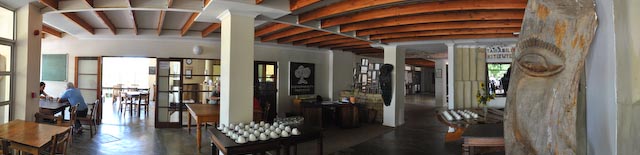
Over meals provided on site by the institute gardens the informal meeting and sitting areas inside and outside proved to be the most interesting part of the week as this is where the real interdisciplinary discussion took place. 

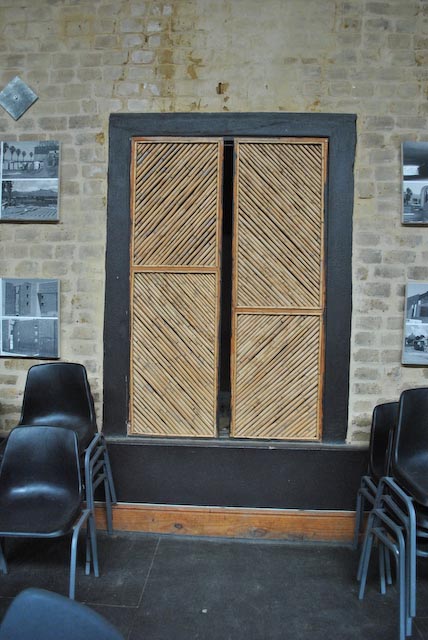
The centre was designed by Cape Town’s ARC Architects and wraps around what appears to be a cement block barn structure on site that was adapted to become a community hall for the historically disadvantaged community of Lynedoche.


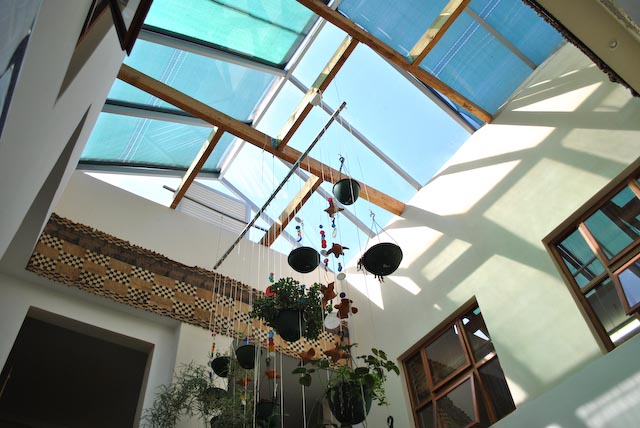
 The adapted barn houses a rock store in its basement that works as a thermal change mass to cool the class rooms of the primary school. The relationship between the primary school, the community came across as the strongest intangibly sustainable aspect of the entire centre. All day school children and local residents animate the and enrich the atmosphere of the institute facility.

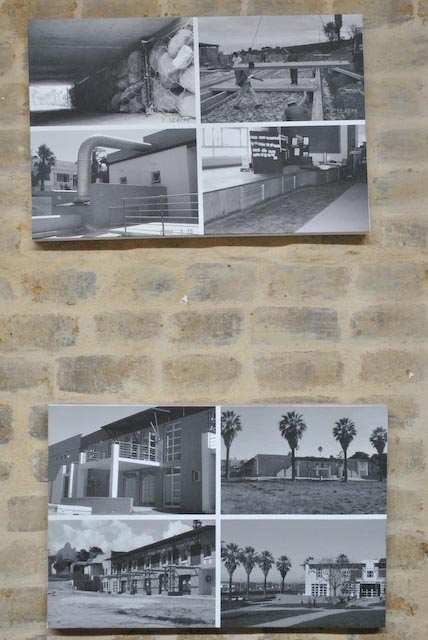
Historic photo of construction and thermal rock store

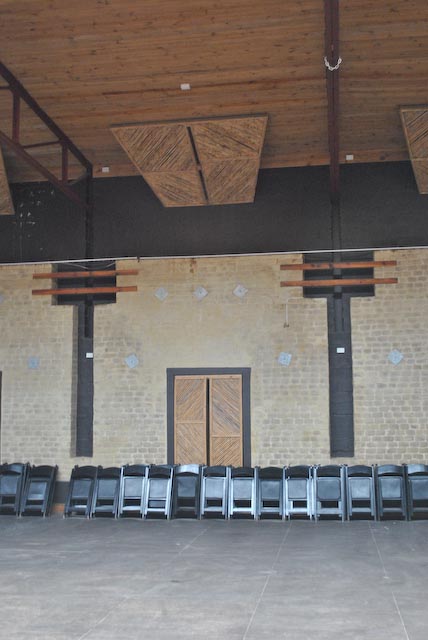
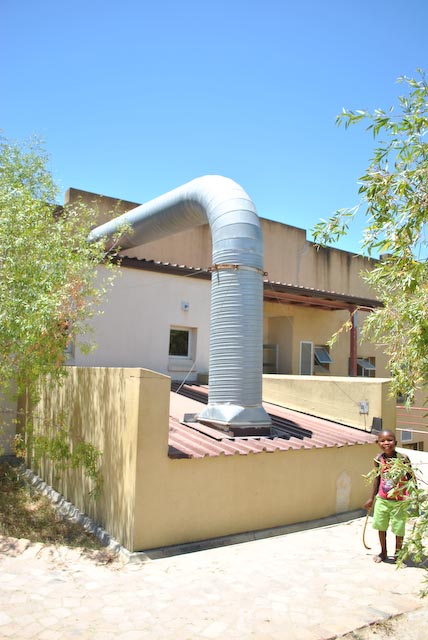
The community hall uses a system of wind funnels and louvres to cool the space itself, while the thermal rock store serves the primary school facilities.

Wind scoops work with wind chimneys on the roof in a similar fashion to malqaf  found in Islamic Architecture


The converted barn is clad with adobe bricks that serve an undefined role, perhaps only ornamental?

The center interacts closely with this community and facilitates a primary school on site as well as subsided housing on the estate as well and harvesting programs in the area along with local farmers and residents.

The thermal rock store ventilation link to cool the primary school.


Day care facility with solar roof tiles

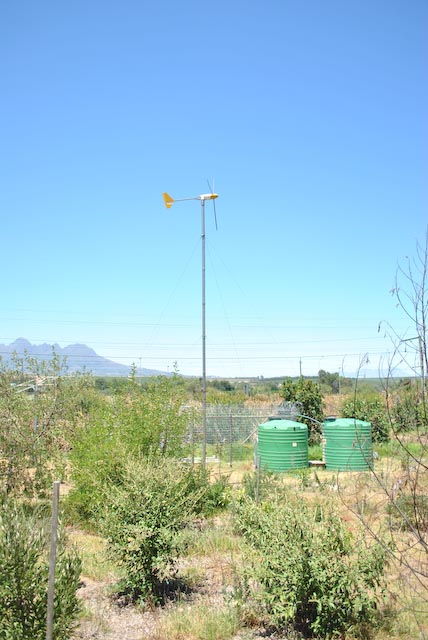
The estate boasts an array of off grid systems that deal with waste treatment, energy & food production. These systems as well a daycare facility on site aim to provide the local residents of Lyndoche with jobs while acting as a model for socially as well as environmentally responsible facility.

Vertically Integrated Constructed Wetland
The Biolytix System

A large portion of the job creation as well as the training for students comes from the garden systems on site. At the moment they grow there own vegetables on site

Recycling post and agriculture on site


An age old meeting venue, under the shade of an old tree

Indigenous tree plantation

The facility is housed by its own eco-estate. These houses work within the framework of the institute and provide research data as well as accommodation. They employ various techniques and processes to lower their respective carbon footprints.

Part of the eco estate with the black water collection pionts
*

When asked in December what would be an appropriate focus for a thesis topic, it seemed to continue in Slovo Park was the obvious option: strong connections with the community had been made, the context was mapped and an insight into the needs and dreams of the people had been established.

Slovo Park Group Framework (Bennett, Casson, Fillipe, Hattingh, Makgabutlane)
The first draft of the proposal I outlined the development and research of the spruit area between the two communities and an architectural investigation into how that could be done through a built intervention possibly exploring urban agriculture.
*
My time cross-country gave me space to reflect on my time in Slovo Park and Pretoria,bringing a more clear understanding of my role as an architect and designer in developing South Africa
The workshop at the Sustainability Institute provided me with a sharper focus on my thesis year and liberated me from my pre-conceptions of the role of architects in social upliftment and research and a result forced my decision not to work in Slovo Park in 2011.
The trip left me with more questions than answers, a disposition that I’m starting to feel is likely to be more commonplace in my year ahead while in pursuit of my Masters Degree.
2010 END.

The Slovo Park Project – The Story

The Slovo Park Project 
 
The Slovo Park Project began as a small research project in the University of Pretoria’s Housing and Urban Environments module of the Architectural Honours Year. 
 
It quickly gained momentum in its relation to the community it desire to understand the problems faced by South Africa’s Urban Poor. The process culminated in a joint project towards a built goal with not only a physical product but many intangible outcomes that extended beyond simply ‘another community project’. 
 
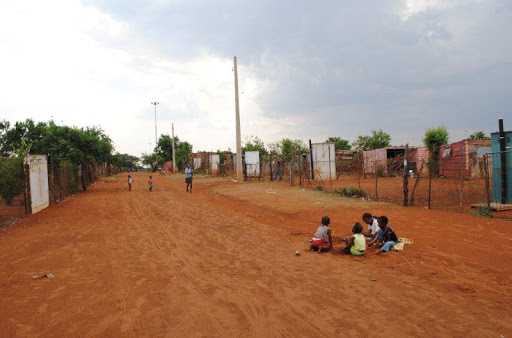
The streets are your playground in Slovo

 
Introduction 
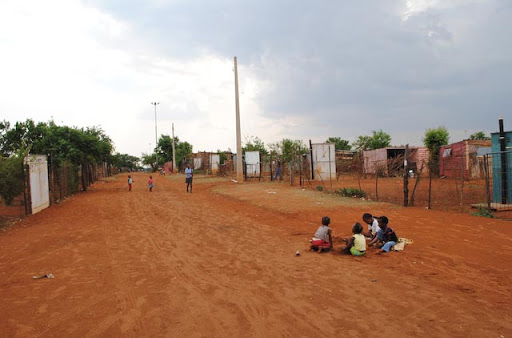
In 2010 the University of Pretoria Architecture Department, Boukunde, offered its Honors year students the opportunity to work with a small informal community located 10km south of Soweto named Slovo Park.
 
Location of Slovo in relation to Johannesburg City
 
The Research


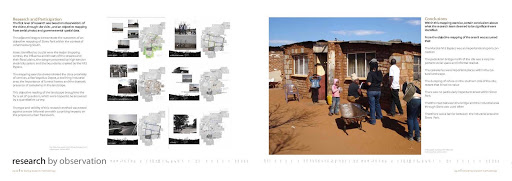
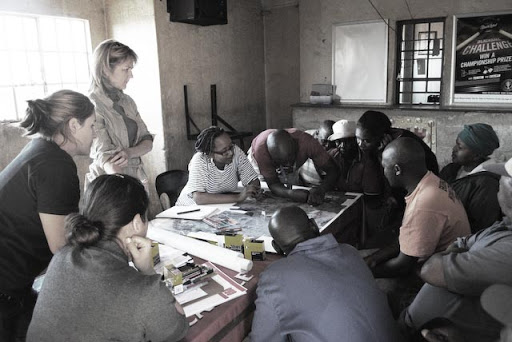
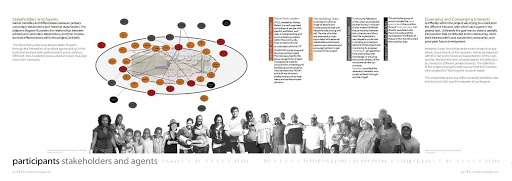
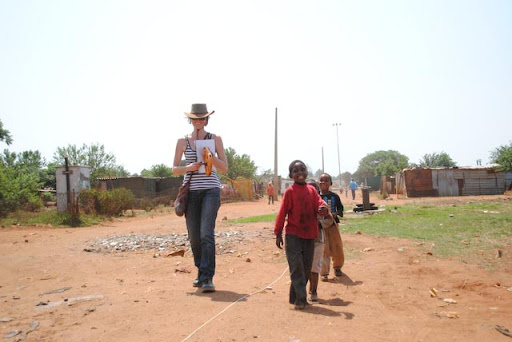
The student group of Bennett, Casson, Fillipe, Hattingh and Makgabutlane, began the project with a sensitive and holistic research process to try and comprehensively understand the socio-economic context of day to day life in Slovo Park.
 
*This article features snippets from the first draft of the book Slovo Park Project: A process of understanding.
Edited by Claudia Filipe and compiled by Bennett, Casson, Fillipe, Van Wyk 
contributions from Makgabutlane and Hattingh
 
 
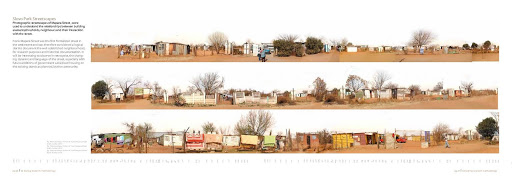
This involved several mapping exercises, interviews and detailed sketches of the local housing typologies. 
 
(To be Published, Bennett, Casson, Fillipe, Van Wyk)
 
 
Measuring up the existing
 
Discovering the world inside Slovo
       
(To be Published, Bennett, Casson, Fillipe, Van Wyk)
 
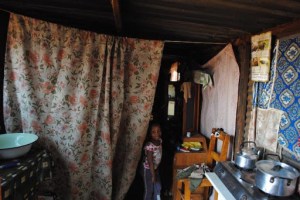
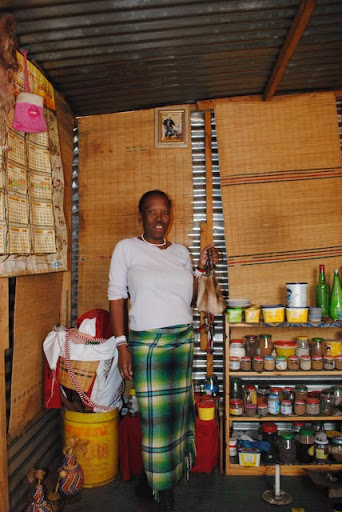
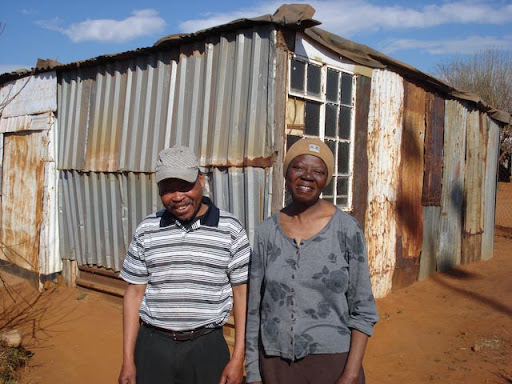
 The residents of Slovo opened their doors to the research team’s questions

(To be Published, Bennett, Casson, Fillipe, Van Wyk)
Playgrounds of Slovo – an electricity pylon
(To be Published, Bennett, Casson, Fillipe, Van Wyk)


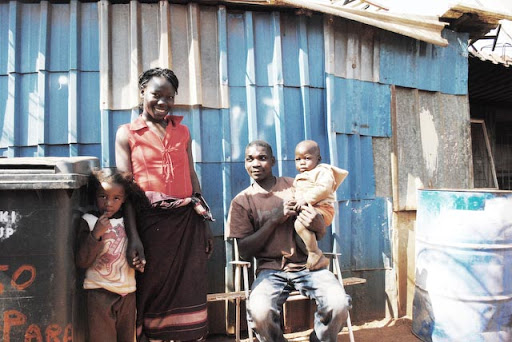
The myriad of faces in Slovo, a traditional healer and a struggling, but happy couple
 
The communities association with the Federation of The Urban Poor (FEDUP) and C.O.R.C was crucial in this process as they were instrumental in arranging and facilitating the research trips as well as bringing forward extremely helpful and willing community members.
 
Mapping Slovo through the community’s eyes
(To be Published, Bennett, Casson, Fillipe, Van Wyk)
 
The Individual Proposals


From this process a larger urban framework was proposed that sought to link Slovo to the neighboring community of El Derado Park while developing Slovo from within and maintaining the existing sense of community that the township demonstrated to the students during the research phase. 
 
(To be Published, Bennett, Casson, Fillipe, Van Wyk)

From here the students were required to propose their own individual theoretical projects that they felt would aid in the development of Slovo Park.


The responses were dynamically varied in nature with some designing a processional route from the township to the adjacent cemetery, incorporating the myriad of African cultures and their relationship to death while others focused on development around housing with titles such as ‘Housing Clinics’ in an attempt to capture the humble manner in which the inhabitants throughout south Africa possess the power to build their own houses but require some assistance and knowledge sharing.

 
The Housing Clinic
 
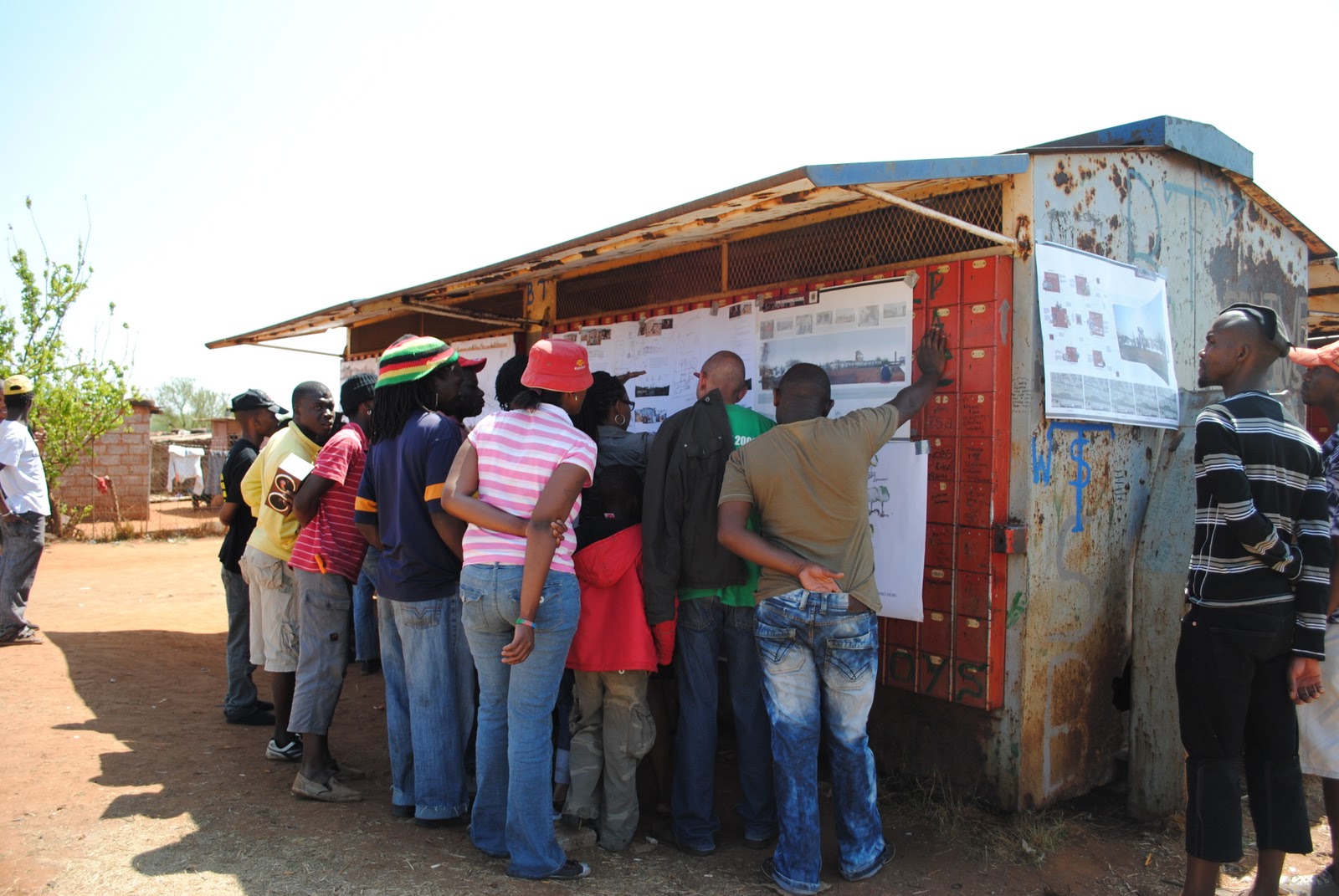
The project was well received by the University and was presented to the Department of Human Settlements at their Indaba in September of 2010 as well as presented to the community themselves during their meeting with government on site.
 
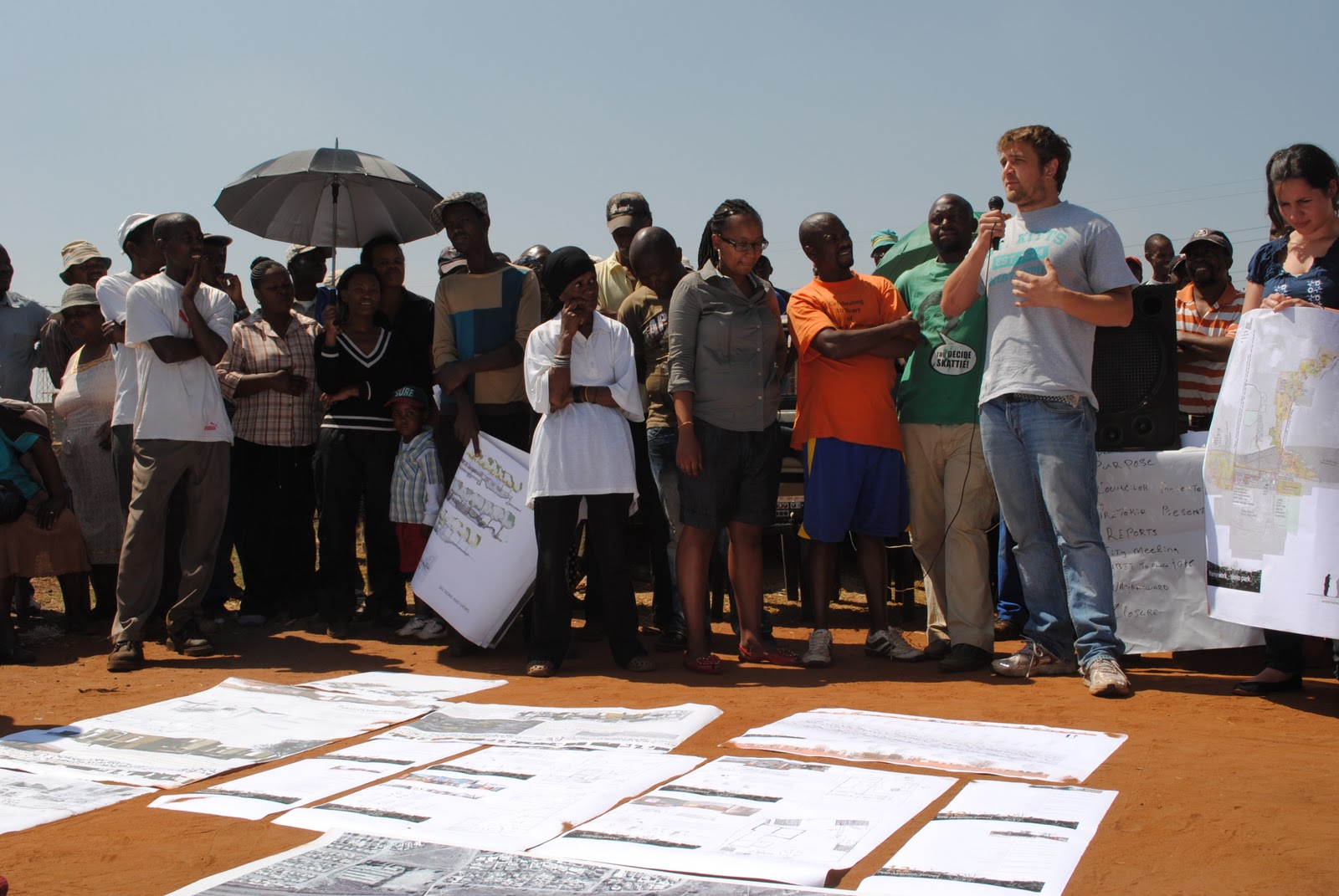
Presenting to the community of Slovo


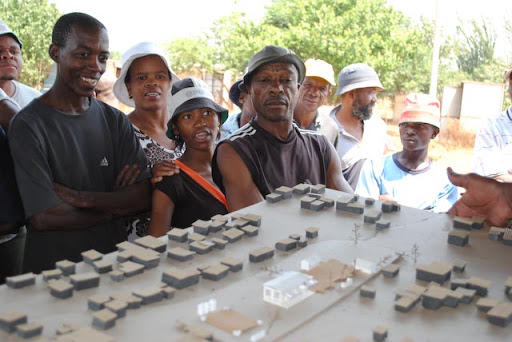
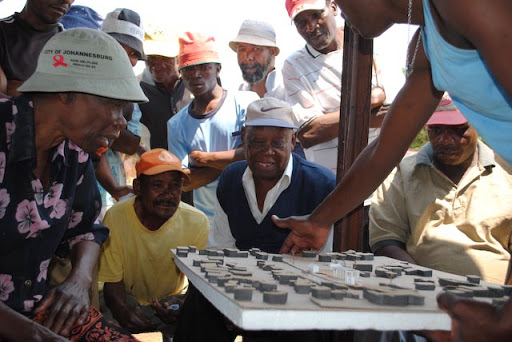
Garnering community feedback with an informal presentation to an informal audience
The Built Intervention
 
The university then offered the students the further opportunity to fund and construct a small portion of the proposed design and build it over an allocated period of 8 weeks.
 
(To be Published, Bennett, Casson, Fillipe, Van Wyk)
 
As the designs proposed over the research period were far too large and costly to build in the 8 week period the student group decided that they would pool together the principles from each design and with the addition of a new student member, Van Wyk, would design a small intervention within the earlier proposed urban framework.
 
Planning the build with the local business forum
 
 
The site as we found it. Waiting to be unlocked
(To be Published, Bennett, Casson, Fillipe, Van Wyk)
 
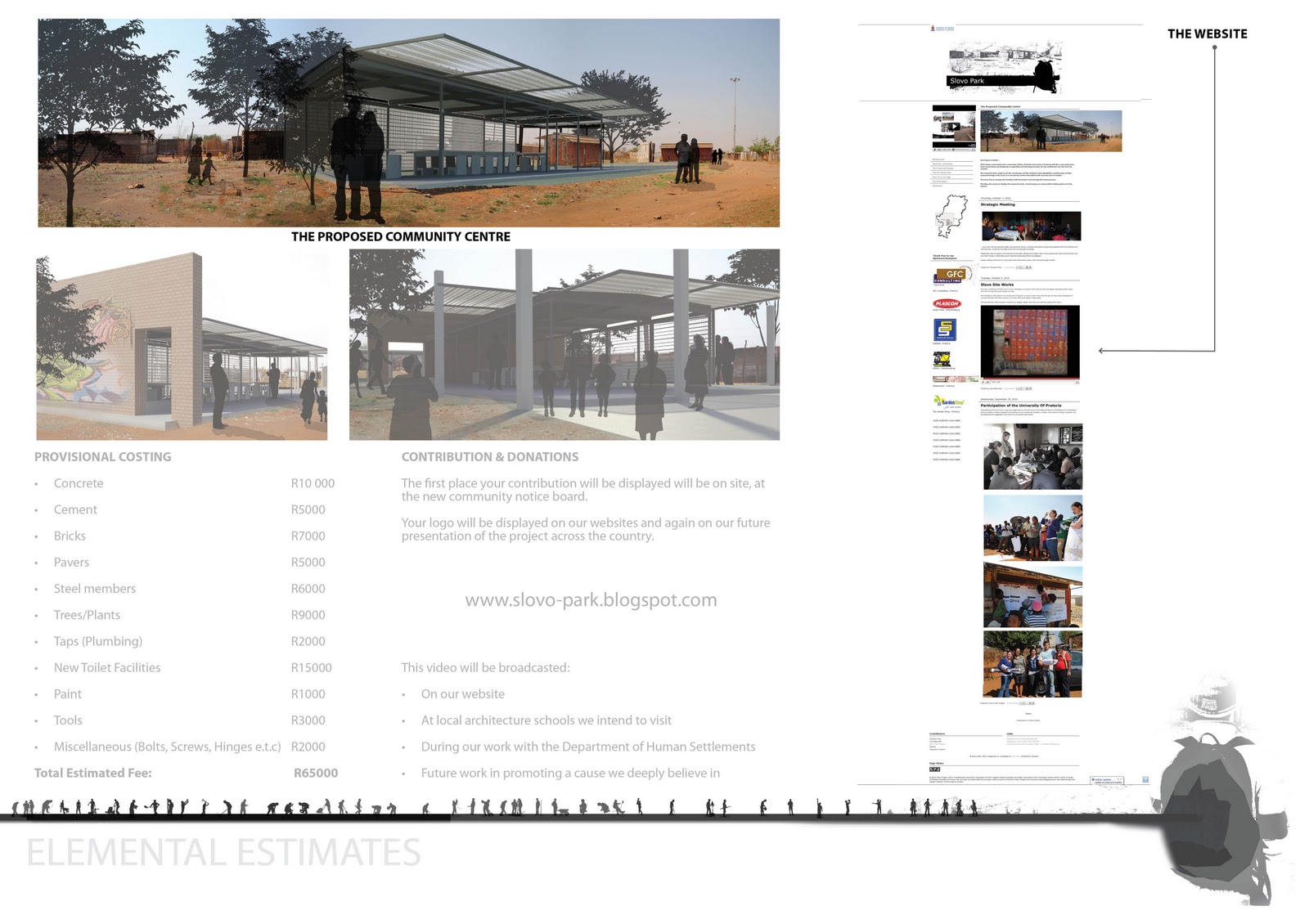
The resultant design was a proposed community center, which fitted into a civic space. This center and civic area would provide the people of Slovo Park a place for the community to meet and determine the future for itself. An existing dilapidated structure that housed the 1994 Election Station was chosen as the team felt that this was where the change began and should be respected so.


Proposed Slovo Hall – Community Meeting Center


Proposed Civic Center


The center was specifically designed with the larger future in mind and phased into 5 early construction phases and 5 later larger future development phases. 

Community poster to explain the process over the Build Weeks (3m Long)
Early construction phases allowed the functions of the future development phase to still operate on site without the actual infrastructure of the later development.
 
(To be Published, Bennett, Casson, Fillipe, Van Wyk)
 
This scheme was presented to the community for input and design assistance at the future Slovo Hall.
 
First formal presentation to the community
 
 
Presenting the ideas to people of Slovo using models proved to be the most effective way of community
These were some of the steps taken in an attempt to construct an effective space and building in a very short period of time. The team’s motto became “Do the most, with the least”.

(To be Published, Bennett, Casson, Fillipe, Van Wyk)
 
The Construction Process
 
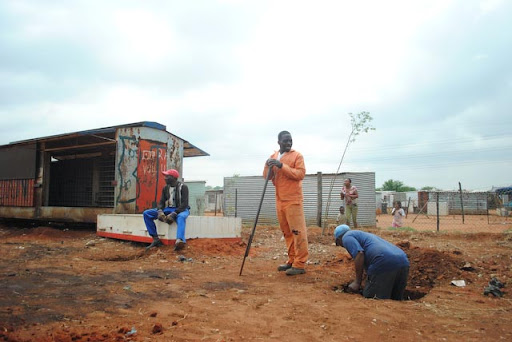
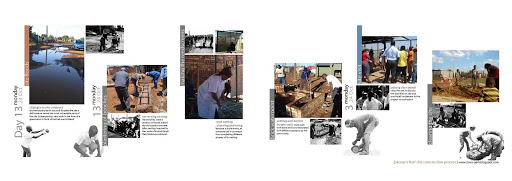
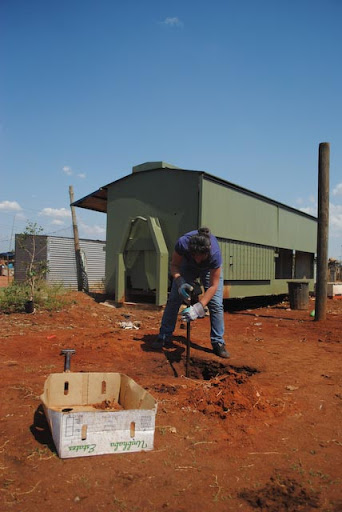
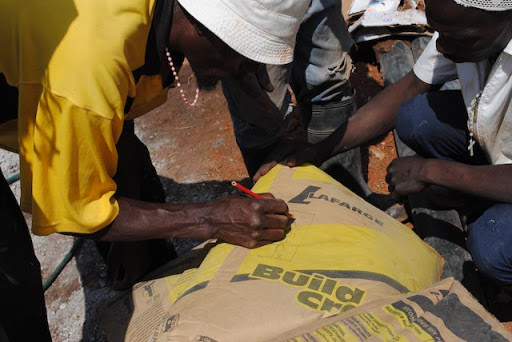
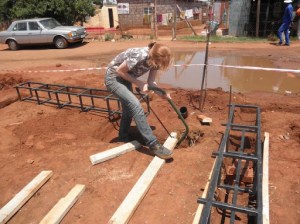
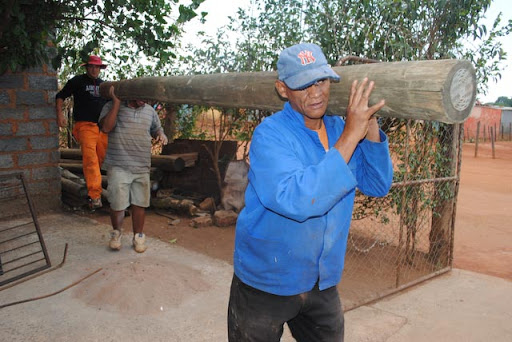
Building began in September and the support received from the community themselves and the local business was overwhelming with each day as varied as the next. Daily more people would join the workforce and get involved in some way.
 
Employing local help in measuring the site
The first site work informally done by help found on site
(To be Published, Bennett, Casson, Fillipe, Van Wyk)
 
Clearing the site with more ‘help’
 
(To be Published, Bennett, Casson, Fillipe, Van Wyk)
The core team getting the work ball rolling
 
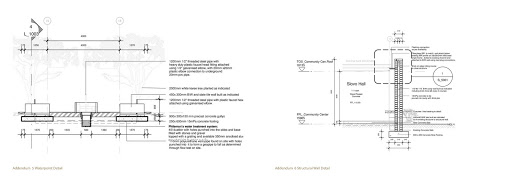
Laying the foundation for the center


(To be Published, Bennett, Casson, Fillipe, Van Wyk)
As the project gathered momentum the team began to see the relationships with these donators and consultants were going to be the lifeblood of future development in Slovo Park. 
 
(To be Published, Bennett, Casson, Fillipe, Van Wyk)
 
Getting into the swing of work
 
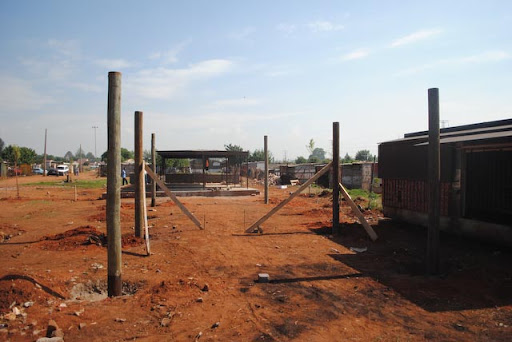
Slowly the site started to take shape


(To be Published, Bennett, Casson, Fillipe, Van Wyk)


The building team discussing how the future wall will look


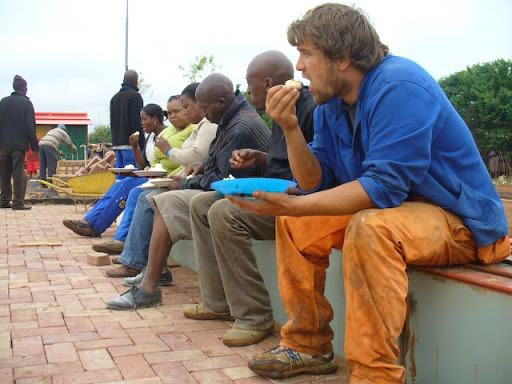
Meals, donated by local business’s on site, became a key time to reflect and build bonds between the team
 
 
Flood damage slowed the progress at points
 
 
But behind each setback were some truly inspiring moments


(To be Published, Bennett, Casson, Fillipe, Van Wyk)


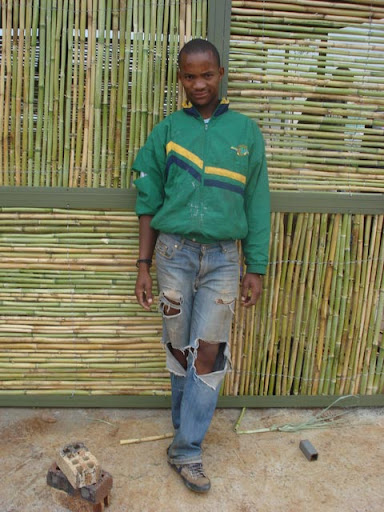
The ladies working on site working on the reeds added a rich dimension of song and colour to the long day    
 
 
 The reeds on site went from being a element of contention to a point pride assembled in some way by all members of the team
 
 
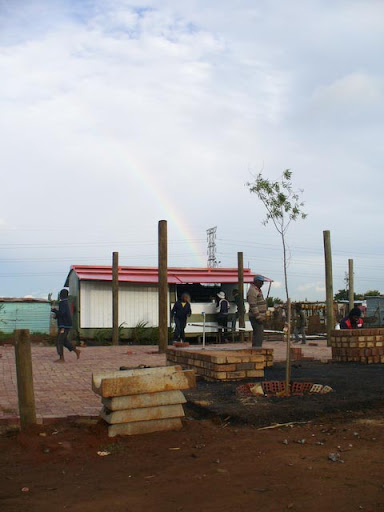
The paving arrived, late, but well received as it drew the elements of the center together


As the final touches began to be applied the energy on site was electrifying as the team neared their goal

Bachelor of Architecture (Honours)

The Slovo Park Project – The Story

The Slovo Park Project    The Slovo Park Project began as a small research project in the University of Pretoria’s Housing and Urban Environments module of the Architectural Honours Year.    It quickly gained momentum in its relation to the community it desire to understand the problems faced by South Africa’s Urban Poor. The process…

AZA Master Class 2010 – Convertible Cities

This year’s Architectural Student Congress was combined with the Architecture ZA (AZA 2010) and held in Newtown, Johannesburg. AZA 2010 hosted a Master Class session, which were attended by several prominent professionals and hosted at Arts on Main, just West of Johannesburg’s CBD. I was chosen amongst several other student submissions for an Autodesk Sponsored…

AZA Master Class 2010 – The Other Master Classes

During the Master Class I was fortunate enough to participate in, several others were run. More information can be found at AZA 2010 – Master Classes Although I did not see all the final products, below are some of the works I managed to document. The quality of the shots isn’t great, but I hope…

The Slovo Park Project – The Beginning

Quarter 4 The final quarter at the University of Pretoria allows for the students to select one project undertaken in the year under: Housing and Urban Environments, Heritage & Cultural Landscapes and Environmental Potential. The intention is for the student to take the proposal further into a design detailed level of resolution. This project then…

The Housing Clinic

The Housing Clinic From the standpoint that the issues around housing in South Africa are too complex and vast for anyone to easily get a grasp on the concept, the design seeks to give a tangible face to the solutions. The Approach The housing SA brand is meant to be the face for Housing South…

Housing & Urban Environments (H-UE)

Quarter 3  The final project for our 3 quarter session was that of Urban and Urban Environments, we were given a choice of 2 sites and expected to undertake the necessary research to and try gain an understanding of the urban condition of the area. From this we were expected to derive a building  that…

Heritage & Cultural Landscapes- Pretoria Art Museum

Quarter 1   My first project at the University of Pretoria was the adaptive re-use of the existing Pretoria Art Museum within the context of Arcadia Park. This was a particularly difficult project due to the unfathomably subjective possibilities of design approaches based on the notions of ‘Cultural Significance’. Anyone who has attempted a heritage…

Environmental Potential: Final Submission

Quarter 2   The refined proposal attempts to streamline the previous ideas and explain how the intervention makes the Carlton Center and the surrounding complex more ecologically responsive.   *   Deep Ecology Working from the previous post’s critique; the design works around the idea of Deep Urban Ecology and how each building is simply…

Environmental Potential: Part 2

Critique 2 After assessing the nature of JHB inner city more closely, a need for a stronger social approach became clear. The modified proposal approached the problem on a much more human scale. An Approach Although the buildings, the people, the flora and fauna all seem to occupy the same spaces and interact on a…

Environmental Potential: Part 1

Critique 1   Our new assignment is a adaptive re-use of the Carlton Center in Johanessburg CBD. Initial My initial idea was to flood the entire basement section (as the BRT system would provide future transport for all visitors and workers to the complex)and by harvesting all the rain water in the area, purifying it…

AZA Master Class 2010 – The Other Master Classes

During the Master Class I was fortunate enough to participate in, several others were run.
More information can be found at AZA 2010 – Master Classes
Although I did not see all the final products, below are some of the works I managed to document. The quality of the shots isn’t great, but I hope the ideas and the richness of the process can be seen.
I also included Hugh Fraser’s Digital Design Workshop, it was on display at the same venue and exhibited very interesting forms and textures.
*

RE-IMAGINING THE MINING BELT

Michael Sorkin, Duzan Doepel (presented by Autodesk), Lindsay Bremner and Hilton Judin 

Re-Imagining the Mining Belt will lay claim to the mining belt through opportunistic, experimental design thinking aimed at generating new urban relations, inventing new urban infrastructures, creating new urban publics and reasserting the mining belt into the urban imagination.


Once a churning metallurgical landscape, the mining land, with its headgear and golden dumps provided not only the city’s wealth, but also its iconic images. Johannesburg was synonymous with its mine dumps. Today this has changed. The dumps are disappearing. The mining belt is contested terrain. For some it is a toxic dump site; for others it is a source of new wealth through micro extraction and real estate development; some see it as disappearing urban heritage and for others, un-accommodated elsewhere in the urban system, it provides invisibility and cover.


The master class begins with the proposition that the mining belt is an environmental, economic and cultural resource for a more sustainable city. It asks architects to engage conceptually with this terrain vague, this unstable seam, this site where the city reveals itself, to imagine and represent its potential for future generations. It includes a site visit, the screening of a documentary, a workshop with stakeholders and the mapping of alternative scenarios. ‘


Architecture is involved in all kinds of systems, not just the use of materials and the consumption of energy. Architecture – simply put, a building – is always an interface between communication, social structures, economics and use.
 
– Duzan Doepel (presented by Autodesk) from his keynote address at AZA2010

* Excerpt taken from AZA Master Class Brief

Re- Imagining the Mining Belt – The Final Presentation
Concept Page – Igolide Elisha ( New Gold)
              
Soutfontein                                        Linear City                                               Historicity
  
   Detoxicity                                                       Urban Farm
Detoxicty
‘Through two days of intense walks throughout Joburg, participants may discover that no existing postcard of this city describes it either fully or partially. During the walks, they will each record, draw, photograph, print, write and capture the most unique, novel, everyday, inventive, imaginative and critical postcard of this city. “We will produce and present these postcards as the shortest story of this city: Johannesburg,” says Seraji.
 
The key to better architectural practice, believes Seraji, lies in unlocking one’s capacity for critical thinking. She proposes “a voyage through the most condensed periods of our practice of architecture in the past ten years – days of total disappointment, hours of extreme joy, and moments of radical thought: the life of an architect.”  ‘
 
Architects often forget that critical thinking depends on exposure, and that the simplest form of debate must start with a proposition. I believe that criticism is an essential interface that allows the architect to engage with the greater public. Somewhere in the 70s and 80s, architecture lost its conviction, its capacity for political activism, its power. It rose to stardom in the 90s; and when architects became as well known as pop singers, everyone started to desire architecture. Perhaps it is time to stop abusing the power of architecture and allow it to become once again a platform for critically, social awareness, and political engagement. We still believe in the power of architecture to make environments that allow us to enquire, measure, and determine our active position in society.
 
– Nasrine Seraji from her AZA2010 keynote address
* Excerpt taken from AZA Master Class Brief


Digital Design and Fabrication Workshop – 2010

The Slovo Park Project – The Beginning

Quarter 4

The final quarter at the University of Pretoria allows for the students to select one project undertaken in the year under: Housing and Urban Environments, Heritage & Cultural Landscapes and Environmental Potential.

The intention is for the student to take the proposal further into a design detailed level of resolution. This project then is detailed through to much more holistic architectural level. This quarter is also supplemented by an elective theory course in order to prepare the student for the Thesis Year ahead.

*

Elective
My choice was the Housing and Urban Environment  project, as I felt there was still much to do and learn in Slovo Park.
The initial research group remained the same with the inclusion of a new member who worked on a different site, but whose design was not site based.
 
The Plan
Our lecturer’s offered us that, due to the level of community interaction, we could build a part of our intervention. But we would have to fund, manage and build the design with the community over the next 6 weeks. This built product would then be assessed on site and would be our final mark.
Getting Started
The first task was to decide which project to go through with, as the other students in the class would take forward their individual designs done over 8 weeks in the previous semester, we as a group would take further a group design, as our individual proposed designs were much more ambitious than we could possibly build with little to no money and in the time frame we had.
Choosing a Site
After we presented our individual work to the community during one of their official meeting we understood that their was no formal meeting spaces and the informal spaces did not work very well.
We chose a site, identified in Urban Analysis framework, as a key point at which the development of Slovo would take place by creating a platform for people to meet and discuss the future of their community.
(Bennett, Casson, Makgabutlane, Fillipe , Hattingh ; 2010)
 
The Project In Brief…
After being contacted by the community of Slovo Park the University of Pretoria with the community have been researching and designing an upgrading and development plan for the settlement over the last few months.

The research team, made up of the community and the students, have identified a small portion of their proposed design in the form of a Community Center that will be built over the next six weeks.

The team has to arrange the funding, build the project and manage the entire process.

A comprehensive information pack is available on the Slovo Park Project Website

The Built Proposal
The design put together was infused with the principles learned during the individual proposals and seeks to provide the first step towards a much larger development.
This pilot intervention will lay the framework for the future development by uniting the community under a common goal and using that energy to project the project past our interaction with the community and make the design a true bottom up initiative.
Each built piece is intended to provide the necessary infrastructure for the community to use as its intended function now, without compromising its adaptability in future:

e.g.

The design of the paving with the intentional space for future columns to build the ‘future blue print’ for the community
or
the low seating walls for the mobile clinic waiting area will become the foundation walls for the proposed clinic in the future phase e.t.c

Built Phase & Future Phase.
The Built Phase will be the re-refurbishment of the existing community structure over the 6 weeks, this will set up the construction sequence for a much larger project development which we designed with the community.

The Future Phase is designed on a much larger scale and  requires more infrastructure and time than we have, but is outlined by the Built Phase
Each phase is incrementally designed so at each point the design can be critically reviewed by the community themselves to ascertain the most effective path towards the built product.’

Diagram of Building Phases – Presented to Community

Current State
The Slovo Park Project Team have begun site works, and are constantly seeking more funding and donations.
Below is the current program for the community building team.

The Slovo Park Project team has received overwhelming support from the community and is busy with site works at the moment, and moving swiftly along the scheduled program.

Maputo – Documenting the Baixa

Maputo – Documenting the Baixa
 
 
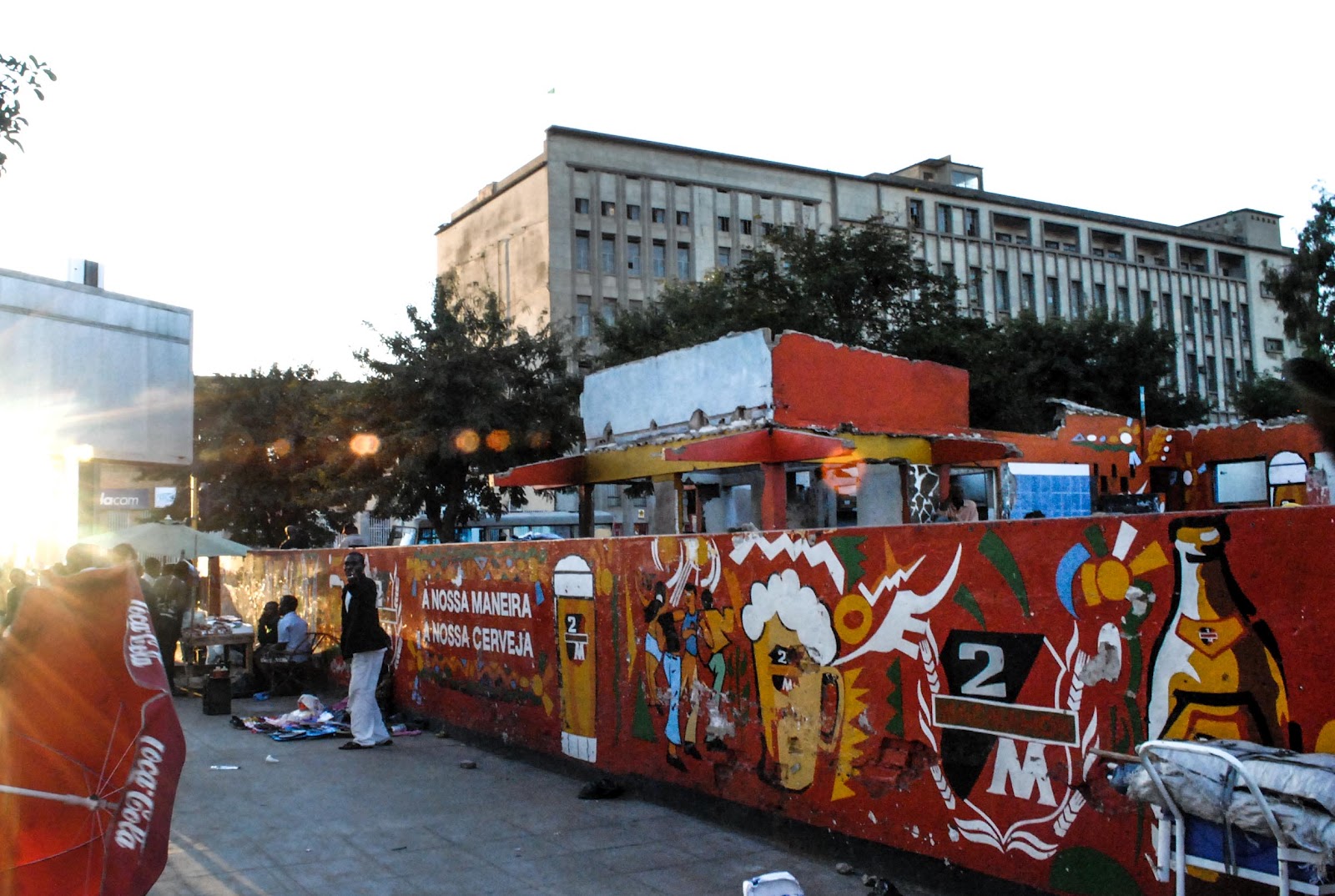
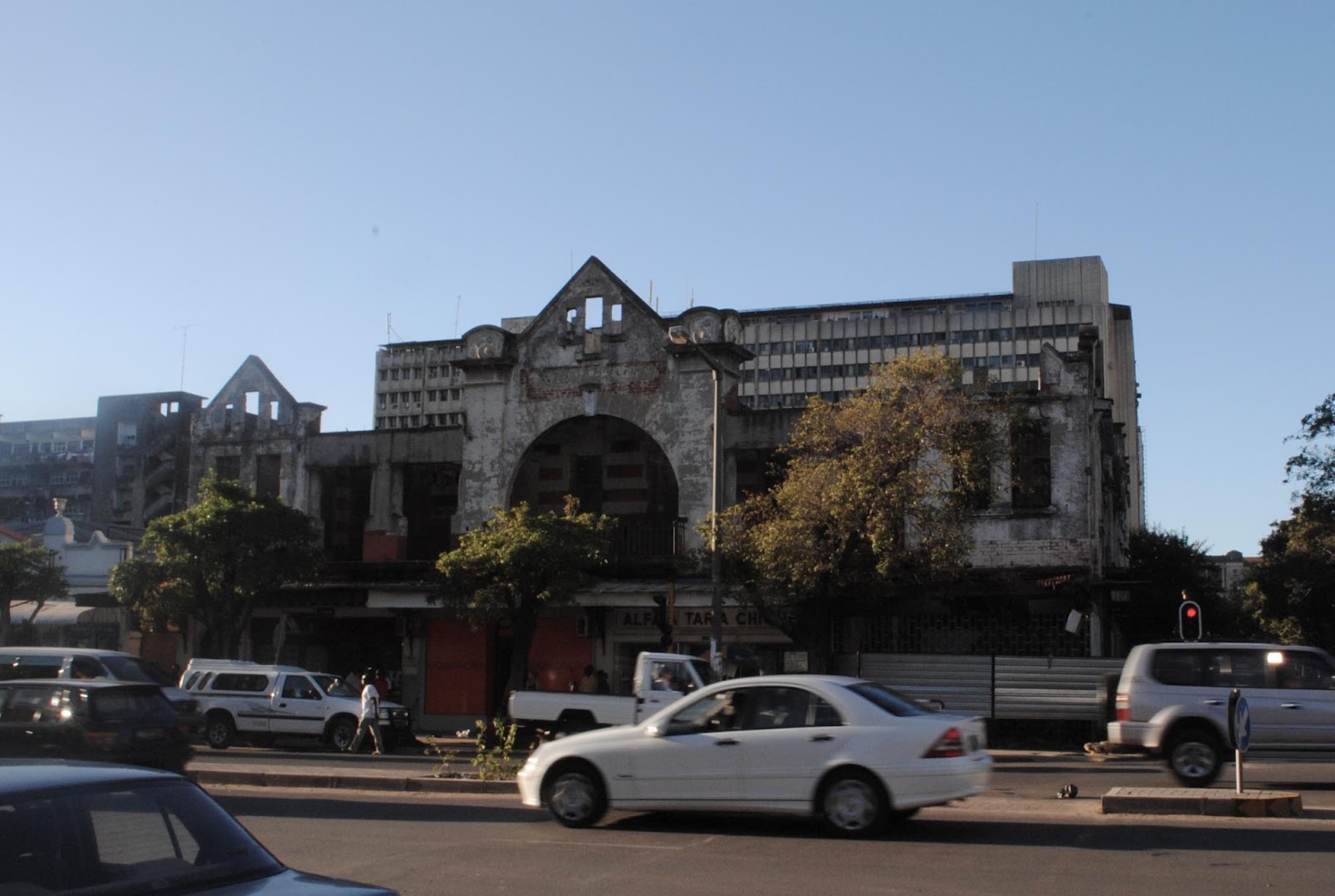
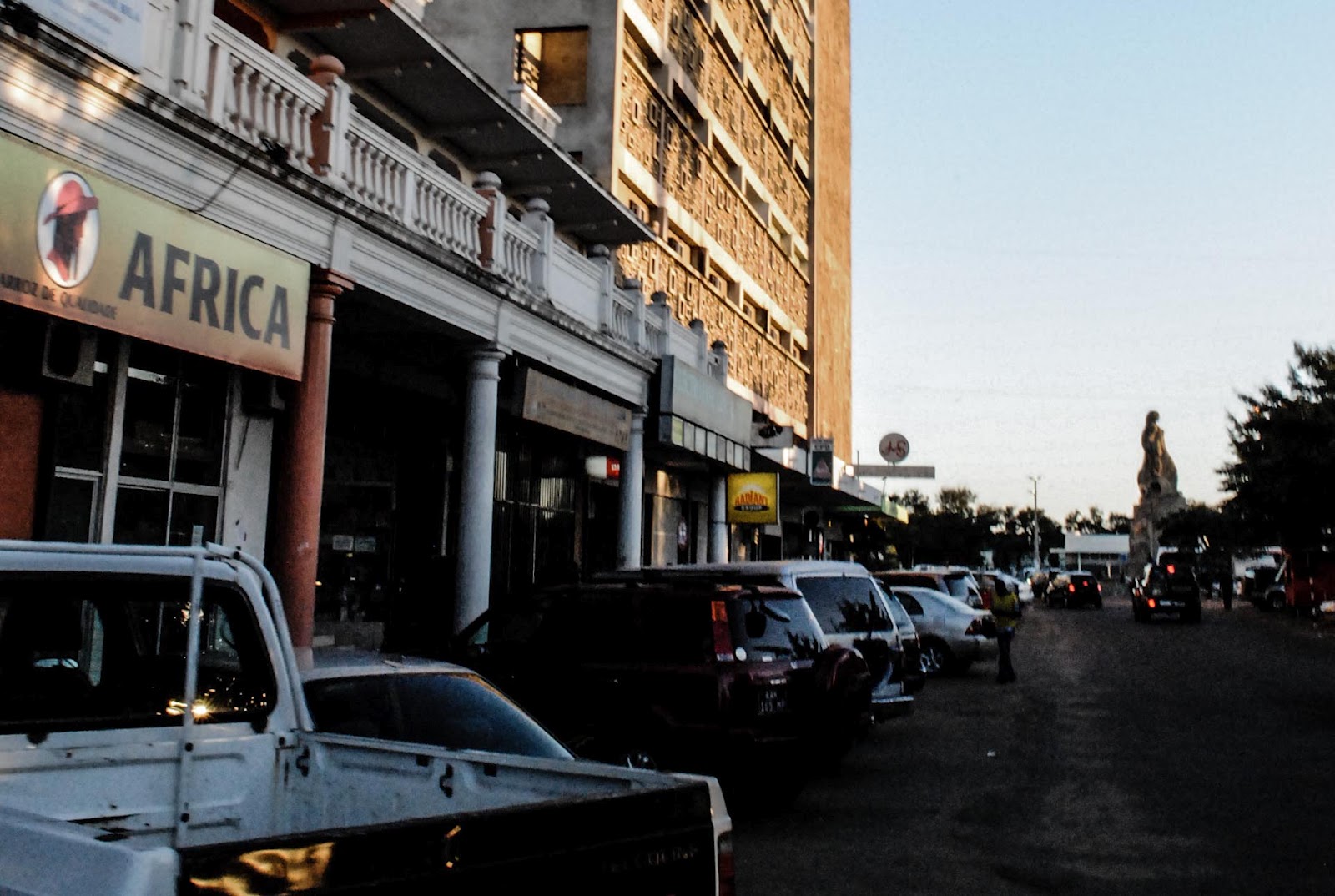
Down town Maputo, known as the Baixa, is the oldest part of this city in decay. Colonised by the Portuguese  in the early part of the 18th century, the city was at one stage planned to be the new capital of Portugal before the war of Independence.

This complex layering of history and site was the site of a University of Pretoria research study in July 2010.
The research project had 20 students from the University of Pretoria documenting the historical buildings of the Baixa area using a contemporary technique known as the ‘Quick Scan’. This method is a fast tracked survey technique to quickly assess the economical and historic nature of an area to communicate to governmental powers possible solutions to maintaining the historical fabric of heritage areas while planning an economical strategy around it.

The first few days were spent getting to know the area as tourists before the real mapping began.


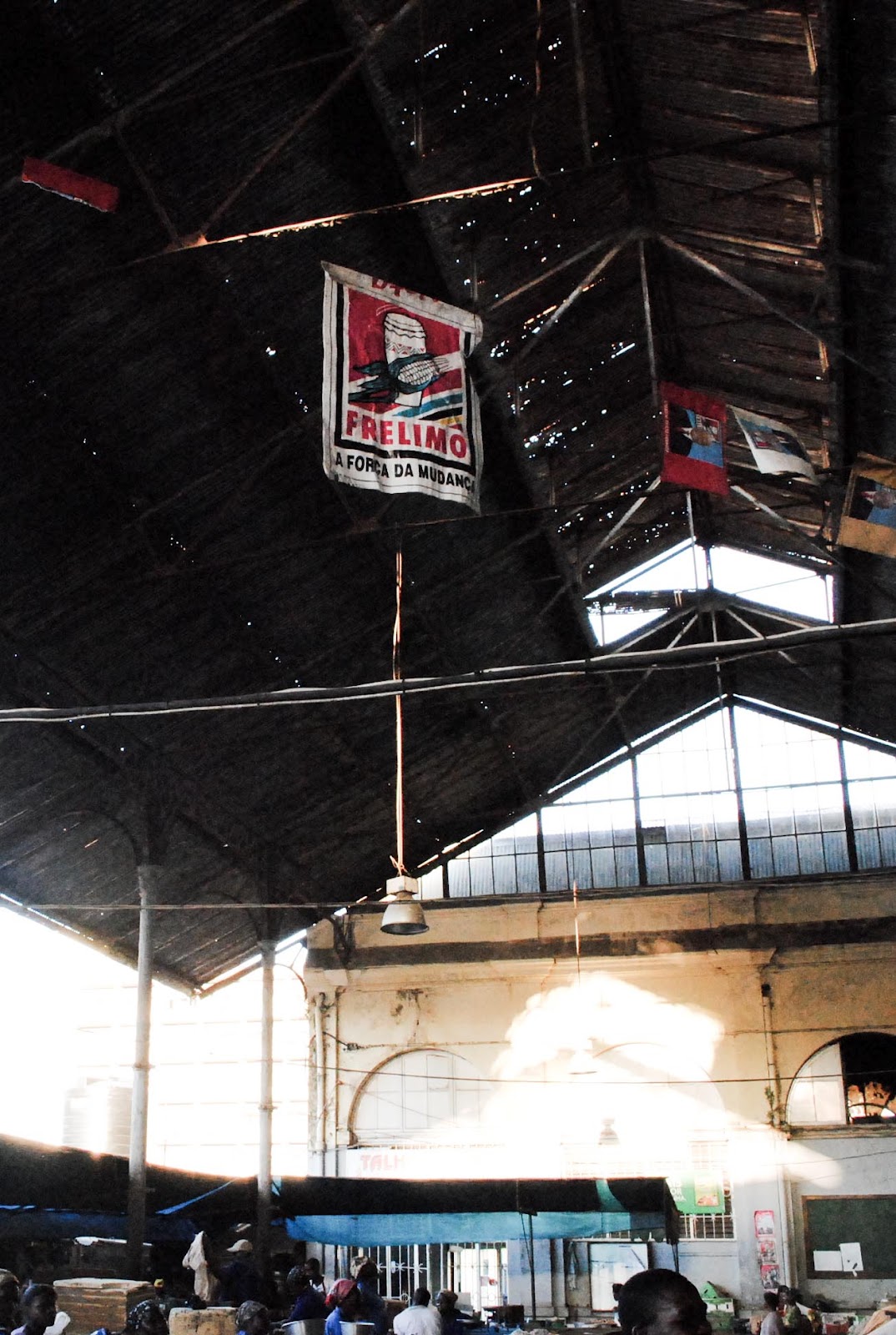
The Market
 
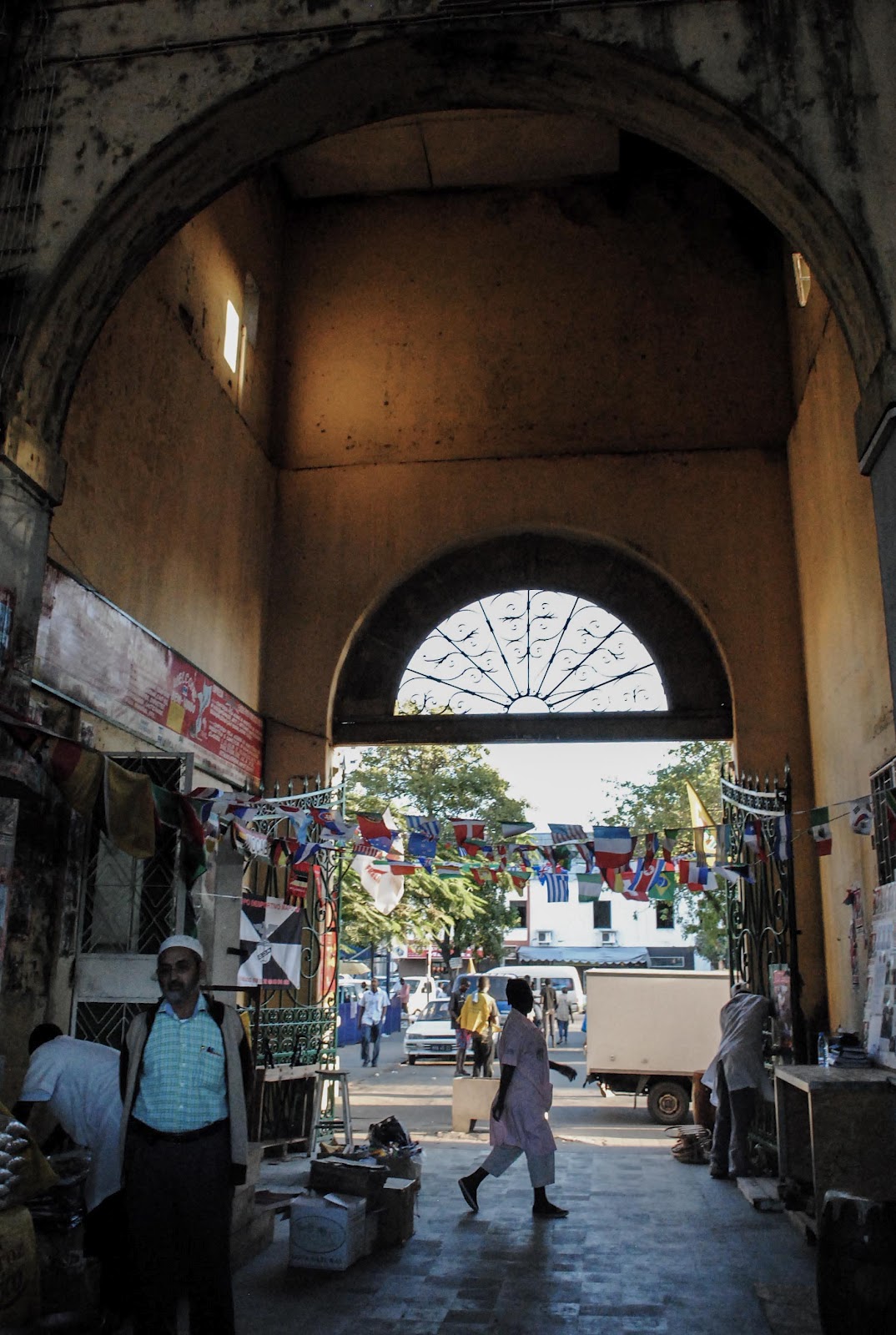
The market was our first experience of the historical nature of Maputo being actively and sustainably used and made viable.
 
 
The Monument to the Great War, erected as a memorial to the Portuguese that died during World War I.
The Maputo Rail Station
 
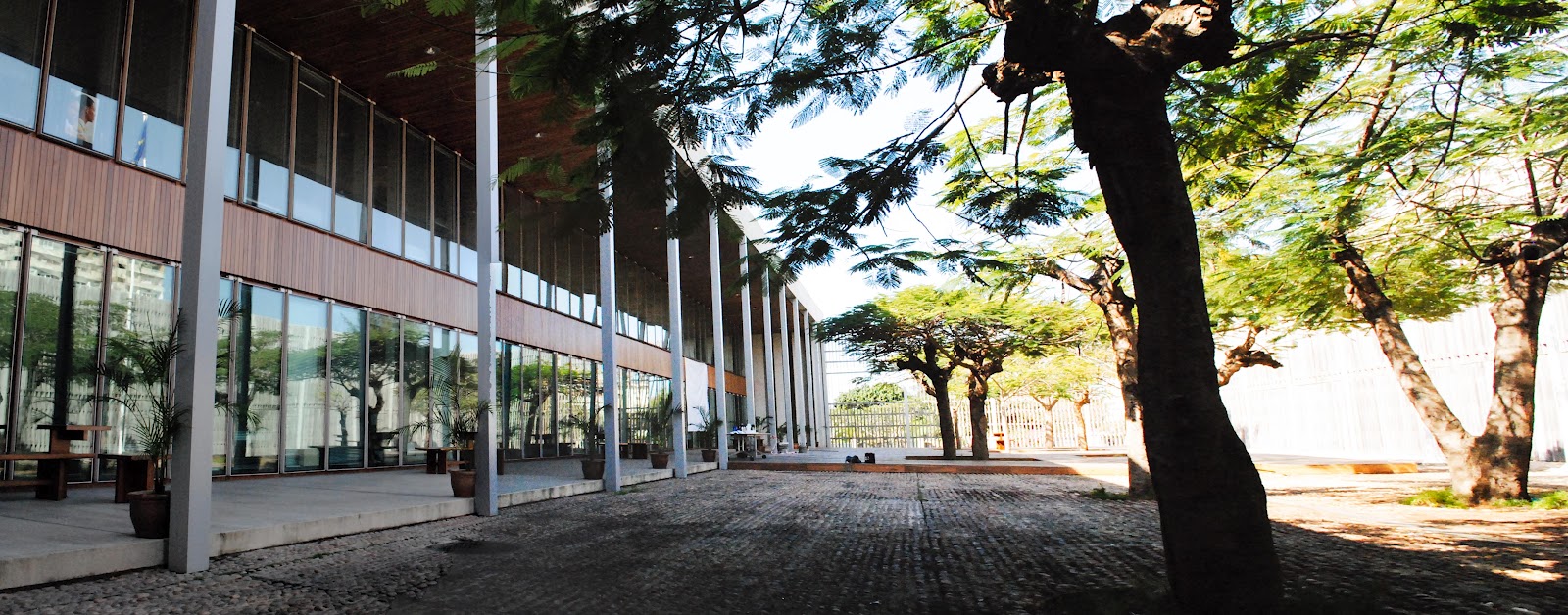
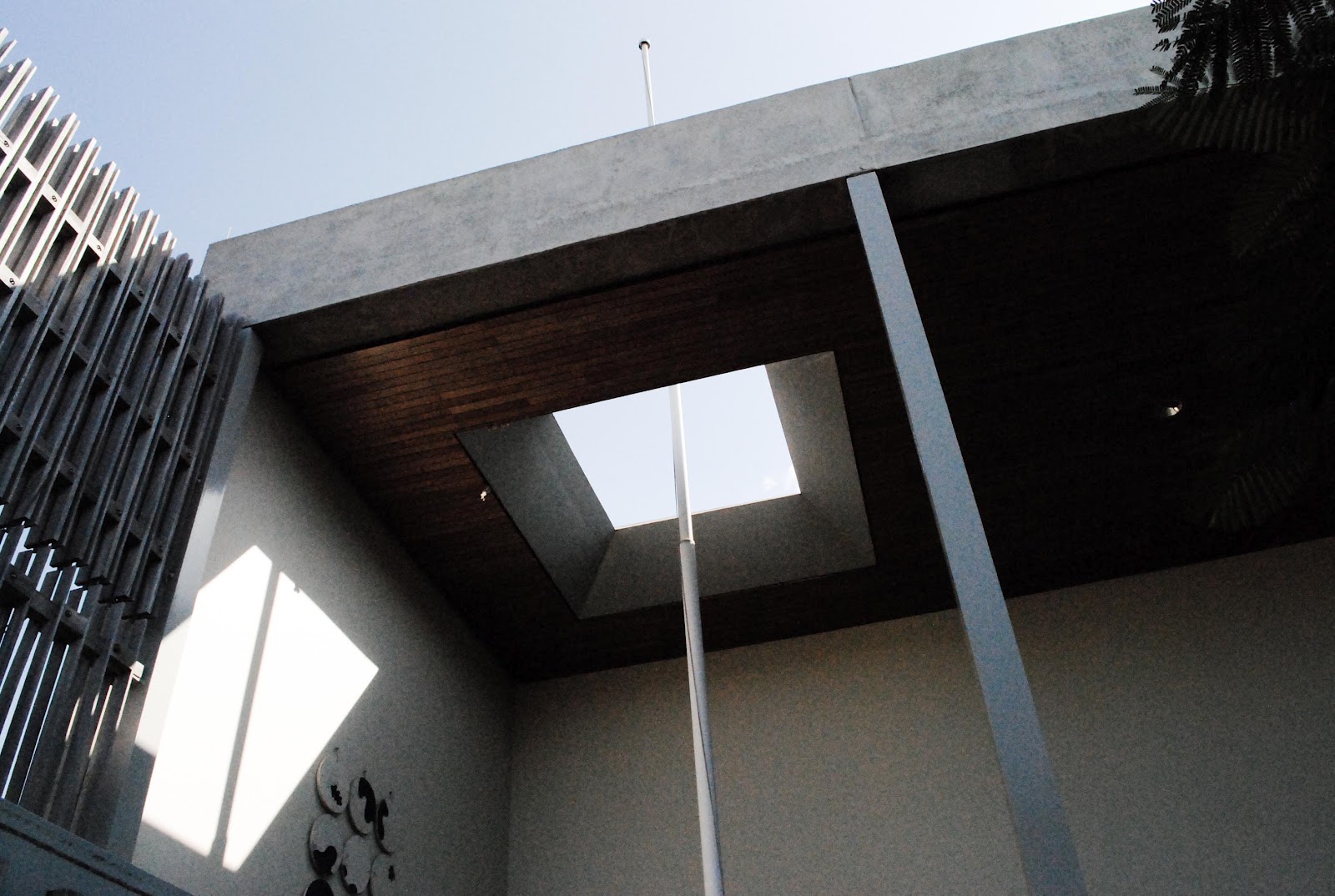
The Netherlands Embassy

We were fortunate to get a chance to visit the Dutch Embassy during trip. Here we were joined by a wild haired passenger known as Antoni Faulkers.


Procurando Pancho…
 
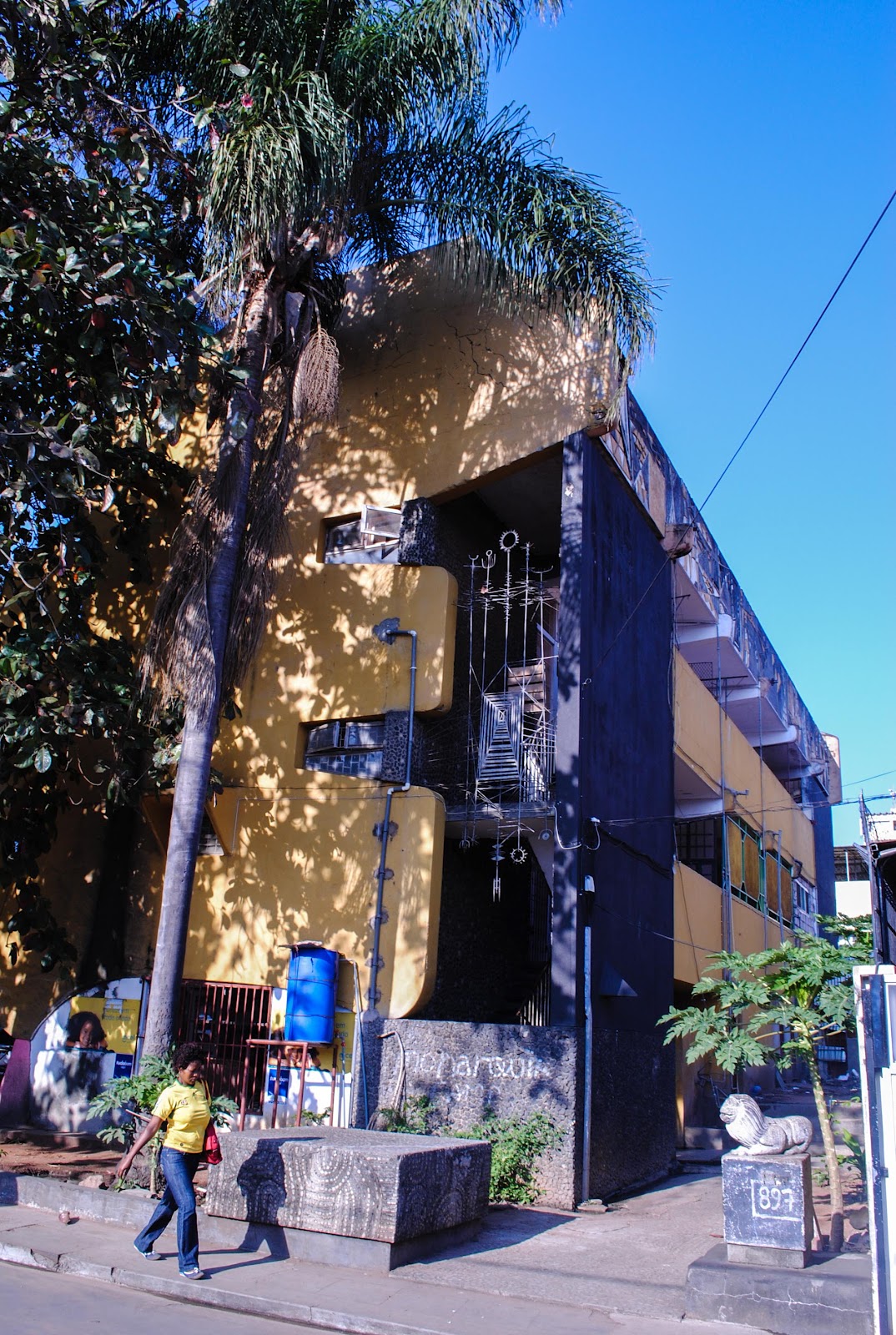
No Architectural trip to Maputo would be complete without a good deal of Pancho Guedes visitiation.
Smiling Lion
 
 
*
This entry serves more as a photo journal of the architectural elements of the trip, and is soon to be updated with the analytical findings from the group.