Southern Urbanist Practice Reading/Doing Group & Maintenance Corner

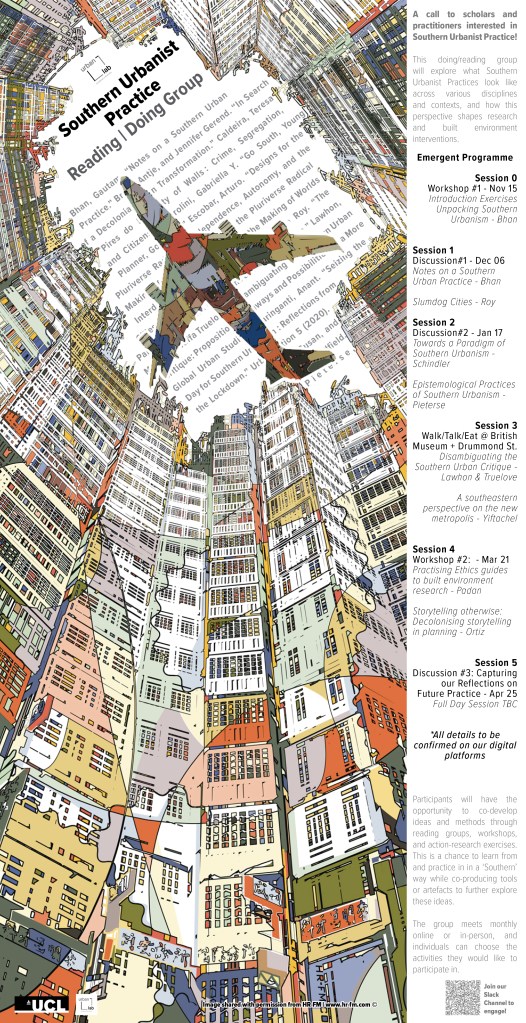
Myself and Lubaina Mirza co-convened a reading/doing group with the aim of fostering a peer-support community for urbanist practitioners. Our goal was to collectively explore and develop a shared understanding of Southern Urbanist Practices with those that were interested in similar topics. We invited collaborators who were interested in contributing to a practice-oriented research collective and co-developing ideas through a combination of reading groups, workshops, and action-research exercises. This was done through UCL Urban Lab’s Post Grad Urbanist Doctoral Network.

From this space, Lubaina Mirza, Catalina Ortiz and I developed a digital ‘Maintenance Corner’. This platform aims to provide an interactive space where scholars, practitioners, and enthusiasts of Southern Urbanism can come together to explore, exchange, and advance their understanding of this transformative approach. With a strong focus on the practical aspects of Southern Urbanism, we strive to bridge the gap between theoretical discourse and real-world implementation.

Through this platform, we aspire to create an inclusive ecosystem where researchers, practitioners, and educators can connect and find inspiration, resources, and support to further their work in Southern Urbanism. Together, we hope to transcend borders and make a positive impact on urban practices worldwide.

https://southernurbanpractice.wordpress.com/


Reading/Doing Group Reflection

The concept of ‘Southern’ or ‘South’ was examined in the context of urban studies, focusing on the need for a more contextually attuned approach when working with cities outside the ‘Global North.’ The group aimed to challenge dominant urban theoretical insights based on relatively wealthy cities and explored alternative theoretical and epistemological resources for various urban situations worldwide.

The reading/doing group aimed to explore the operationalization of Southern Urbanism and the practical implications of working locationally from people and place, while countering peripheral positions to ‘a north.’ It encouraged reflections on the significance of Southern Urbanist Practices across different disciplines, geographies, and professional contexts.

Participants were invited to critically engage with questions about the relevance of academic debates on terminologies like ‘Global South’ or ‘Southern Cities’ to their individual and collective research or practice interests. The group served as a flexible space to address the challenges and aspirations of scholars and practitioners working between the north and south, seeking to explore tools and artefacts to further understand Southern Urbanist Practices.

Session 1: 11:00 – 13:00

11:00 – 11:10 Welcome & Introduction

11:10 – 11:30 Reflection Presentation from Reading/Doing (Lu and Jhono)

11:30 – 12:30 Panel 1 Presentation & Discussion: Southern Values in Context: 

  • Ola Uduku
  • Gautman Bhan
  • Beatrice De Carli

12:30 – 13:30 Lunch Break

Session 2: 13:30 – 15:30

13:30 – 14:30 Panel 2  Presentation & Discussion: Southern Values in Action 

  • Gabriella Carolini
  • Catalina Ortiz
  • Tanzil Shafique

14:30 – 15:00 Open Discussion

15:00 – 15:15 Closing Remarks/Reflection from Lead

15:30 Close

The final event sought to bring together a group of Southern Scholars to reflect with the Reading/Doing Group. This was held with the Bartlett Development Planning Unit’s BUDD programme. The broad findings are outlined below:

What Brought Everyone Together

  • Interested in exploring Southern Urban Design.
  • Wanted to connect with like-minded individuals.
  • Valued the connection between theory and practice.
  • Sought to understand South African cities in relation to broader theories.
  • They were interested in interdisciplinary connections with urban theories and practices.
  • Recognized the hierarchy and binary between rural and urban in Southern urban practices.
  • Eager to engage in discussions, readings, and connect with other PhD students exploring Southern Theory beyond the “north.”
  • Interested in understanding cities through social aspects and comparing different urban contexts.
  • Questioned and challenged the notions of the “north” and “south.”
  • Engaged with topics related to cities, social issues, and the global South.
  • Sought collective exploration of these questions through connection with others.

Emergent Values/Aspirations

  • (de/re)centering 
  • Diverse, heterodox, pluriversal, variegated, polyphonic 
  • Equal/just/inclusive 
  • Insurgent/emergent/indeterminate 
  • Uncertainties, un-knowledges, mistrust of authority 
  • Counter-hegemonic relationality – “sets of moving peripheries” 
  • Ethical standpoint, Situated positionality  
  • Decolonial, non-proprietary, non-extractive, 
  • “epistemic disobedience” 
  • “epistemic force fields” 

Emergent learning strategies discovered through SUP:  

  1. Working locationally – embedding/immersing, tuning into ‘here and now’, describing and accepting it as it is 
  2. Identifying ‘propositions’ 
  3.  Auto-ethnography feeding into case study reflections on the why and how of practice,  
  4. A-positivist analyses – speculative, creative, affective, generative and inviting emergence rather than rational and controlled
  5. Using common values (rather than research/project objectives) as guides or epistemological criteria for decision-making in situations of uncertainty 
  6. Attempting solidarities, creating self-organising structures for these 
  7. Collective rather than individual knowledge production/evaluation. E.g. peer reflection/review, co-production, PAR, collaborative transcribing and analysis of what matters… 

Emergent Core Ideas

These findings provide insights into the challenges, perspectives, and approaches discussed in various actions and discussions on Southern Urbanism and knowledge production in the gSouthern locations. They emphasise the need for critical engagement, decolonization, and a plurality of perspectives to better understand and address the complexities of Southern cities.

False North/South Divide: 

The dichotomy between the North and the South was problematized, and there was an acknowledged need to move beyond these labels and understand the cities from new perspectives. The focus is on creating pluralistic readings of cities and challenging the dominant theories derived from Western cities. The aim is to build theory from multiple perspectives and locations, acknowledging the intra-south nuances and diversities.

Theory and Practice: The discussion highlights the need to rethink the way theory is produced and the larger conceptual trajectories. Practice is localised and intertwined with theory, and there is a recognition that practitioners should be involved in knowledge interpretation. The importance of self-reflection, questioning positionality, and understanding values within theories and actions is emphasised.

Methods and Approaches: 

The discussion highlighted the importance of understanding the context and trying to make sense of conditions in Southern cities. The focus is on making the invisible visible and reflecting on the details of makeshift lives and institution building from these knowledge systems. Multiple levels of analysis are necessary, including how students and experts make sense and how institutions make sense. Comparisons to other contexts and expanding the field were described as crucial.

Knowledge Production: 

The politics of knowledge production outside of ‘northern contexts are critical. It is important to challenge the dominant narratives and perspectives, and there is a need for a decolonial point of view. The limitations of post-colonial theory are recognized, and the focus is on understanding the underlying forces that shape societies and Southern Urbanism. Translating concepts and creating a global archive are seen as essential steps in this.

Audience and Engagement: 

There was a call to listen and ask who is absent in knowledge production. It is necessary to question the assumptions and norms in disciplines and engage with practitioners and vulnerable communities/grroups. The intention of the message and the consequences of practice should be considered. Humanising practice, recognizing individual experiences, and understanding the consequences of messaging are emphasised.

Professionalised Problematics: 

There was an acknowledgement of the lack of engagement on the differences on how  issues such as class versus race were understood in ‘southern systems’ compared to perspectives from the Northern contexts. Professionals (in practice) often fail to acknowledge the traceability of concepts visually and systemically, and there is a need for a lens to nuance and reflect on room experience. The displaceability and displacement of concepts, as well as the hybridization of practice, are also problematics that professions/scholars struggle to address.

Decolonization and Hybridity: 

The decolonization of knowledge was recognised as a key concern, while working within eurocentric structures. There was a call to circulate knowledge with sensitivity to place and historical differences and to decolonize urban aesthetics. The hybridization of ideas, avoiding binaries, and creating space for new ideas are seen as essential for moving forward.

Southern Urbanism as a Concept: 

There is no consensus on epistemologies, questions, and methods in Southern Urbanism. This is not necessarily an issue, but an opportunity to accept places on their own terms and use ideas, concepts and practices that are based on place. 

Specific learning strategies discovered through SUP:  

  1. Working locationally – embedding/immersing, tuning into ‘here and now’, describing and accepting it as it is 
  2. Identifying ‘propositions’ 
  3.  Auto-ethnography feeding into case study reflections on the why and how of practice,  
  4. A-positivist analyses – speculative, creative, affective, generative and inviting emergence rather than rational and controlled (e.g. our fieldtrips or games like 2 truths and a lie) 
  5. Using common values (rather than research/project objectives) as guides or epistemological criteria for decision-making in situations of uncertainty 
  6. Attempting solidarities, creating self-organising structures for these 
  7. Collective rather than individual knowledge production/evaluation. E.g. peer reflection/review, co-production, PAR, collaborative transcribing and analysis of what matters…
Change by Design – Joburg 2023: Workshop 1

Overview

The 2023 CBD Workshop in Joburg was developed over many years of preparation with ASF-UK, 1to1 and various stakeholders across Johannesburg. My own doctoral research was tied into this process.

The 2023 Change by Design – Joburg workshop delved into two distinct types of inner-city sites: an informal settlement and a cluster of informally occupied buildings. Leveraging the ongoing efforts and partnerships of 1to1 with advocacy groups and grassroots leadership, the aim was to bolster local residents and their organizations in creating equitable living conditions in the two areas.

The workshop was divided into two parts: an online symposium for preparation, followed by a one-week live workshop culminating in a final event. The workshop aimed to comprehend the role of community-led design and planning in promoting housing justice in inner-city Johannesburg. The team believed that organized collective action was needed to advance the housing rights of inner-city residents and that community-led design and planning could support civic and grassroots actors in their housing justice work.

The workshop utilized ASF-UK’s Change by Design methodology to encourage collaboration and mutual learning about urban space and improve local living conditions. The CBD methodology has four stages: diagnosis, dreaming, developing, and defining, with the workshop focusing on the first two stages. It also emphasized Ethics-in-Action, with a reflective approach to ethical practice and the importance of informed consent and data protection in research practice.

The workshop’s sites, Bertrams and Jumpers, were chosen to facilitate comparative learning, with each site explored at the micro, meso, and macro scales to coordinate three groups of participants. The final event served as an important moment for various project stakeholders to come together, share insights, and collaborate on actionable next steps towards the project’s aims and needs.

The workshop provided several recommendations for the future, including a focus on upgrading occupied buildings, addressing knowledge gaps around affordability and physical conditions, enhancing the capacity of grassroots activists, and promoting knowledge exchange beyond Johannesburg. The next steps involve implementing these recommendations to advance housing justice in Johannesburg, with a focus on policy dimensions around upgrading occupied buildings, addressing knowledge gaps in practice, enhancing grassroots activists’ capacity, and promoting knowledge exchange.


Full Story (re-posted from CBD 2023 Website)

In 2023, Architecture Sans Frontieres – United Kingdom (ASF-UK) and 1to1 – Agency of Engagement (1to1) led a multidisciplinary group of action-research volunteers to support local grassroots efforts in addressing housing challenges within the inner-city of Johannesburg through the Change by Design Methodology.

Participants took part in a one-day online symposium in December 2022 and a one-week live workshop in Johannesburg in January 2023. Throughout this period, they worked closely with 1to1 – Agency of Engagement and their civil society partners, adapting the Change by Design methodology to explore how community-led design and planning can contribute to advancing housing justice in inner-city Johannesburg.

The 2023 workshop explored two different types of inner-city sites: an informal settlements, and a cluster of informally occupied buildings. Building upon 1to1’s ongoing activities and partnerships with advocacy groups and grassroots leadership, the aim was to support local residents and their organisations in their efforts to create fairer living conditions in the two areas.

The workshop was split into two parts: a preparatory online symposium, and one week live workshop that culminated in a final event.

WORKSHOP AIMS

The workshop aimed to understand the role of community-led design and planning in promoting housing justice in inner city Johannesburg. The project team and felt that inner city areas were places where housing deprivation and human rights violations are common and that there is a lack of understanding of the conditions and experiences of housing informality and precarity in these areas.

They believed that community-led design and planning could support civic and grassroots actors in their housing justice work and that organised collective action was needed to advance the housing rights of inner city residents.

The expected outcome of the workshop was to capture and amplify diverse experiences of housing informality in inner city Johannesburg, and the future aspirations of residents and their organisations.

METHODOLOGY

The workshop utilised ASF-UK’s Change by Design methodology to support collaboration and mutual learning about urban space and improve local living conditions. The CBD methodology has four stages: diagnosis, dreaming, developing, and defining. The initial stages are used to facilitate co-design activities at three scales: micro, meso, and macro. The 2023 workshop focused on the first two stages of the process (diagnosis and dreaming) and centred on two sites, Bertrams and Jumpers, to facilitate comparative learning. In each site, the micro, meso, and macro scales were used to guide and coordinate three groups of participants, each supported by ASF-UK/1to1’s facilitators.

Diagram illustrating the stages and components of the Change by Design methodology for participatory design and planning (De Carli and Frediani:2021)

CONSIDERED ETHICS-IN-ACTION

The ethical standards and ethics board of institutions, organisations, and companies tend to focus on legal concerns around ethics or high-level moral principles. However, for the workshop, the focus is on Ethics-in-Action and navigating the complicated interpersonal dynamics that manifest in our work. The workshop outlined key concepts for a reflective approach to ethical practice, including being considerate of one’s presence in contexts of inequality and understanding positionality. It also highlighted the importance of informed consent and data protection in research practice. The document provides resources for further information on these topics and encourages ongoing reflection and learning.


WORKSHOP CONTEXT

INNER-CITY JOHANNESBURG

The city of Johannesburg in South Africa was built in response to extractive industrial forces, with no clear origins, and is situated away from natural water resources. The city’s location was influenced by a meteor strike 2 billion years ago, which brought the gold seam closer to the surface. Johannesburg’s urban form was shaped by the mining belt, which split the city across an affluent-labour force divide. Johannesburg is one of the most unequal cities in the world. Even though the pass laws were revoked and the Apartheid State dismantled in 1994, endemic spatial inequality in South Africa remains.

South Africa’s socio-economic inequality is a broadly discussed topic of research and public debate. However, socio-spatial inequality remains an elusive and collectively murky topic. Johannesburg was built before the Group Areas Act, but the separative patterns of labour, industry and housing put in place by both the Transvaal government and later British colonial forces preceded an urban structure that was later entrenched through the control of labour between the city centre, the townships and the rural homelands through the larger Apartheid system.

The Apartheid City Model (Davies, 1989)

The twentieth-century Apartheid city model, implemented by law, very specifically separated inhabitants and users along strict zoning and racial definitions as set out by city planners and mandated by the national government. Each adopted an internal core – a Central Business District (CBD)- that acted as a hub between industrial areas, outlying white neighbourhoods, and non-white townships and severely controlled access times, modes, and users. The model employed various natural and manmade ‘buffers’ to separate these areas that included industrial zones, rivers, mountains and, in the case of Johannesburg, the unusable mining extracted ore known locally as the ‘mine dumps’.

BERTRAMS

Bertrams is a suburb located on the eastern edge of Johannesburg’s CBD in South Africa. It is named after the property developer who bought the area in 1889. Bertrams is a warm and welcoming suburb, despite its high unemployment rate, and is situated near the University of Johannesburg. The housing in Bertrams ranges from fenced brick houses to apartment buildings, many of which serve as student accommodation.

However, many of these buildings have not been well-maintained, causing health and safety hazards. The priority block, which is located between Gordon Road and Berea Road, consists of buildings occupied by groups of people who work together to maintain the cleanliness and liveability of their buildings. The land is owned by the municipality, with informal social tenure amongst the residents of the buildings.

JUMPERS

Jumpers is a small informal settlement located in Johannesburg’s Cleveland area, to the east of the CBD. The settlement is named after the Jumpers Deep Gold Mine which was established in 1898 and operated until 1913. Most of the people living in Jumpers reside in corrugated iron sheeting shacks, with some living in small brick homes or wooden board shacks.

The settlement has community leaders, a creche, little shops, and bars for entertainment. People living in Jumpers commute to places like Sandton to work as domestic workers, gardeners, in supermarkets, or in taverns. The area is densely packed, with narrow walkways and gravel roads accessible by cars. The settlement has cuca shops where residents sell fruits, vegetables, and daily household items to make an income.

WORKSHOP SUMMARY

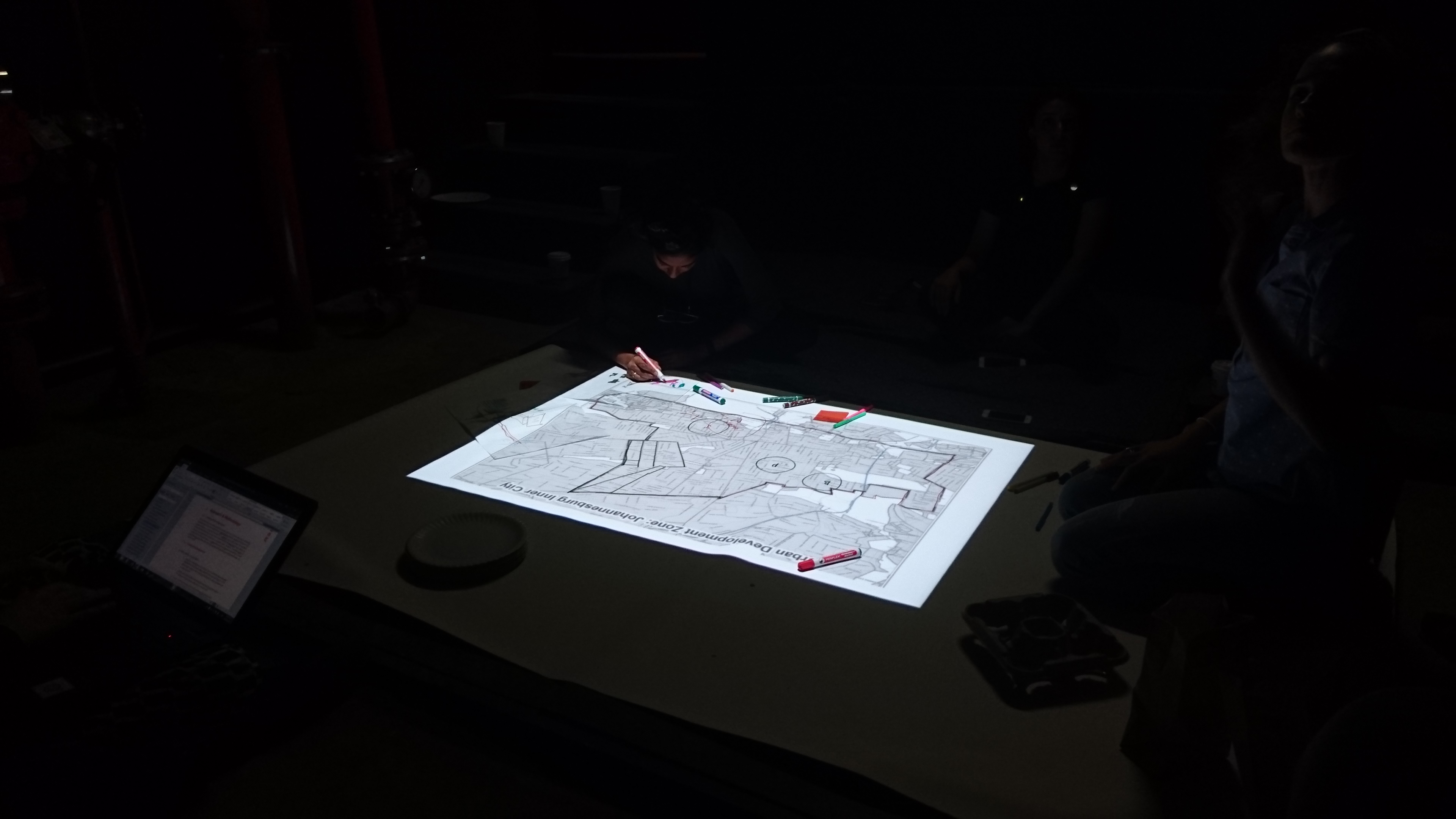
In December 2022, an online symposium was organized to support the upcoming 2023 Change by Design workshop in Johannesburg. The symposium aimed to bring together partners, stakeholders, and participants from the broad network, making participation easy and accessible. The symposium was split into two parts: the Workshop Participants Session and the Public Symposium. The Public Symposium had two panels, the first discussing the challenges faced by people living in informal settlements in the city and the second focusing on community-led design and planning agenda.

On January 22, 2023, the 2023 Change by Design workshop began with an opening session, bringing together all participants to encourage reflection and engagement through a series of reflective questions. The following day, the workshop participants took a city tour that provided them with a rich and insightful experience, fostering a deeper appreciation of the challenges and opportunities that arise from designing for social change in the South African context.

On Tuesday, the participants embarked on their first day of fieldwork in Jumpers and Bertrams. The experience highlighted the importance of understanding the social dynamics that underpin settlements like Jumpers and the need for a collaborative approach to designing interventions that can create positive change in these communities.

The third continued the multi-scalar approach, focusing on the micro, meso, and macro levels of the sites to understand shared systems, spaces, and narratives.

The fourth day was the final day of fieldwork, providing an opportunity to tie up any loose ends in the exercises and ensure that all participants were connected to the project’s future.

The fifth and final event was an important moment for the workshop as various project stakeholders came together to creatively and collaboratively design actionable next steps towards the project’s aims and needs. The event was open to city officials, academic partners, NGOs, residents, and anyone interested in the project’s topics and was held at the School of Architecture and Planning in the University of the Witwatersrand’s John Moffat building.

Overall, the final event was a crucial moment in the workshop as it provided space for various project stakeholders to come together, share insights, and collaborate on actionable next steps towards the project’s aims and needs.

REFLECTION & WAY FORWARD

WORKSHOP OUTCOMES

The Change by Design 2023 Workshop was an important step towards addressing the complex challenges surrounding housing justice in Johannesburg, with a particular focus on inner-city informal settlements and occupied buildings. One of the key objectives of the workshop was to support community facilitators in their training skills and to help make and record the evidence of the work that various project partners have been doing for years. The workshop brought together stakeholders from various backgrounds, including grassroots networks, NGOs, academic institutions, and government officials, to collaborate and share knowledge.

The workshop was organized into three main groups, each focusing on different scales of the sites in Bertrams and Jumpers. The groups explored a range of issues, including collaborative networks, multi-stakeholder approaches, and the difficulty of translating policy into practice. The lack of a policy for upgrading occupied buildings and limited options for community-led housing were identified as significant challenges. As a result, the workshop provided several recommendations for the future, including a focus on upgrading occupied buildings, addressing knowledge gaps around affordability and physical conditions, enhancing the capacity of grassroots activists, and promoting knowledge exchange beyond Johannesburg.

The workshop also served as a platform for stakeholders to collaborate and share their experiences, strategies, and best practices. The event concluded with a presentation of initial work and an open discussion about potential ways forward for these sites. Attendees included representatives from grassroots networks, NGOs, and academic institutions. The workshop supported community facilitators in their training skills and helped make and record evidence of the work that various project partners have been doing for years. Overall, the workshop was an important step towards advancing housing justice in Johannesburg and promoting sustainable solutions for inner-city informal settlements and occupied buildings.

NEXT STEPS

The workshop brought together stakeholders to collaborate and share experiences, strategies, and best practices and supported community facilitators training. The next steps will involve building on this momentum and working collaboratively towards sustainable solutions for inner-city informal settlements and occupied buildings.

The next steps following the Change by Design 2023 Workshop will involve implementing recommendations made between the project team in order to advance housing justice in Johannesburg, with a focus on policy dimensions around upgrading occupied buildings, addressing knowledge gaps in practice, enhancing grassroots activists’ capacity, and promoting knowledge exchange.

ACC: Southern Urbanism Master’s Studio 2022

I was fortunate to have received an invitation to be a guest Studio Lead at the African Center for Cities in 2022, where I had the opportunity to teach one of their City Research Studios as part of the Masters in Southern Urbanism programme at the University of Cape Town.

The City Research Studios are an integral component of the programme, providing students with an immersive and practical learning experience that enables them to develop real-world solutions to urban challenges. As the instructor of the City Research Studio, I was responsible for guiding and supporting the students in their research and design project, as well as facilitating group discussions and critiques of their work. It was an exciting and fulfilling experience to work with the talented and motivated students, and to be part of a community of scholars and practitioners who are dedicated to advancing our understanding of the complex urban issues facing cities in the global South.

The MPhil in Southern Urbanism program aims to address the unique environmental, economic, and social challenges posed by the unprecedented increase in urban population growth in Asia and Africa. The program challenges traditional assumptions of Urban Studies dominated by Global North theories and encourages critical engagement and plural perspectives with a Global South viewpoint. The full-time 18-month program offers a combination of guided learning, experimentation, and independent thesis research, leading to a minor dissertation based on individual fieldwork. The program curriculum includes coursework and a City Research Studio, interdisciplinary urban modules, and urban-focused electives. The program is taught in English and supervised by expert faculty in the University of Cape Town’s Humanities, Engineering and Built Environment, or Science faculties.


I worked closely with Professor Anna Selmeczi, Dr. Nobhukhosi Ngwenya alongside Professor Edgar Pieterse who oversee the course and conceptually arrange the program. The literature for this course focused on homelessness in Cape Town, South Africa. Core readings include The Inkathalo Conversations Phase One Comprehensive Report, The Cost of Homelessness in Cape Town, and Exploring the Lived Experiences of Homelessness in a Cape Town Suburb. Additional resources cover various aspects of homelessness in Cape Town, including policies, statistics, and the impact on individuals. Other readings examine homelessness in South Africa and other regions around the world. The literature provides insights into the causes and consequences of homelessness, as well as potential approaches to address the issues involved.

2022 Studio Group:

Rebekka Ammann
Moreblessing Chipangura
McDonald Galimoto
Leta Honegger
Eric Hubbard
Lateefah Joseph-Rajab
Mukundwa Makabane
Gladys Mirugi-Mukundi
Shakira Qwabe
Anna Zweifel


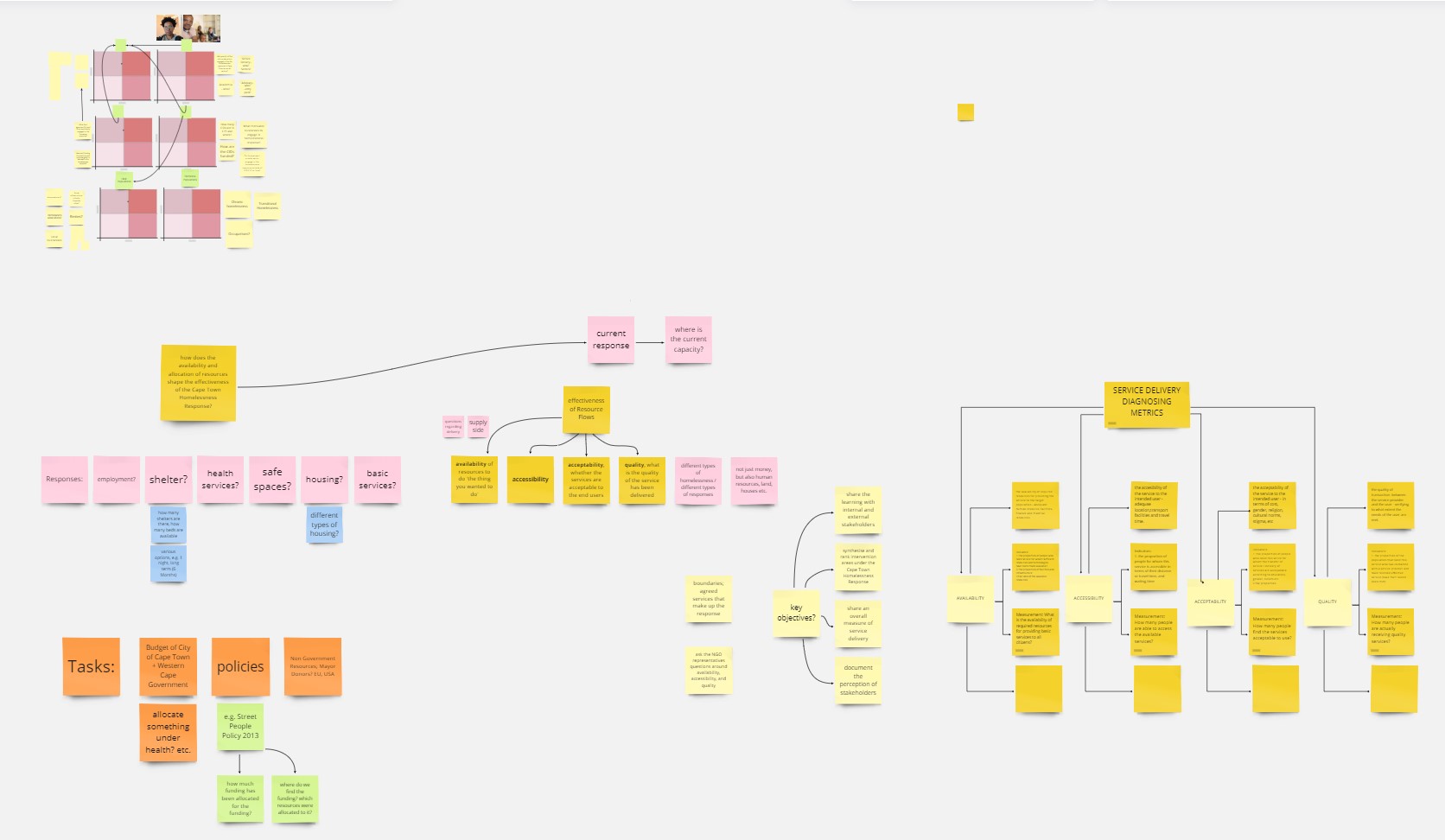
As the studio lead for CRS 3, my role was to guide the participants in their exploration of systems mapping as a tool to address complex urban problems, with a focus on homelessness in Cape Town. Throughout the studio sessions, we engaged with key stakeholders, visited sites, and had discussions with experts to better understand the issue at hand.

In session one, we welcomed participants and clarified expectations for the studio. We learned about the state of homelessness in South African cities from expert James Clacherty and Brian Adams from the Economic Development Partnership. We also received an introduction to systems mapping and created individual maps of homelessness in Cape Town.

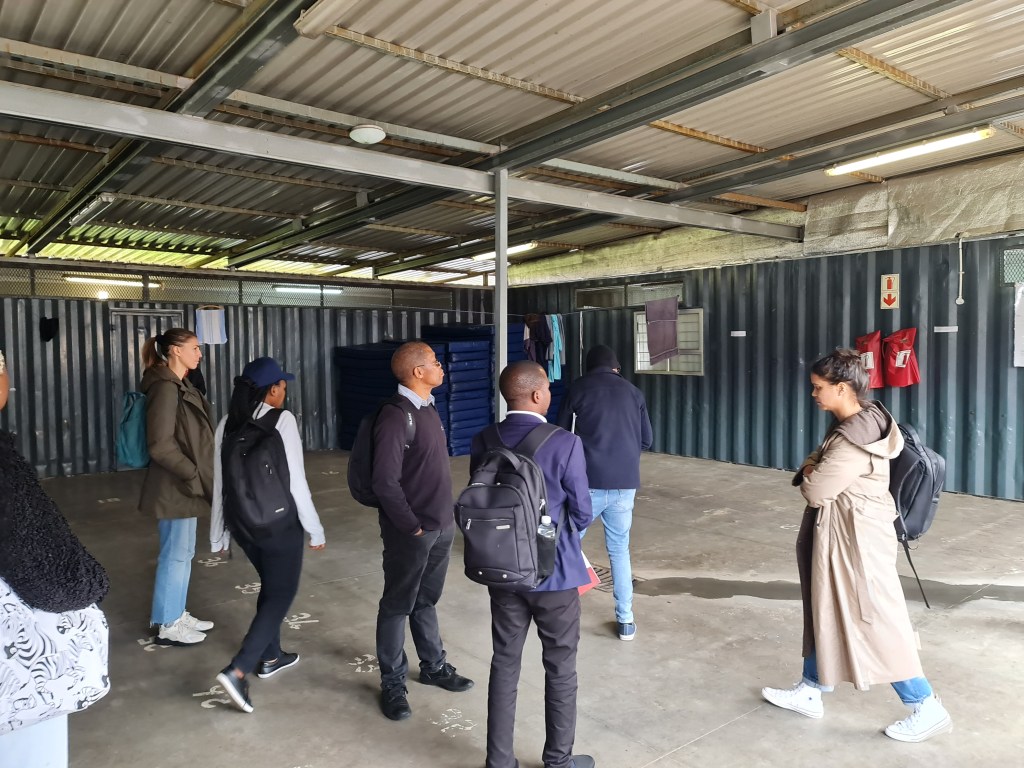
In session two, we had site visits to various locations related to homelessness, coordinated by Nobukhosi Ngwenya and Brian Adams. We also discussed our individual systems maps from the previous session and identified a process to produce a group map.

In session three, we continued our exploration of systems mapping with an introduction to the tool and group-based application of its steps, facilitated by myself

In session four, we discussed the six conditions of systems change and had a panel discussion with various stakeholders about the challenges associated with homelessness and potential solutions. We also revisited and refined our group systems map.

In session five, we focused on the implementation of solutions based on our systems map, and each group produced an implementation task list for a specific sector and a series of visual summaries of the systems thinking tools.


The City Research Studio on Homelessness provided us with a valuable opportunity to explore the complexities of addressing the issue of homelessness in our communities. Homelessness is a wicked problem that requires a systems-level approach to understand and address the many factors that contribute to it. Through this course, we learned about the various societal challenges involved in tackling homelessness, including the lack of affordable housing, mental health and addiction issues, poverty, and social stigma.

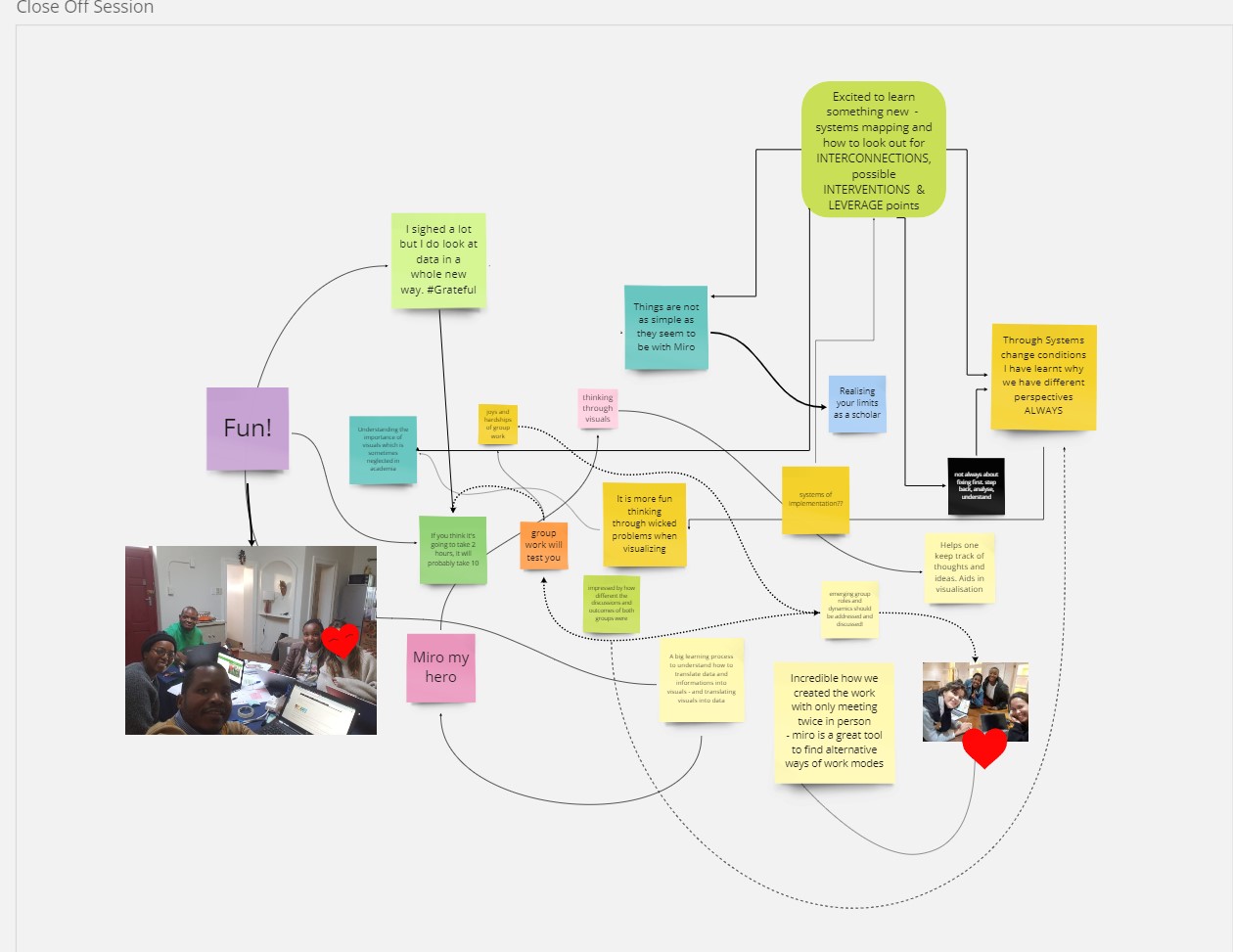
One of our key takeaways from this course was the importance of using systems thinking to address wicked problems like homelessness. By understanding the interconnectedness of various factors, we can better design solutions that address root causes rather than just symptoms. The use of visual tools, such as mind maps and system maps, was also beneficial in visualizing the complexity of the issue and identifying potential leverage points for change.

Another valuable aspect of the City Research Studio was the focus on design thinking methods and the inclusion of diverse groups in the process. Design thinking allowed us to approach the issue of homelessness from a human-centered perspective and to develop solutions that address the needs of those experiencing homelessness. The inclusion of diverse groups, including those with lived experience of homelessness, provided important insights and perspectives that would have been missed otherwise.

The course also highlighted the many complications and challenges of tackling wicked problems like homelessness. The issue is deeply entrenched and complex, and there are no easy solutions. The political and economic realities of our society also pose challenges, as addressing homelessness requires significant resources and political will.

BUDD DPU Practice Engagement: Sheffield Otherwise

As part of my work with the DPU’s BUDD Programme, I assisted in the digital structuring and communication of their yearly Overseas Practice Engagement. Due to the limitations of the pandemic, this year it was held in Sheffield, England with Resolve Collective, Gut Level and SADACCA with the support of Urban Ark at Sheffield Hallam University.

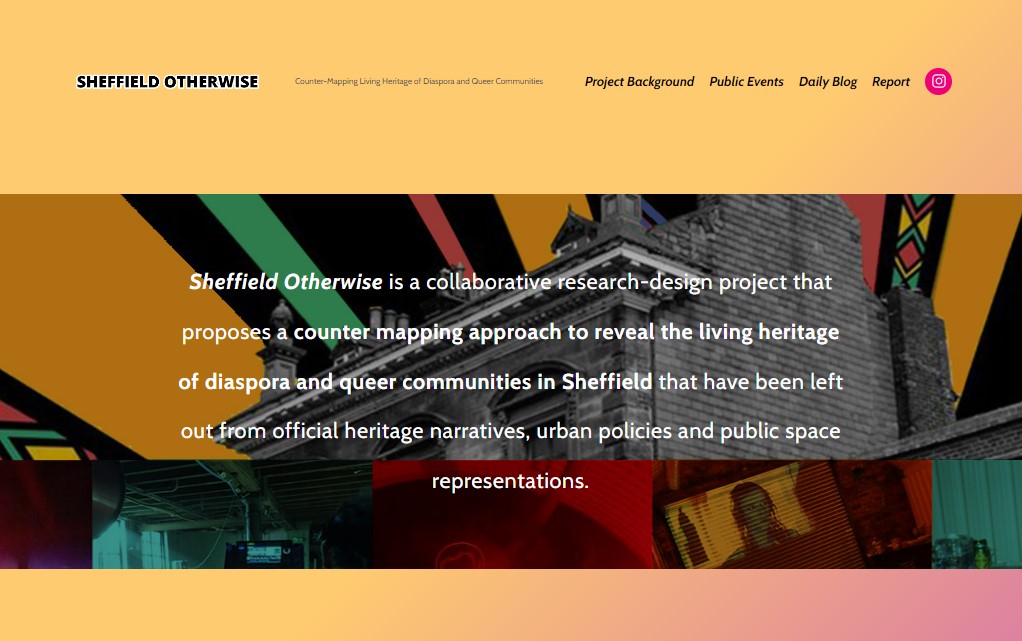
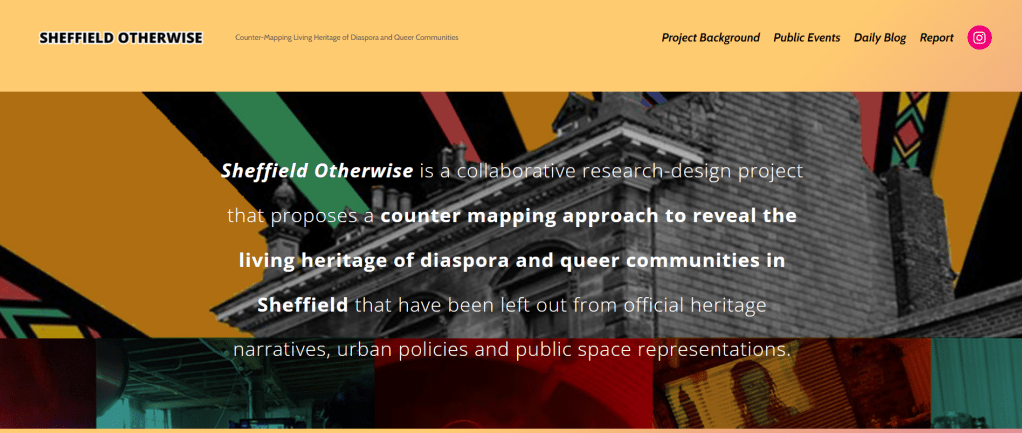
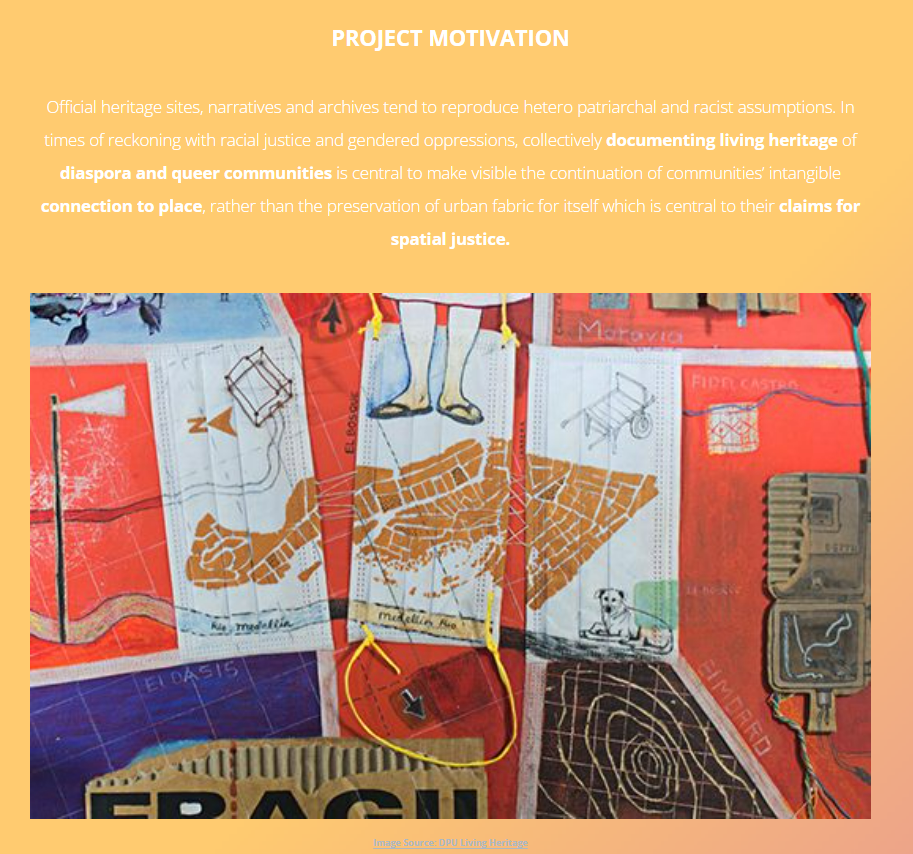
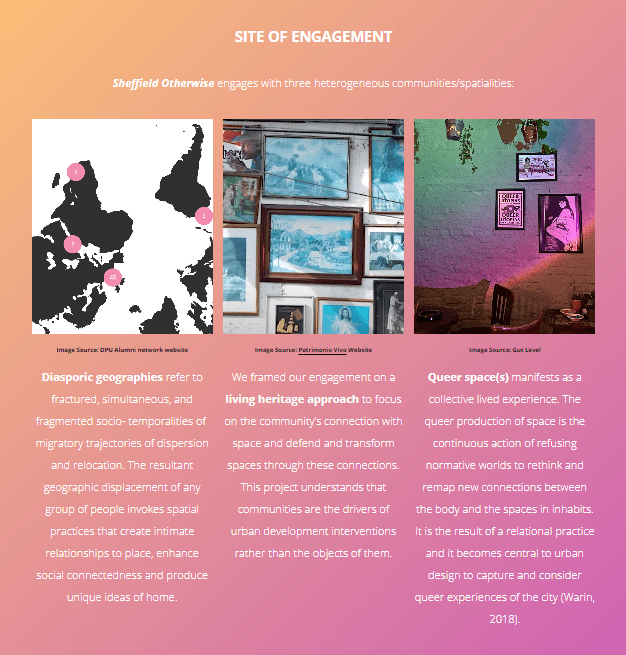
Project Website Summary

The project was developed and executed by Dr. Catalina Ortiz, Dr. Natalia Villamizar, Dr. Giorgio Talocci and Laia Fernandez Garcia from the DPU, with myself and Nihal Hafez in support.

Project Thematics Areas (developed by BUDD Tutors & shared from project website)

The short and cussed participative engagement was broken into 4 thematic lenses that had students working closely with the project partners to engage with a series of action research questions and co-design exercises in supporting the work of those involved.

Project Background (developed by BUDD Tutors & shared from project website)
Projects Aims (developed by BUDD Tutors & shared from project website)
Project Focus (developed by BUDD Tutors & shared from project website)

The week was supplmented by a series of public events that brought together a host of different local actors, practitioners and people from across Sheffield.

Public Events (developed by BUDD Tutors & shared from project website)

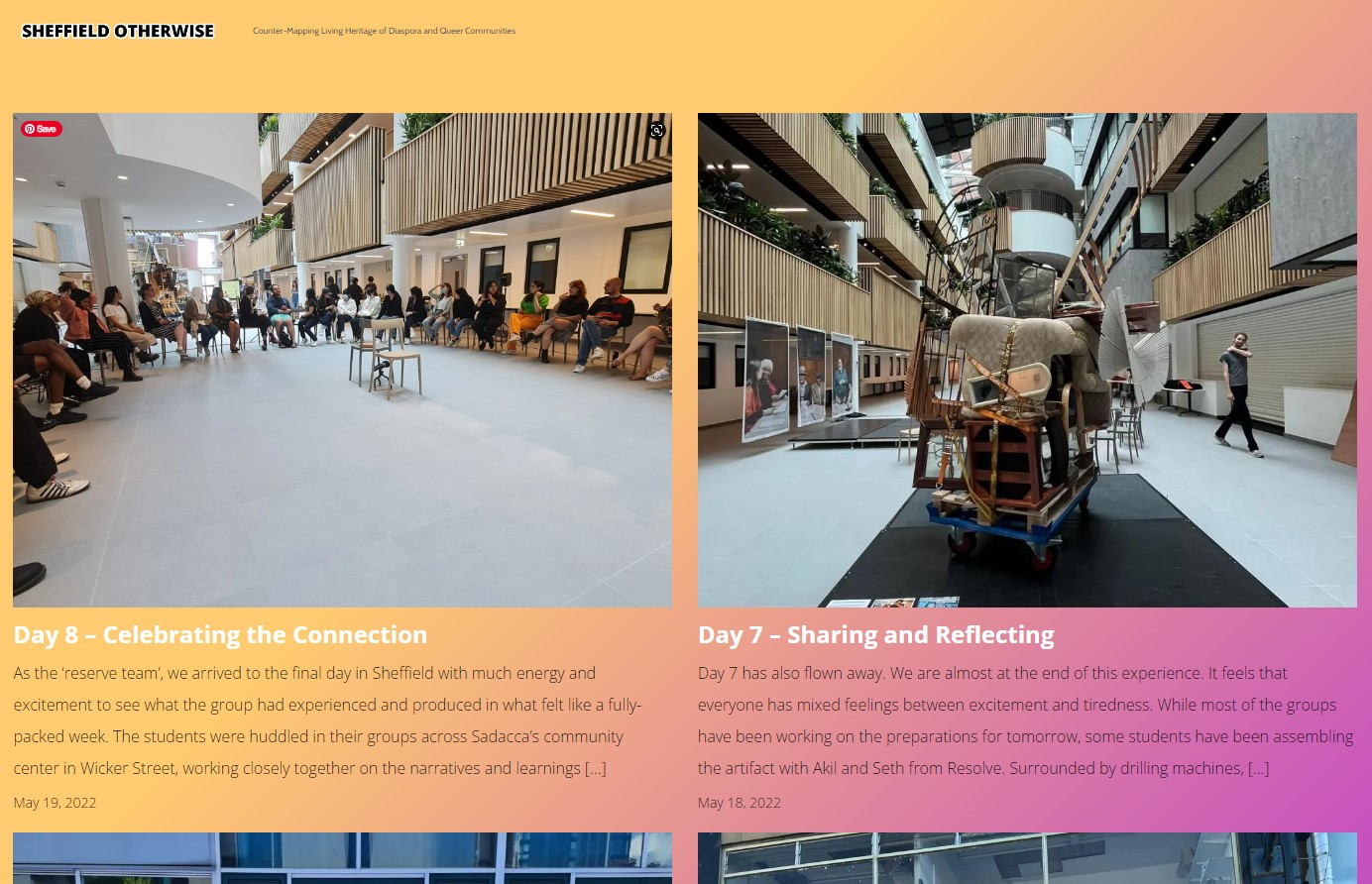
The week was packed with engagements, and had the students staying and working on site each day and each evening.

Project Background (developed by BUDD Tutors & shared from project website)

The workshops was carefully documented in both a Daily Blog, as well as a live Instagram account, allowing the project partners involved to share and connect through the week’s activities.

With a final project report that shared and covers all of the student research and design proposal work which was shared and made available to all involved in the project, and publicly accessible here.

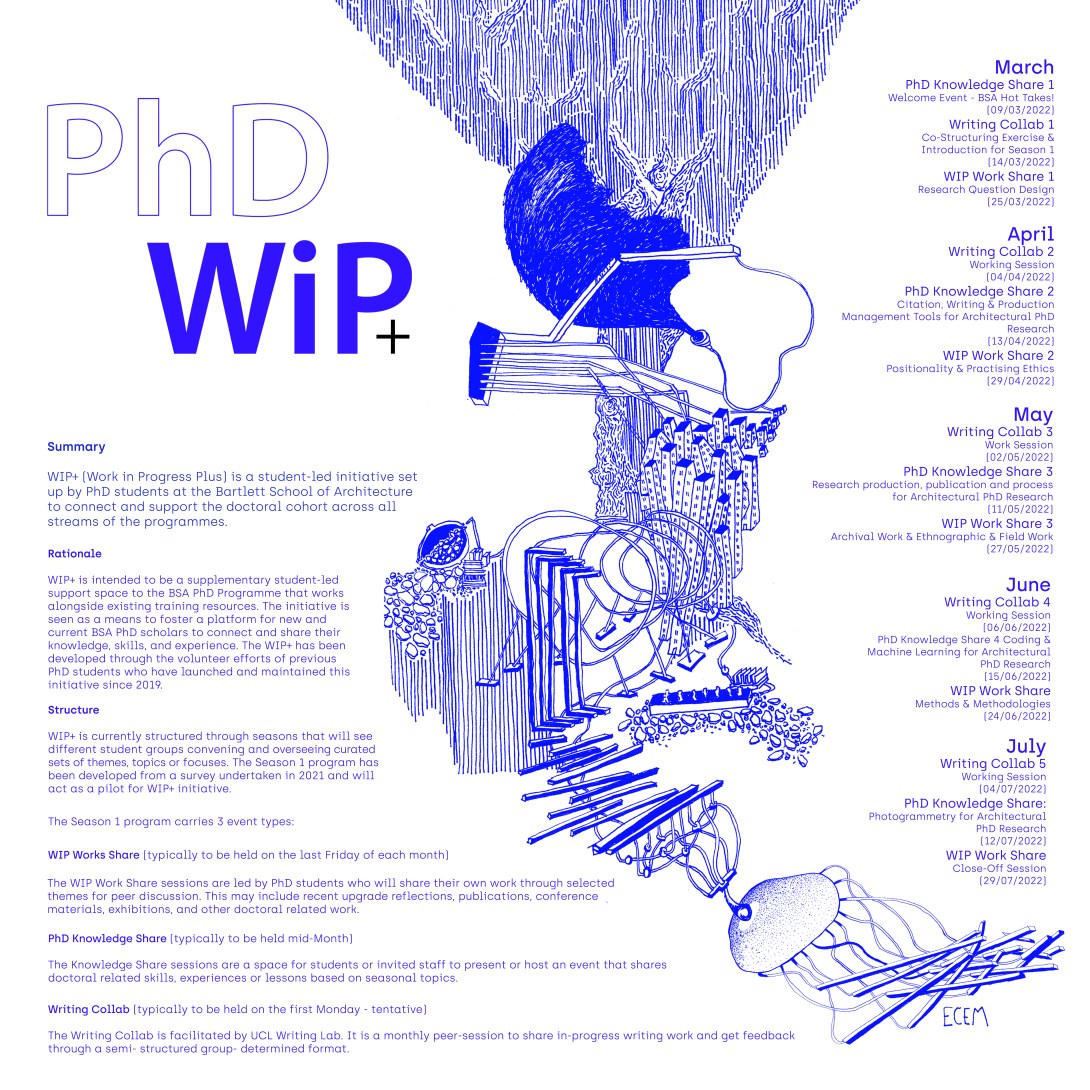
WIP+ Bartlett School of Architecture PhD Support Programme

In response to effects the Covid 19 Lockdowns has on the doctoral culture here at UCL, I have played a part in leading an initiative, alongside Zahira El Nazer and a Committee of students, that aimed to bring the PhD Cohort together in support of peer learning and training here at the Bartlett School of Architecture.

This initiative was started a few years ago by previous PhD students (acknowledged below) with the amazing graphic design by our fellow PhD candidate Ecem Egrin.

Graphic Work: Ecem Egrin

“WIP+ (Work in Progress Plus) is a student-led initiative set up by PhD students at The Bartlett School of Architecture to connect and support the doctoral cohort across all streams of the programme.

WIP+ is intended to be a supplementary student-led support space to The Bartlett PhD Programme that works alongside existing training resources. The initiative is seen as a means to foster a platform for new and current PhD scholars to connect and share their knowledge, skills, and experience. The WIP+ has been developed through the volunteer efforts of previous PhD students who have launched and maintained this initiative since 2019. 

Graphic Work: Ecem Egrin

WIP+ is currently structured through seasons that will see different student groups convening and overseeing curated sets of themes, topics or focuses. The Season 1 program has been developed from a survey undertaken in 2021 and will act as a pilot for WIP+ initiative. The 2022 programme has been supported by funding from both The Bartlett School of Architecture PhD Programme and The Bartlett Faculty Doctoral Initiative Fund Award. 

All events are recorded and available on the Teams Group along with all documented resources and links. Join the Teams Group to be involved. There have already been several sessions this year to catch up on the teams site. The remaining sessions are detailed below. 

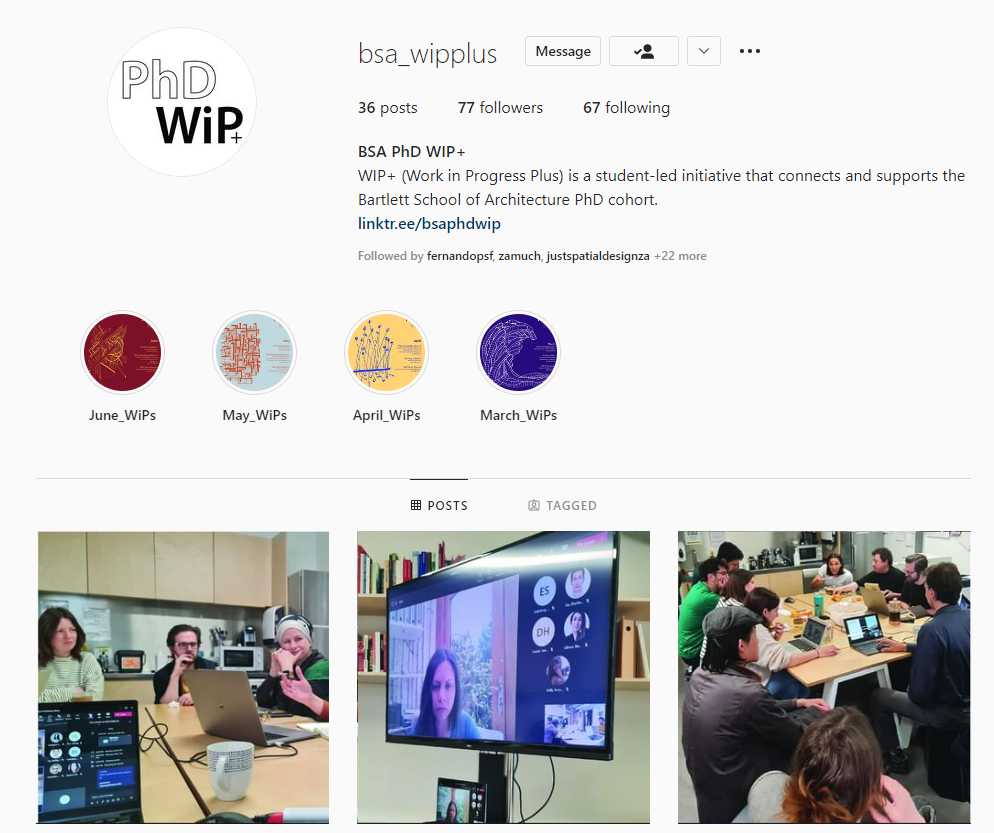
https://www.instagram.com/bsa_wipplus

WIP+ 2022 Season 1 Committee: Jhono Bennett, Zahira El Nazer, Kirti Durelle, Sepehr Zhand and Tumpa Fellows.

WIP+ Speakers: Kerry-Jo Reilly, Ana Wild, Zahira El Nazer, Sepehr Zhand, Stelios Giamarelos, Nathaniel Telemaque, Alberto Fernández González, Thomas Parker, Danielle Hewitt, Sol Perez Martinez, Saptarshi Sanyal, Ram Shergill, Omar Abolnaga, Petra Seitz, Noami Gibson, Jhono Bennett, Keri Culhane, Olivier Bellfamme, Steph Fell, Zoe Quick, Dr Dasha Moschonas and Dr. Beatrice De Carli

WIP+ Volunteers and Support Team: Ecem Egrin (Graphic Design), Thomas Parker, Jonathan Tyrell, Danielle Ovalle Costal, Danielle Hewitt, Thomas Dyckhoff, Kirti Durelle, Tumpa Fellows, Mine Sak Acur, Melih Kamaoğlu

Former WIP+ Leaders & Founders: Danielle Hewitt, Aisling O’Carrol, Sol Perez Martinez and Claire Tunnacliffe

Diasporic Geographies: voices from the south(s)

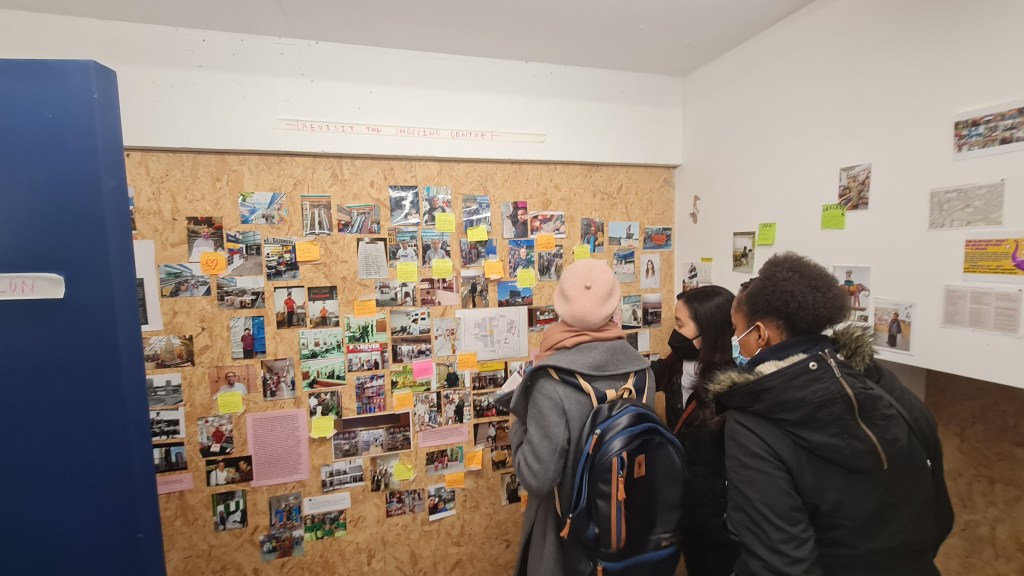
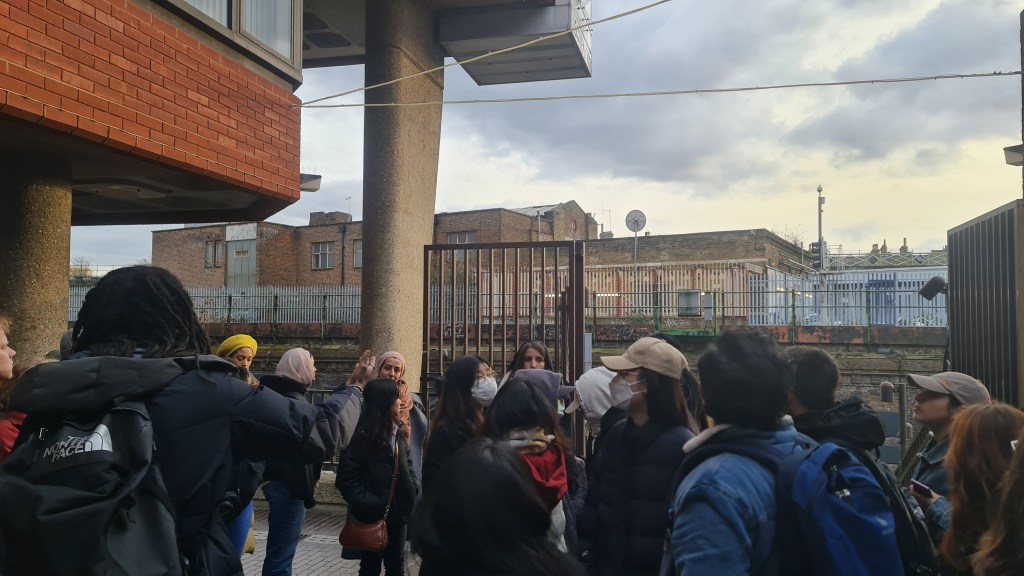
Within the Urban Design Otherwise Seminars conceptualised and led by Dr. Catalina Ortiz, I was tasked to work with the MSc Building and Urban Design in Development team in organising (led by Laia Gemma Garcia Fernandez ) a walking seminar with Latin Elephant, David Mcewen and Resolve Collective.

While diaspora speaks to ideas of dispersion or forced relocation, the resultant geographic displacement of any group of people invokes spatial practices that create intimate relationships to place, enhance social connectedness and produce unique ideas of home. Diasporic living practices typically empower and support actions of solidarity and interconnectedness as well as the assertions of cultural self and collectivism that tend to travel with people through global manifestations of community. Very often, these practices create friction within existing socio-spatial systems and can result in strong collective actions around identity, politics, and agency in relation to belonging.

This session will host an immersive and interactive city-walk-talk format that will be led by local voices and actors in spatial making from London’s South(s). Through walking, talking, and engaging with the people and places of this dynamic urban center, we will be exposed to a unique juxtaposition of temporality and permanence, of preservation and innovation and understanding as well as response that are present in the South(s) of London’s diasporic geographies.
 
In this session we will join a small local selection of spatial actors from Elephant and Castle as well as Brixton.

Taken from introduction text for the event: https://www.ucl.ac.uk/bartlett/development/events/2022/feb/diasporic-geographies-voices-souths

UCL Doctoral Position: TACK Network

After more than 2 years of stepping out of my role at 1to1, my teaching work at the University of Johannesburg as well as my practice work in South Africa I will be beginning a PhD position at the University College London’s Bartlett School of Architecture. This position is supported by the Marie Sklodowska-Curie Actions EU funding through the TACK/ Communities of Tacit Knowledge Network and will see me engaging with a dynamic and committed network of scholars:

‘TACK / Communities of Tacit Knowledge: Architecture and its Ways of Knowing’ is a newly funded Innovative Training Network, as part of the Marie Sklodowska-Curie Actions within the European Framework Program Horizon 2020. It trains young researchers in understanding the specific knowledge that architects use when designing buildings and cities. TACK gathers ten major academic institutions, three leading cultural architectural institutions as well as nine distinguished architecture design offices. Collaboratively these partners offer an innovative PhD training program on the nature of tacit knowledge in architecture, resulting in ten parallel PhD projects.

The research program consists of ten PhD projects, which are pursued by ten PhD candidates, hosted by ten academic partners. While the individual PhD projects constitute independent doctoral projects in their own right, nine of these can (in terms of content) be grouped in three clusters:

  1. Approaching Tacit Knowledge: These PhD projects approach tacit knowledge from historical and theoretical perspectives
  2. Probing Tacit Knowledge: These PhD projects examine tacit knowledge through concrete cases
  3. Situating Tacit Knowledge: These PhD projects situate tacit knowledge in architecture by developing innovative concepts and methods

I have been placed in the Situating Tacit Knowledge Cluster under Dr. Peg Rawes under the Values Project.

” The three PhD candidates working on this research cluster will develop new theoretical concepts and new heuristic approaches to examine how tacit knowledge is understood in architectural practice and how it can be made explicit and communicated. They will investigate how value-systems that are inherent to specific cultural contexts (for instance concerning the public role of the architect) affect the perception and reception of tacit knowledge in architecture, and examine how self-reflexivity can sharpen the understanding of the functioning of tacit knowledge.”

The 3 year programme is jam packed with conferences, symposia and meetings and actively encourages and support mobility across the network, including a practical secondment as well as secondment to cultural institute in the network.

It has been a long journey to reach this point, and I am grateful to the individuals and institutes who supported me in this difficult transition period as well as those (who have been personally acknowledged these last months) who played such an important role in shaping my research and practice through the opportunities offered. Thank you.

Inclusive Cities: Scaling Up Participation in Urban Planning

Through 1to1 I have been very fortuante to be a part of this global network project. The Initaitve was held over 3 years and supported research, learning and engagements across South Africa, Zimbabwe, Kenya and Manchester, United Kingdom.

See: https://www.gdi.manchester.ac.uk/research/groups/global-urban-futures/scaling-up-participation-in-urban-planning/ for all details. Summary below:

Goal: 

In recent decades the world has experienced unprecedented urban growth. According to the United Nations 4 billion people, or 54% of the world’s population, lived in towns and cities in 2015. That number is expected to increase to 5 billion by 2030.

Urban growth has outpaced the ability of many governments to build infrastructure and, in many towns and cities in the global South, provision for housing is inadequate. Consequently one in three urban dwellers live in informal settlements. Issues of insecure tenure, poor access to basic services, and insecure livelihoods are all prevalent. Although local government may have the desire to improve the situation they are, in many cases, under-capitalised and under-capacitated. Existing planning legislation and practices remain incapable of resolving such issues therefore local residents try and resolve these themselves. Their efforts are, however, fragmented and localised.

The 2030 Agenda for Sustainable Development and the resulting Sustainable Development Goals vow to end poverty, to achieve gender equality and ensure liveable cities. Multi-disciplinary approaches that build on local action and create strong partnerships are needed in order to advance initiatives and to address the UN Sustainable Development Goals to ensure the availability and sustainable management of water and sanitation for all and to make cities and human settlements inclusive, safe, resilient and sustainable.

This commitment to ‘leave no-one behind’ highlights the importance and strengthens the significance of citizen involvement in urban development. Academics seek to contribute to new solutions and approaches to problems faced by the residents in informal settlements. Universities have an important role in generating, analysing and monitoring data that can be used by policy makers. However this should be done in collaboration with local government, local residents and organisations. Citizen involvement and public participation in policy-making and programming should be nurtured and encouraged.

Aims and objectives:


The network aims to develop the knowledge required to move from participatory community-led neighbourhood planning to city-scale planning processes. The aims and objectives of the project are critical to achieving inclusive urban futures, these include:

-Develop frameworks that build on effective approaches of community-led planning for informal settlement, upgrading at the neighbourhood level, and then scaling these to the city level.
-Locate these frameworks within traditions of alternative planning including participatory co-productive planning, participatory planning and action planning thus strengthening the critical mass of people-centred approaches supporting inclusive urban development. This component will elaborate why grassroots organisations make a substantive contribution to inclusive urban development and the achievement of Sustainable Development Goals.
-Develop a framework that enables the integration of community understandings and innovations with academic and professional knowledge.
-Achieving these objectives requires a combined effort from academics and civil society agencies. While academic researchers encourage civil society agencies to engage meaningfully and substantively, it is difficult to achieve this within academic research programmes. By creating a formal network the opportunity for engagement is created, to deliver on a set of shared objectives and to achieve the strengthening of relations between individuals and agencies.

The network:

Professor Diana Mitlin, Managing Director of the Global Development Institute at The University of Manchester, is the project lead.
Dr Philipp Horn, Honorary Research Fellow at the University of Manchester’s School of Education, Environment and Development and Postdoctoral Research Associate at The Open University, provides research support to the project.
The network is a co-productive knowledge partnership between civil society action research agencies and academic departments. The project combines professionals and academics with a commitment to substantive change and experience at local level.

This network is funded by the Leverhulme Trust.

SDI-affiliated civil society alliances of organised groups of low-income residents are working in partnership with academic institutions. Their participatory efforts at neighbourhoods have been presented as best-practice examples in urban poverty reduction. These alliances are:

Dialogue on Shelter Trust, Zimbabwe
Slum Dwellers International Alliance, Kenya
The network comprises committed partners that have been directly involved in previous participatory planning processes, these include:

The University of Manchester (UK)
The Faculty of Art Design and Architecture at the University of Johannesburg (South Africa)
CURI at The University of Nairobi
Faculty of the Built Environment at the National University of Science and Technology (Zimbabwe)
Design Society Development DESIS Lab based at Faculty of Art, Design and Architecture (FADA), The University of Johannesburg
1to1 – Agency of Engagement


All of these departments have a track record on urban development planning. The selected individuals within these departments have established connections with low-income communities, planners and urban professionals within their respective countries as well as sub-Saharan Africa. They have previously conducted practice relevant research around topics such as informal settlement upgrading, service provisioning and participatory community planning.

See: https://www.gdi.manchester.ac.uk/research/groups/global-urban-futures/scaling-up-participation-in-urban-planning/ for all details.

Designing With People – CEPT

In late 2018, Dr. Jigna Desai of CEPT University offered me an opportunity to teach her semester course at the Faculty of Architecture in Ahmedabad. This came about as a spin off of the 3 year professional mobility hosted by Sheffield University, the University of Johannesburg and Nanjing University.

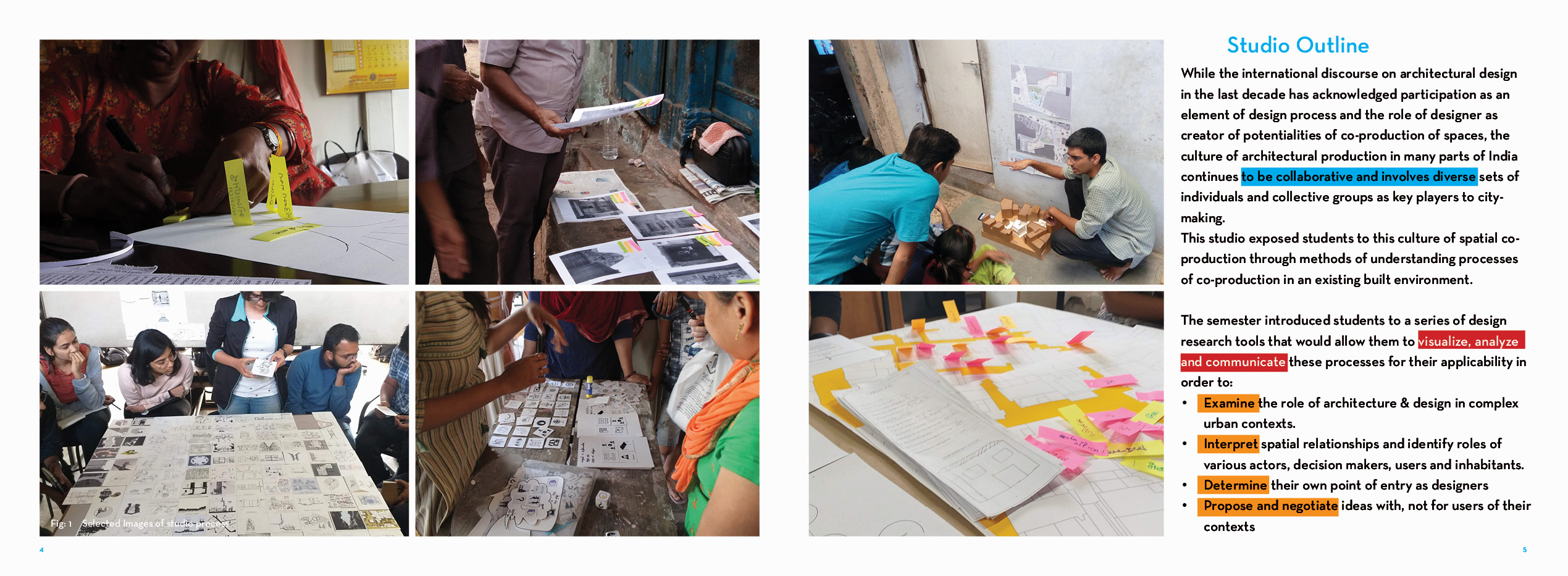
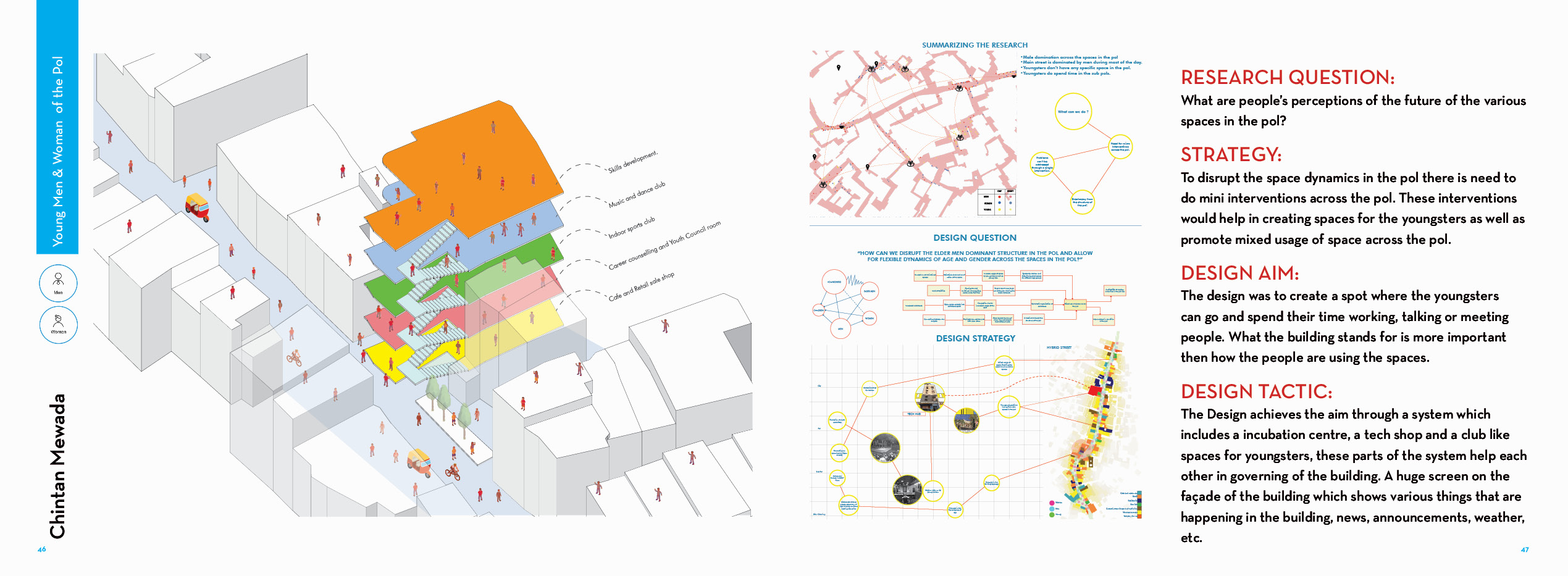
Jigna had been running a design module each year in Mandvi Ni Pol within the old city of Ahmedabad and allowed me to bring my own take  ‘Designing with People’.

DWP_Studio Book2DWP_Studio Book3

The opportunity allowed me to structure a module that was critical, reflective, speculative and grounded in both participatory research as well as design methods.

DWP_Studio Book4DWP_Studio Book5DWP_Studio Book6DWP_Studio Book7

I worked closely with Harshil Parekh, the studio assistant, and we designed the course (with the Mandvi Ni Pol leadership) to be as supportive and mutually beneficial as possible. The limits of such work was crucial to recognize and was done early on in the process. (see below)

DWP_Studio Book8DWP_Studio Book9DWP_Studio Book10

The course actively challenged the idea of participatory work as ‘consensus building’ and sought to build a platform for dialogue of dreaming and discussion with residents. The program equipped students with deep exposure to field work, critical self-reflection techniques and discussions on demographic positionality in such work.

DWP_Studio Book11DWP_Studio Book12

We used action learning, visual thinking and UserX methods of working between ourselves and the resident User Groups we engaged with. DWP_Studio Book13DWP_Studio Book14DWP_Studio Book15DWP_Studio Book16

We co-designed a series of Studio Tools and used them across the semester. This was critical in building a way of working while bridging the difficult gap of participatory research into participatory design(see below). DWP_Studio Book17DWP_Studio Book18DWP_Studio Book19DWP_Studio Book20

The students responded amazingly and put together a comprehensive and challenging body of work that was well received by critics and the residents.

DWP_Studio Book21DWP_Studio Book22DWP_Studio Book23DWP_Studio Book24DWP_Studio Book25DWP_Studio Book26DWP_Studio Book27DWP_Studio Book28DWP_Studio Book29DWP_Studio Book30DWP_Studio Book31DWP_Studio Book32DWP_Studio Book33DWP_Studio Book34

A full Gujarati ‘hand over’ booklet titled Dreaming with Mandvi Ni Pol was put together and given to the leadership in our final engagement with the Pol. The students additionally met with their individual usergroups and underwent a smaller level ‘handover’ DWP_Studio Book35DWP_Studio Book36

Dr Jigna Desai is still working in the Pol and continues this work (see the orange thread) within her larger offering to the old City of Ahmedabad.

Design as Utility: At the Intersection of Technical & Social: Yale University

*Cover Image: The presentation of Orli Setton & Olwethu Jack on Socially Engaged Design Work

*Reposted from 1to1 – Agency of Engagement: http://1to1.org.za/portfolio-item/yale-critical-action-workshop/

1to1 alongside Orli Setton, Olwethu Jack, Simnikiwe Xanga and Melilizwe Gqobo provided a 2 day facilitated workshop experience for a visiting group from Yale’s School of Management under Jessica Helfland’s Design as Utility: Luxury, Waste and Sustainability Practicum. The workshop sought to make a critical space for local citizen experts to co-produce a set of values and ways of working with visiting international groups that would not be exploitative to the locals or reductive in it’s inquiry.

The workshop produced a set of thinking tools on top of the facilitated learning that took place.


Killarney Socio-Spatial Mapping

*Reposted from 1to1 – Agency of Engagement: http://1to1.org.za/portfolio-item/killarney-neighbourhood-mapping/

 1to1 alongside our collaborating partner, Urbanists for Equity, were commissioned to develop a body of work that both unpacked the socio-spatial nature of Killarney, but also supported the social cohesion of the various groups that make up the diverse neighborhood through small scale research interventions.

The team worked together with University of Johannesburg students to facilitate and generate the full package of work over the 7 week period.

Backstory – Joburg

Backstory began as an explorative research investigation into the idea of Spatial Ineqaulity in Johannesburg. The initial project collective was led by Liz Ogbu, Counterspace Studio and 1to1 – Agency of Engagement under the title of ‘ the Unjust City’ .

The project took form between 2016 – 2018 as a collaboratively built installation in Johannesburg’s inner-city neighborhood of Braamfontein, where stories and city-data were unpacked through a series of workshops, discussions, and exhibitions. The installation aimed to bring together different city inhabitants and make this confluence of data and stories more accessible to those who use, manage and make the city.

The installation sought to draw in a diverse group of voices to engage with the narratives of spatial justice at play in Johannesburg. The installation space was developed by the Back Story Collective and offered as a platform to selected (typically students, local actors and activists) researchers who were working on topics of spatial injustice.

www.backstoryjoburg.wordpress.com