ACC: Southern Urbanism Master’s Studio 2022

I was fortunate to have received an invitation to be a guest Studio Lead at the African Center for Cities in 2022, where I had the opportunity to teach one of their City Research Studios as part of the Masters in Southern Urbanism programme at the University of Cape Town.

The City Research Studios are an integral component of the programme, providing students with an immersive and practical learning experience that enables them to develop real-world solutions to urban challenges. As the instructor of the City Research Studio, I was responsible for guiding and supporting the students in their research and design project, as well as facilitating group discussions and critiques of their work. It was an exciting and fulfilling experience to work with the talented and motivated students, and to be part of a community of scholars and practitioners who are dedicated to advancing our understanding of the complex urban issues facing cities in the global South.

The MPhil in Southern Urbanism program aims to address the unique environmental, economic, and social challenges posed by the unprecedented increase in urban population growth in Asia and Africa. The program challenges traditional assumptions of Urban Studies dominated by Global North theories and encourages critical engagement and plural perspectives with a Global South viewpoint. The full-time 18-month program offers a combination of guided learning, experimentation, and independent thesis research, leading to a minor dissertation based on individual fieldwork. The program curriculum includes coursework and a City Research Studio, interdisciplinary urban modules, and urban-focused electives. The program is taught in English and supervised by expert faculty in the University of Cape Town’s Humanities, Engineering and Built Environment, or Science faculties.


I worked closely with Professor Anna Selmeczi, Dr. Nobhukhosi Ngwenya alongside Professor Edgar Pieterse who oversee the course and conceptually arrange the program. The literature for this course focused on homelessness in Cape Town, South Africa. Core readings include The Inkathalo Conversations Phase One Comprehensive Report, The Cost of Homelessness in Cape Town, and Exploring the Lived Experiences of Homelessness in a Cape Town Suburb. Additional resources cover various aspects of homelessness in Cape Town, including policies, statistics, and the impact on individuals. Other readings examine homelessness in South Africa and other regions around the world. The literature provides insights into the causes and consequences of homelessness, as well as potential approaches to address the issues involved.

2022 Studio Group:

Rebekka Ammann
Moreblessing Chipangura
McDonald Galimoto
Leta Honegger
Eric Hubbard
Lateefah Joseph-Rajab
Mukundwa Makabane
Gladys Mirugi-Mukundi
Shakira Qwabe
Anna Zweifel


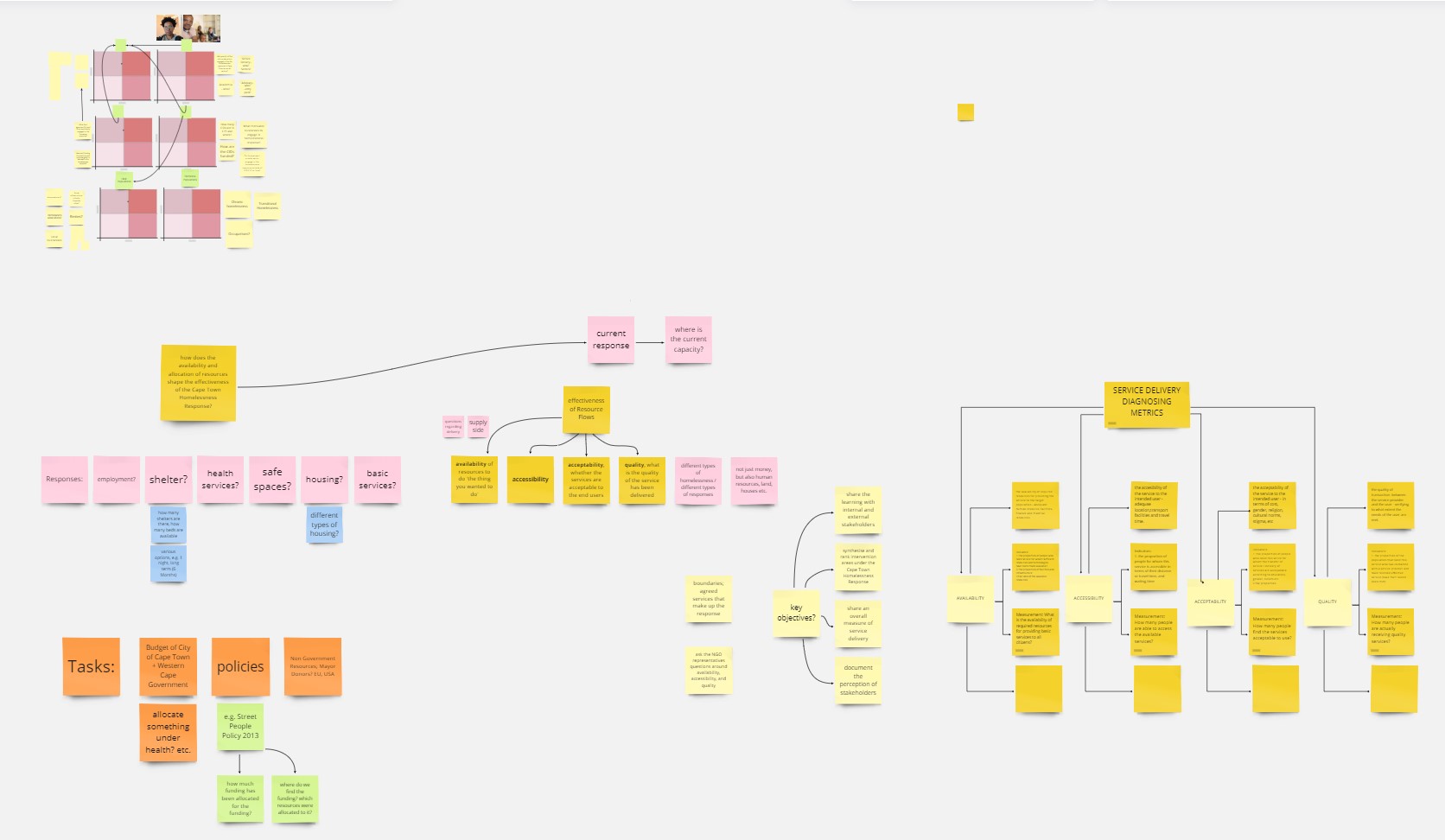
As the studio lead for CRS 3, my role was to guide the participants in their exploration of systems mapping as a tool to address complex urban problems, with a focus on homelessness in Cape Town. Throughout the studio sessions, we engaged with key stakeholders, visited sites, and had discussions with experts to better understand the issue at hand.

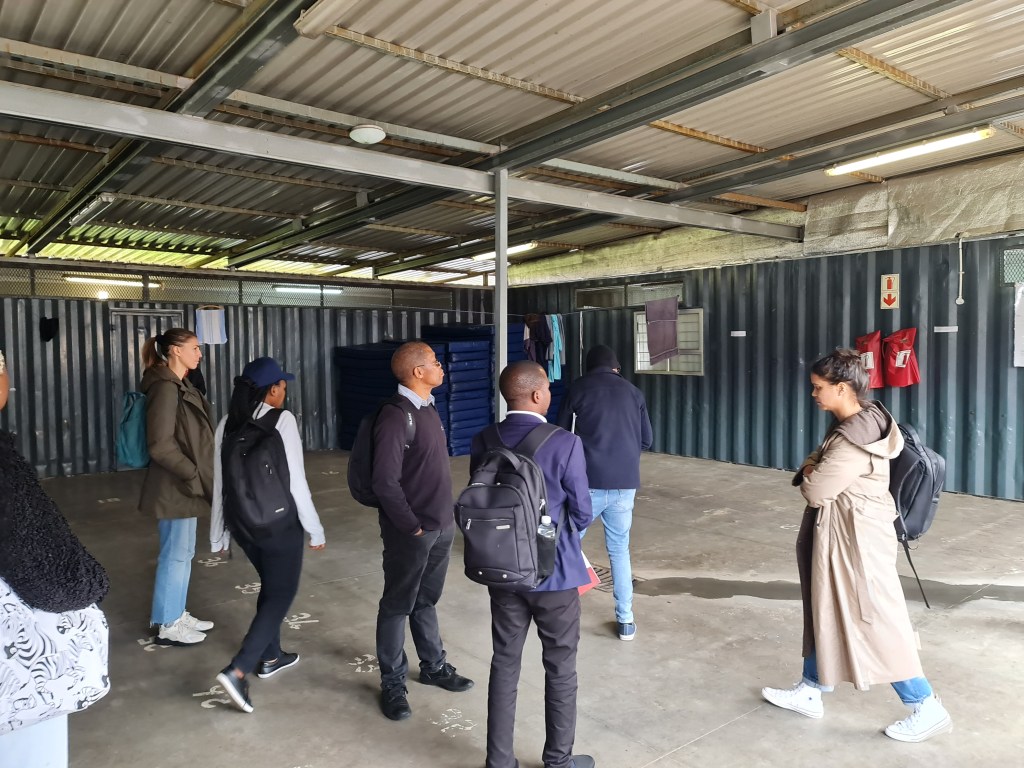
In session one, we welcomed participants and clarified expectations for the studio. We learned about the state of homelessness in South African cities from expert James Clacherty and Brian Adams from the Economic Development Partnership. We also received an introduction to systems mapping and created individual maps of homelessness in Cape Town.

In session two, we had site visits to various locations related to homelessness, coordinated by Nobukhosi Ngwenya and Brian Adams. We also discussed our individual systems maps from the previous session and identified a process to produce a group map.

In session three, we continued our exploration of systems mapping with an introduction to the tool and group-based application of its steps, facilitated by myself

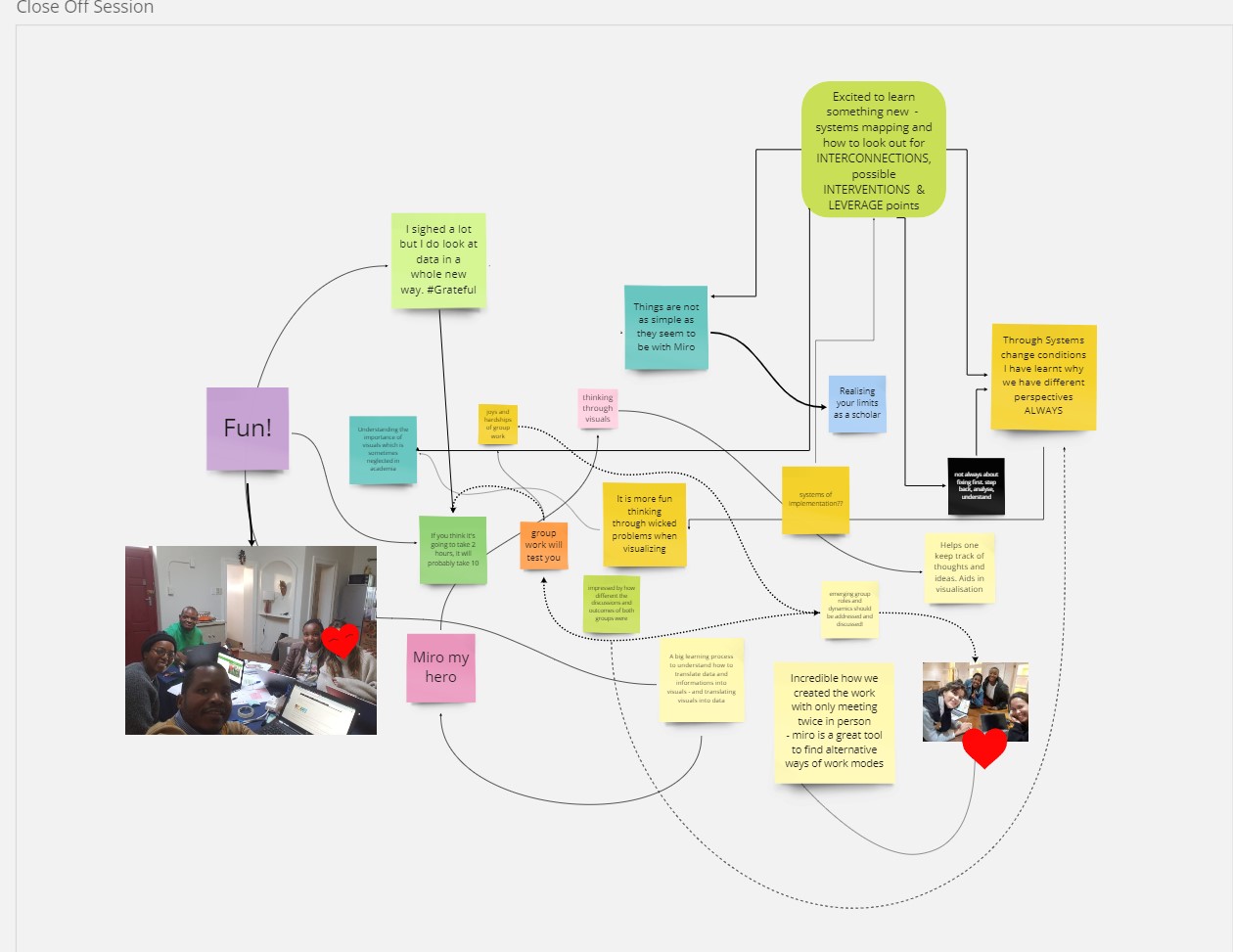
In session four, we discussed the six conditions of systems change and had a panel discussion with various stakeholders about the challenges associated with homelessness and potential solutions. We also revisited and refined our group systems map.

In session five, we focused on the implementation of solutions based on our systems map, and each group produced an implementation task list for a specific sector and a series of visual summaries of the systems thinking tools.


The City Research Studio on Homelessness provided us with a valuable opportunity to explore the complexities of addressing the issue of homelessness in our communities. Homelessness is a wicked problem that requires a systems-level approach to understand and address the many factors that contribute to it. Through this course, we learned about the various societal challenges involved in tackling homelessness, including the lack of affordable housing, mental health and addiction issues, poverty, and social stigma.

One of our key takeaways from this course was the importance of using systems thinking to address wicked problems like homelessness. By understanding the interconnectedness of various factors, we can better design solutions that address root causes rather than just symptoms. The use of visual tools, such as mind maps and system maps, was also beneficial in visualizing the complexity of the issue and identifying potential leverage points for change.

Another valuable aspect of the City Research Studio was the focus on design thinking methods and the inclusion of diverse groups in the process. Design thinking allowed us to approach the issue of homelessness from a human-centered perspective and to develop solutions that address the needs of those experiencing homelessness. The inclusion of diverse groups, including those with lived experience of homelessness, provided important insights and perspectives that would have been missed otherwise.

The course also highlighted the many complications and challenges of tackling wicked problems like homelessness. The issue is deeply entrenched and complex, and there are no easy solutions. The political and economic realities of our society also pose challenges, as addressing homelessness requires significant resources and political will.
BUDD DPU Practice Engagement: Sheffield Otherwise

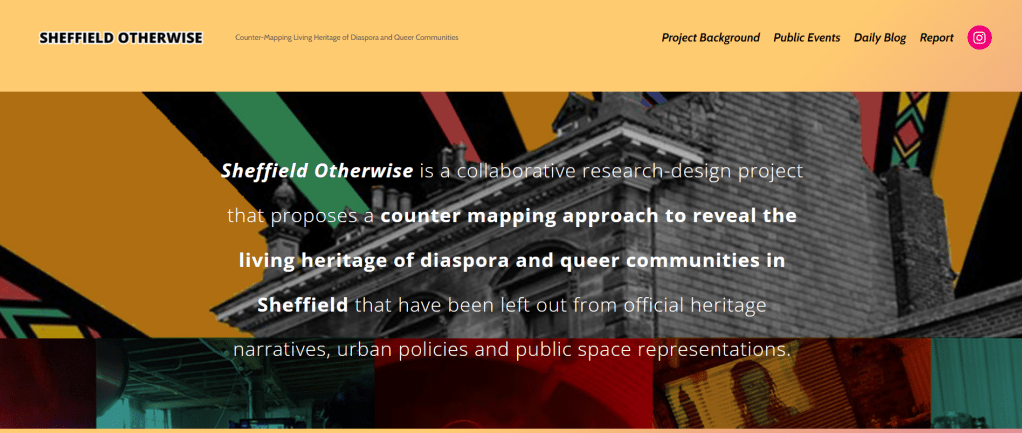
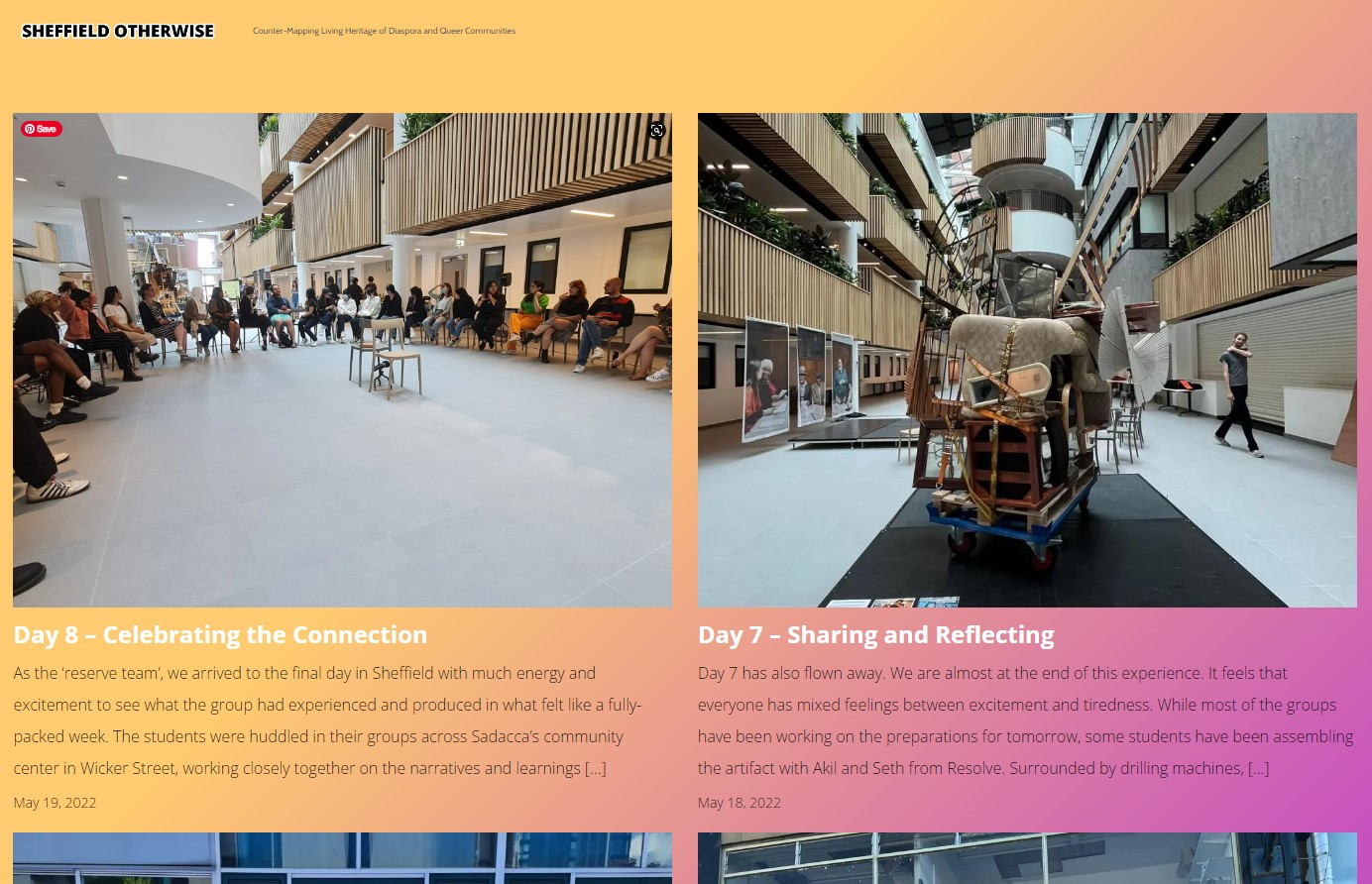
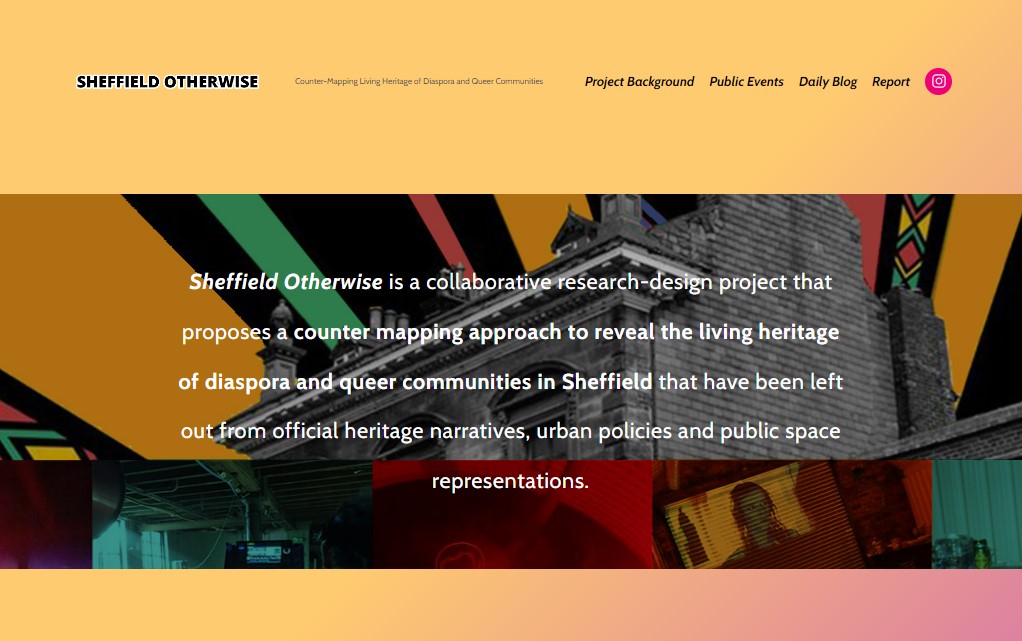
As part of my work with the DPU’s BUDD Programme, I assisted in the digital structuring and communication of their yearly Overseas Practice Engagement. Due to the limitations of the pandemic, this year it was held in Sheffield, England with Resolve Collective, Gut Level and SADACCA with the support of Urban Ark at Sheffield Hallam University.

Project Website Summary

The project was developed and executed by Dr. Catalina Ortiz, Dr. Natalia Villamizar, Dr. Giorgio Talocci and Laia Fernandez Garcia from the DPU, with myself and Nihal Hafez in support.

Project Thematics Areas (developed by BUDD Tutors & shared from project website)

The short and cussed participative engagement was broken into 4 thematic lenses that had students working closely with the project partners to engage with a series of action research questions and co-design exercises in supporting the work of those involved.

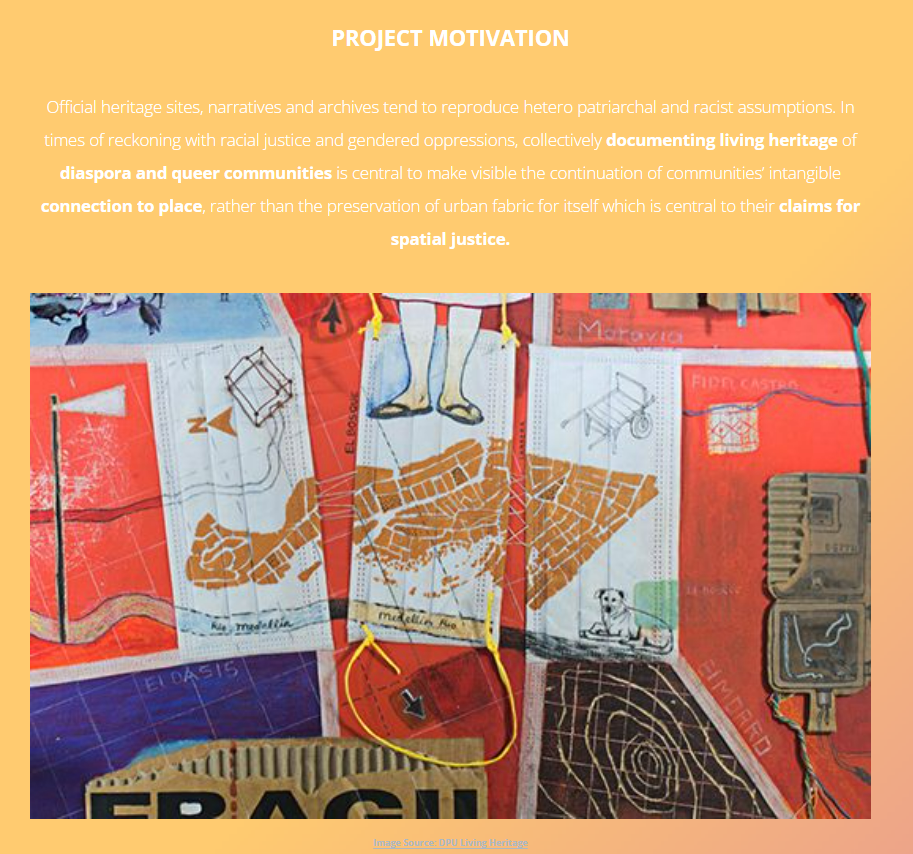
Project Background (developed by BUDD Tutors & shared from project website)
Projects Aims (developed by BUDD Tutors & shared from project website)
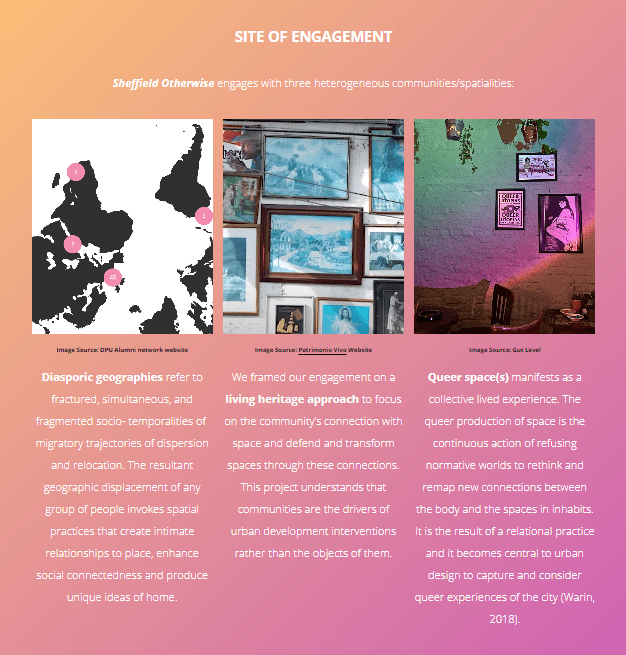
Project Focus (developed by BUDD Tutors & shared from project website)

The week was supplmented by a series of public events that brought together a host of different local actors, practitioners and people from across Sheffield.

Public Events (developed by BUDD Tutors & shared from project website)

The week was packed with engagements, and had the students staying and working on site each day and each evening.

Project Background (developed by BUDD Tutors & shared from project website)

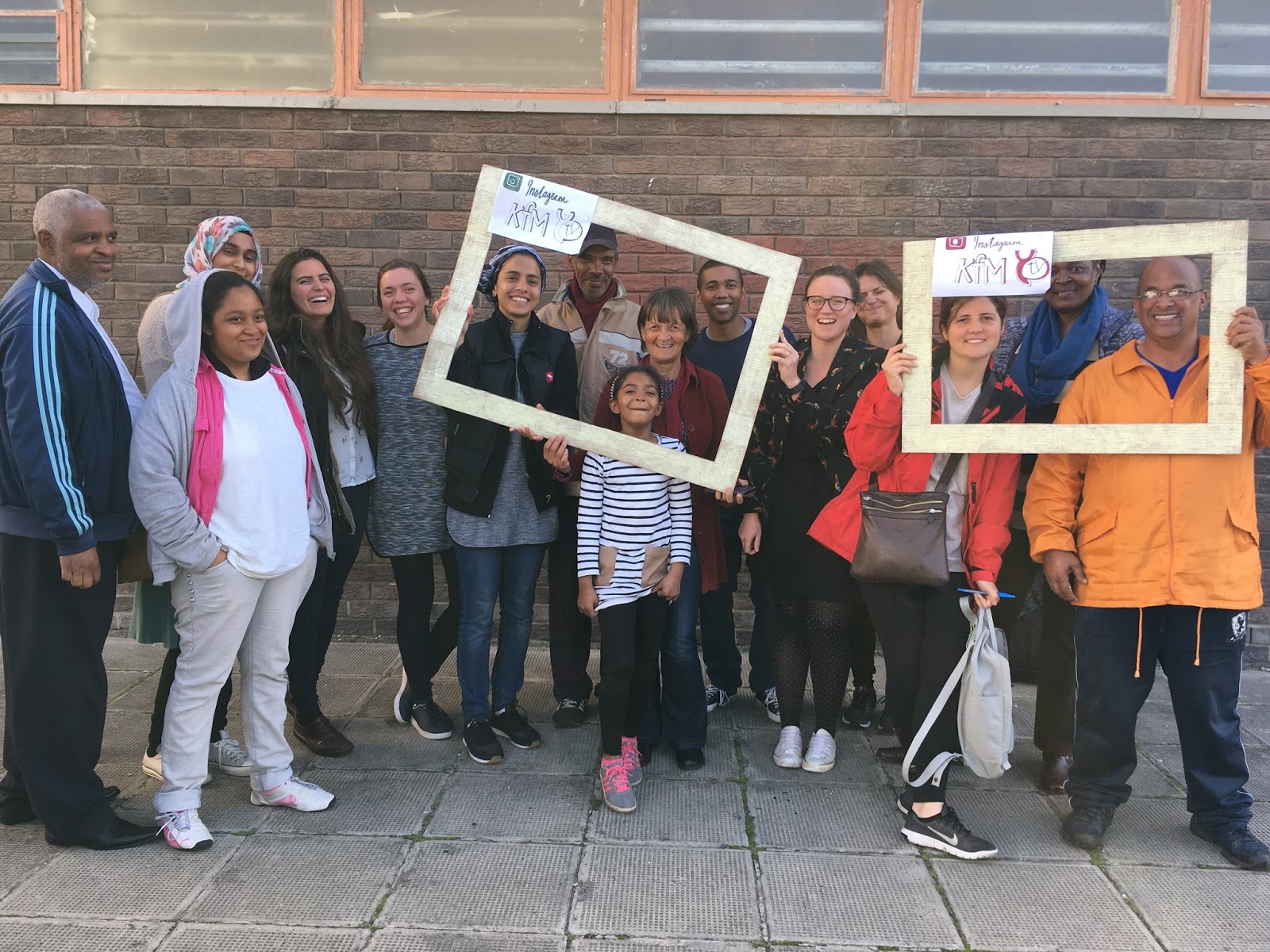
The workshops was carefully documented in both a Daily Blog, as well as a live Instagram account, allowing the project partners involved to share and connect through the week’s activities.

With a final project report that shared and covers all of the student research and design proposal work which was shared and made available to all involved in the project, and publicly accessible here.

WIP+ Bartlett School of Architecture PhD Support Programme

In response to effects the Covid 19 Lockdowns has on the doctoral culture here at UCL, I have played a part in leading an initiative, alongside Zahira El Nazer and a Committee of students, that aimed to bring the PhD Cohort together in support of peer learning and training here at the Bartlett School of Architecture.

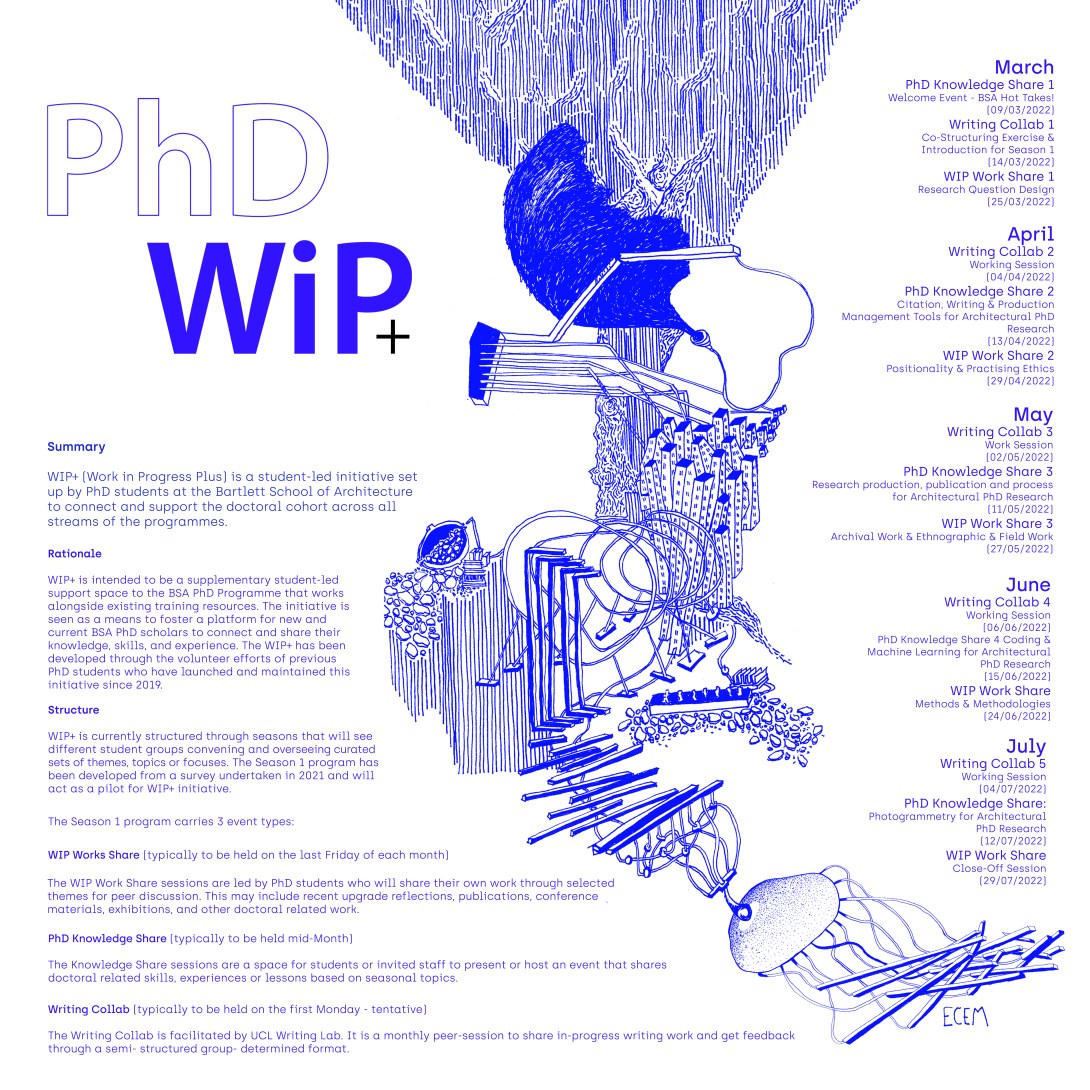
This initiative was started a few years ago by previous PhD students (acknowledged below) with the amazing graphic design by our fellow PhD candidate Ecem Egrin.

Graphic Work: Ecem Egrin

“WIP+ (Work in Progress Plus) is a student-led initiative set up by PhD students at The Bartlett School of Architecture to connect and support the doctoral cohort across all streams of the programme.

WIP+ is intended to be a supplementary student-led support space to The Bartlett PhD Programme that works alongside existing training resources. The initiative is seen as a means to foster a platform for new and current PhD scholars to connect and share their knowledge, skills, and experience. The WIP+ has been developed through the volunteer efforts of previous PhD students who have launched and maintained this initiative since 2019. 

Graphic Work: Ecem Egrin

WIP+ is currently structured through seasons that will see different student groups convening and overseeing curated sets of themes, topics or focuses. The Season 1 program has been developed from a survey undertaken in 2021 and will act as a pilot for WIP+ initiative. The 2022 programme has been supported by funding from both The Bartlett School of Architecture PhD Programme and The Bartlett Faculty Doctoral Initiative Fund Award. 

All events are recorded and available on the Teams Group along with all documented resources and links. Join the Teams Group to be involved. There have already been several sessions this year to catch up on the teams site. The remaining sessions are detailed below. 

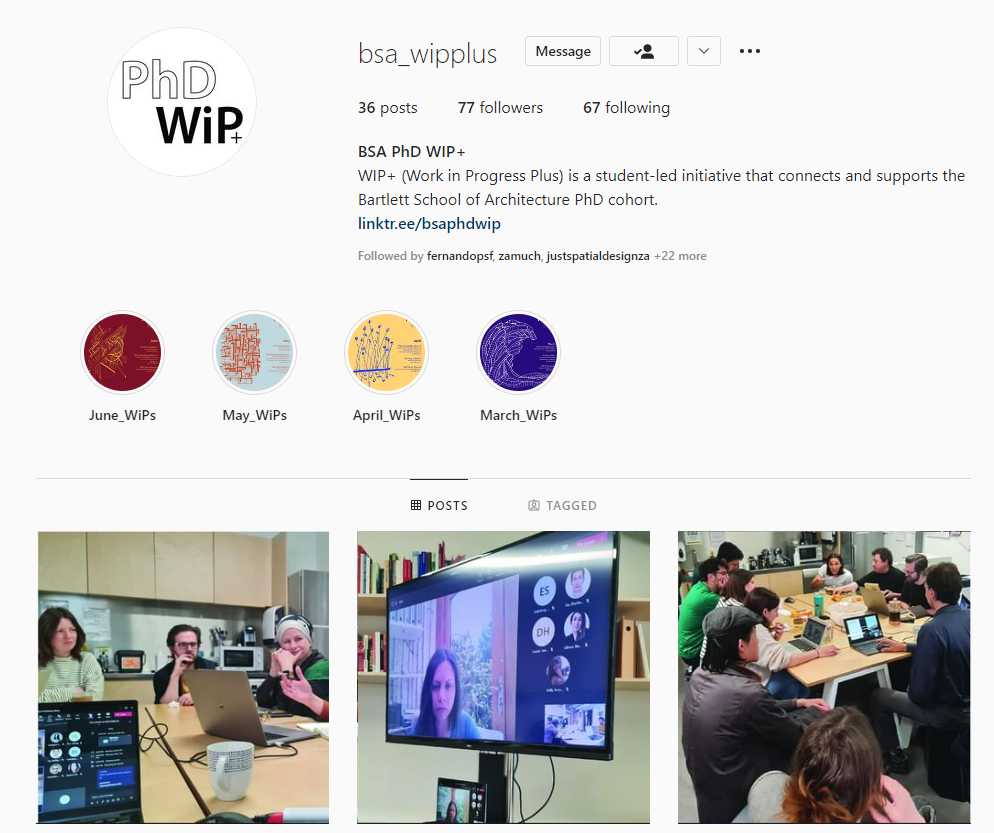
https://www.instagram.com/bsa_wipplus

WIP+ 2022 Season 1 Committee: Jhono Bennett, Zahira El Nazer, Kirti Durelle, Sepehr Zhand and Tumpa Fellows.

WIP+ Speakers: Kerry-Jo Reilly, Ana Wild, Zahira El Nazer, Sepehr Zhand, Stelios Giamarelos, Nathaniel Telemaque, Alberto Fernández González, Thomas Parker, Danielle Hewitt, Sol Perez Martinez, Saptarshi Sanyal, Ram Shergill, Omar Abolnaga, Petra Seitz, Noami Gibson, Jhono Bennett, Keri Culhane, Olivier Bellfamme, Steph Fell, Zoe Quick, Dr Dasha Moschonas and Dr. Beatrice De Carli

WIP+ Volunteers and Support Team: Ecem Egrin (Graphic Design), Thomas Parker, Jonathan Tyrell, Danielle Ovalle Costal, Danielle Hewitt, Thomas Dyckhoff, Kirti Durelle, Tumpa Fellows, Mine Sak Acur, Melih Kamaoğlu

Former WIP+ Leaders & Founders: Danielle Hewitt, Aisling O’Carrol, Sol Perez Martinez and Claire Tunnacliffe

a South(ern) African Archi PhD Resource Platform

I have spent the last few years navigating the all to common horribly lonely and complicated journey of doctoral applications, funding and re-learning that comes from not being located in the ‘center’ of research and knowledge production in this world.

While many amazing individuals have emerged over the years and offered their guidance and support through these obstacles: it really should not be this difficult to undertake a PhD in and around architecture from the African continent.

In response, I have gathered some of these great individuals alongside my own collected resources to lead on the development of a publicly accessible platform to share these assets, as well as bringing together those on this journey.

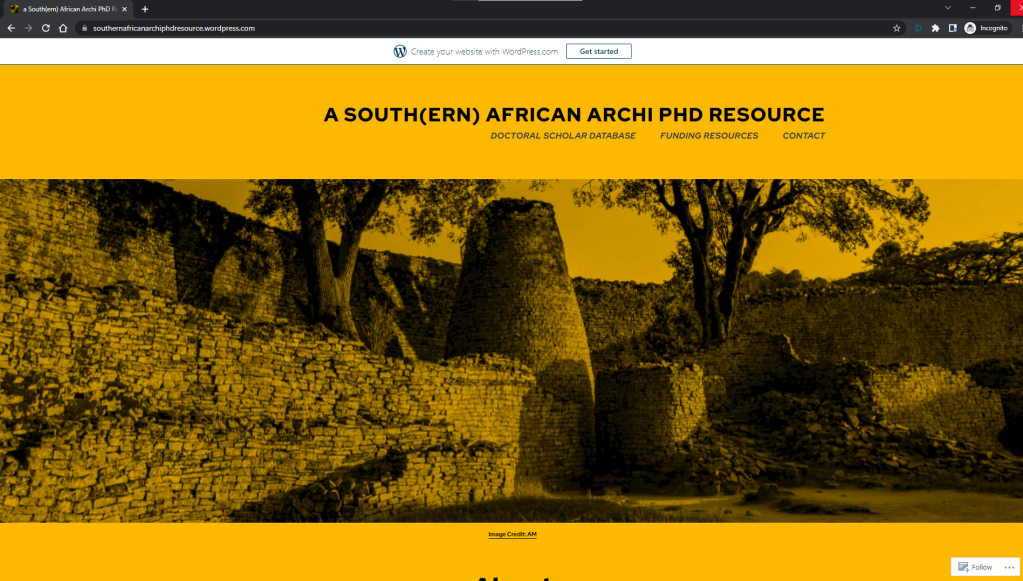
https://southernafricanarchiphdresource.wordpress.com/

The website is part of a larger and ever-growing resource that seeks to support South(ern) Africans looking to undertake a PhD in architecture or the related spatial practice fields associated with the built environment – both on the continent as well as abroad.

The FAQ section of the Home Page

This platform is by no means exhaustive & has been built more as a platform than a comprehensive source. At present the resource carries certain biases to South & South(ern) Africa and their adjacent cross-national links.

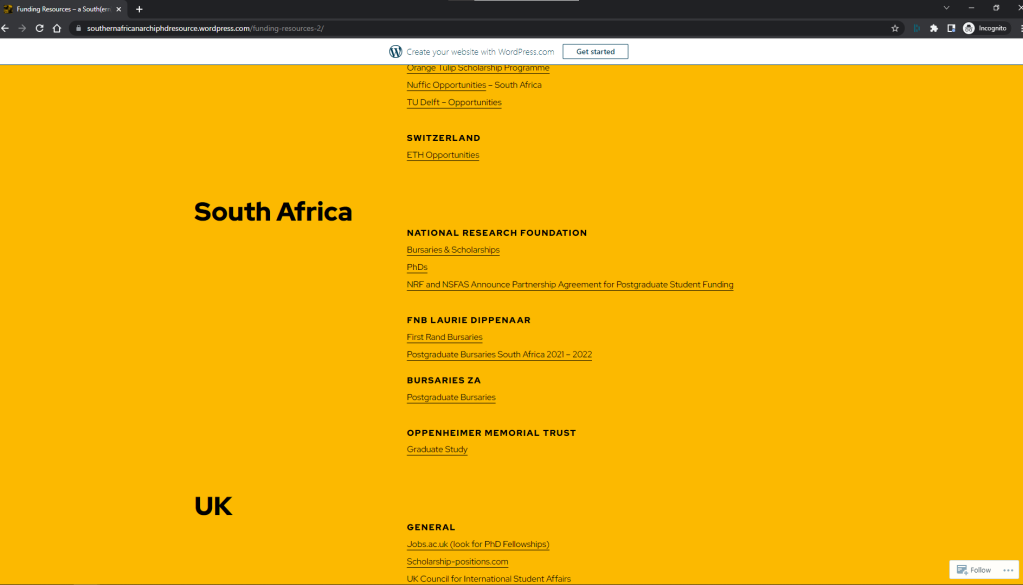
A snippet of the South African section from the Funding Resource Page
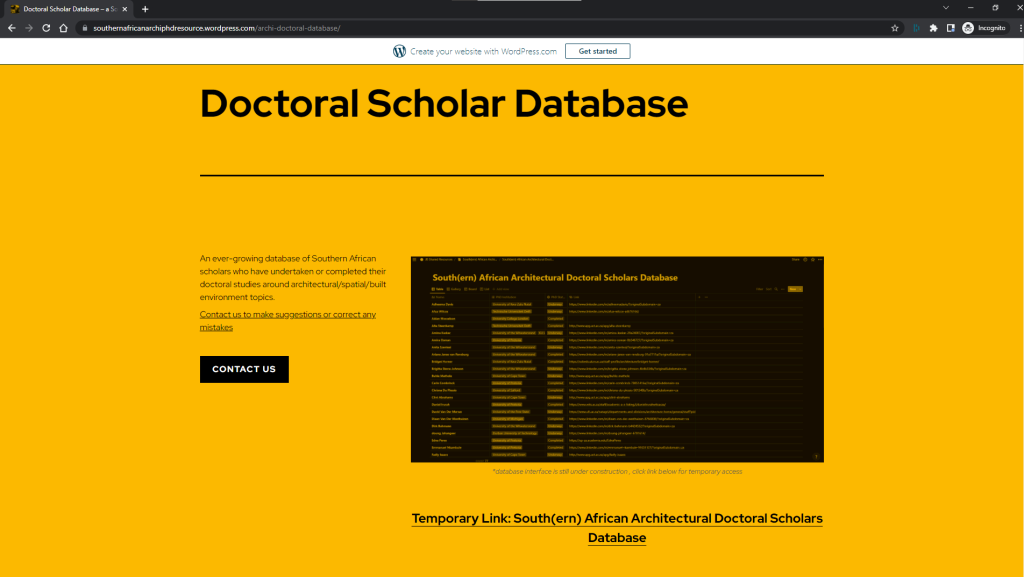
A snippet of the South African section from the Doctoral Scholar Database

These resources are put together, shared by volunteers and will be updated as regularly as possible. Please feel free to join the contributors to expand and change this, as well as message us with any additional contributions, resources or to suggest points to add/edit/re-consider.

In addition, there is now a fully active Twitter Platform on @SouthernArchPhD and a Communal Slack Channel for more detailed discussion with a growing peer group.

Please feel free to join the contributors to expand and change this, as well as message us with any additional contributions, resources or to suggest points to add/edit/re-consider.

Race and the Architectural Humanities: How we (can) research, teach and learn – Bartlett History & Theory Forum 2022

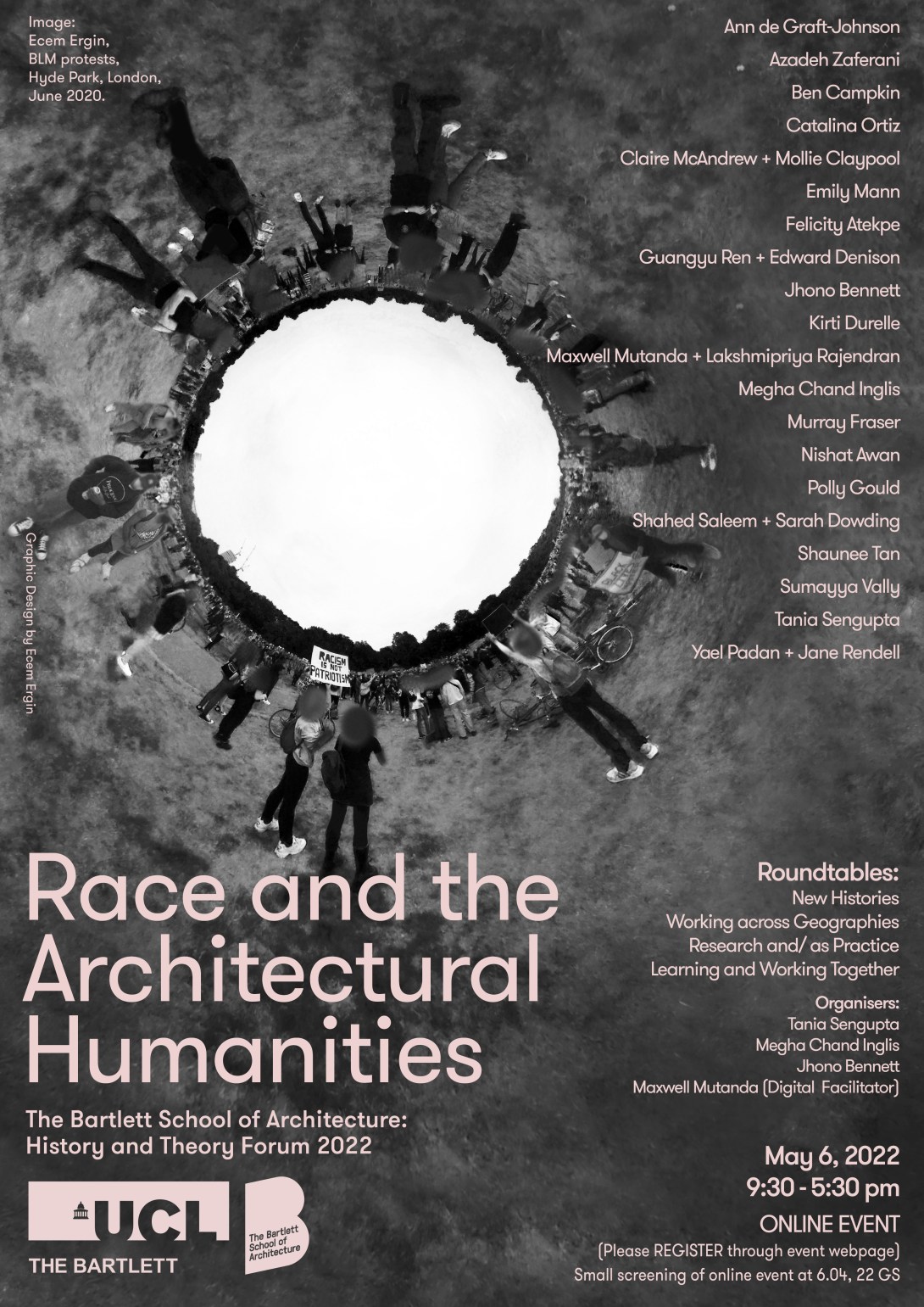
Led by Dr. Tania Sengupta and Dr. Megha Chandra Inglis, we have recently just organised and hosted the 2022 Bartlett History & Theory Forum through a hybrid digital and physical event structure:

“Curated by The Bartlett School of Architecture’s Director of History and Theory, Tania Sengupta, along with Megha Chand Inglis and Jhono Bennett, the History and Theory Forum is being revived this year after a hiatus, particularly as part of collective action on urgent issues.

This year’s theme is ‘Race and the Architectural Humanities: How we (can) research, teach and learn’, understood broadly, and including the interactions of these themes with design and technologies. Reflecting on how these relationships shape or might shape research, design or other forms of practice and pedagogy through inclusive, anti-racist, socially equitable, environmentally just and culturally nuanced approaches. 

This online event – consisting of roundtables, show-and-tell presentations and conversations – is open to all Bartlett School of Architecture staff and students. The presenters include the school’s staff and students as well as key external researchers, designers, creative artists and activists. The forum will enable the school to gather as a community and share the varied efforts taken that address such questions and consider how we might transform our practices in fundamental and meaningful ways.

There is limited capacity to join the event in 6.04 at 22 Gordon Street. 

This event has been oranised by Tania Sengupta, Megha Chand Inglis and Jhono Bennett. The digital facilitator will be Maxwell Mutanda. Visual Design by Ecem Ergin. “

The full event programme can be downloaded here

The excellent graphic design work was undertaken by Ecem Egrin, while Maxwell Mutanda and I facilitated both a digital and physical summary space for the session and captured the day’s discussion live via a Miro Board.

Live Digital Scribbing of the full day

In addition I presented my own doctoral work through the specific focus on positionality and my research titled: Navigating the What-What: A situated Southern urban design inquiry around how

In all, the day was highly successful, and has placed a solid foundation to continue this work outwards into other areas of focus and dissemination across the school and wider faculty.

Graphic design work by Ecem Egrin

1to1 2.0 – a new chapter

1to1 Agency of Engagement's avatar1to1 - Agency of Engagement

HOW DID 1TO1 START?

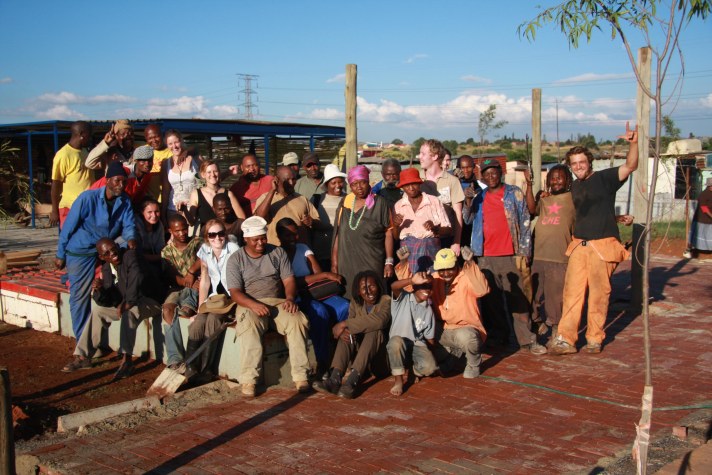
1to1 began in 2010 when a group of students from a South African university were given an opportunity towork with the residents and leadership of Slovo Park, theSlovo Park Development Forum, as part of their masters in architecture programme.

During the initial project of co-designing and co-building a small tactical intervention in Slovo Park, theSlovo Hall,the group were exposed to another way of working and city-making, as people first then as practitioners – they sought to grow this additional mode of practice into something that could support similar projects while creating a platform for engagement with other stakeholders and students. This initial student group went on to develop the1to1 Student Groupinto 1to1 – Agency of Engagement andregister the organisation in 2012 as legal entity.

HOW HAS 1TO1 ADAPTED?

Since2010, 1to1 has grown, reflected and adaptedthrough…

View original post 680 more words

Design as Utility: At the Intersection of Technical & Social: Yale University

*Cover Image: The presentation of Orli Setton & Olwethu Jack on Socially Engaged Design Work

*Reposted from 1to1 – Agency of Engagement: http://1to1.org.za/portfolio-item/yale-critical-action-workshop/

1to1 alongside Orli Setton, Olwethu Jack, Simnikiwe Xanga and Melilizwe Gqobo provided a 2 day facilitated workshop experience for a visiting group from Yale’s School of Management under Jessica Helfland’s Design as Utility: Luxury, Waste and Sustainability Practicum. The workshop sought to make a critical space for local citizen experts to co-produce a set of values and ways of working with visiting international groups that would not be exploitative to the locals or reductive in it’s inquiry.

The workshop produced a set of thinking tools on top of the facilitated learning that took place.


Killarney Socio-Spatial Mapping

*Reposted from 1to1 – Agency of Engagement: http://1to1.org.za/portfolio-item/killarney-neighbourhood-mapping/

 1to1 alongside our collaborating partner, Urbanists for Equity, were commissioned to develop a body of work that both unpacked the socio-spatial nature of Killarney, but also supported the social cohesion of the various groups that make up the diverse neighborhood through small scale research interventions.

The team worked together with University of Johannesburg students to facilitate and generate the full package of work over the 7 week period.

Hactivate: Vrededorp/Page View

1to1, alongside a group of former interns and students, set out to develop a mechanism to support recently graduated students of spatial design.

Through a series of discussions and workshops the collaboration formed an idea of developing a series of action research workshops that give current students and pre-professionals a flexible and open space to test these ideas. The group named themselves Hactivate, and put together a proposal to test out a workshop series of 5 such Hactivations.

So far the collaboration has been able to test one such Hactivation with ARUP Urban Design employing the Back Story installation. This Hactivation worked with residents living in Pagew View/Vrededorp and sought to live-test an engagement process that had residents leading engineers, city officials and urban designers through a guided walk of their neighbourhood identifying area or conditions of opportunity.

The process used the tool as a grounding framework and worked with students from UJ who acted as socio-technical facilitators and method mechanic to collect the findings live via Whatsapp and build a model of the findings that were discussed through a facilitated session in the Back Story space.


We plan to develop this further in the new year and grow the initiative.

Backstory – Joburg

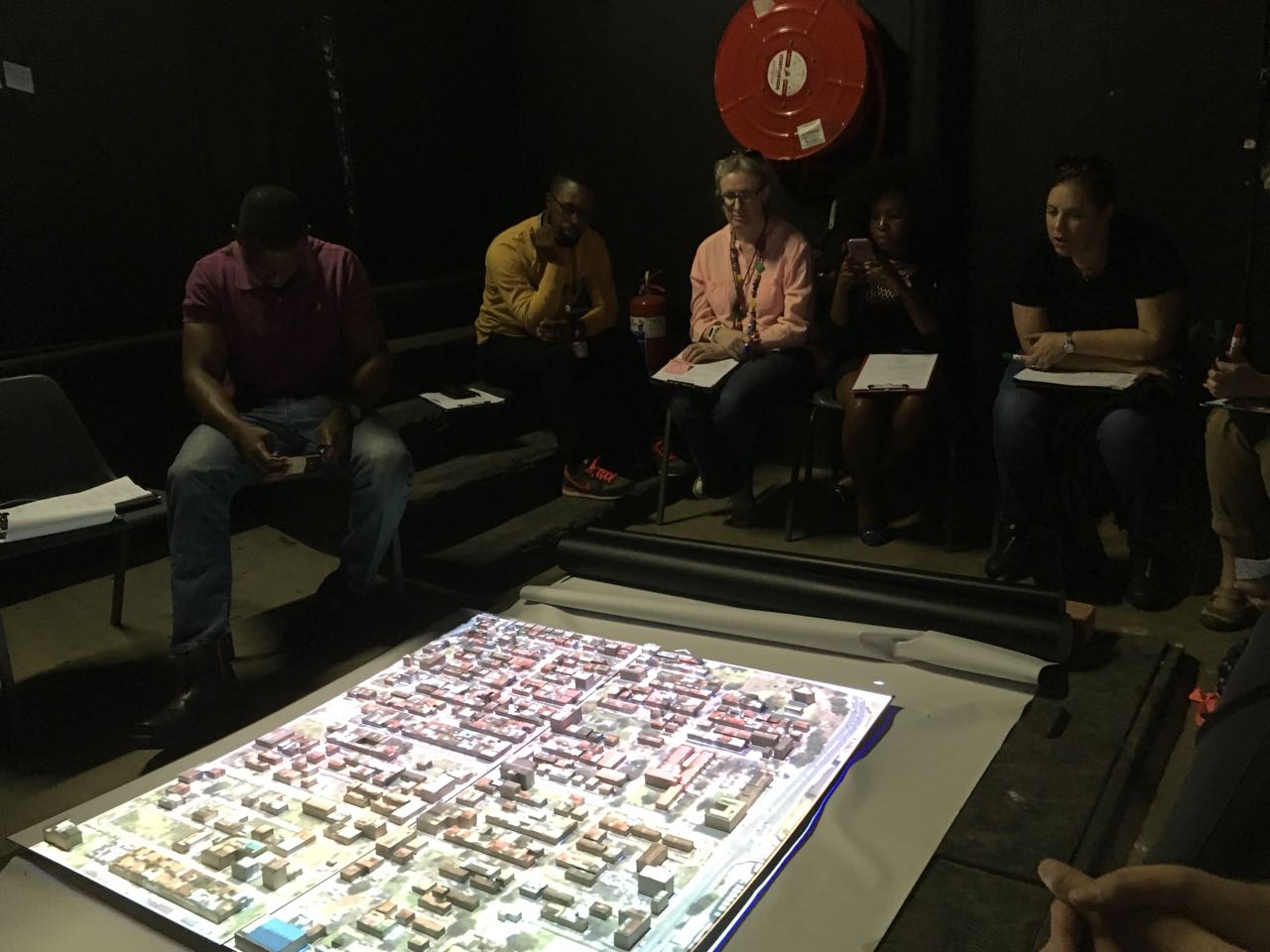
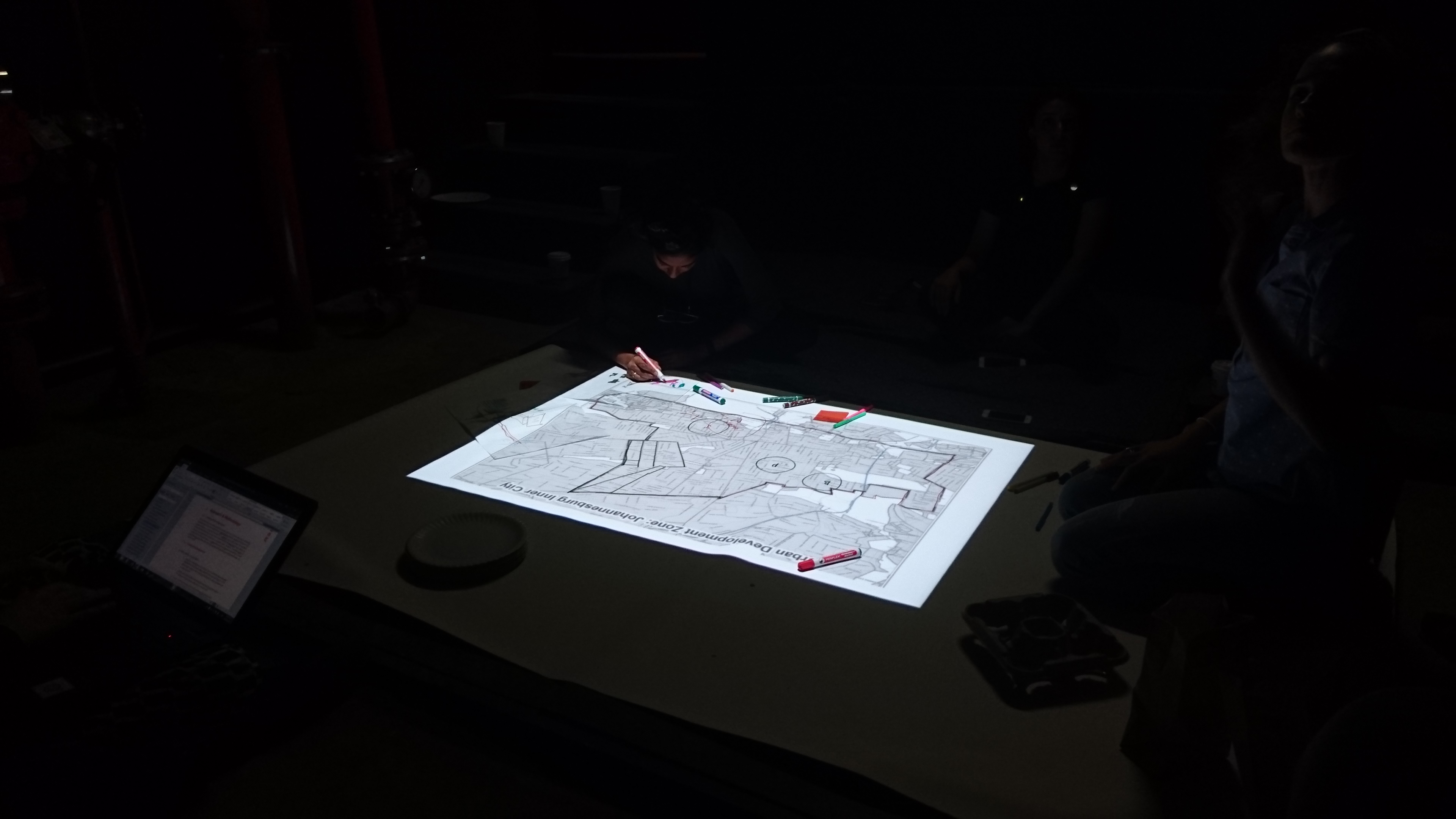
Backstory began as an explorative research investigation into the idea of Spatial Ineqaulity in Johannesburg. The initial project collective was led by Liz Ogbu, Counterspace Studio and 1to1 – Agency of Engagement under the title of ‘ the Unjust City’ .

The project took form between 2016 – 2018 as a collaboratively built installation in Johannesburg’s inner-city neighborhood of Braamfontein, where stories and city-data were unpacked through a series of workshops, discussions, and exhibitions. The installation aimed to bring together different city inhabitants and make this confluence of data and stories more accessible to those who use, manage and make the city.

The installation sought to draw in a diverse group of voices to engage with the narratives of spatial justice at play in Johannesburg. The installation space was developed by the Back Story Collective and offered as a platform to selected (typically students, local actors and activists) researchers who were working on topics of spatial injustice.

www.backstoryjoburg.wordpress.com

AT: Positive Numbers

*shared from www.aformalterrainjoburg.wordpress.com*

The Positive Numbers project was developed as one of the tangible outputs for the MOU through the 3 year engagement with the Denver leadership, residents and local NGO’s. The concept evolved from the challenges based in social enumeration and spatial planning in informal settlement upgrading processes.

The project involved linking the co-developed spatial development plan to the numbering process that typically involved spray-painting numbers on the sides of existing homes.

AT, working with Tyler B Murphy and local residents developed a system of sign making that , using colour coding, linked the spatial development to the social enumeration to allow for incremental neighborhood development to take place while waiting for governmental support.

This short film documents the process of the Positive Numbers Project which formed a part of a larger research initiative in Denver Settlement, Johannesburg in 2017.

The project was developed in partnership with active NGOs, signage and way-finding for residents in the settlement and links to the larger short-to-long term upgrading strategy of the Community Action Plan (CAP).

The Positive Numbers Project was a collaboration between the Aformal Terrain research collective and artist Tyler B. Murphy, supported by Open Societies Foundation: Higher Education Support Programme.

ASF Change by Design: Cape Town 2017

The 2017 Architecture Sans Frontiere’s Change by Design Programme took place in Cape Town in support of the Development Action Group (DAG)’s work with their Active Citizens Programme on 3 specific sites: Kensington, Khayalitsha and Oude Moulen.

The workshops’s goals were to support grassroots movements with strategic tools in action-research, spatial enumeration and strategy building across the grassroots members stakeholder and beneficiary groups.


The workshop ran for 2 weeks and employed an iterative action research methodology to support the unique needs of each site with the workshop particpants and DAG.


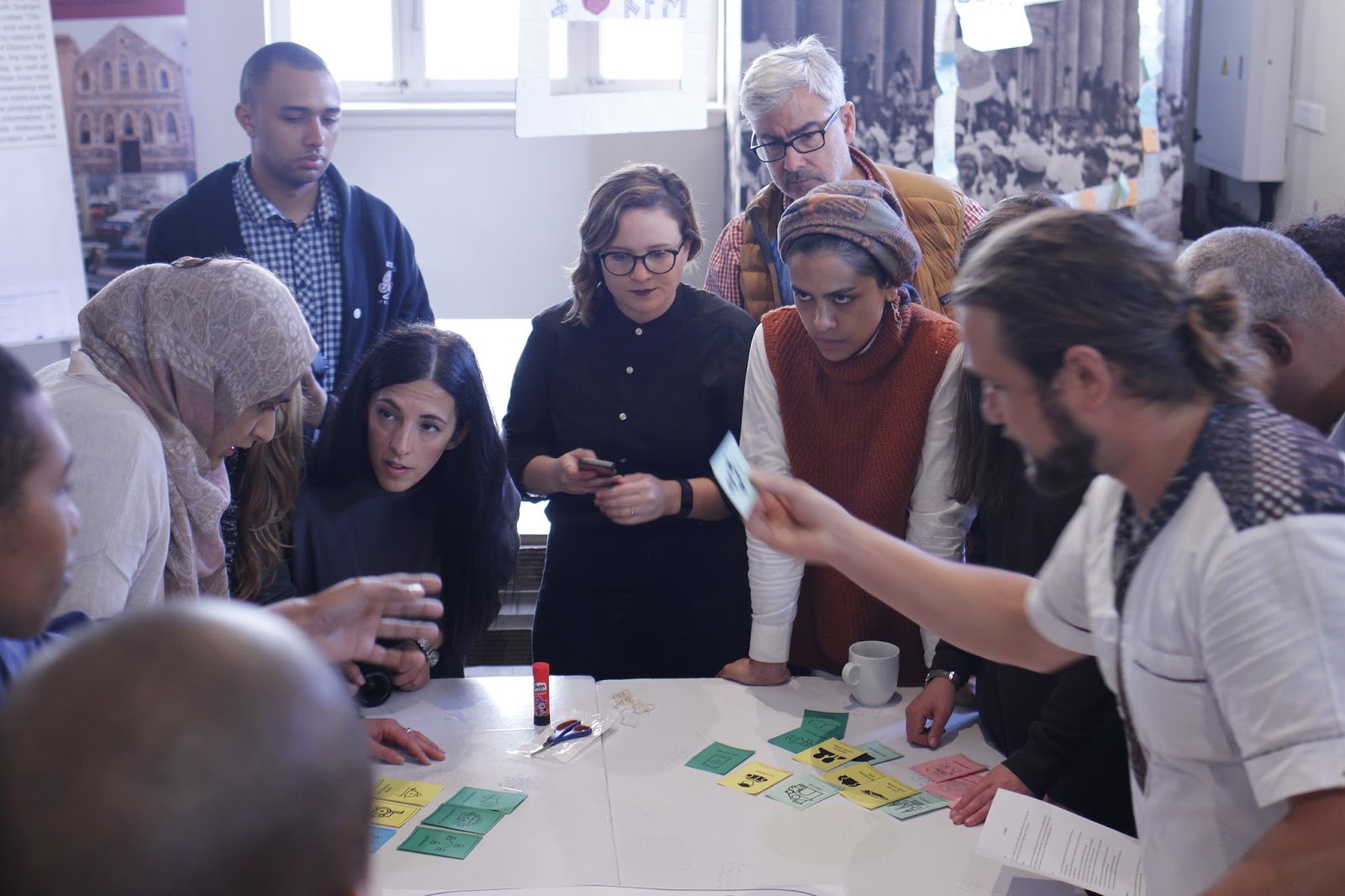
The result of the two week process was a set of grounded spatial research that was intended to support the grassroots leadership’s future engagement with the City of Cape Town. Each group developed a small visual summary of the research in a shared graphic language that was presented back to a large stakeholder group at the district 6 Museum in Cape Town.

At this feedback session each local leadership group shared their findings from the workshop and hosted  a small game that was designed by the ASF workshop team as a means to not only share the feedback from each site, but build a dialogue between local leaders and the workshop participants which included City of Cape Town Officals, other NGO’s and other grassroots organisations.