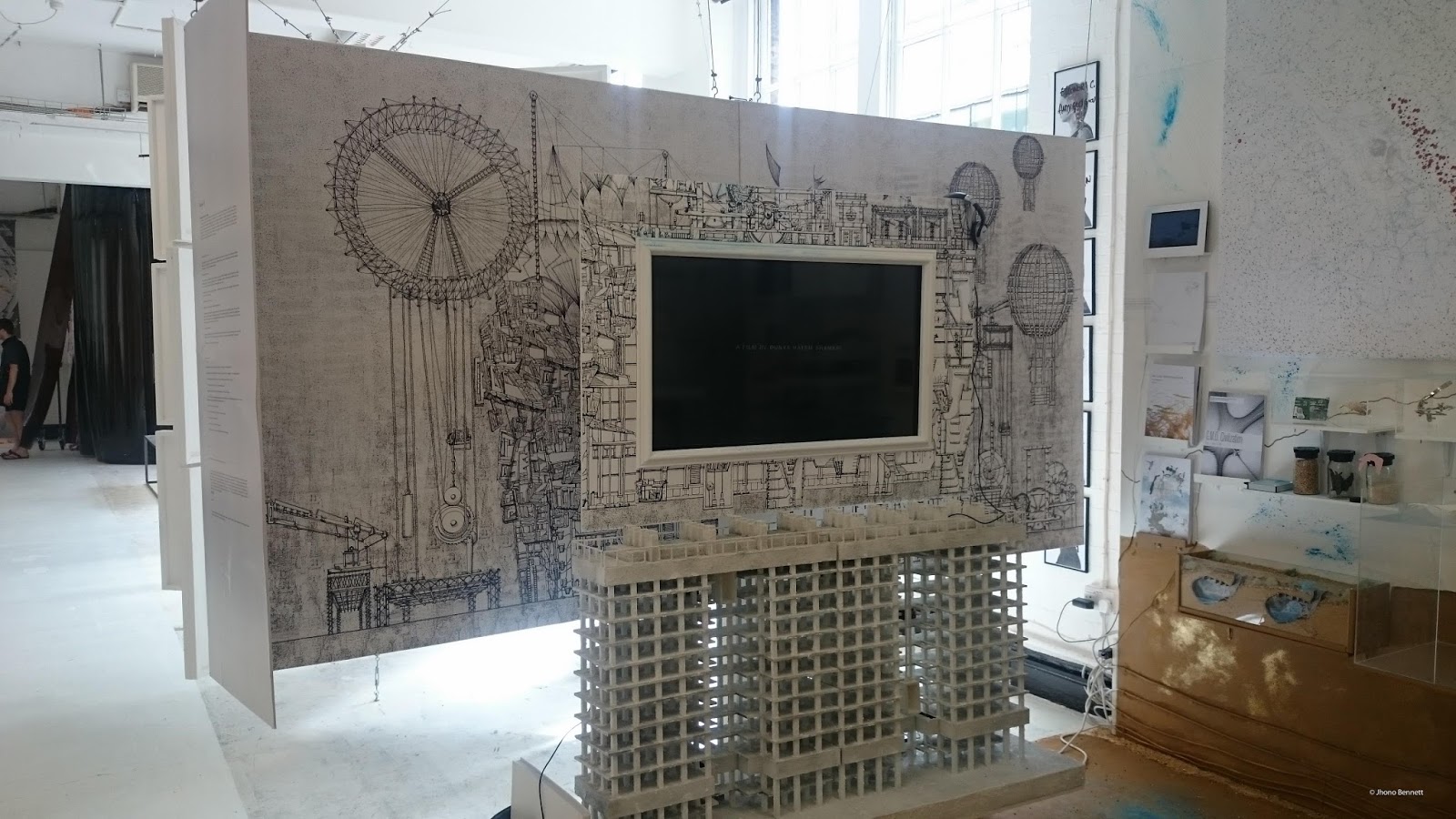
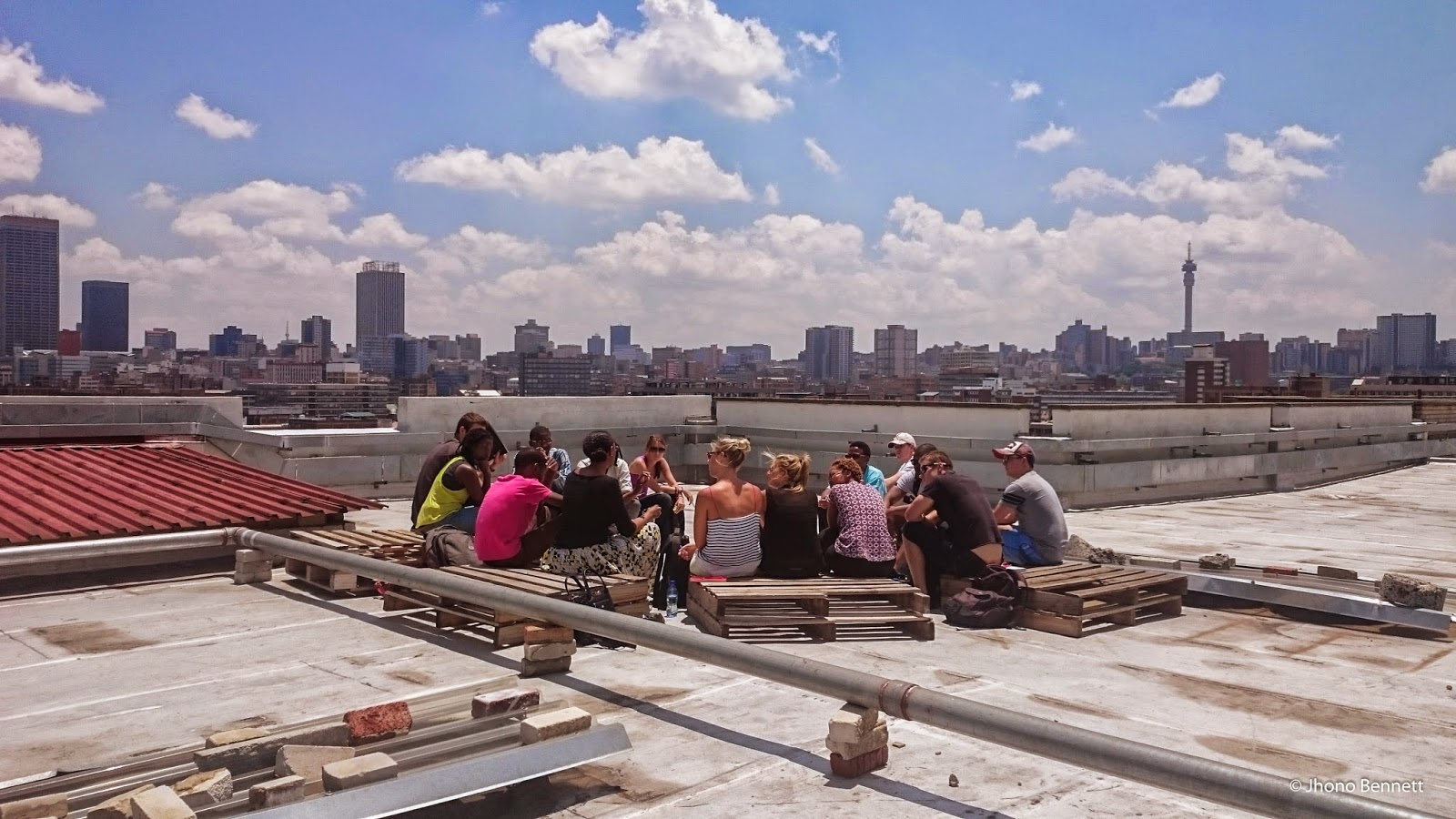
We set the brief in Johannesburg’s Braamfontein and aimed to create a teaching/research model that would allow students in Sheffield to work with students from Johannesburg in a digital participative pedagogical system.
The artefacts the students designed were carefully considered in order to allow them to be easily transferred to a digital movie format, but also function as workshop tools back in South Africa for the local practices and students.
I was invited to present my views on Socio-Technical architectural practice in South Africa alongside a panel of students and practitioners at this year’s AZA 2015 Architecture Biennial for the Student Debate – Tomorrow’s Architects Today
The debate was an interesting sharing of student ideas and perspectives and has been summarised here by Onthathile Makgalemela, the debate organiser and producer.
In early Costanza La Mantia invited myself and several other researchers, lecturres and practitioners to assist in the running of a 10 day workshop in Johannesburg’s Kya Sands Informal Setttlement through a project named ‘Transforming Kya Sands’
The organisation team worked as facilitators on the project and guided the participants, made up of a mix of professional, government and students from South Africa and abroad, through the the difficult challenge of how to develop and meet the needs of the kya sands residents.
My group was looking at public space and how it would be addressed in the larger project development. The project is still being published and will be shareable soon.
This project was linked to my ealrier teaching with Costanza at Wits in the Planning School:
2015 has proven to be a very busy year with several teaching, learning and research projects lining up around the idea of pedagogy and design research.
A joint research and experiential exchange arranged between SDI International, the South Africa SDI Alliance and myself in regard to developing a similar network in South Africa.
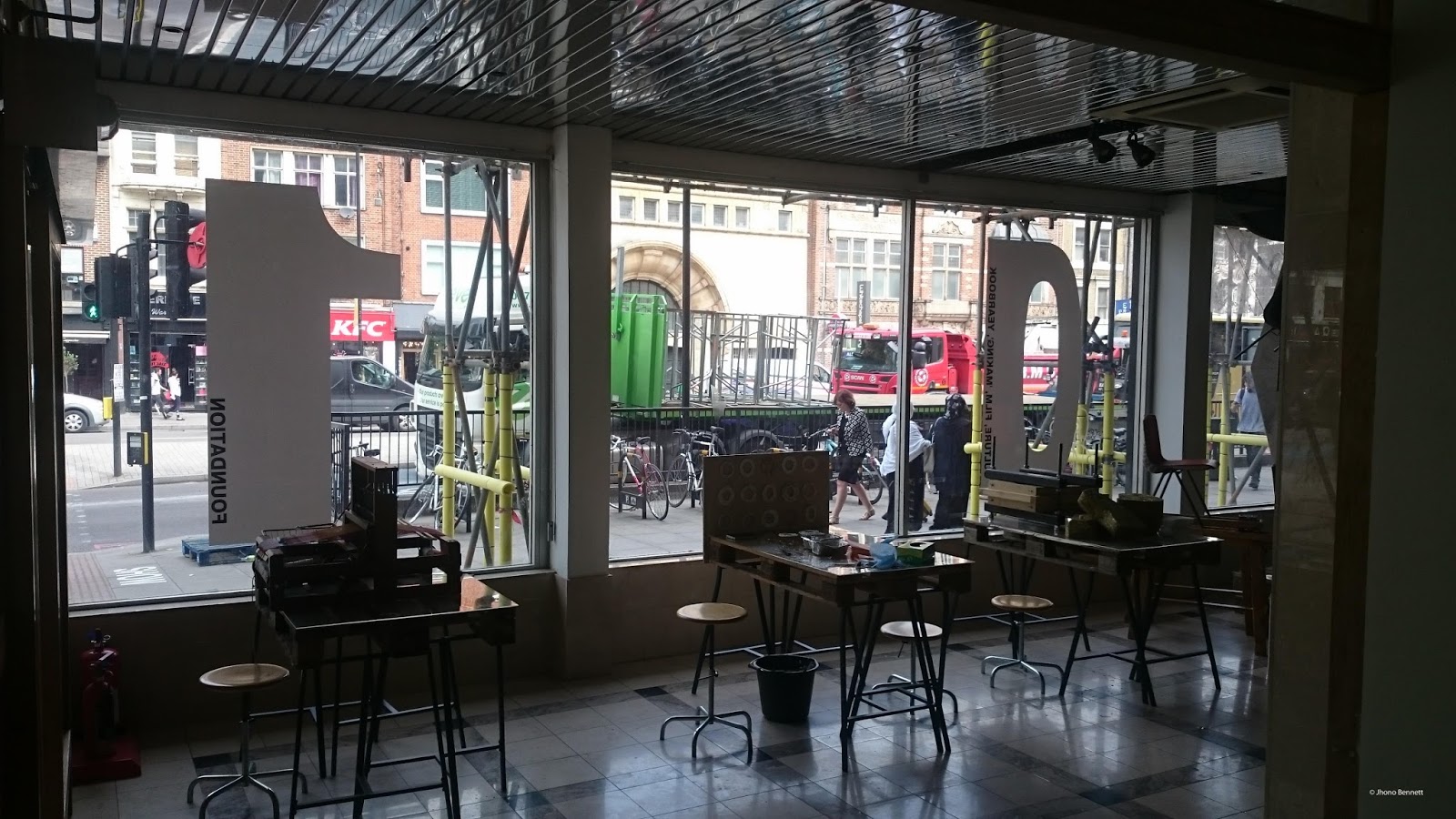
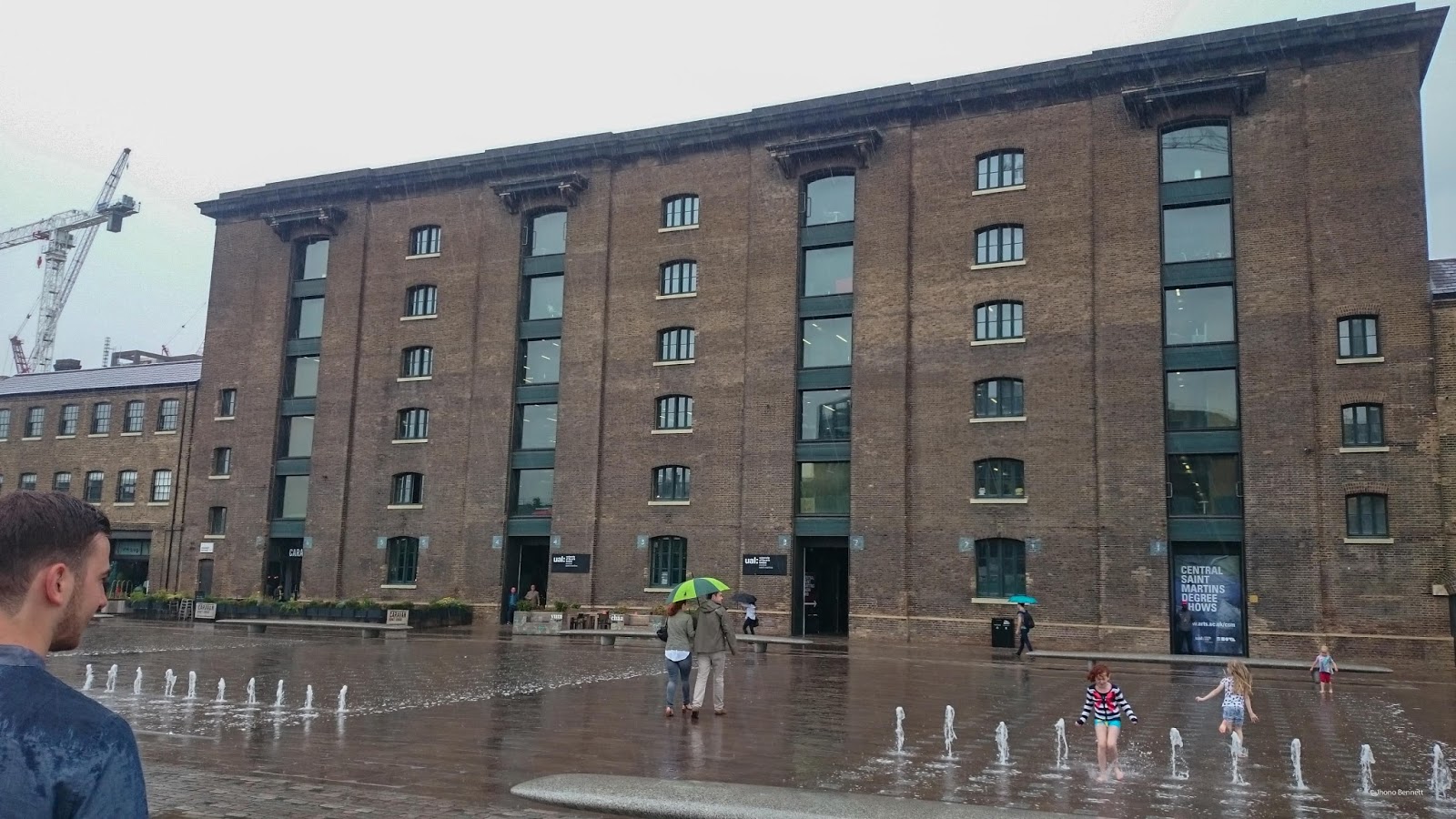
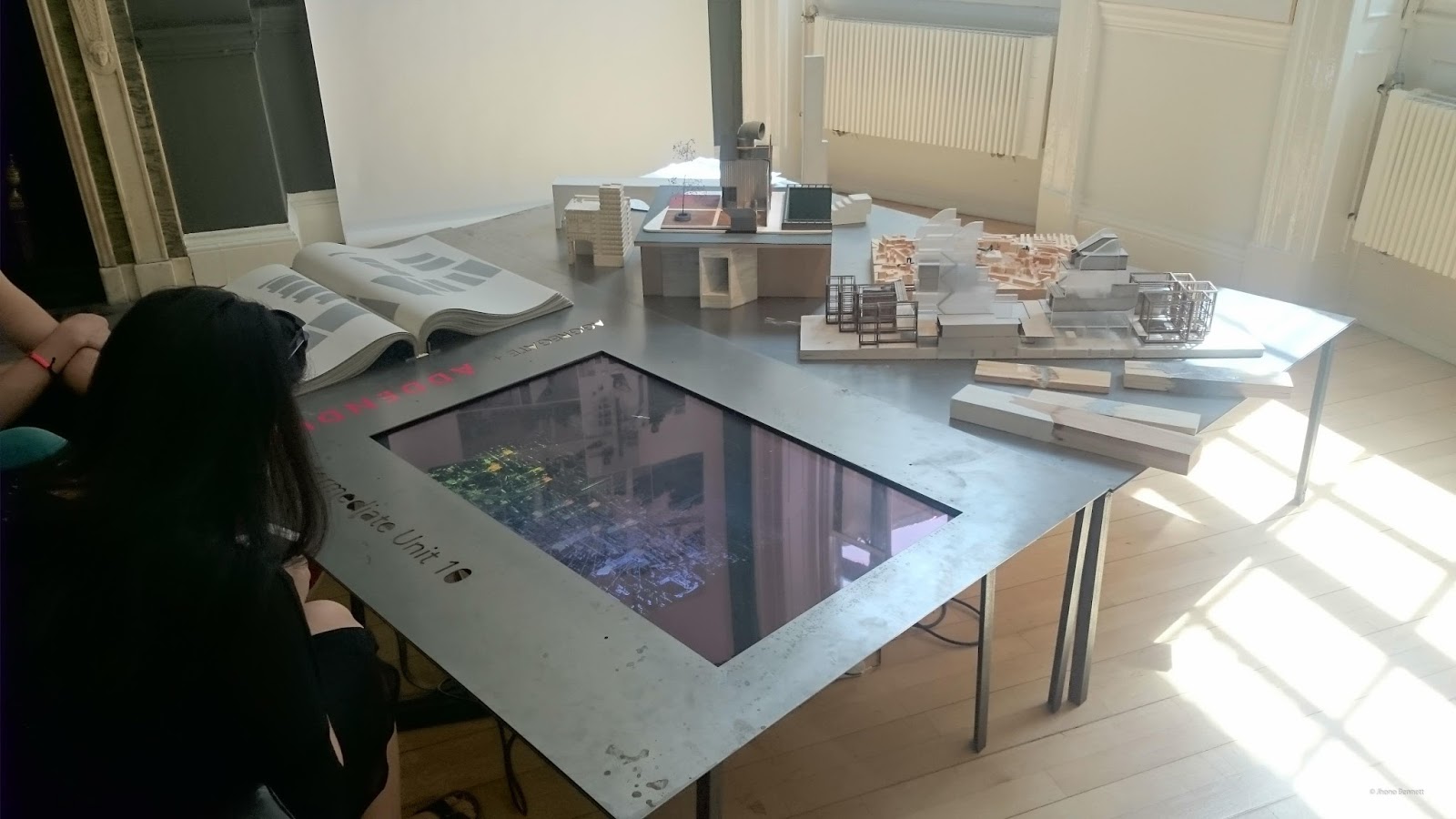
Through an agreement with the various supporters, I arranged to stop over in London en route to the later part of this trip in order to joing my colleagues from the University of Johannesburg who are busy initiating a paradigm shift in it’s post graduate programme of Architecture and arranged several visits to School’s of Architecture in London during the Summer Festival of Architecture to develop a further understanding of the Unit System.
In order to break the long trip up for medical reason’s I managed to arrange a short stay in Boston, where I visited several friends involved in Architecture and global urbanism
The KV Leuvan and the University of Guayaquil arranged an intensive summer school that I was fortunate enough to be selected for their scholarship programme and attend.
To make and break the return trip home for the same medical reasons, a second visit to London was arranged, where I got to meet up with several key practitioners such as Julia King, who had just completed an exciting Design/Build with the Bartlett School of Architecture’s undergraduate department.
The Barbican, because
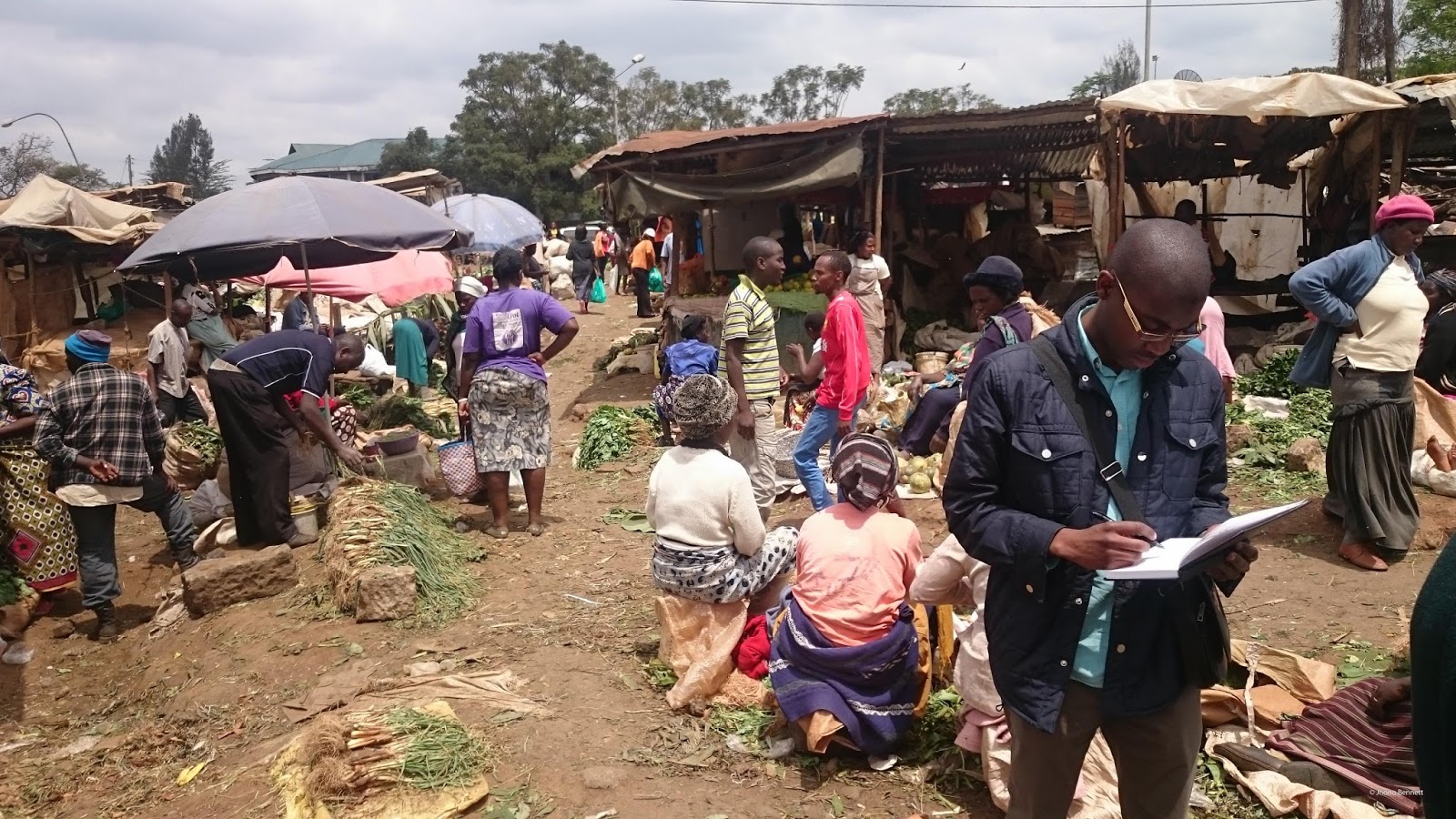
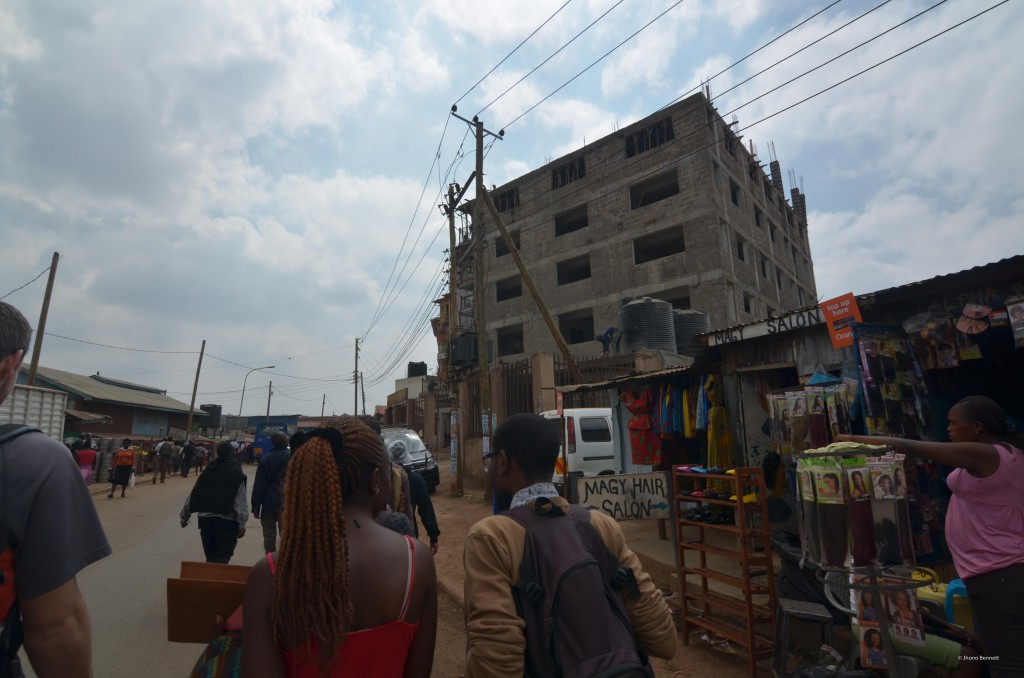
Nairobi – Unit 2 Field Trip
By chance the UJ Unit 2 field trip ended up fitting perfectly onto the tail end of this trip and I met the unit in Nairobi, and led the week-long experience with my colleagues Dr. Amira Osman
Being positioned so isolated in the ‘global south’ we don’t get to see in person such a diversity of approaches, values and work – this trip exposed me to such a vast array of work and practices that I now understand has deepened my position and values in regard to design & practice.
The Summer School aimed to expose participants to the complexity of working within Guayaquil’s current development phase while attending public lectures and classes on ecological urbanism by several keynote speakers and panellists.
The workshop sought to use design as a tool to mitigate the difficulty of the government programmes to protect the ecological systems of Guayaquil while engaging with economically, environmentally and socially vulnerable groups of people who live in close proximity to such systems.
This summer school aims to provide professionals engaged in environmental planning and urban development with the critical tools to design and manage an integrated provision of both housing and ecological infrastructure. Its goals are premised on the lack of scalar integration and participatory planning in the implementation of large-scale and capital-intensive ecological mega-projects in the global South – and in Ecuador more particularly. Indeed, the emergence of ecological mega-projects in the global South is undeniable.
Their implementation in the context of rapid growth, consolidated self-building practices and increasing inequality holds innumerable threats to equitable urban development. Co-producing ecological urbanism for inclusive city transformation is therefore an essential skill for engendering meaningful social and physical change. With the ‘global city’ discourse strongly impacting on the governance of urban eco-restoration and residential developments in many cities, the delineation of alternative ecological management strategies and housing typologies remains largely neglected.
In Ecuador, the Buen Vivir concept has bred many promises to promote alternative forms of development and spread well-being across the country’s human settlements. In line with this agenda, Ecuador’s largest city and port has been subject to significant transformations, out of which the most prominent is the Guayaquil Ecologico.
University of Guayaquil
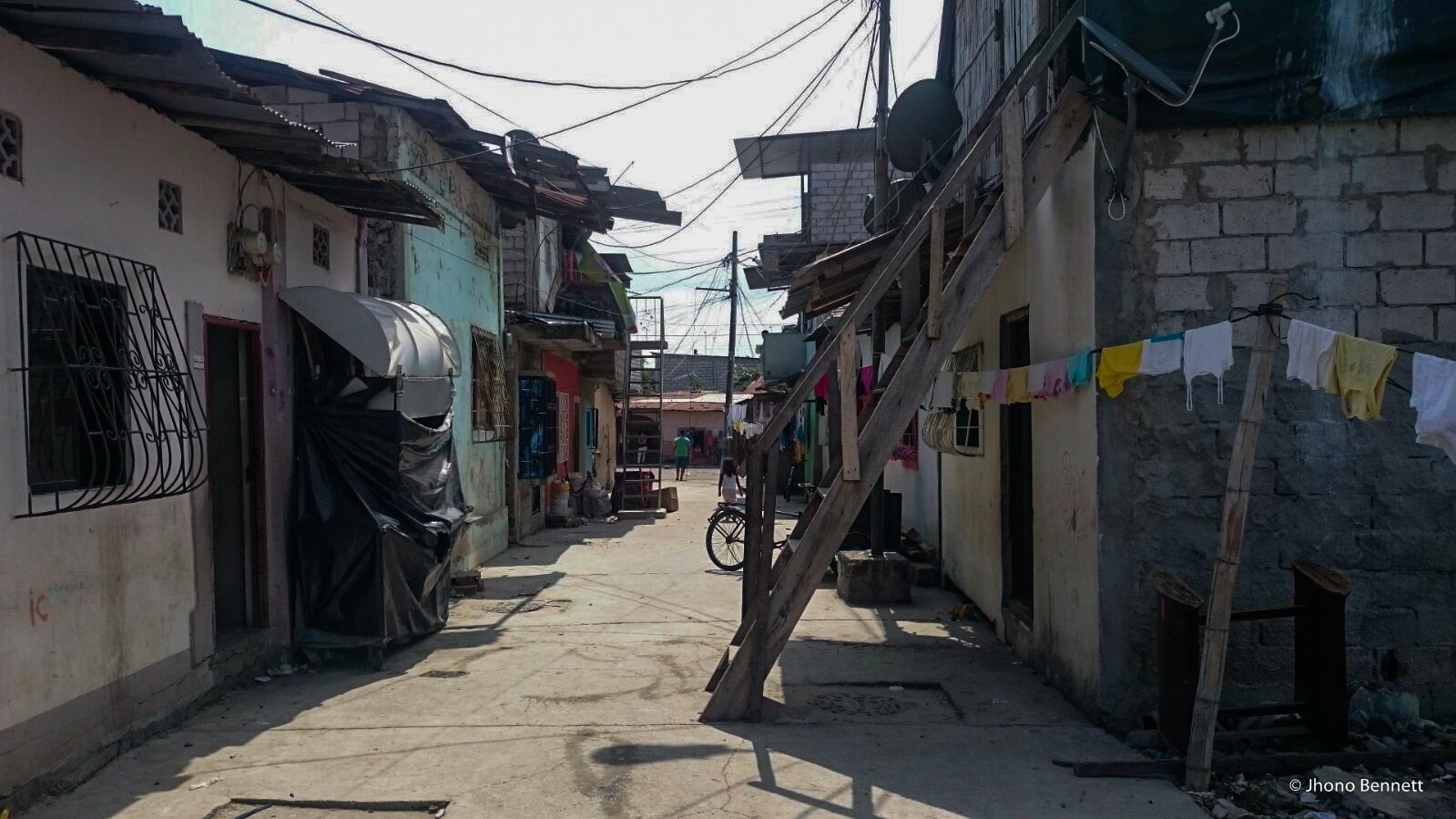
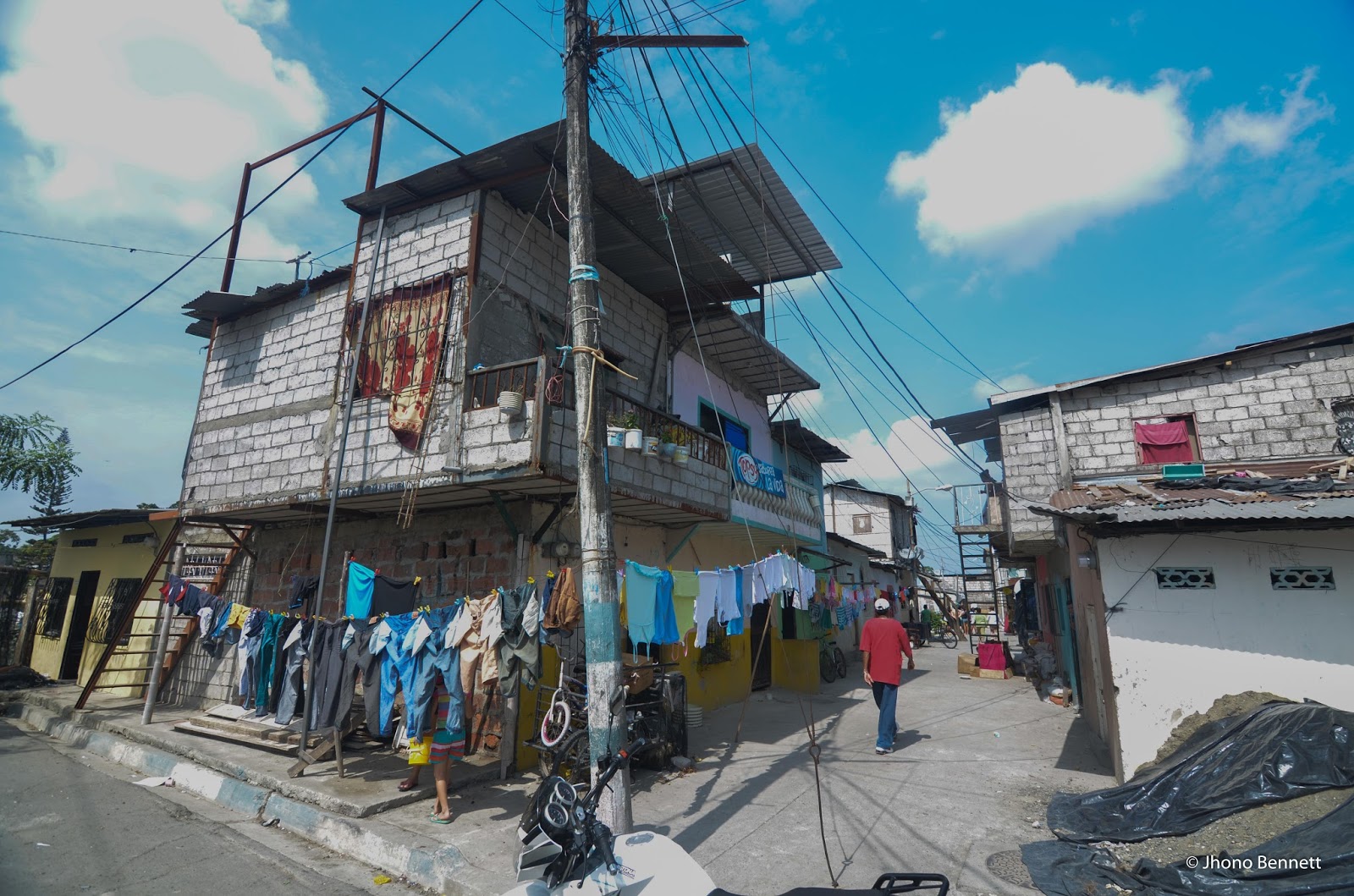
The first few days were spent on several immersive site visits to explore the Guayaquil Ecologico. projects and subsequent public spaces that emerged from such initiatives.
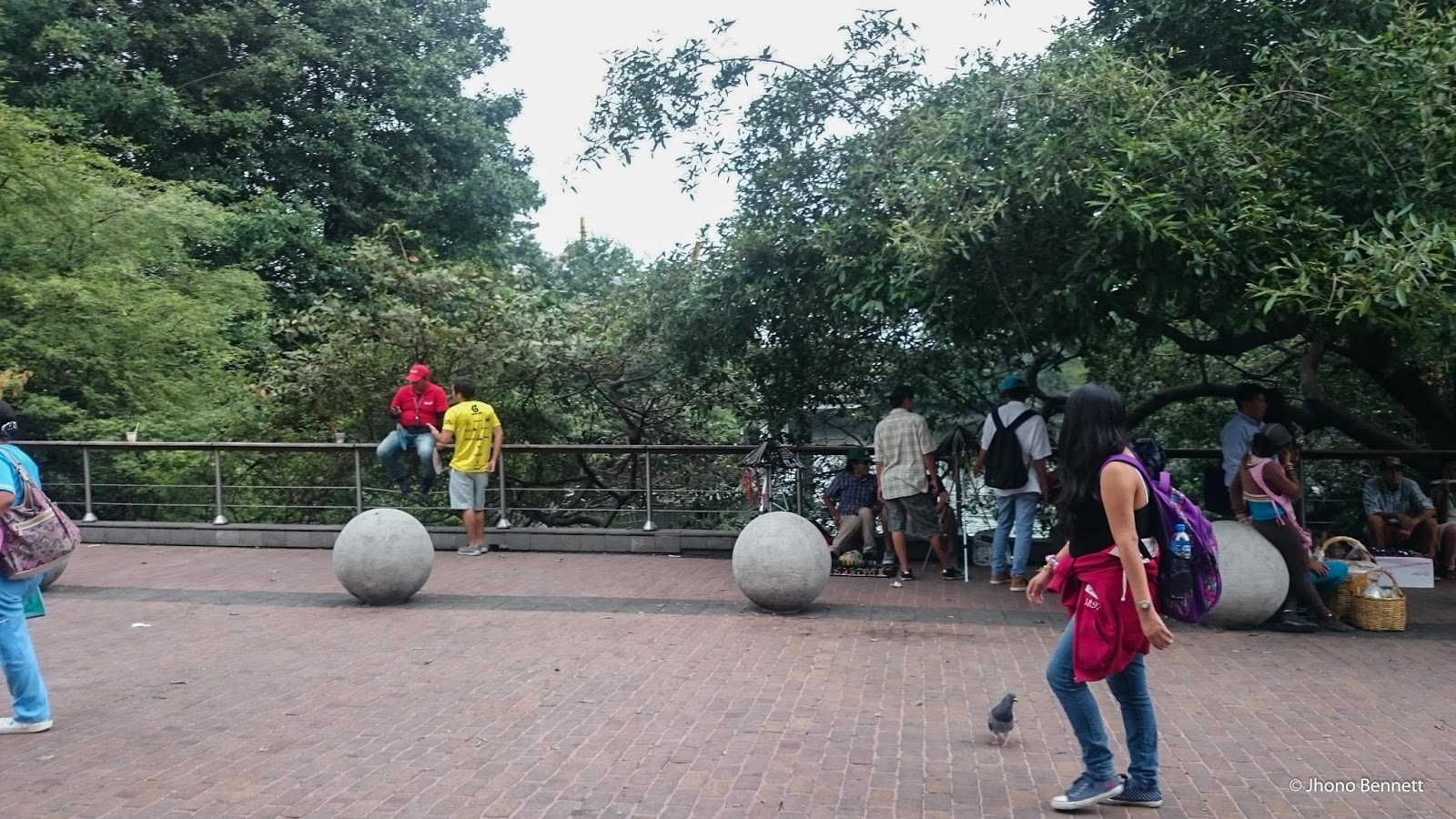
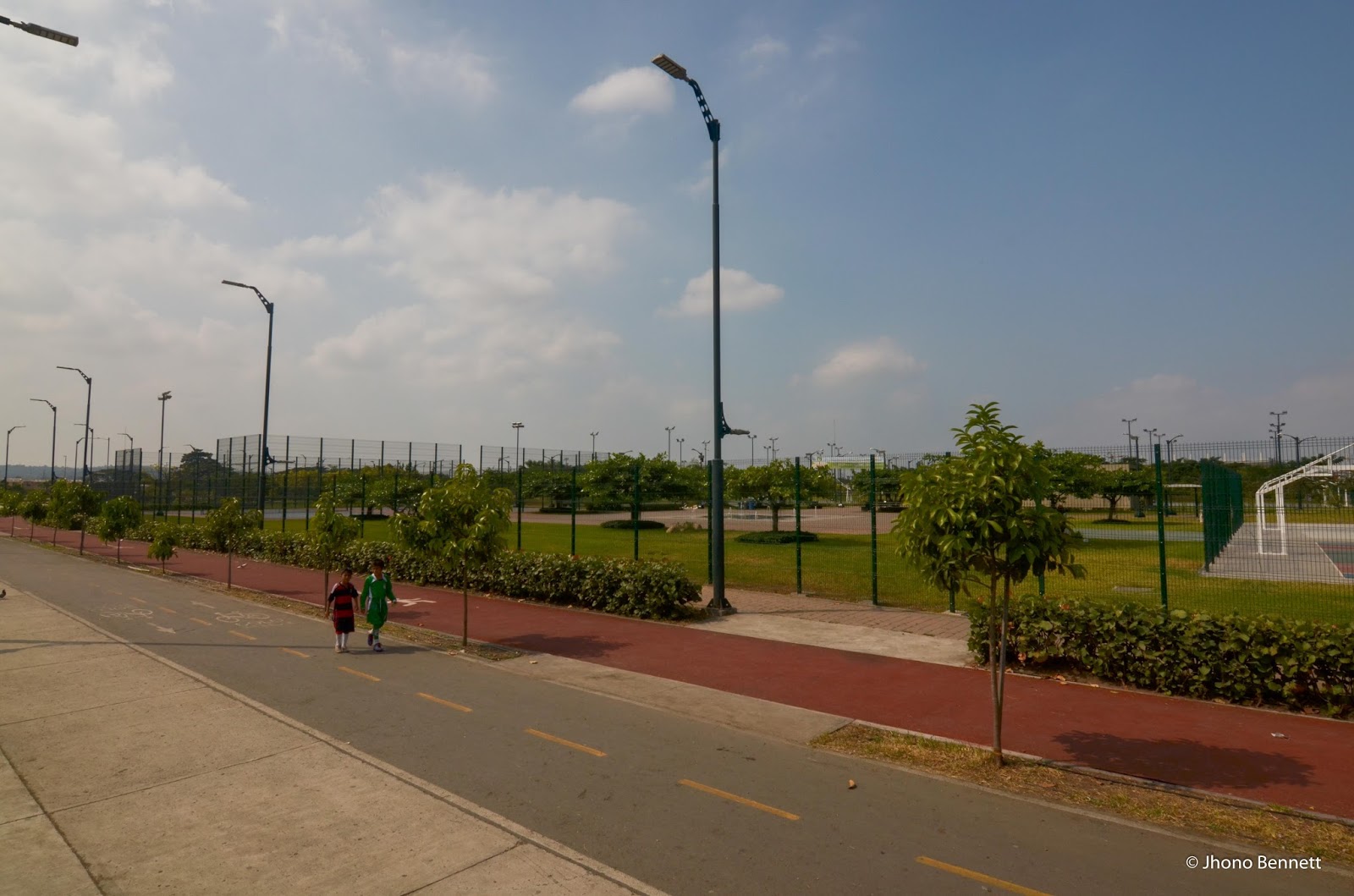
Heavily controlled ‘public space
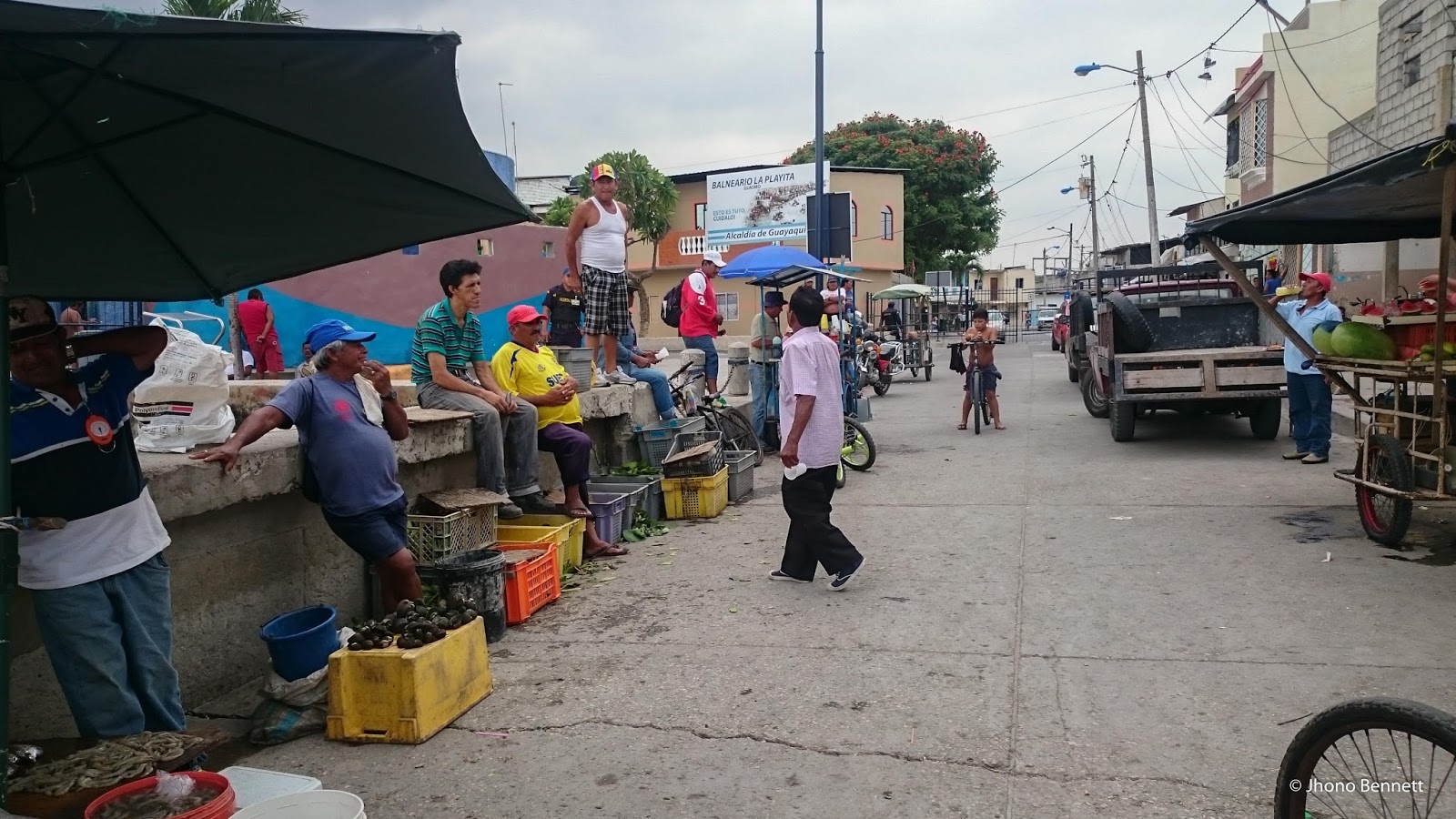
Market Traders strictly controlled in such public spaces
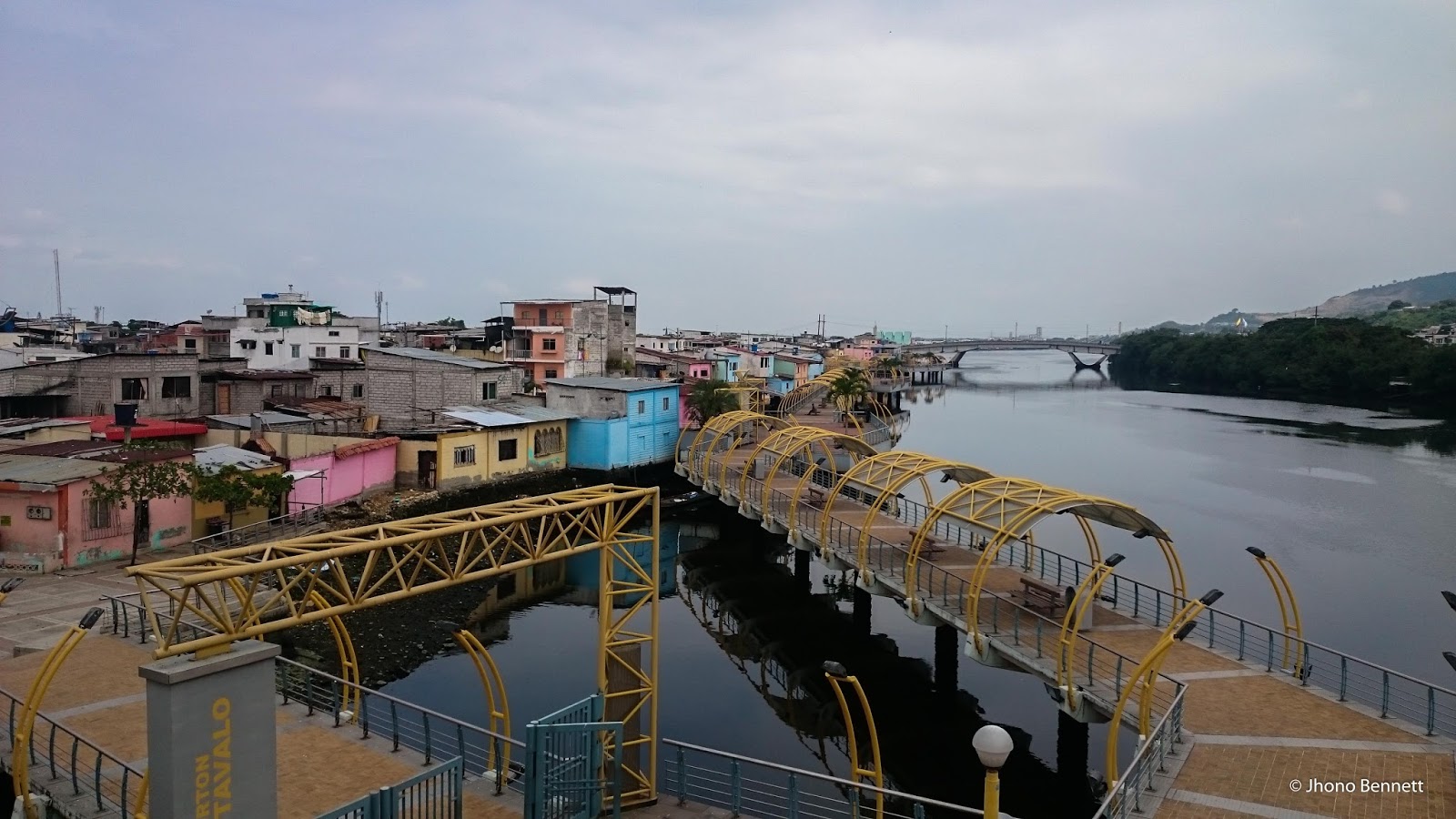
The Malecon (waterfront) project near the historical sector of Guaqyuil
Guayquil Relocation settlements (RDP)
Public Spaces in Guaqyuil are seen more in Shopping Center’s (Similar to RSA)
Gated Communities are as common as in Johannesburg and prolific on the city edges.
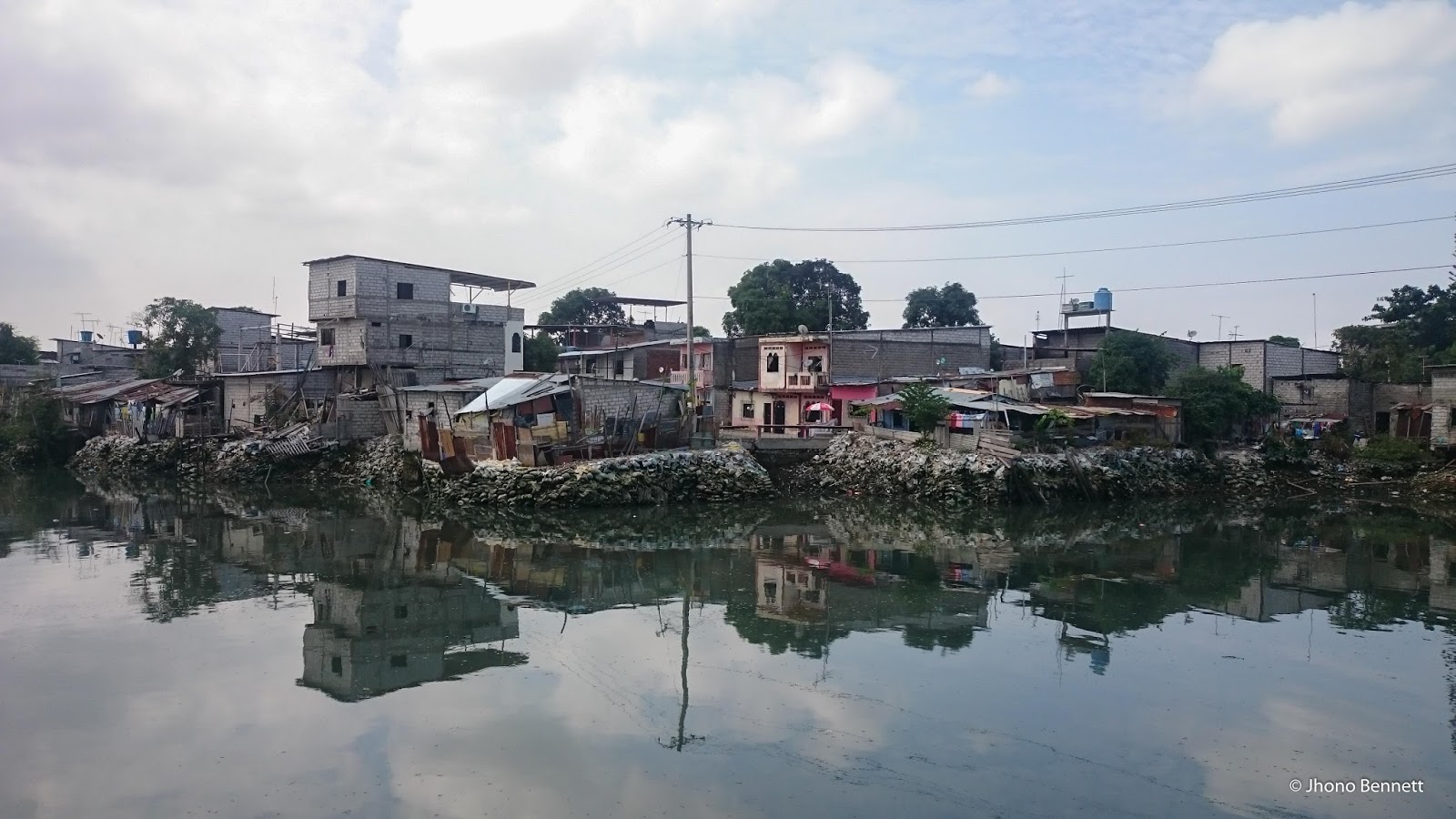
Environmentally vulnerable residents of the river edges
Evicted residents, pressure put on by government and local developers
Some public spaces work better than others
Such as this heavily controlled ‘public park’
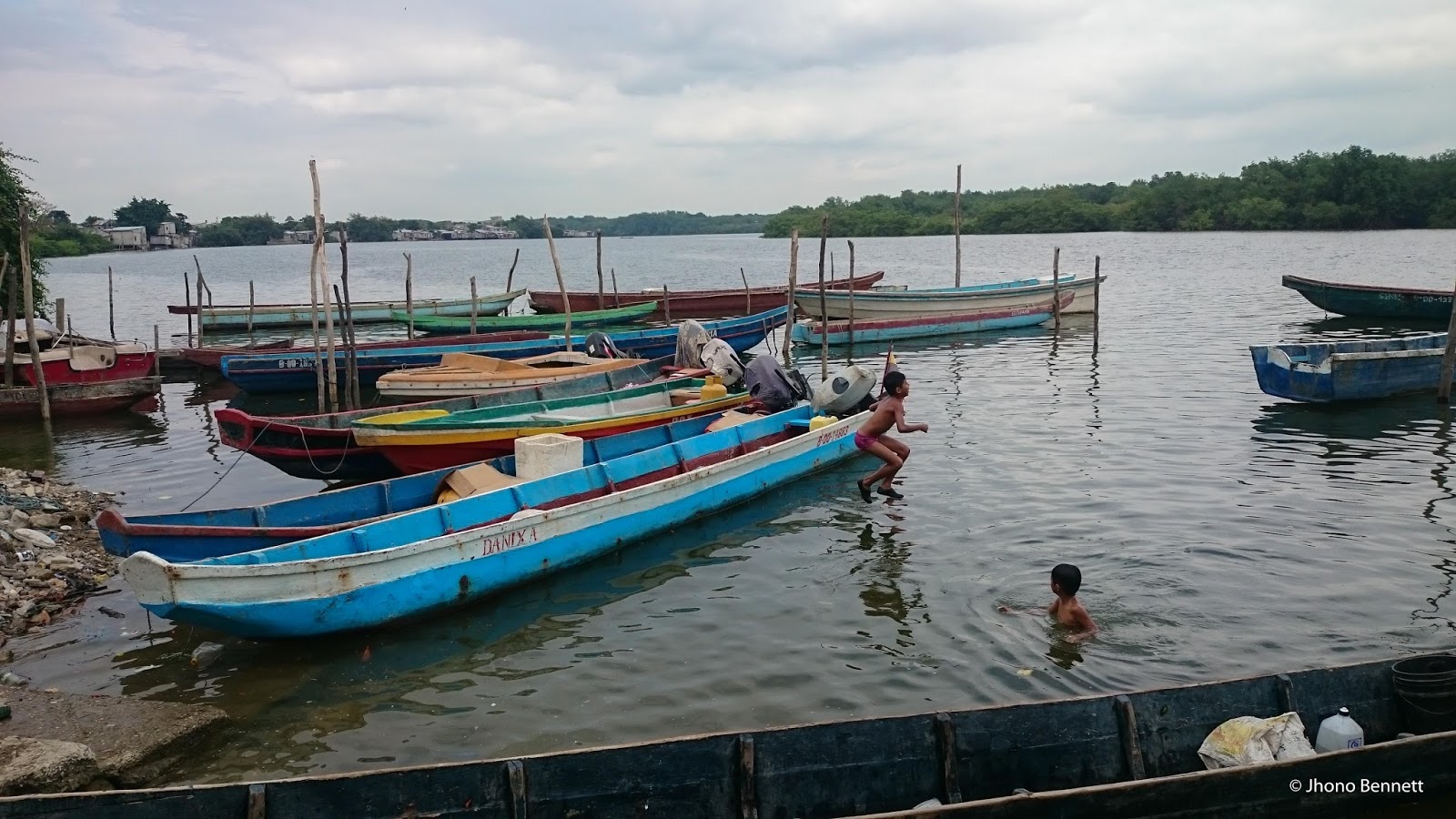
Fisherman’s livelihoods were most crucially affected by the issues of urbanisation, and predicted climate change
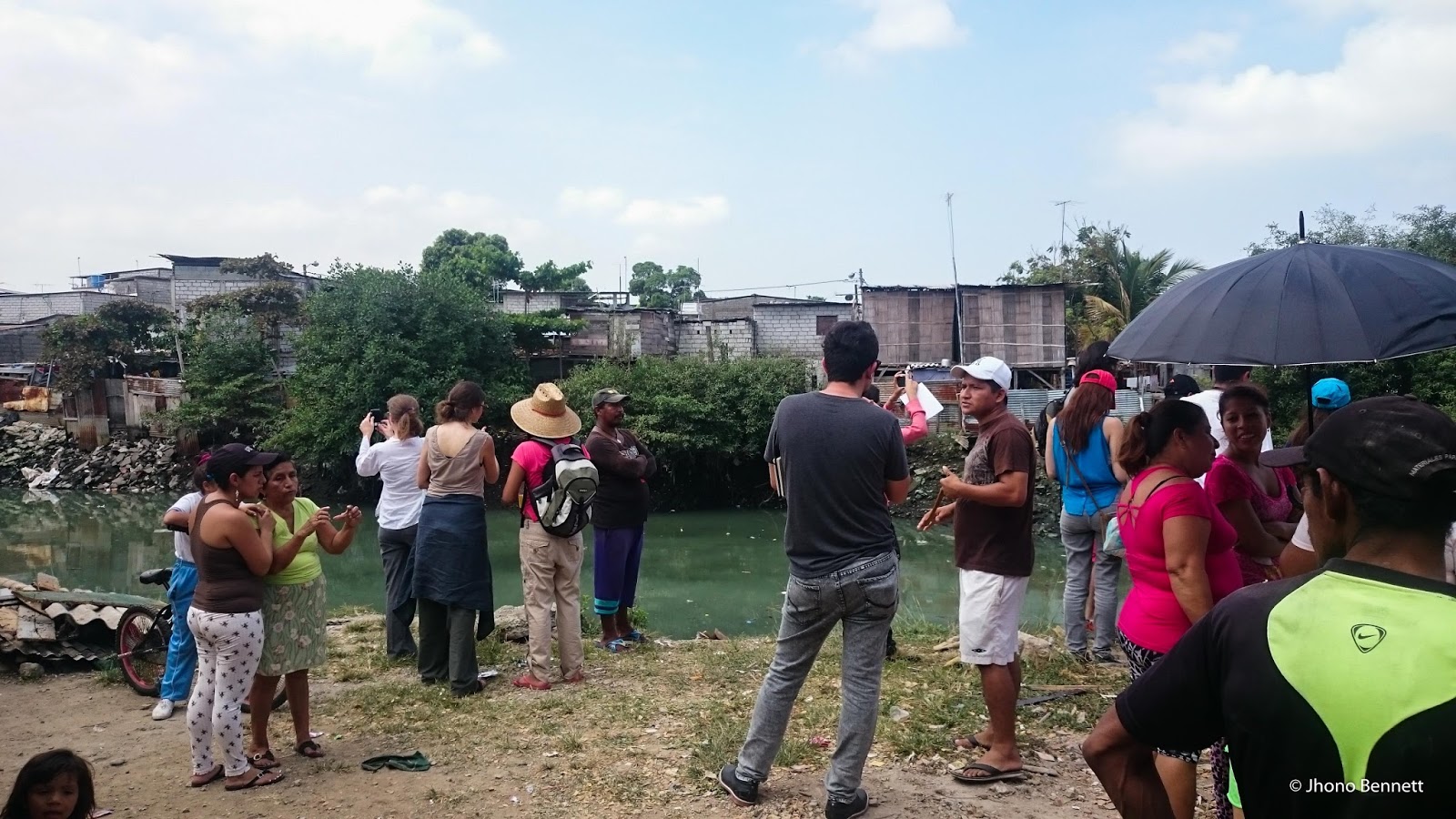
Local residents took us around their neighbourhoods
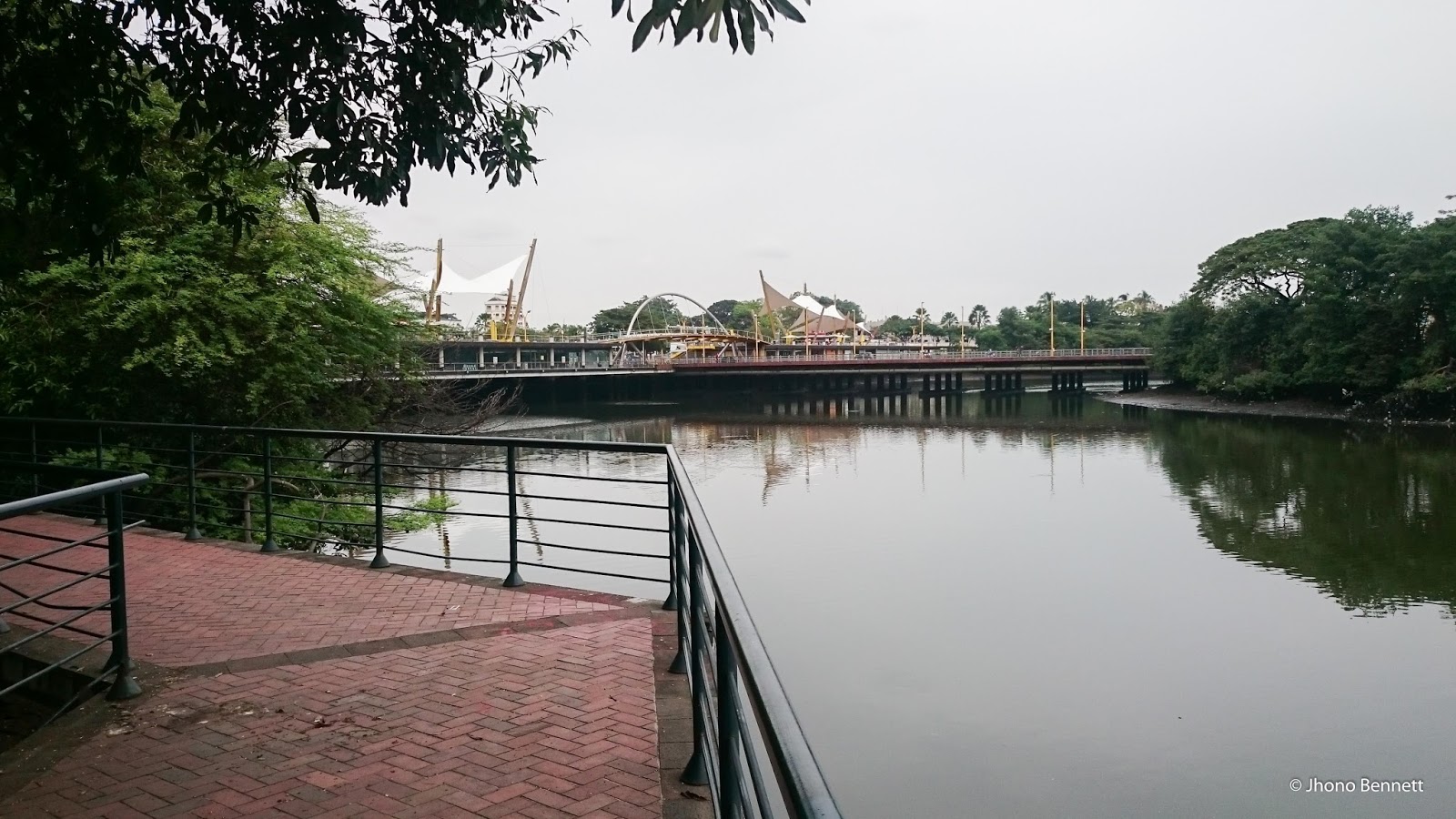
A ‘public space’project that sought to create better waterfront space
residents were encouraged to paint their houses to look ‘nicer’
The separation of waterfront from the neighbourhood was very clear.
Each day was spent either on field or in intense lectures and presentations, ending normally around 8pm. The organisers arranged special headsets for translation between English and Spanish.
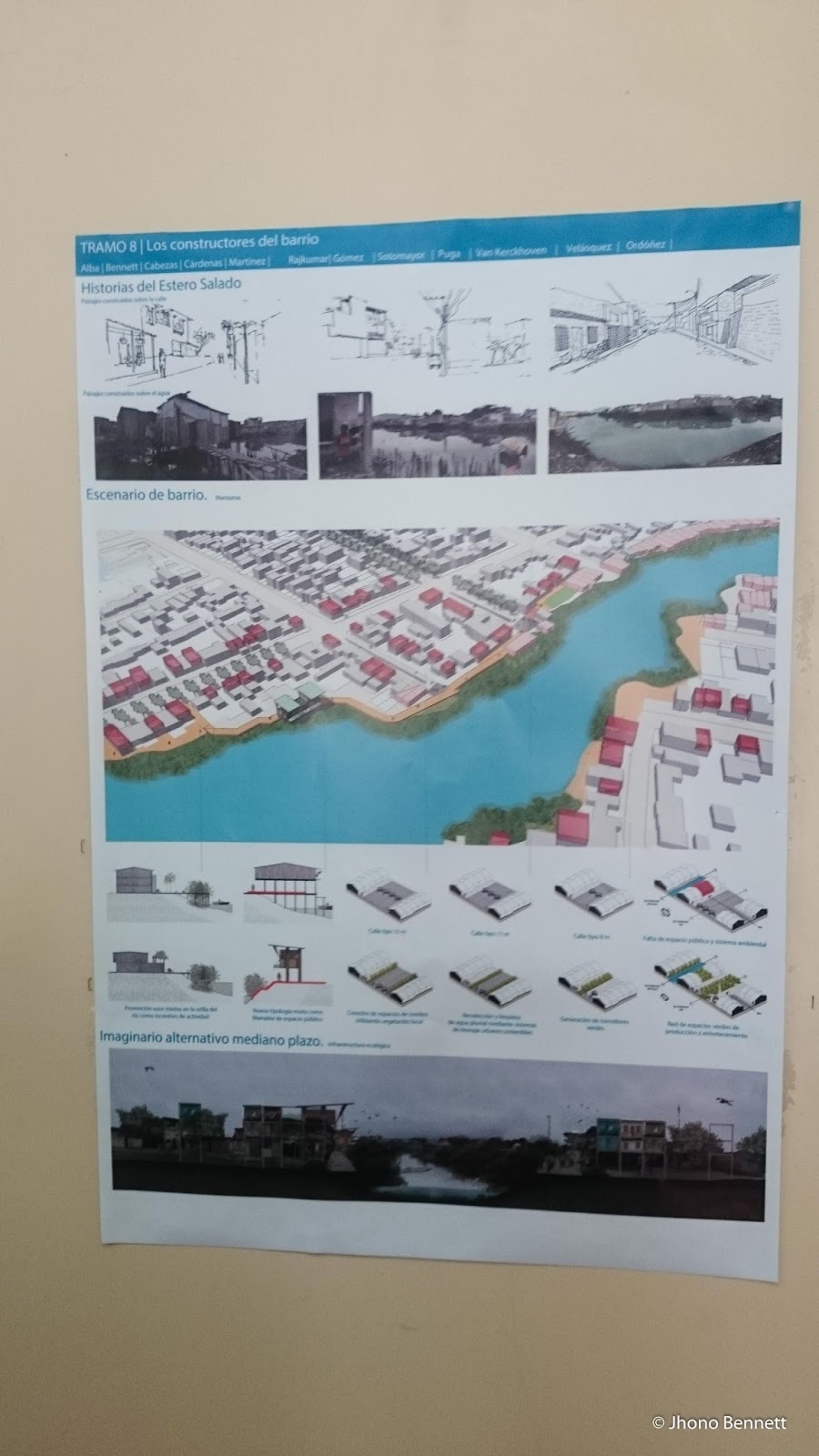
Tramos 8
After the initial site visits and lectures, we were assigned various sites and into groups to begin working with the residents of facing immediate threats of eviction and climate change.
Our group working with the local community leader, an advocate and activist.
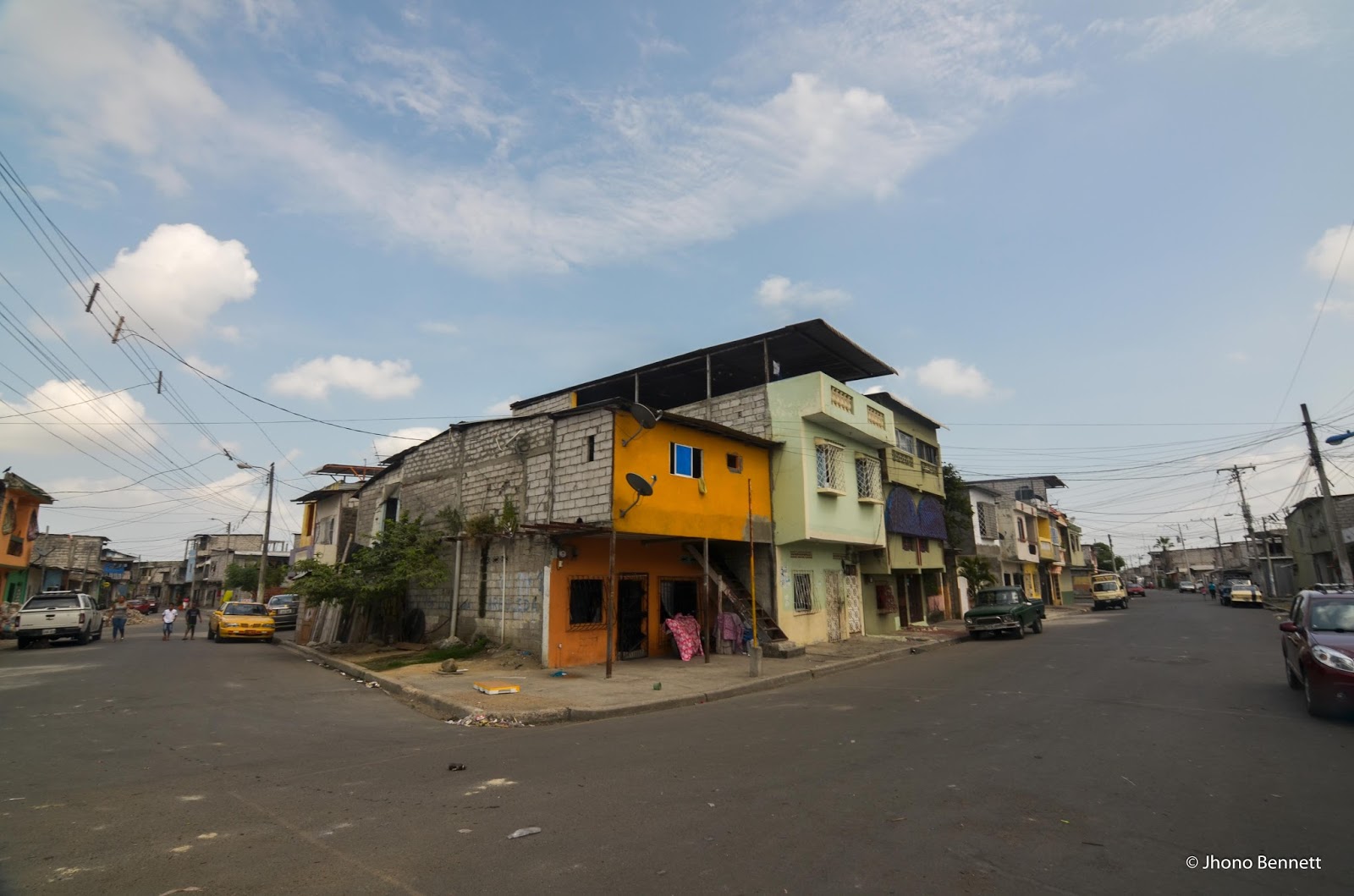
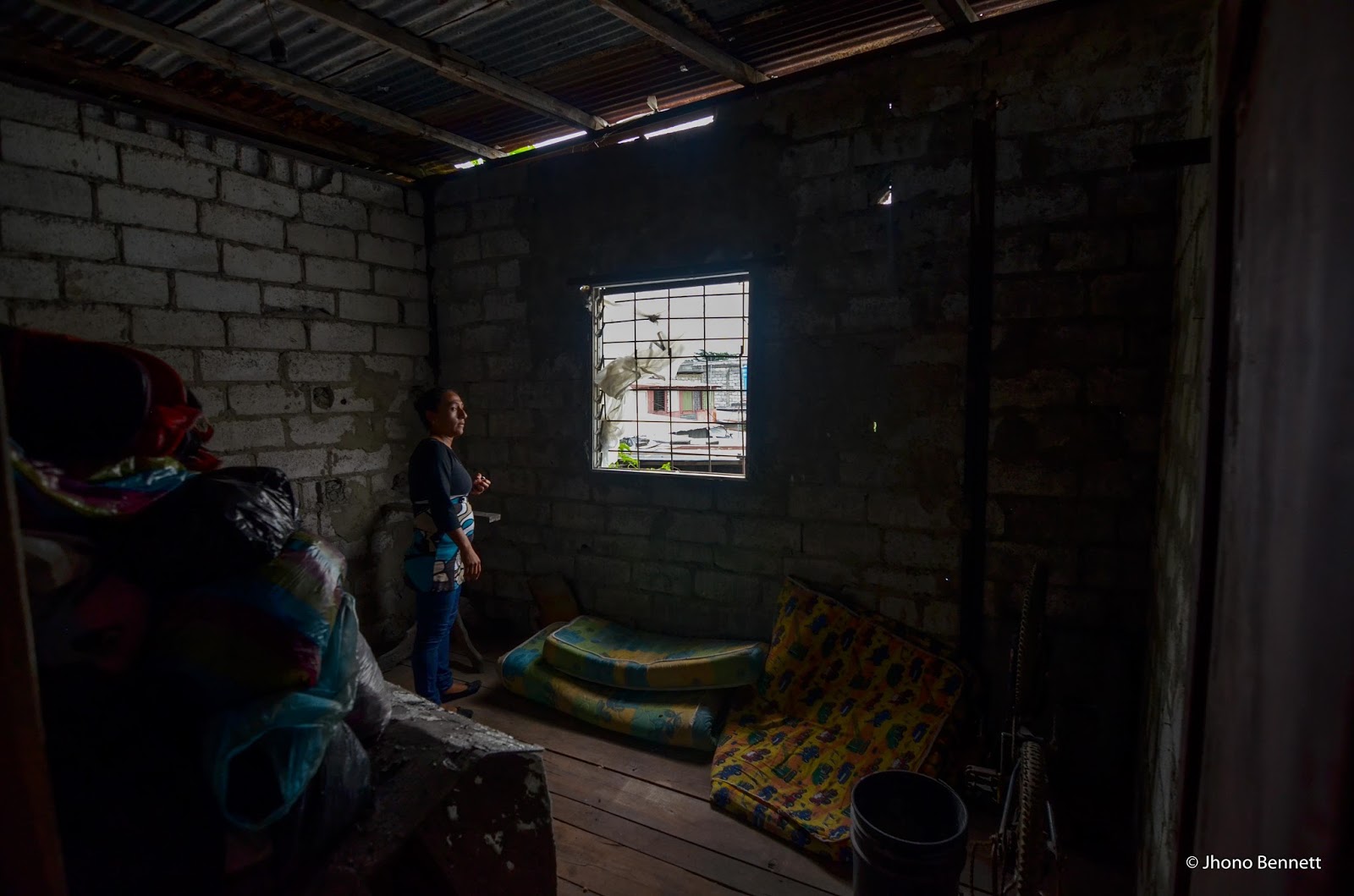
Various housing conditions
Various housing conditions
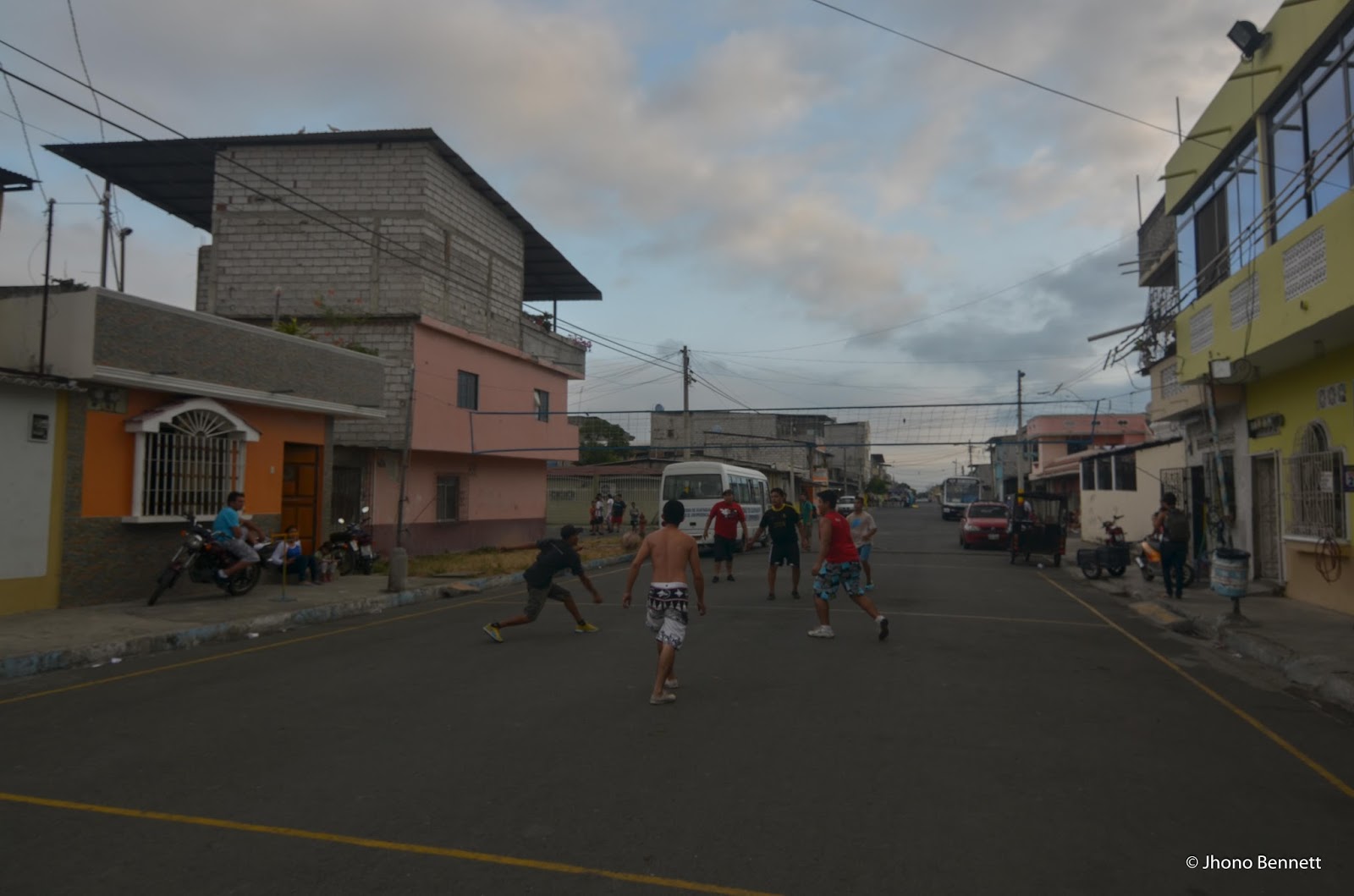
Public spaces in streets change daily
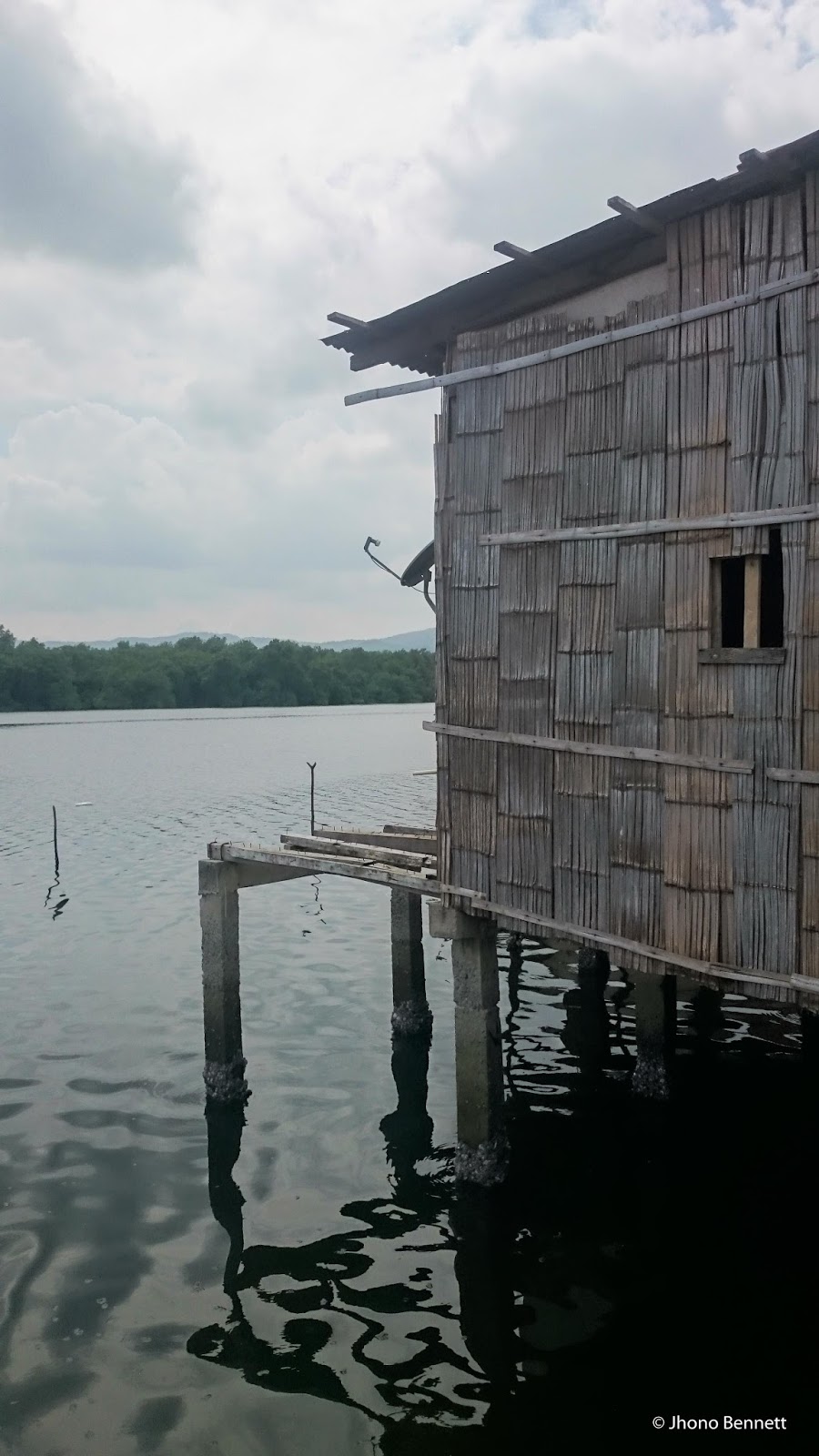
The proximity to the river was a health and security risk to some, but a livelihood to others
Construction typologies varied massively
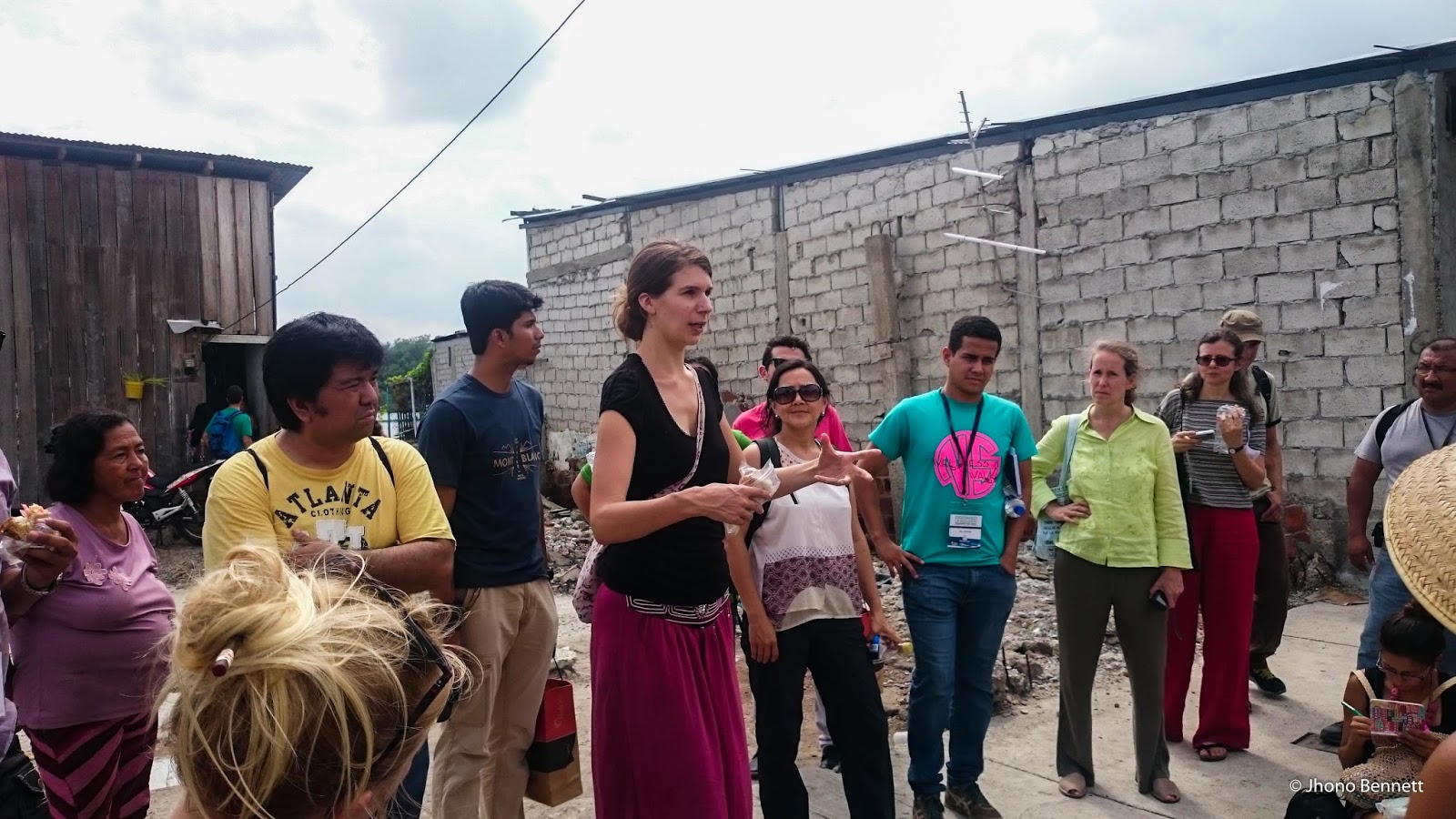
Local residents took us around explaining in detail the various challenges faced
A local architect had been commissioned to design a vision of little Venice that the residents of Tramos 8 were pushing local government for
The work
Our task was to take the immersive research done with residents and transform their needs and vision into a set of design strategies that took into account climate change, a relationship to ecological systems while addressing the complex social and economic factors of the people of Tramos 8.
The rest of the workshop focused on similar tasks in different areas across Gauyaquil.
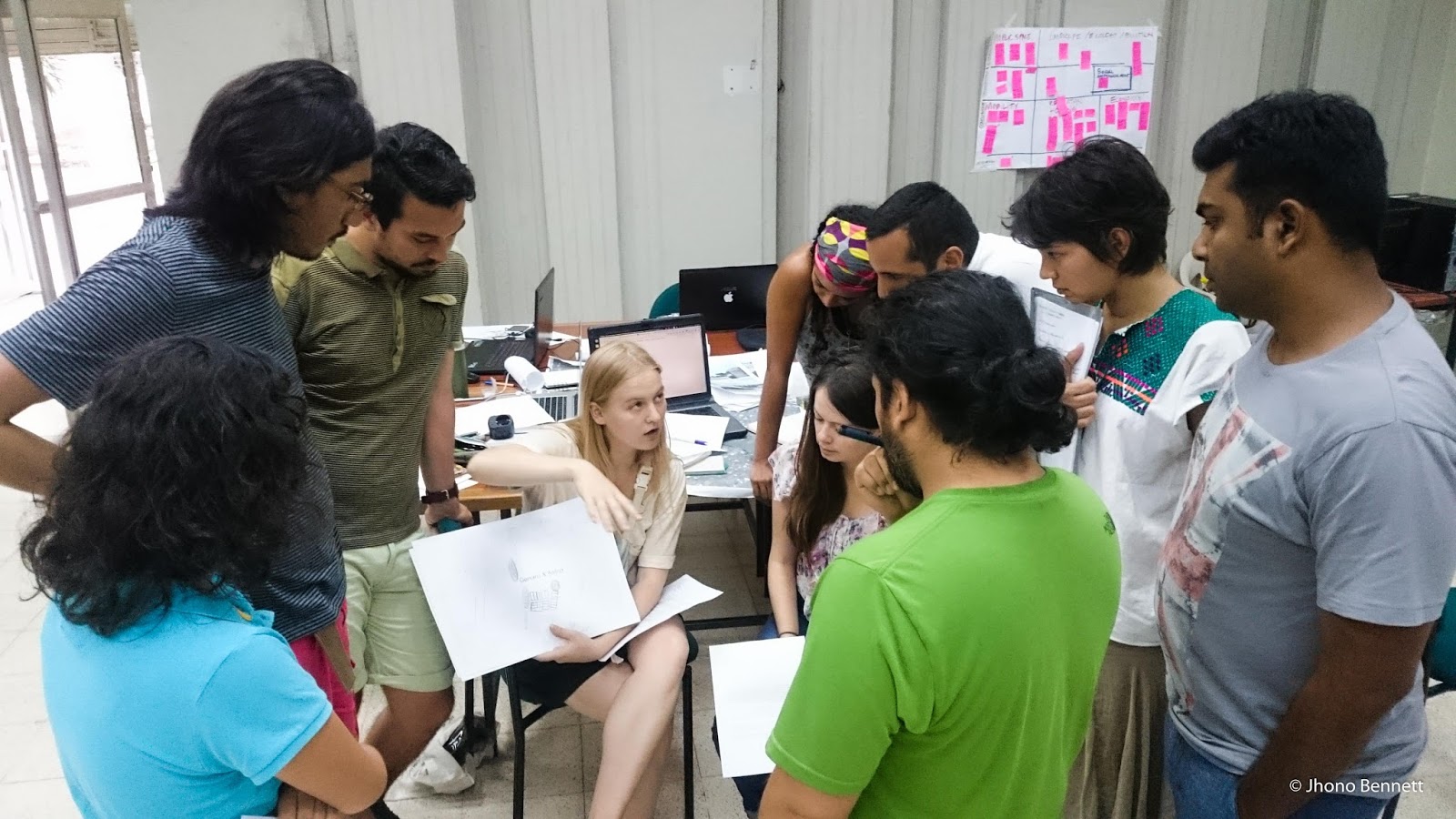
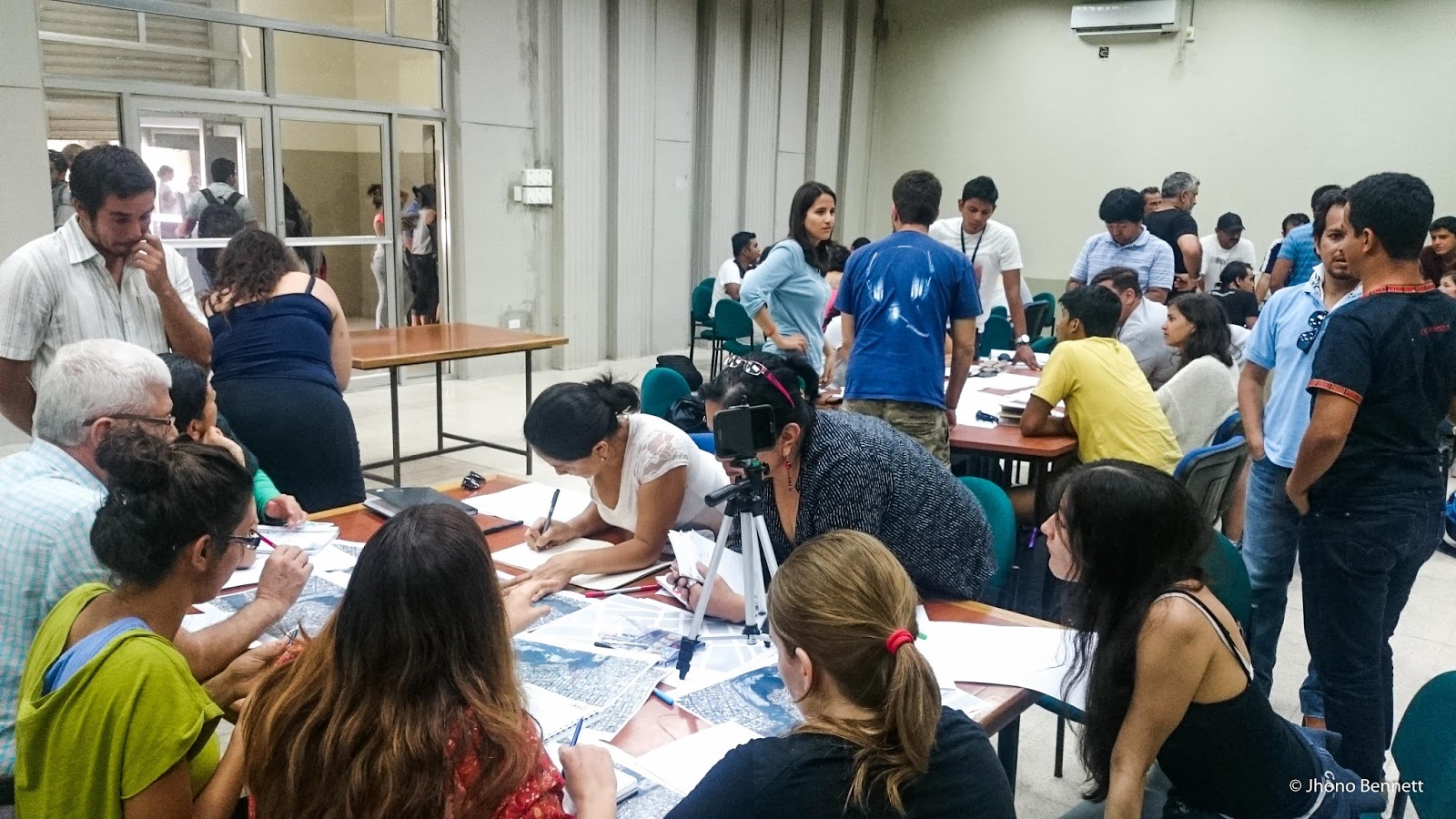
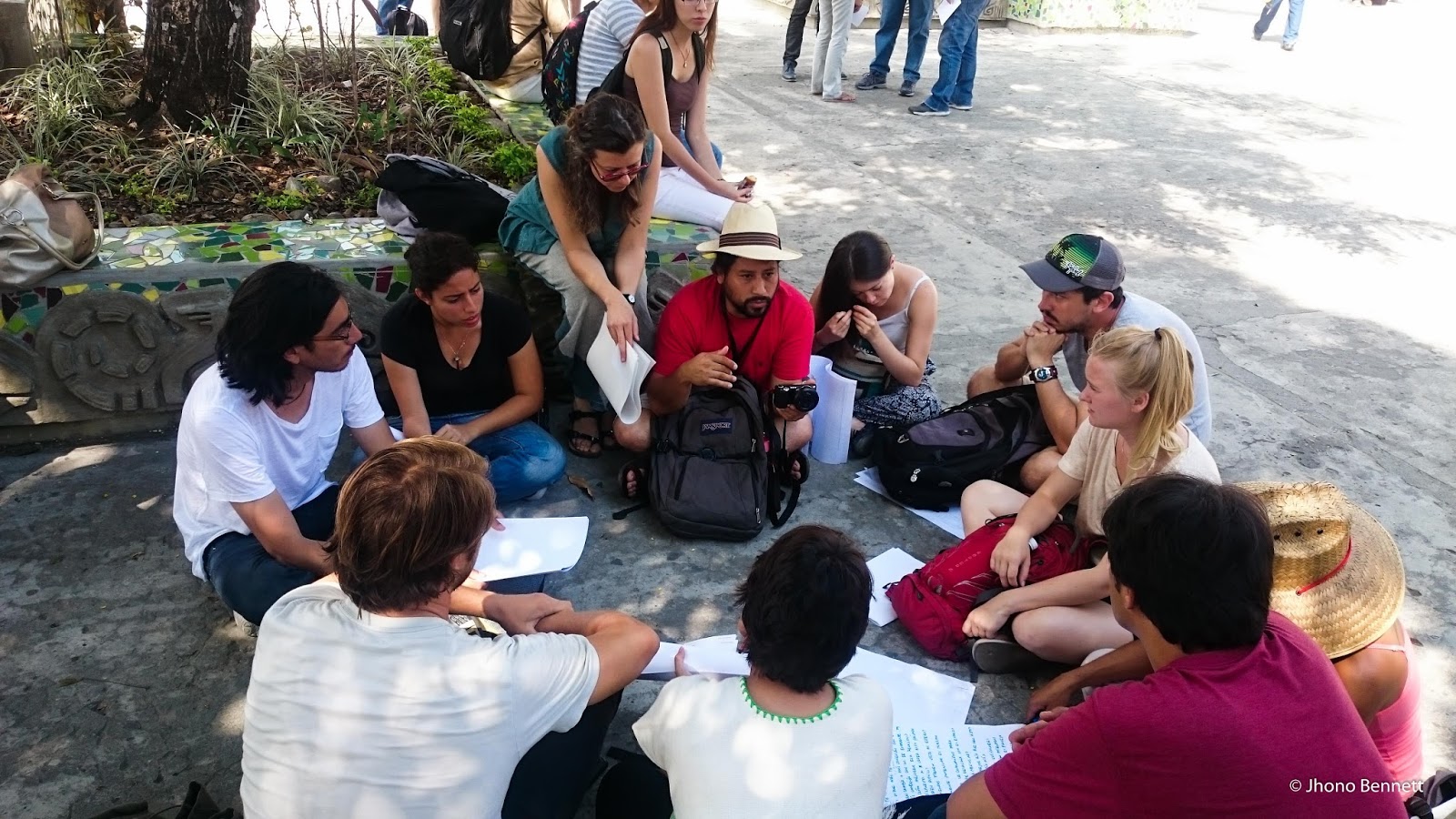
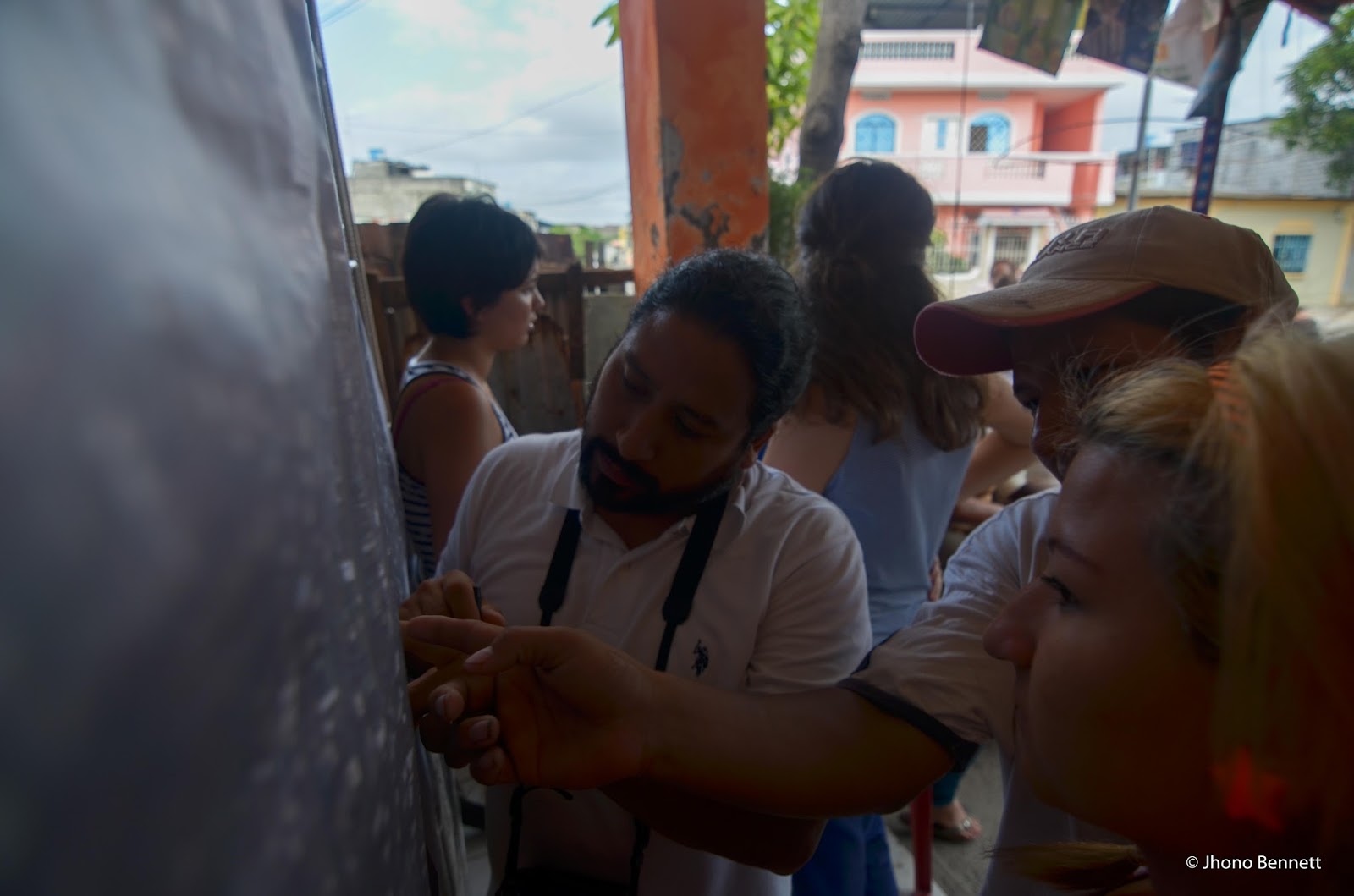
Workshops were held at local houses
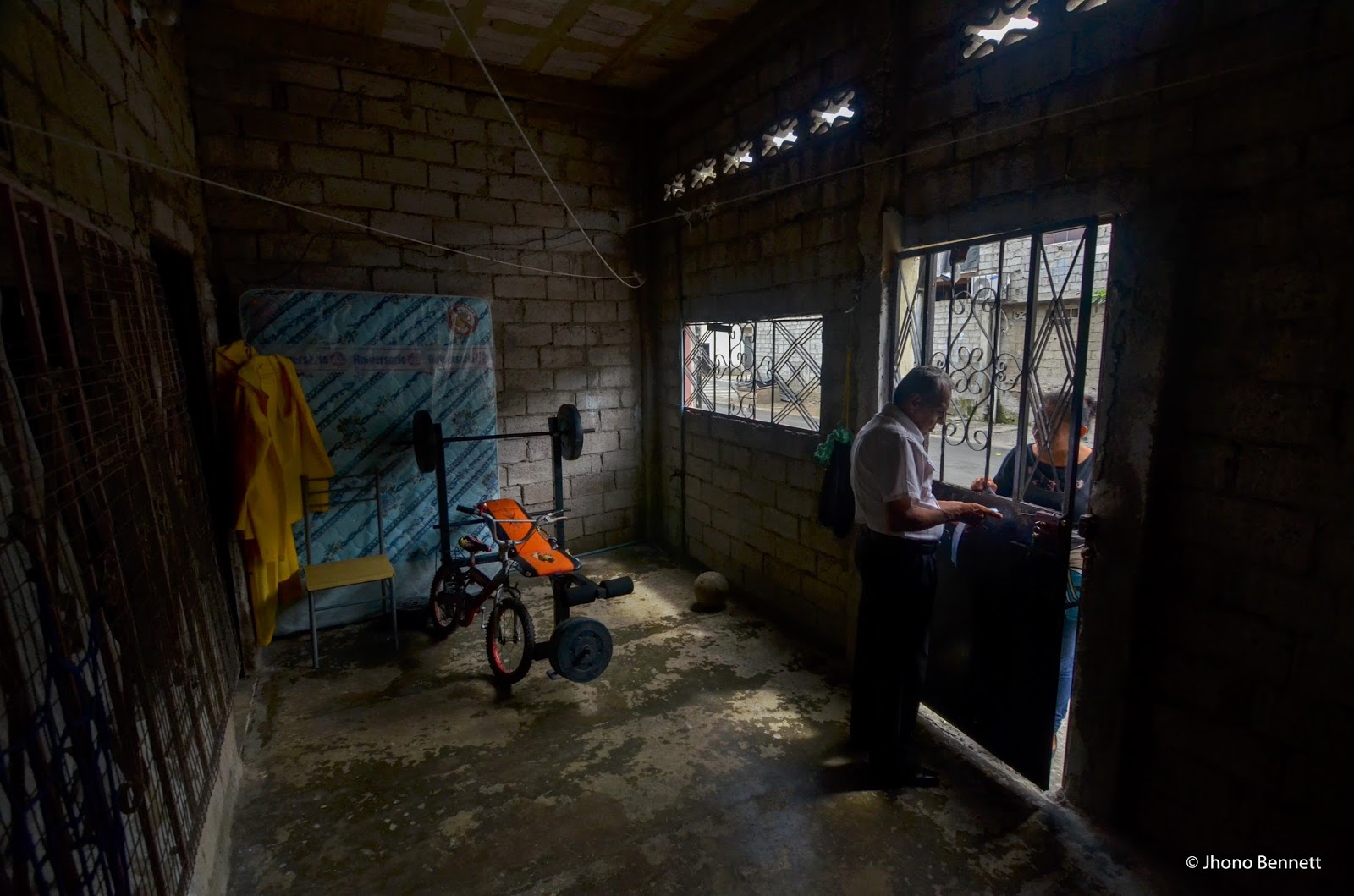
Residents took us into their homes to understand the space
The street facades were a crucial aspect of security and social capital
But mostly people turned their backs to the river
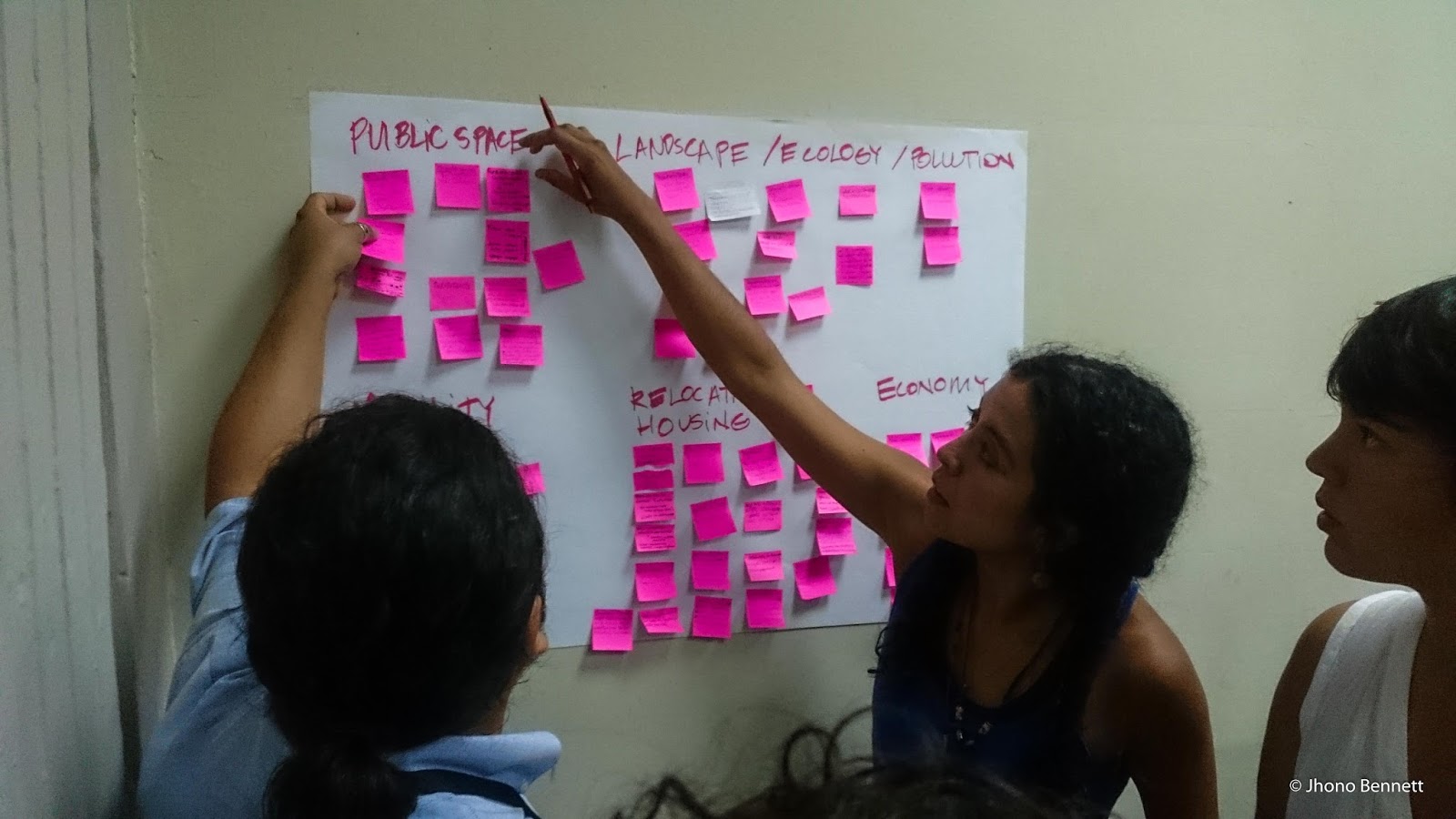
Our team sought to understand public space and design accordingly
This was done with several methods of data capturing
Workshops Our work was presented in a series of workshops held at the University and in the local neighbourhoods.
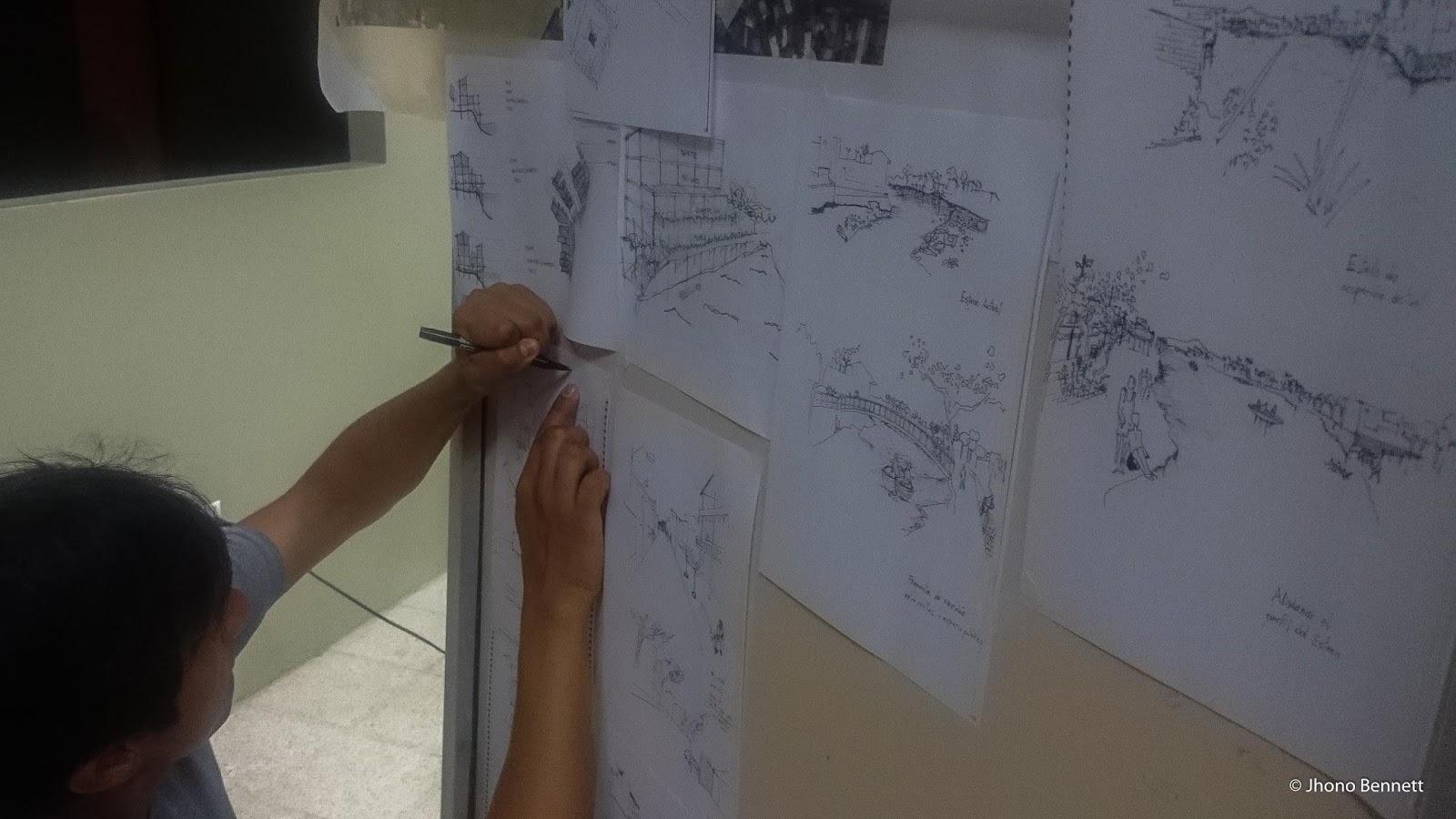
Strategy Image – Existing Condition
Strategy Image – Proposed Design Strategy
Our strategies were presented in this format, which did not work so well in the first iteration due to various miscommunication and translation errors.
But after this initial meeting, our team focused on smaller working groups and spent the remainder of the week working on site in more engaged workshops.
Here with more engaged residents we uncovered valuable information about the area, while developing a stronger communication tool set and focusing in on examples of upgrading such as the fisherman.
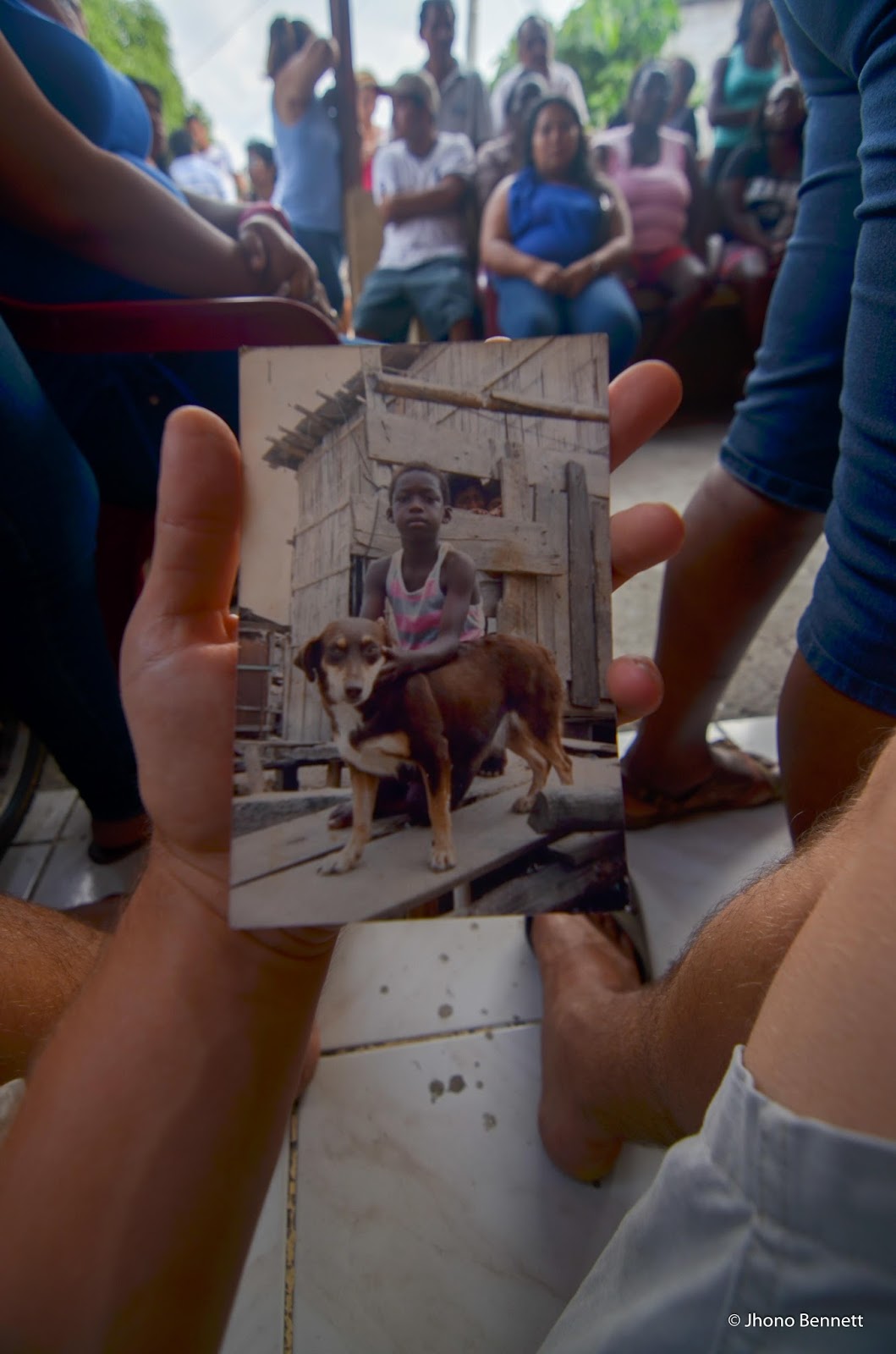
Interviews with the fisherman families
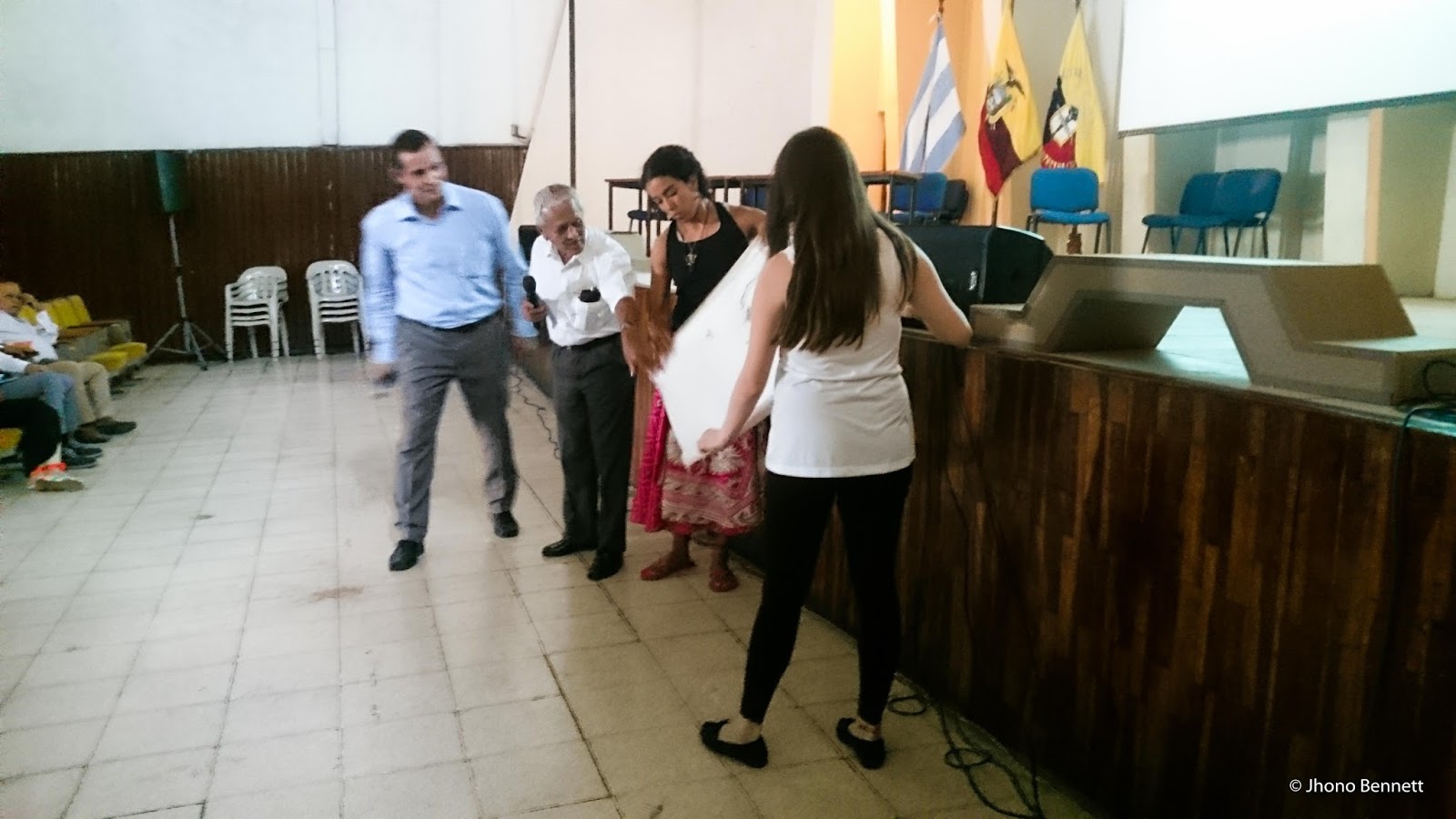
Final Workshop After a very intense 2 weeks of non-stop work we presented the co-developed scheme to the residents alongside the architect who commissioned the original ‘Little Venice’ scheme.
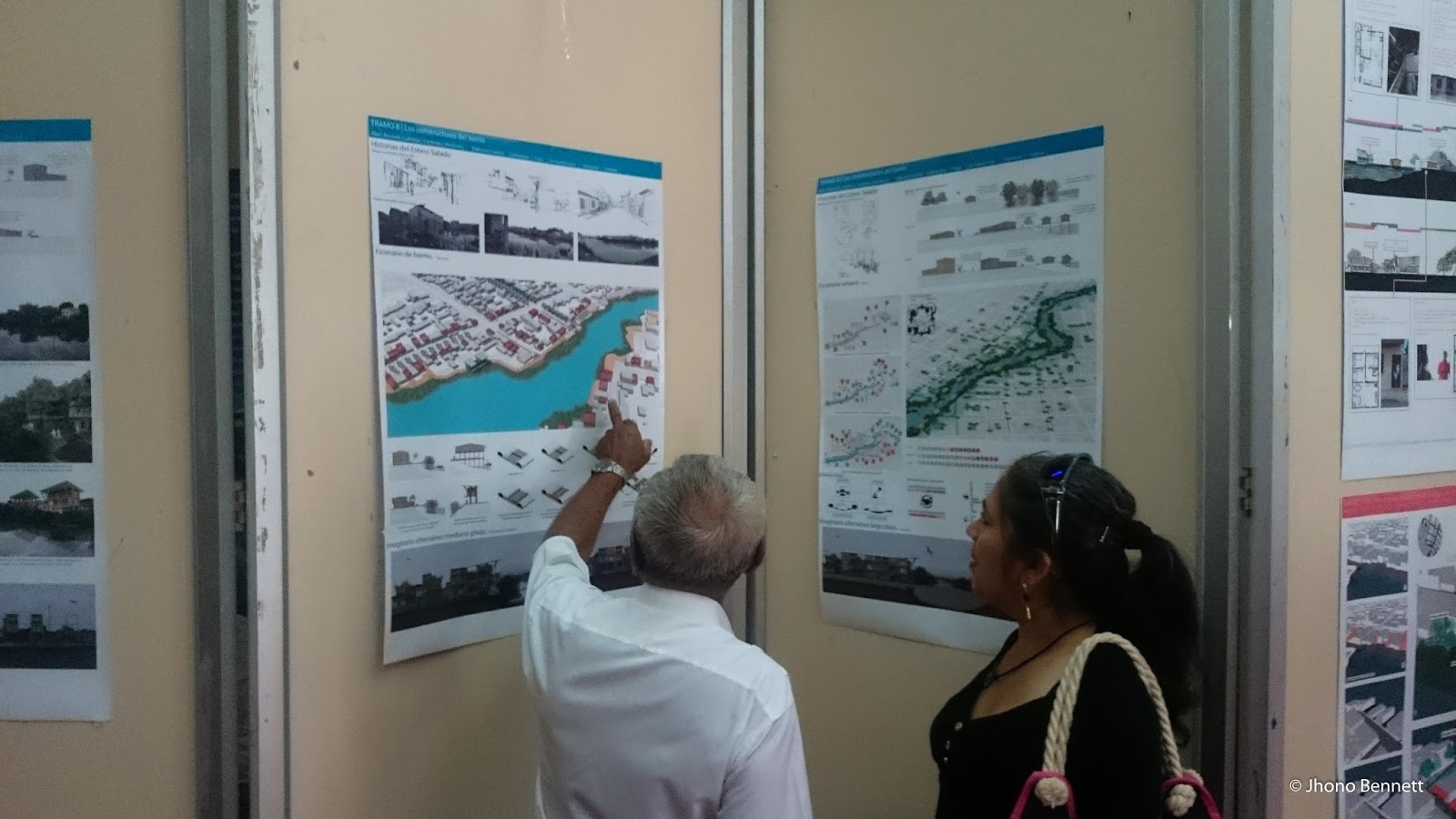
Tramos 8 final presentation posters depicting the development strategy
Image from final design strategy
The presentation was much better received in this 1to1 format, than in the large presentation arena
Our team returned to Tramos 8 to present the whole programmes findings to residents in their neighborhood.
Position & Values
As a non-Spanish speaker I was forced to take a backseat in this process and contribute where I could technically and with some workshop tools. This position forced me to reflect on the manner in which I approach such design challenges in the face of the summer school:
As a designers we are forced to enact our own values and understanding through design decision but with this, we are complicit in this action of forcing our own values on people who may not share such social, cultural or economic values.
Our position as architects trains us in a common language of speaking through design drawings which again, is not a language shared by non-designers, yet we struggle to see this and blame people for not understanding our vision because they cannot read such drawings.
I was surprised that such ideas were so hard to discuss with a group of 40 designers who I would assume would be more reflective on the position of privilege they unwittingly hold.
I was also taken back by the manner in which the summer school used design; in my experience design is used as a tool to understand and co-develop understanding and communication tools as well as a tool to strategise future development proposals, but here the design proposal was used as the communication tool, a different approach to my own – but one that I felt a bit strong for such a sensitive context.
That being said, I did see the value in bringing together a group of highly skilled technicians to address a very complex technical design issue, and what could be produced in such a short period of time.
The workshop exposed me much about the role of designers in such contexts, and only cemented my resolve to further develop the role of socio-technical spatial designers in South Africa.
studioATdenver was a multi-year teaching and learning programe in collaboration with residents, community leadership and multiple stakeholders involved with Denver Informal Settlement in Johannesburg.
This program was established to take course over a period of 3-5 years and supported a much larger development process that Denver is already a part of in regard to the Department of Human Settlement’s work in Gauteng and South Africa.
“AT focuses on integrating resources and skills towards promoting awareness and generating appropriate responses to the context of rapidly changing and often unstable contemporary urban phenomena.
This approach is underpinned by people-driven methodologies for engagement, research, design responses and planning strategies.”
AT operated through this processes of engagement by partnering with local leadership, civil groups and residents living in Denver. Outcomes for colloboariton were carefully developed through immersive, collaborative and co-produced process of pre/post and active engagement and established an iterative trans-disciplinary platform for exchange and cross-capacitation.
The studioATdenver: 2014 -2016
The course aimed to engage students and staff of the Univerity of Johannesburg’s Department of Architecture in an active and careful social engagement, research and design process where the outcomes and project parameter would be identified and developed in collaboration with the various local actors (residents, local government, private sector e.t.c) with the underlying intention to ultimately assist residents in their current efforts to spatially develop their neighborhood.
The structure of the social engagement was built on methods, techniques and principles developed through earlier formative collaborative platforms; informalStudio: Ruimsig (2011) and informalStudio: Marlboro South (2012). The core underpinnings, purpose and relevance of AT stemmed from and was built on the development of, and involvement in, these preceding studios.
The studios took place over a multi-week integrated studio format, that guided a focused engagement between students, the residents and leadership of Denver, Johannesburg.
The studio pursued both practical and theoretical methodologies (conceptual & pragmatic) and allowed for open ended, process driven, outcomes. The curriculum was under-pinned by community based planning methodologies and ethos that aimed at co-producing highly responsive ‘community-action plans’ based on the engagement outcomes and research. These action plans were structured to investigate and co-develop short, medium and long term planning scenarios.
The studioATdenver actively recognised the settlement residents and community groups/organisations as both clients and partners and it was the studio was structued to galvanise developing relationships with local active NGOs (CORC & uTshani) who were already underway with community focussed processes on site, as well as the interest of the the National Upgrading Support Programme (NUSP) and the informal Settlement Network) (ISN) with Denver as an identified category -B settlement for the Department of Human Settlements (DoHS) development list.
The program allowed for students, teachers and teaching practitioners to engage with a people-driven process of development. A core principle of this studio was that teaching & learning took place through the action-research and the physical doing of collaborative work between the field (the context) and the class room (the university) in support of developing linkages between theory, practice and research.
The studio thus aims to expose students to process oriented methods of participative planning, shifting the focus from product (delivery) to alternative approaches (responses). Despite the on-going backlog of South Africa’s formal housing delivery, the upgrading of informal settlements (as defined by the DoHS) and the residents living within these areas is seen as one of South Africa’s key National Delivery Targets.
Yet NUSP, tasked to assist National Government’s efforts “to improve basic infrastructure, services and land tenure for 400 000 households in well-located informal settlements by 2014” (National Development Plan: Outcome 8), is still facing a shortage of suitably qualified professionals and officials regarding:
Meaningful community engagement around collaboratively identifying needs, challenges and existing expertise and processes through collective efforts of immersive observation and exchange.
Analysis of Community Action Plans (CAPs) in direct response to their immediate condition, needs and means, then combining these CAPs with strategies employed by more formal processes of infrastructural and housing delivery.
Development of rigorous frameworks for adaptive settlements, self-made improvements and future change.
Co-designed strategies for small scale, allowing people to adapt ‘delivered’ responses more suited to specific needs, challenging current professional or state definitions of housing.
Production of architectural and urban strategies founded in rich collaborative efforts investigating; density, economy/ies, spatial scenarios, systems, adaptability and programmatic complexity.
In addition the program aimed to bring awareness to the broader housing crisis facing South Africa and the potential role that architects and spatial practitioners can play as responsive professionals toward this challenge:
“For the provision of basic shelter to lead to healthy, integrated neighbourhoods, the planning of new settlements and the re-blocking of existing ones need to be guided by robust urban frameworks which help structure the richly complex growth typical of the informal settlement. ”
studioATdenver Brief – 2014
“Architects working in collaborative constellations can offer real value through their ability to integrate both the intimate (domestic) scale as well as the overall (settlement) scale.
Yet in the absence of appropriate training and methodological approaches this potential remains largely unfulfilled and likely to remain so unless academia engages more directly and proactively with real world needs and demands. This course attempts to do just this.”
(excerpt from general course outline informalStudio: Marlboro South, June2012)
Context
Denver is situated in a light industrial zone located along the eastern edge of a broader industrial belt spanning the southern extent of Johannesburg’s CBD. It sits adjacent to the historic east/west gold mining axis (known as the ‘main reef’). This industrial belt (buffer) is embedded into the surrounding urban fabric, simultaneously woven and disconnected by multiple forces: mine dumps, railways, arterials, freeways and storm water channels. Over the past 15 years residual industrial lots and open spaces have become appropriated as living environments affording well located shelter within the inner city.
Denver Hostels and other surrounding settlements emerged, accompanying the city’s development, to accommodate migrant workers arriving in the city, controlled by previous apartheid planning approaches. The numerous hostels in the broader township vary dynamically in terms of spatial and social conditions. Such differences are largely informed by management and leadership. Denver (township/informal settlement) contains minimal established residential areas within its confines – The closest larger established (‘formal’) residential suburb is Malvern East, to the North. Other nearby townships include; Benrose and Jeppestown to the east, City Deep and Heritodale to the south and Gables to the east.
The larger Denver neighborhood sits well connected to various mobility lines; the M2 motorway, Main Reef road, The railway line (closest station..?) and taxi routes. From this is can be considered an area with high levels of accessibility, mobility and visibility. Through these well developed transport networks and as an industrial node offering employment, many people transit the CBD and surrounds en route to jobs in Denver and surrounding industrial areas. Denver can be considered as both a regional destination and transit point taking the provision of employment and other services (manufacturing, motor repairs etc.) into account.
The fabric of Denver comprises of mainly older industrial stock, many of these large factories and warehouses are disused. The area developed rapidly from 1920-1940 and much of the disuse is due to the fact that most buildings are now either unsuitable or less competitive for contemporary industrial uses.
Further to these conditions, the proximity and relationship to the nearby hostels and surrounding social housing developments suggest noteworthy, both historical and emergent, living conditions as informants to perceptions and aspirations towards the provision of services and housing.
Pre-Engagement & MOU
An elongated period of pre-engagement with the various leadership structures was conducted before the studio began, to clearly determine the nature of the studio and the expected outcomes and processes. These meeting included the local ward councillors, regional leadership, housing officials and NGO’s such as uTshani, ISN and CORC.
Before the studio began a multi year Memorandum of Understanding (MOU) was co-developed that carefully outlined the aims, structure and outcomes of the studio between the Denver Izinduna (local leadership) and AT.
Value Based Approach
The following values governed the nature of all engagements conducted in throughout the multi-year program.
Do no harm
Work ethically and sensitively in precarious spatial environments and human settlements.
Respect and acknowledge the value of settlement residents in processes of research and design.
Encourage awareness
With a focus on generating useful knowledge to inform and capacitate self-made (grassroots) change, Involving students, lecturers,
residents, professionals and local governance.
Interrogate assumed roles and definitions of spatial practitioners in a South African context.
Generate responsive ways of working within spatially chaotic and unequal scenarios.
Work collaboratively
Work in partnership with organised community groups, thus building on local community knowledge and objectives.
Collectively identify necessary ‘outcomes’ (with residents, NGOs, Local Gov).
Initiate and support long-term relationships.
Tie into existing processes
Identify and assist on-the-ground initiatives already in motion (current upgrades, clean-ups etc).
Track, effect and inform governmental policies and/or initiatives in place. (NUSP, DoHS).
Assist local organisations with community focussed processes (SA SDI)
Investigate and develop emerging methodologies
Strategically employ and develop current and emerging methods of working in informal settlements:
The following themes were identified as key concepts for the studios. Each theme held a potential scale and time-frame for action planning considerations i.e. short-medium-long term strategies at dwelling scale, interface scale, system scale, settlement scale, regional scale etc.
SPATIAL JUSTICE
Developing a grounded and critical understanding of ‘on the ground’ realities with, and for, the residents. This understanding is aimed at promoting spatial justice through social, economic, political and physical factors as influences in aformal scenarios.
HUMANE ENVIRONMENTS
Settlements that promote sustainable and equitable dwelling (living) through social, economic and communal opportunity through the planning for; improvement of systems, spaces and places that allow equitable co-existence. A focus on housing, services and healthcare
SCENARIO PLANNING
The co-production of visions, action plans and joint objectives towards short, medium and long-term potentials. Community action plans as mobilising elements for spatial justice and humane environments.
Within each of these key themes the following (more quantative and qualitative) considerations have been identified as sub-focuses: (Note: a diagram of this matrix will be included in the studio info pack)
Wellbeing/healthscapes (A rhizomatic healthscape is defined as non-fixed health provision which minimises obduracy (inflexibility) and follows open building theory (Habraken), and extending it to design scales around and above architecture.)
This story covers the 2015 exchange trip between South African delegates from the SDI Network and the CAN Network in the Philippines.
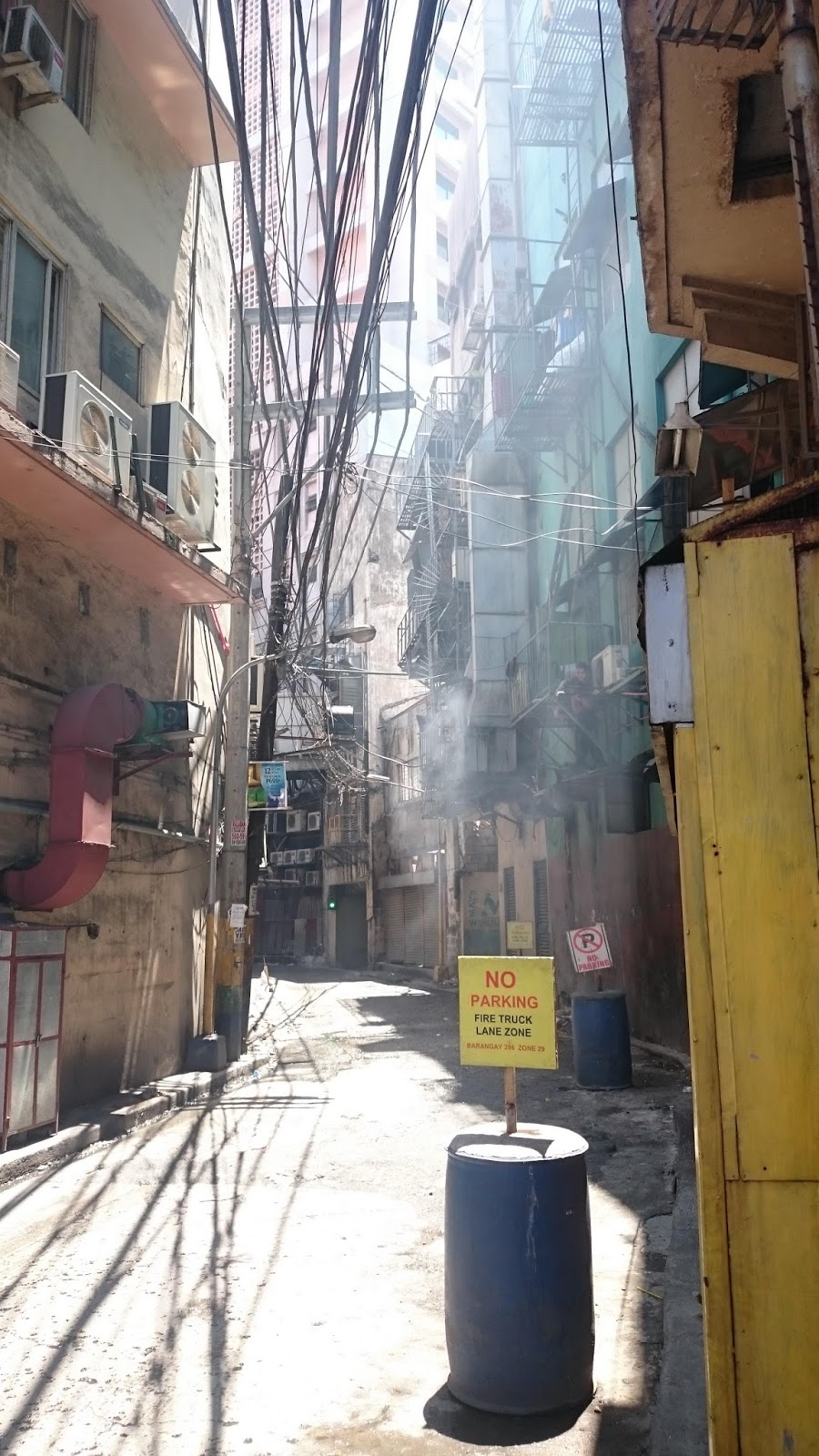
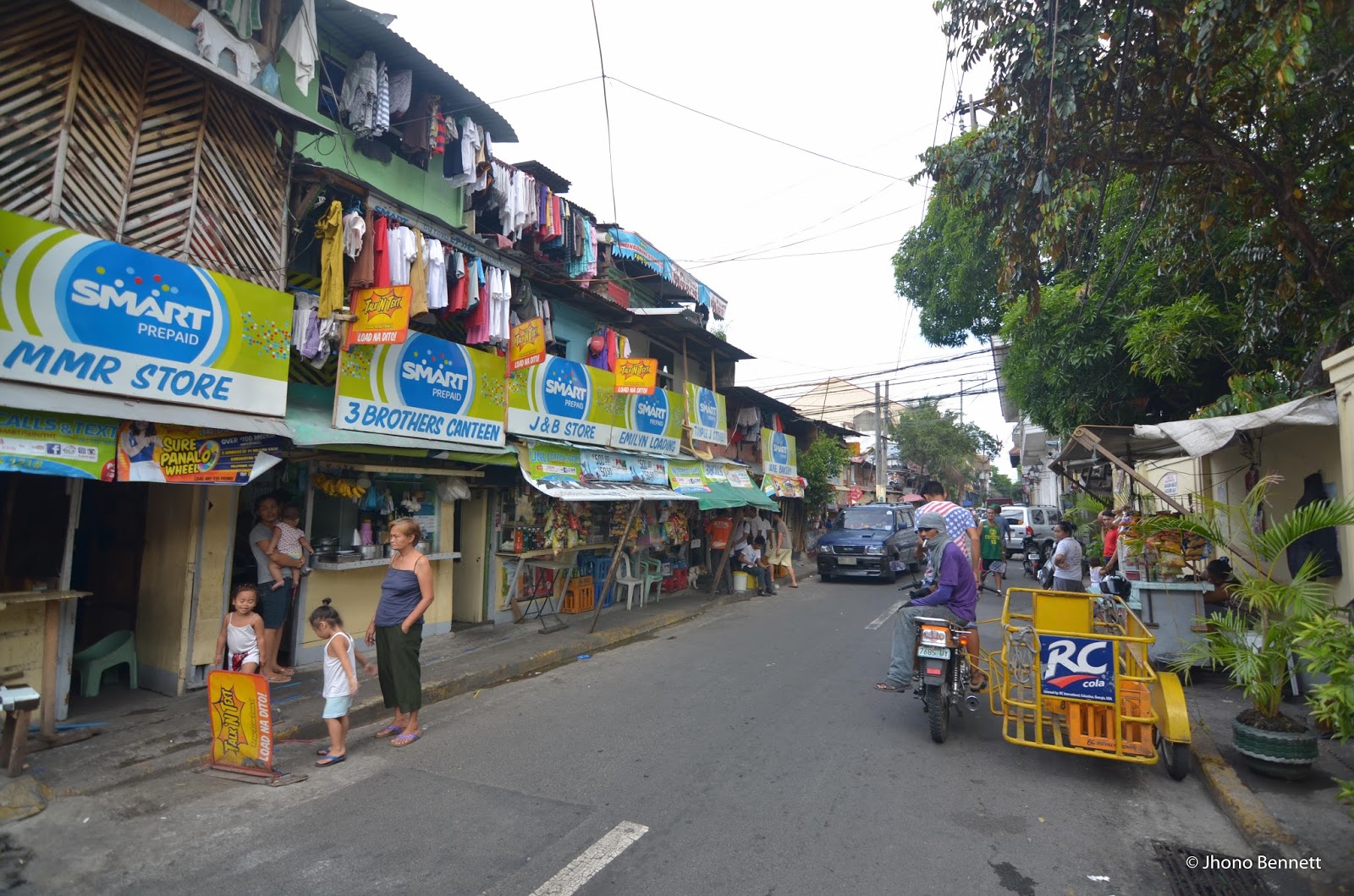
Manila City
The Exchange
In 2015, a small delegation from the South African Shack Dwellers International Alliance (SASDIA) was sent to the 3rd Regional Community Architecture (CAN) Meeting & Workshop to experience first-hand the CAN Network in action in order to understand the workings of the network, learn from the CAN experience.
SDI Delegation in Manila
This delegation was made up of 3 professionals and three community members from the SASDIA and were chosen by the alliance for strategic leadership and capacity development to bring back home.
As a team, we were expected to try and understand how the CAN works, its practices and tools as well its members . This would be done during the working while the delegation would be exposed and learn from similar practitioners and community groups who are working on similar problems around the development of disadvantaged communities, such as in South Africa. Ideally we would learn valuable lessons from the CAN in regard to practices of community design and bring these home to South Africa.
Workshop Background:
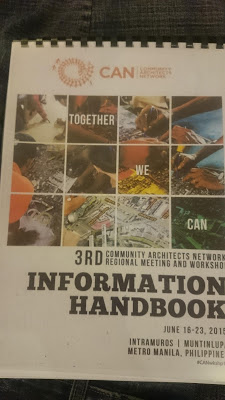
The 3rd Regional CAN Regional Meeting & Workshop held was held this year in Manila, Philippines between June 16 – June 23 and conducted with the theme: “Together we CAN! People planning for future inclusive cities “
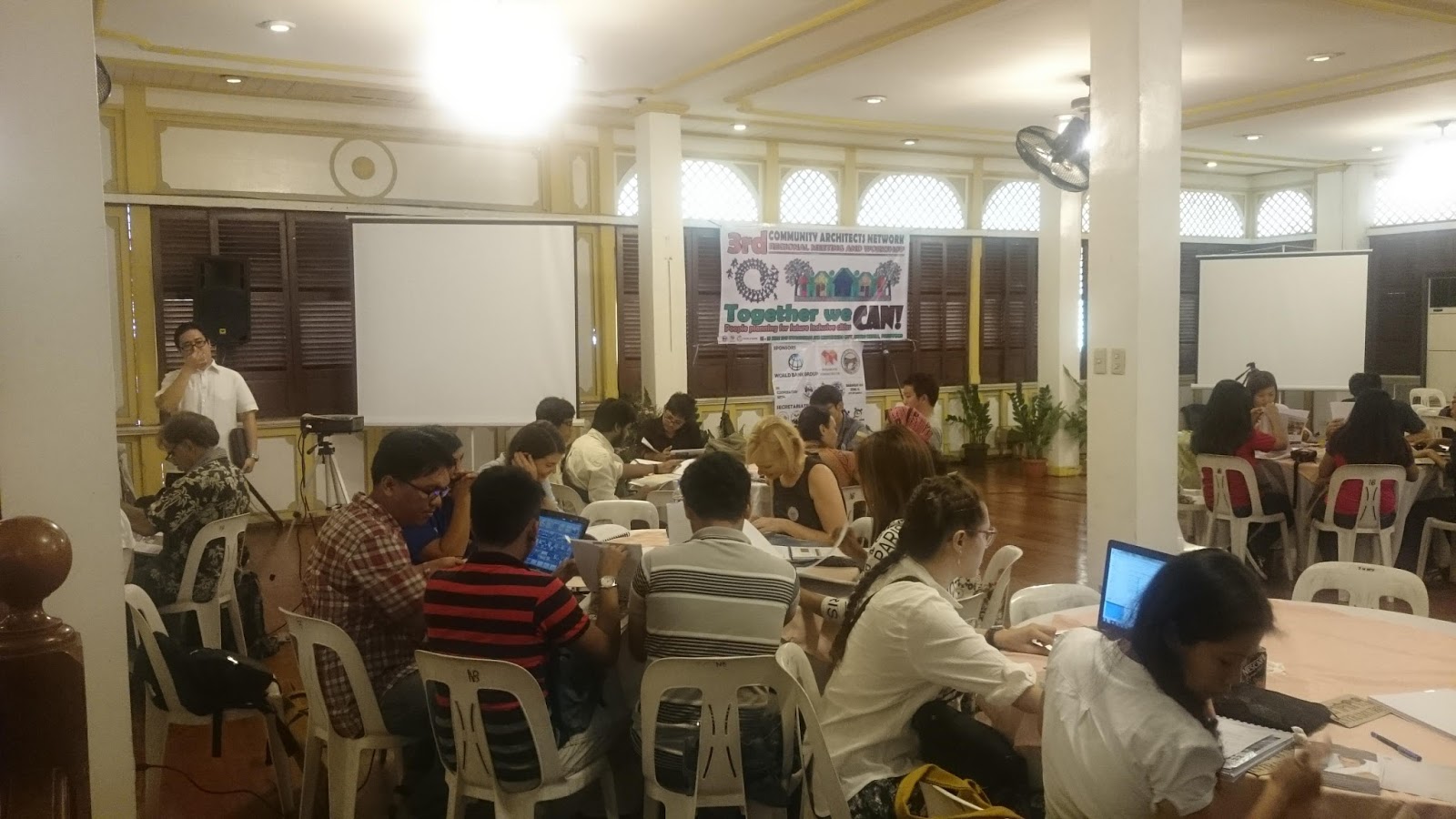
CAN Workshop Day 1
The workshop aimed to:
· Bring together local and international participants working in different countries in Asia and beyond to exchange and share experiences through community workshops.
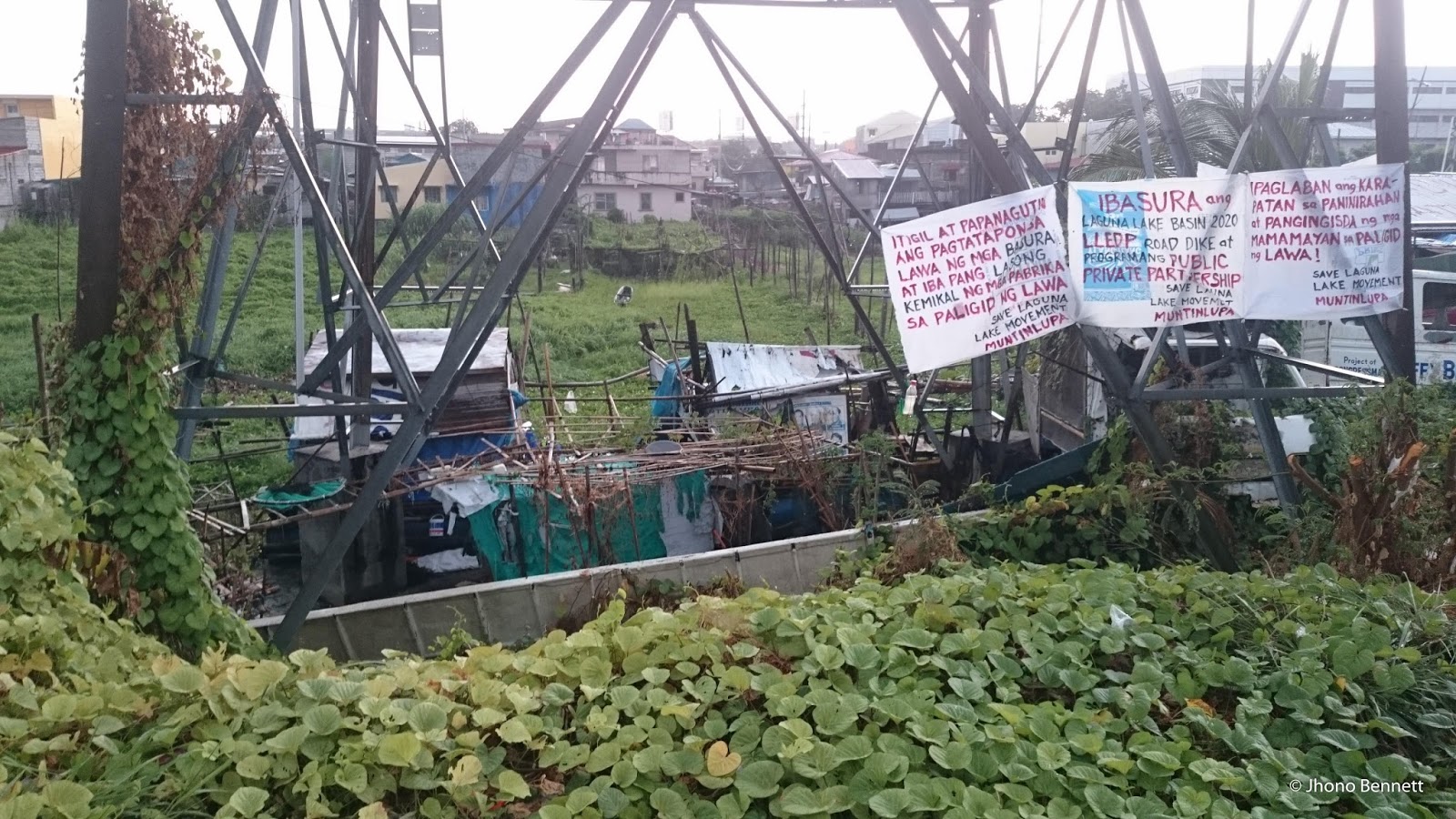
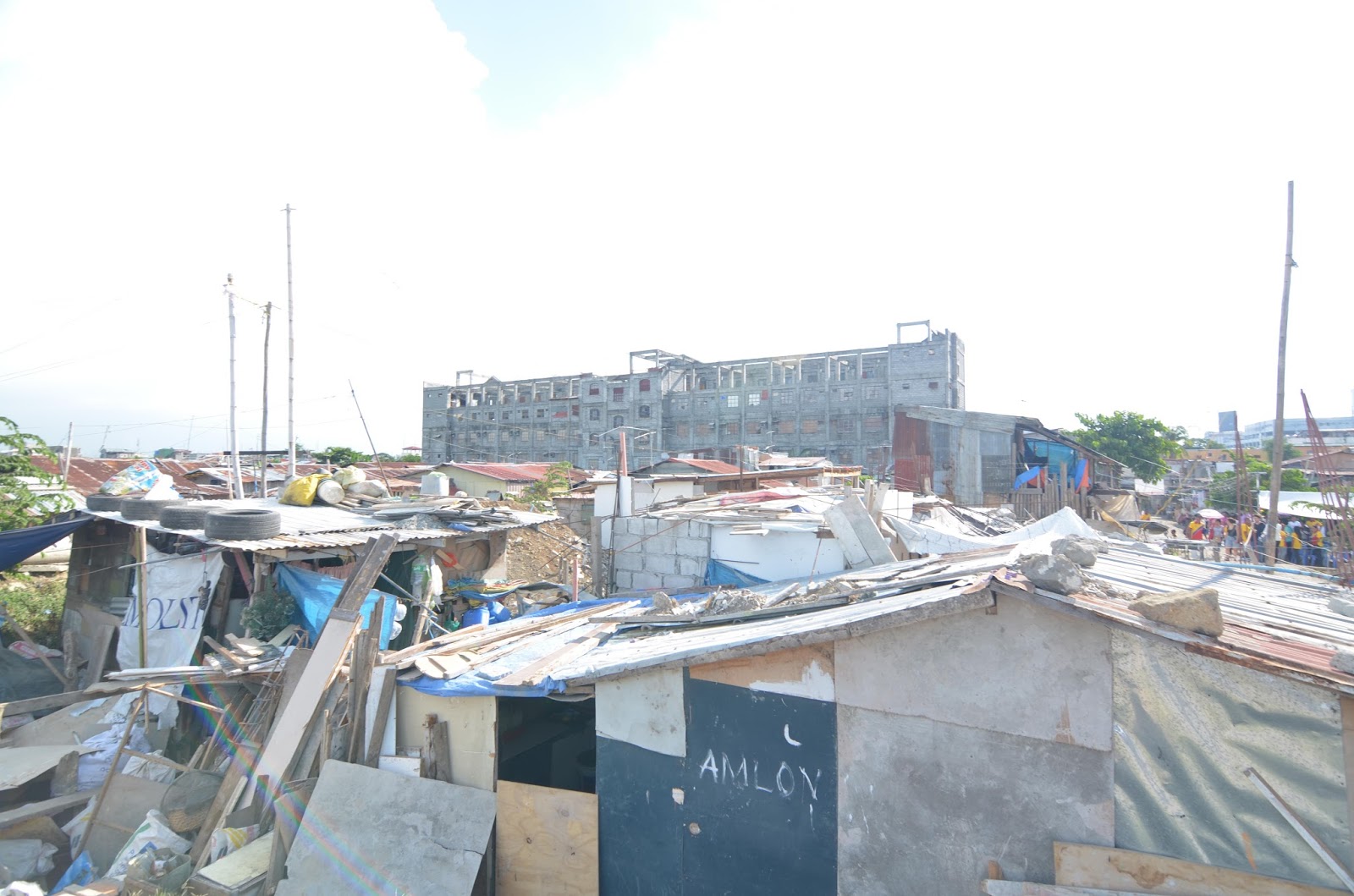
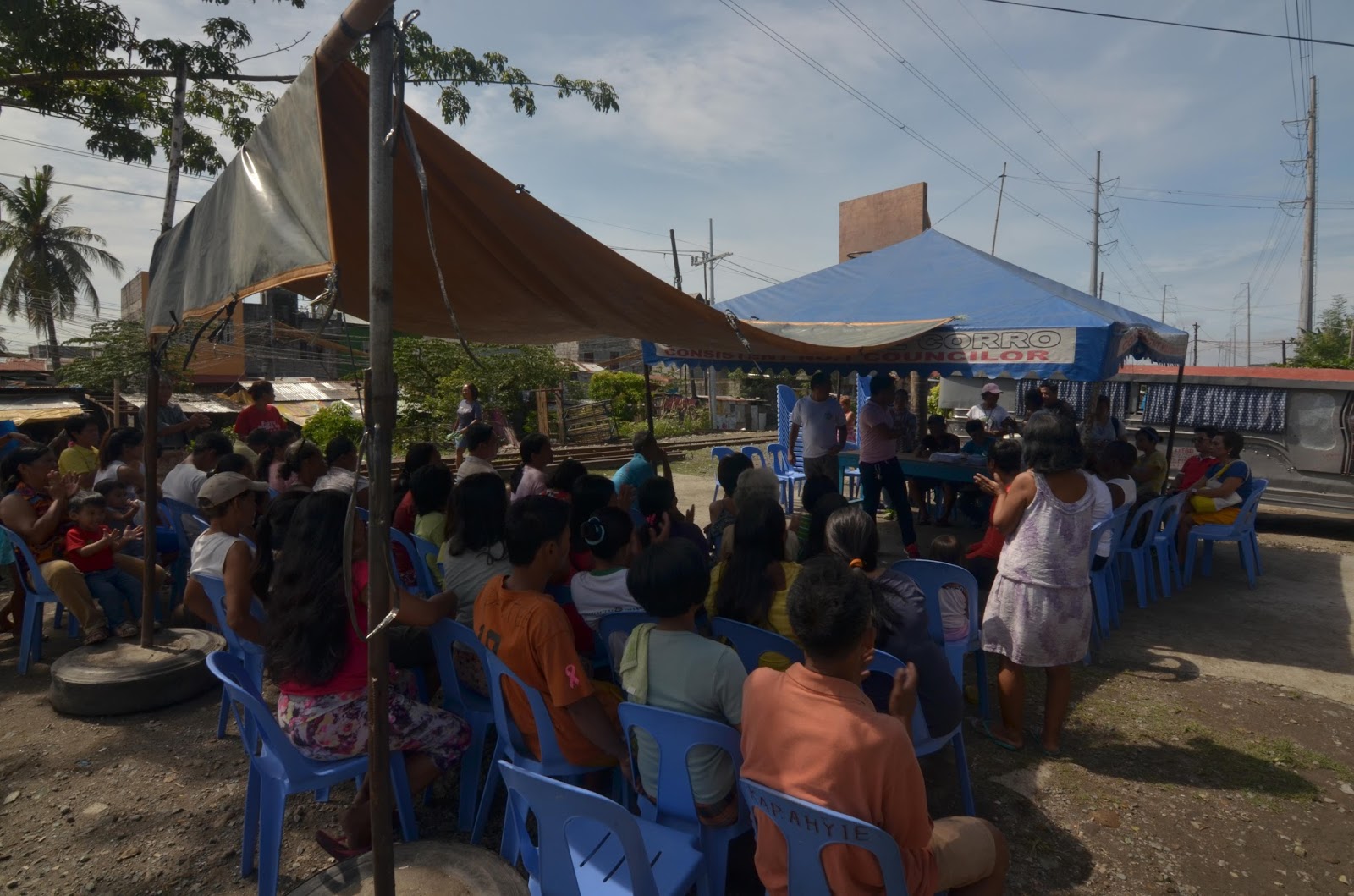
· Provide concrete technical support to actual community initiatives through fieldwork in people centred heritage planning in Intramuros, Manila and city-wide development approach (CDA) in Muntinlupa City.
· Link with local universities
· Plan new collaborative future activities with multiple stakeholders to ensure long term change
Ultimately the workshop aimed to support the larger mission of the CAN Network which is to:
“..Create a platform to link architects, engineers, planners, universities and community artisans in Asia, who work with communities and believe that poor communities should play a central role in planning their communities, and in finding solutions to build better settlements and more inclusive cities. “
CAN Network Diagram
The Workshop:
The delegation arrived on the 15th, and was welcomed by the well organised and energetic CAN management team.
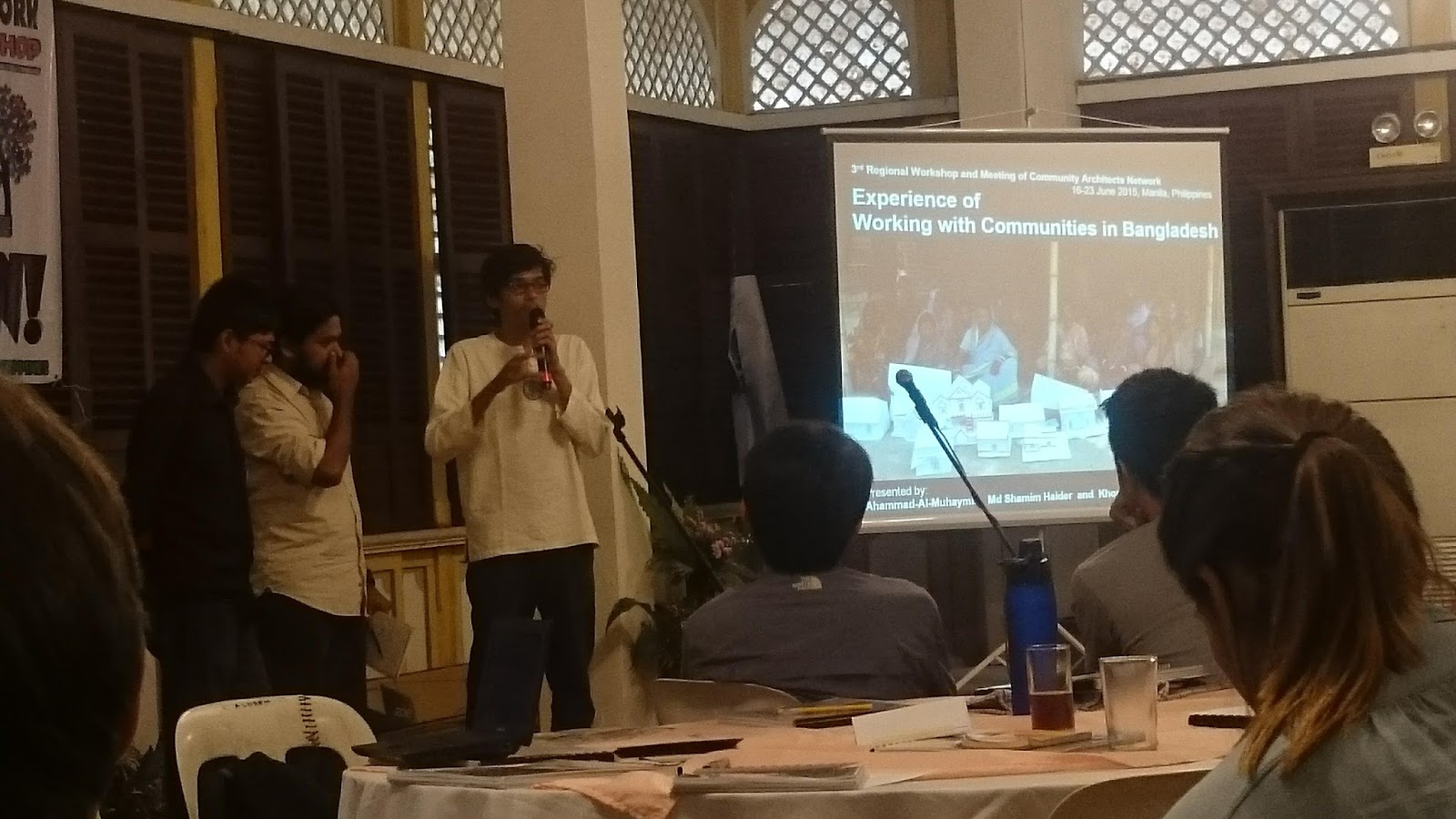
CAN Members from Bangladesh presenting
After an initial series of presentations on CAN and the various organisations that make up the network, individual organisations of the workshop were invited to present themselves and their work.
Site Visits – Intramuros
Site Visits – Intramuros Workshop
Intramuros Site Visit – Banana City
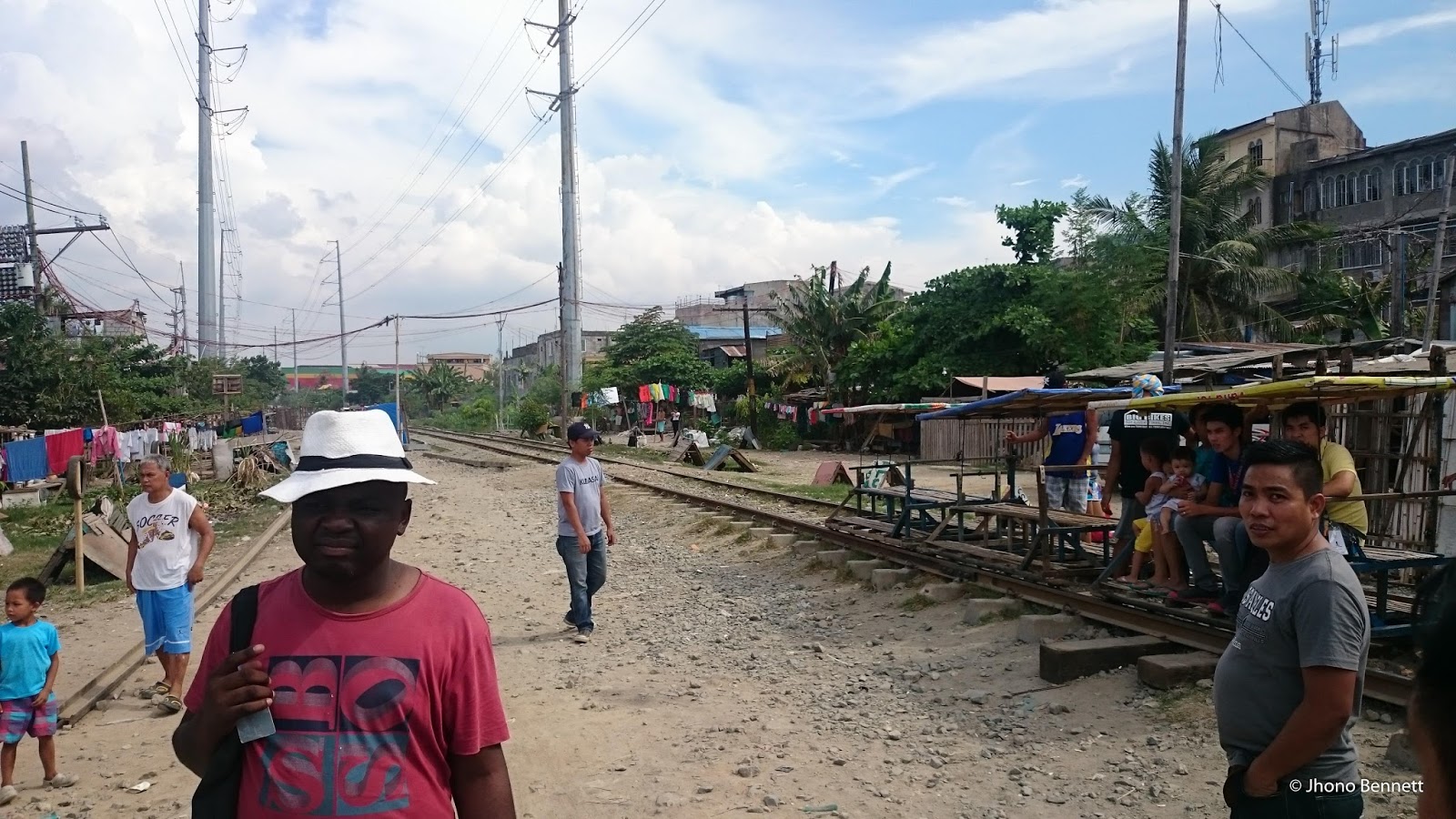
From here the next 2 days were spent taking the conference on site visits of where the workshop delegates would be working in Allabang and Intramuros.
Allabang Site Visit
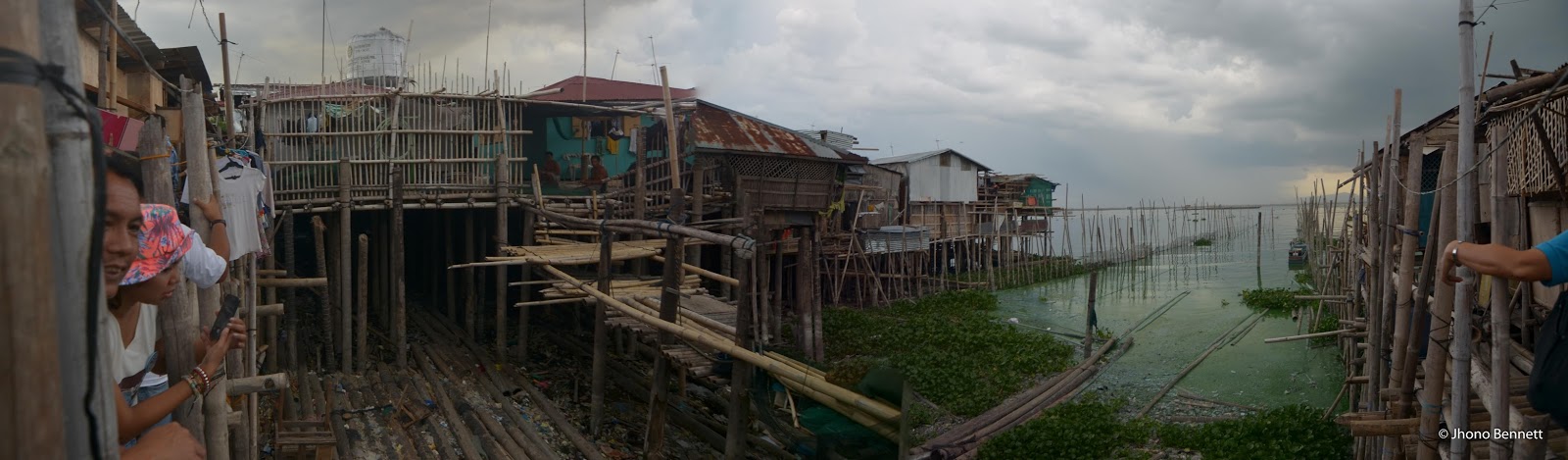
Allabang Site Visit – Fisherman Houses
Allabang Site Visit – Saving group welcome
Allabang Site Visit – Saving group welcome
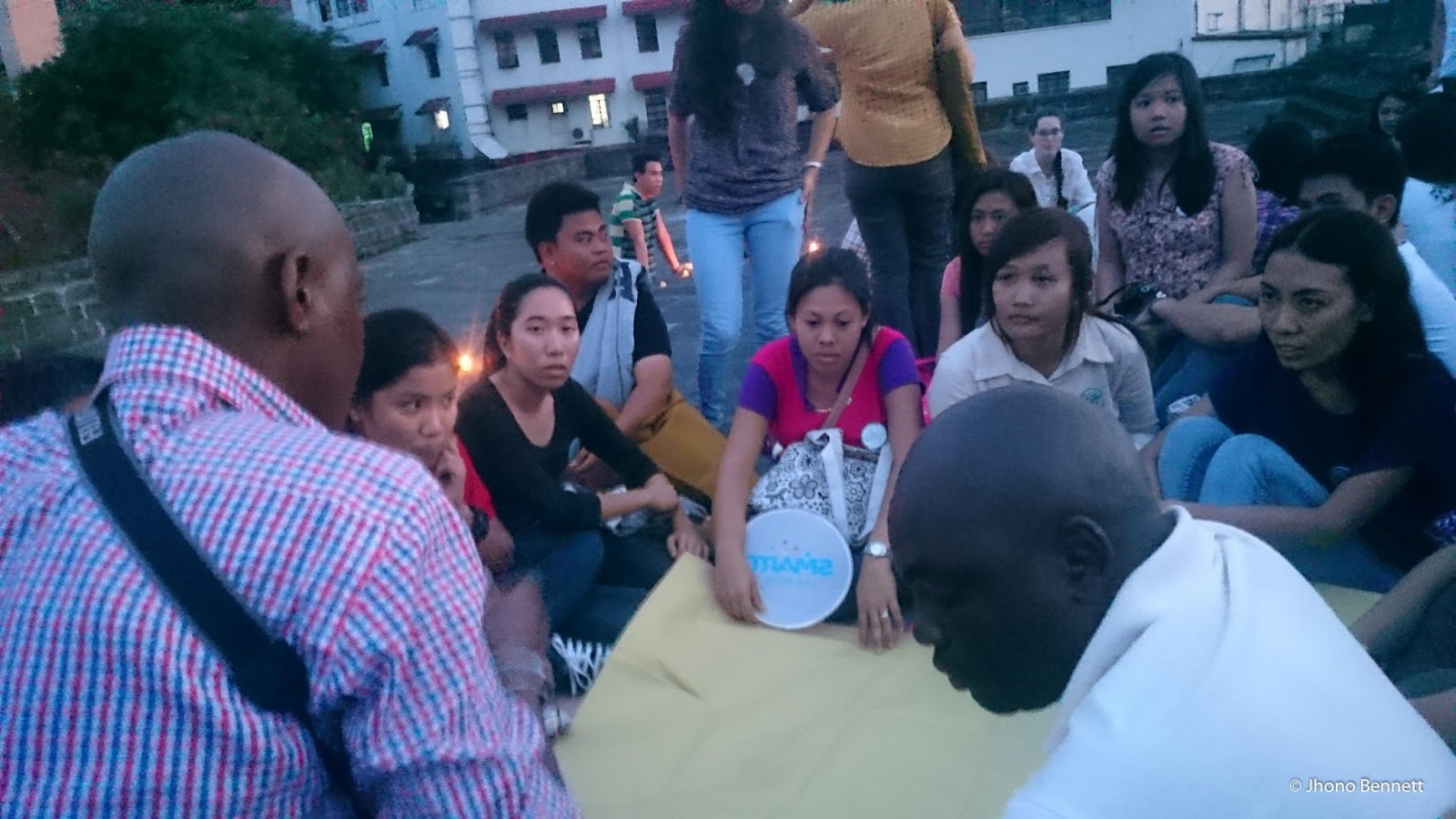
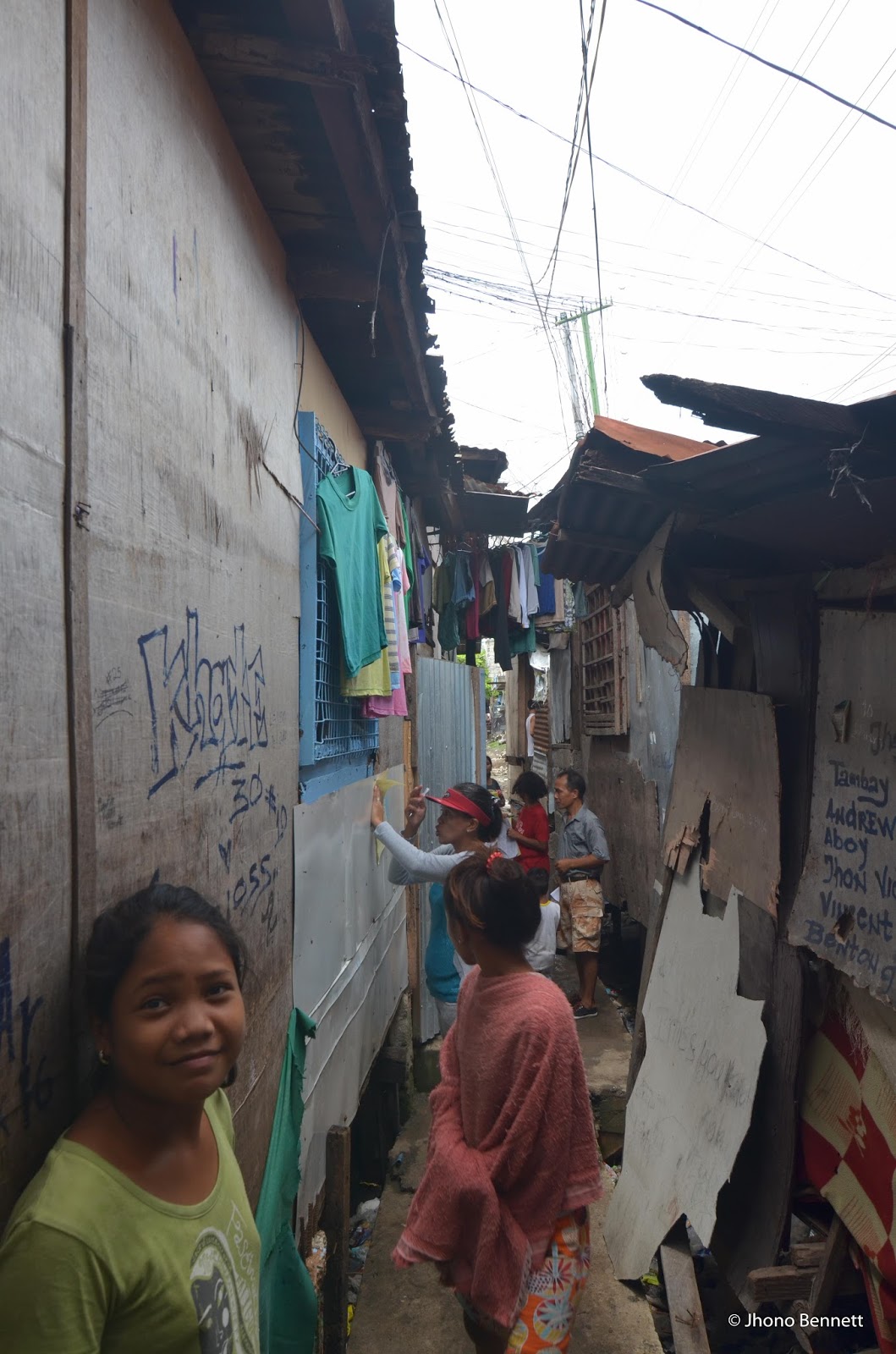
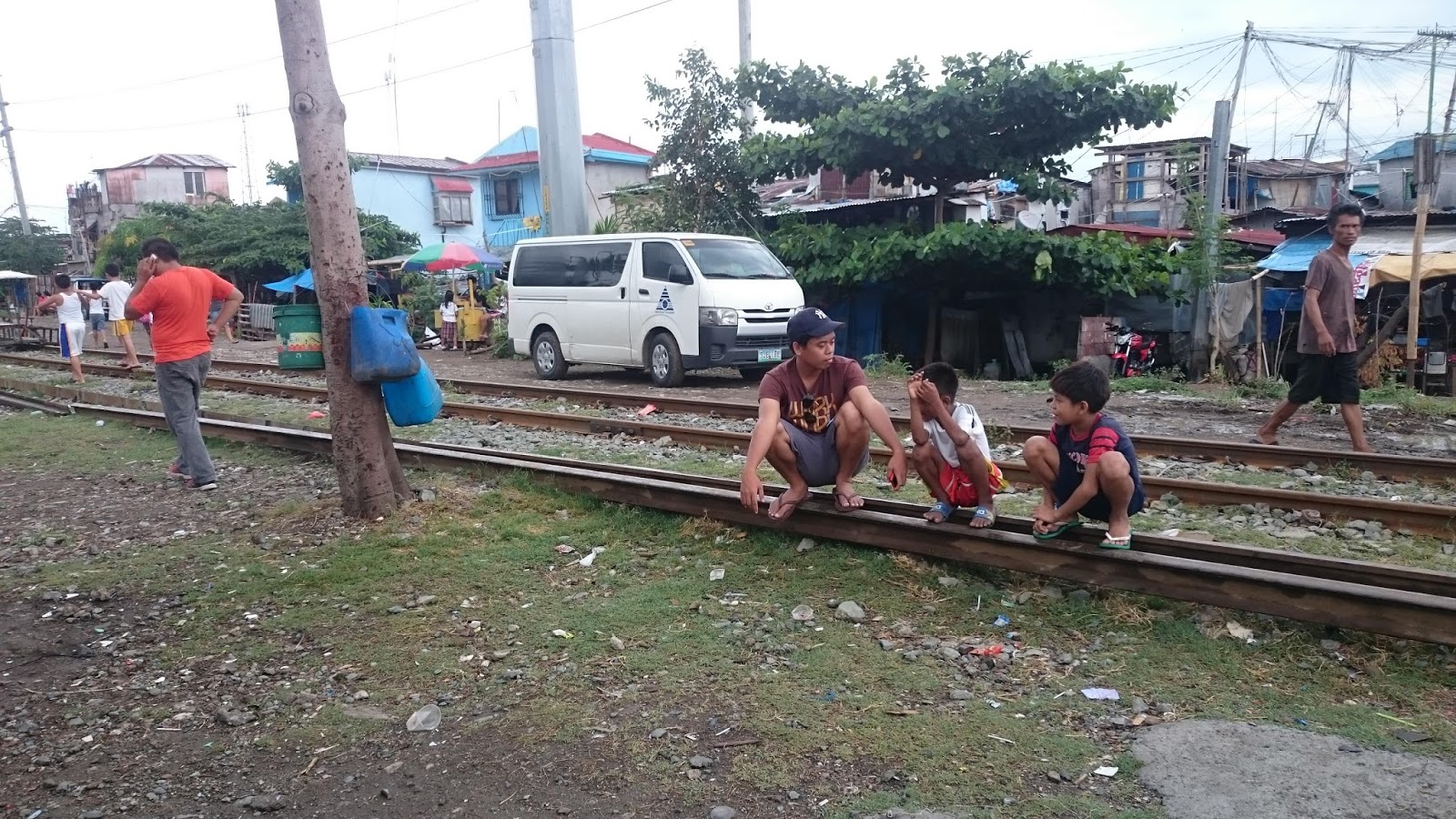
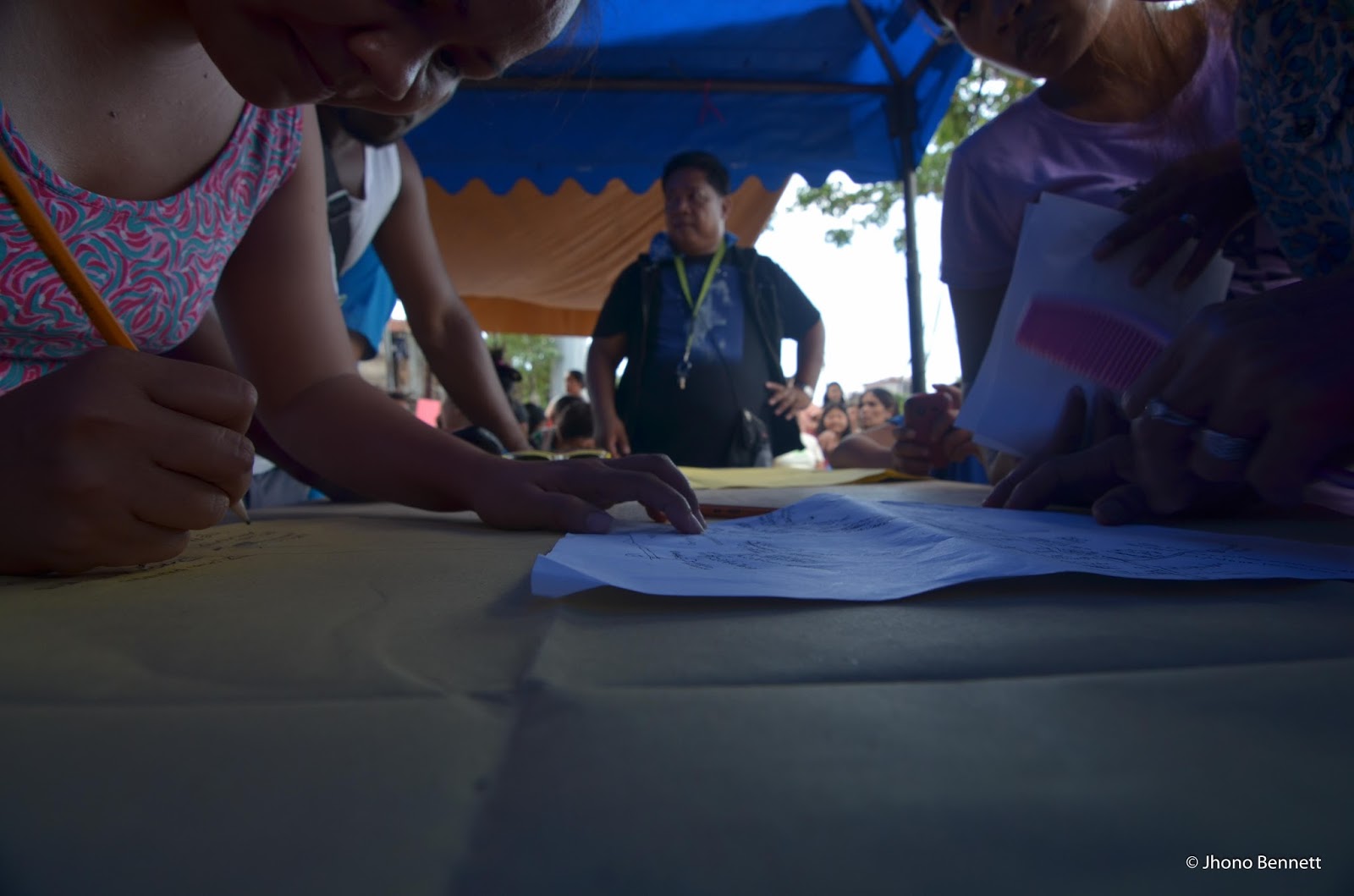
The participants were then broken into smaller groups of practitioners and community members and sent to stay in separate neighborhoods (or Barangays) where each group would focus on a specific set of issues faced by the various community groups supported by the local CAN organisation, Tampei.
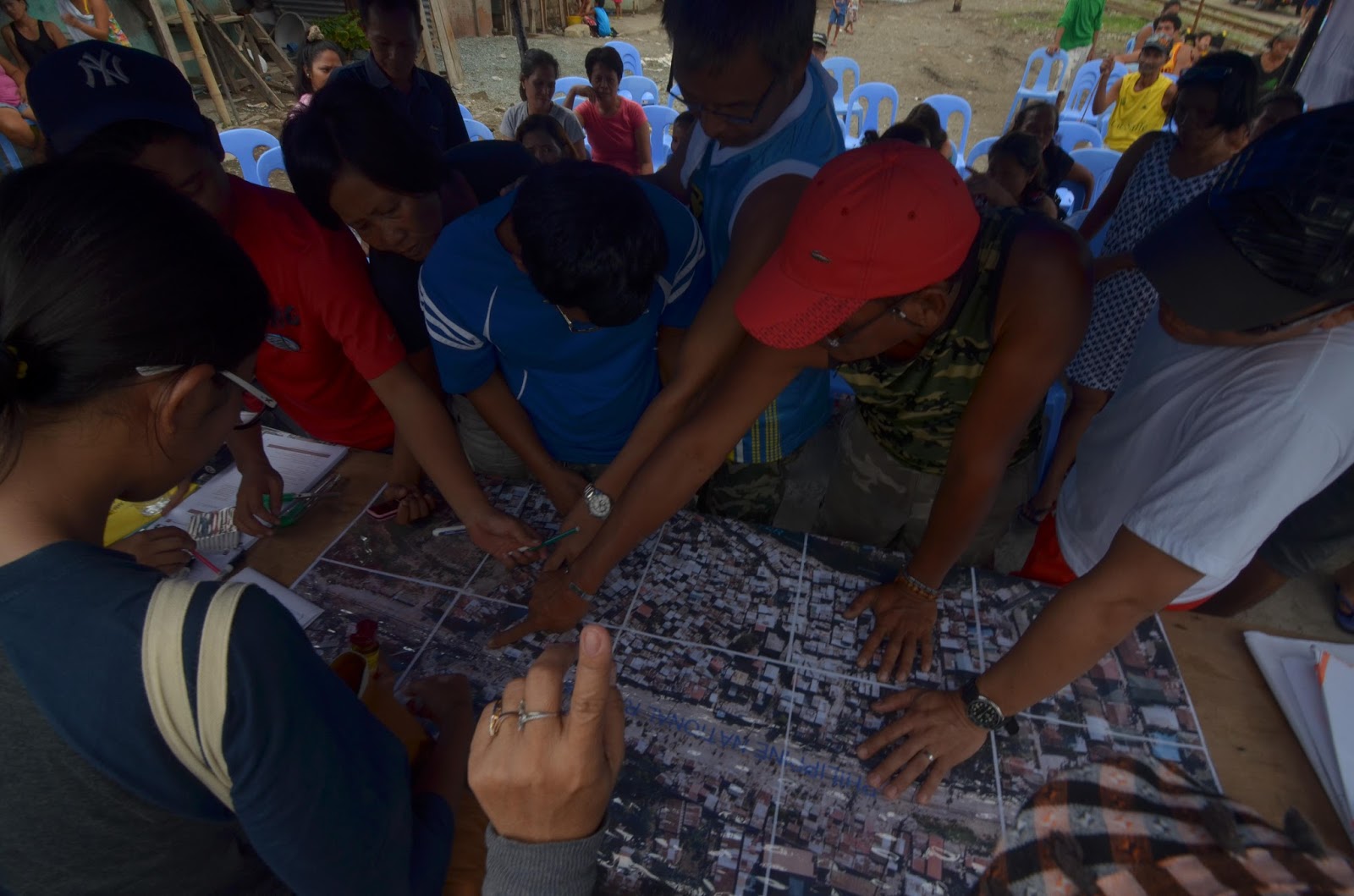
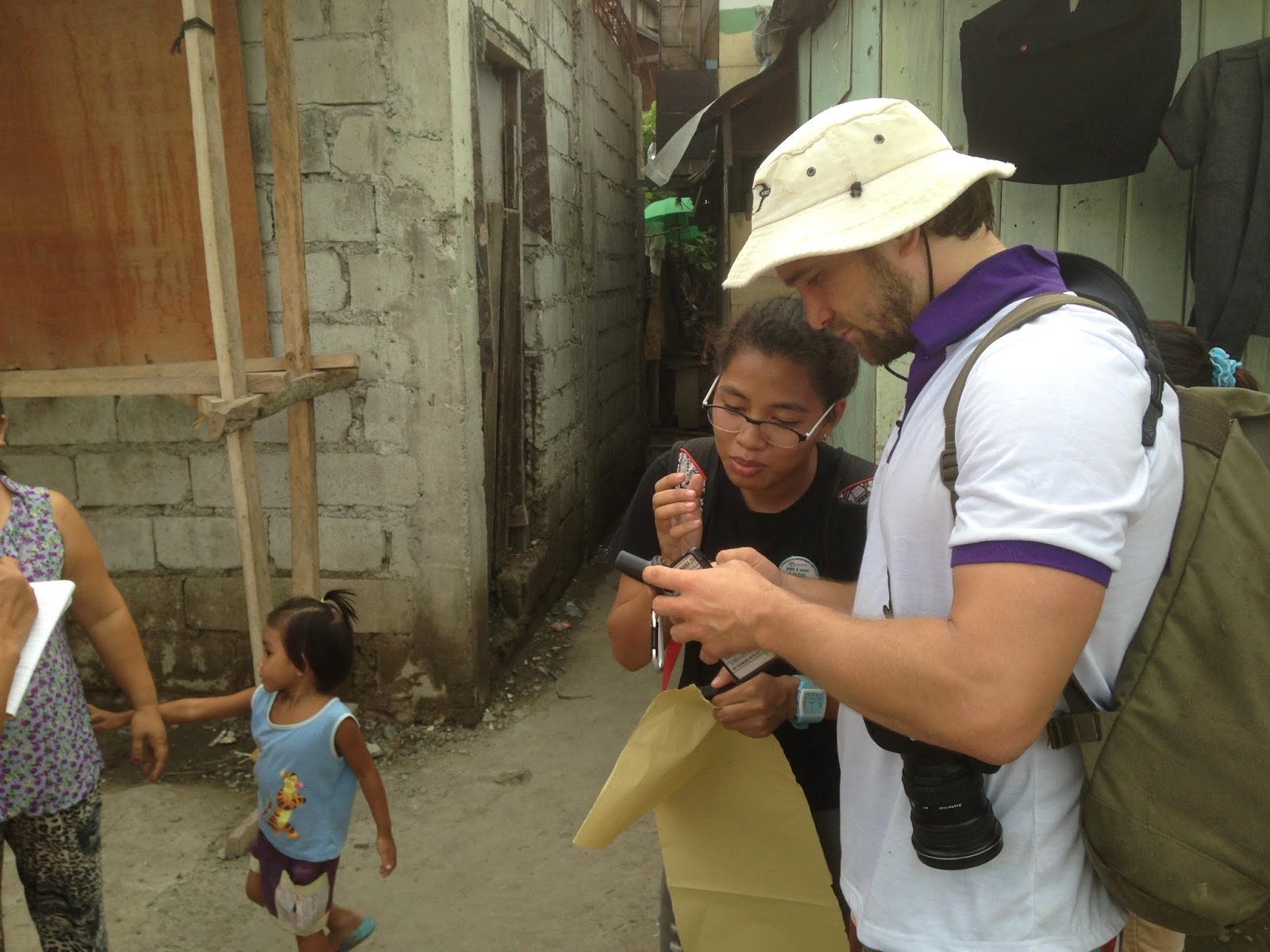
Group Focus Work in Allabang – Enumeration & Mapping
Group Focus Work in Allabang – Enumeration & Mapping
Group Focus Work in Allabang – learning the CAN practices
Group Focus Work in Allabang – Confirming the Mapping
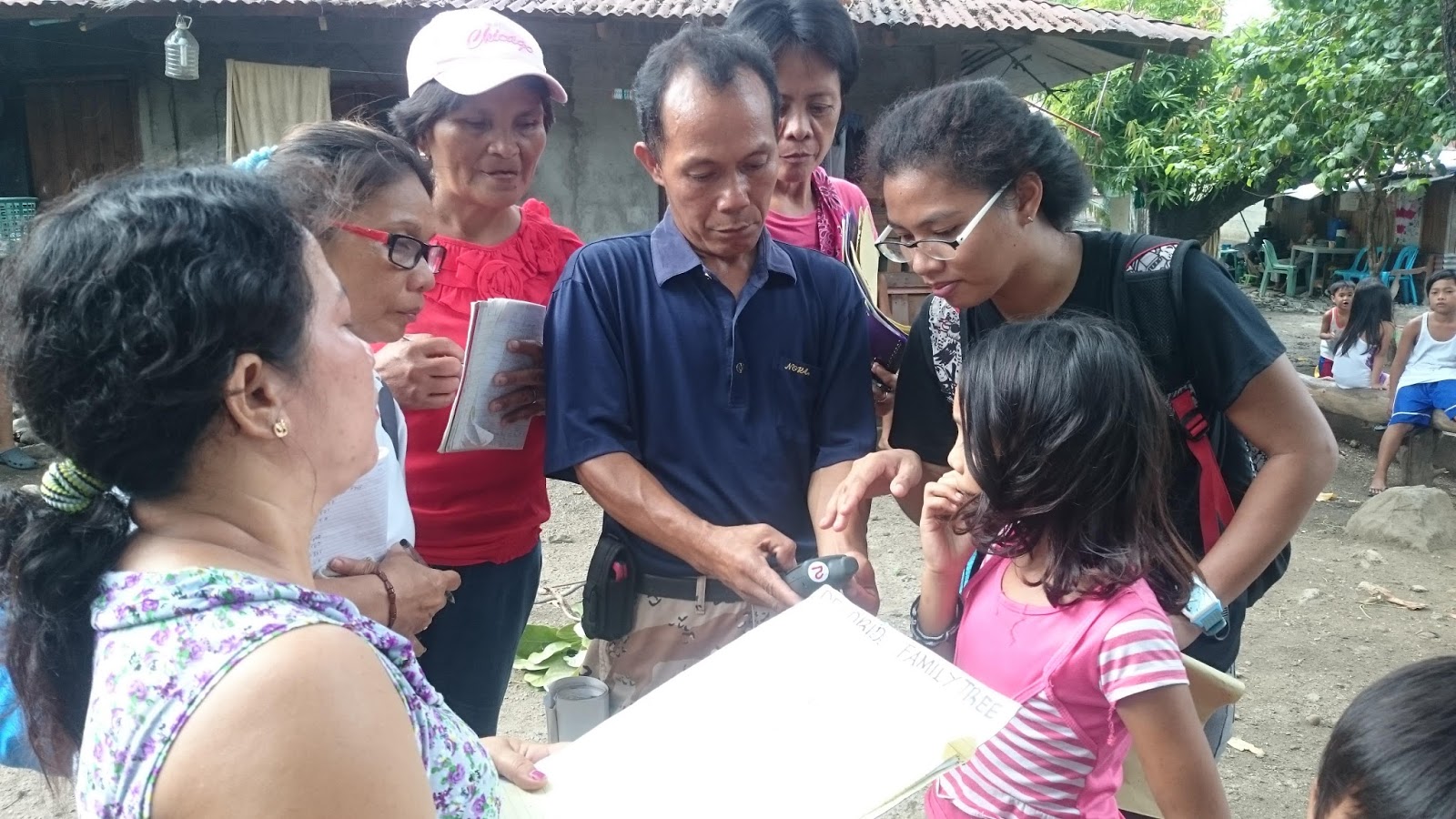
Each group spent the week intensively working on enumeration, mapping, and design with and for local groups aiming to initiate development energy supporting community initiatives.
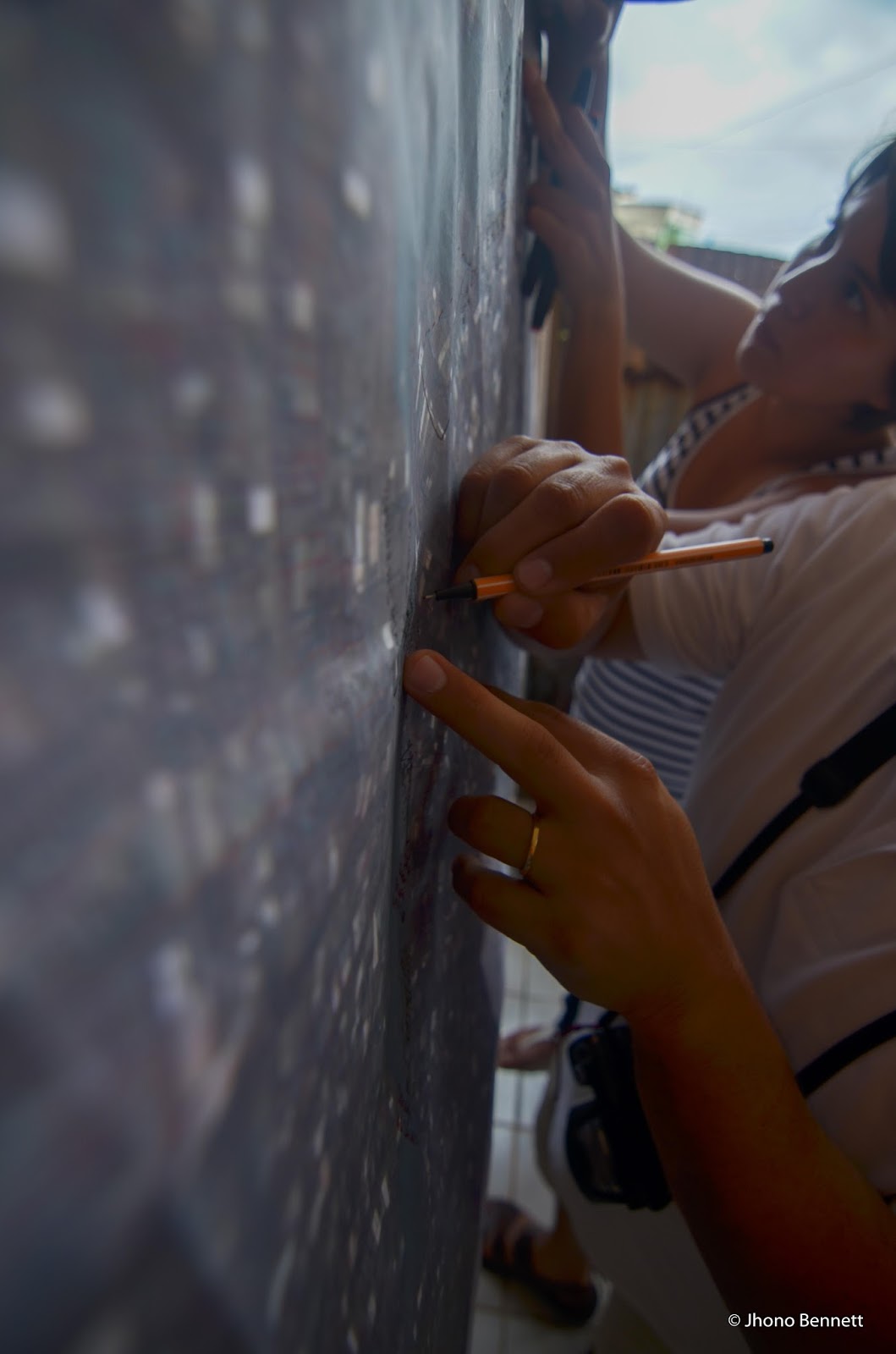
Group Focus Work in Allabang – GPS Mapping in dense settlements
Group Focus Work in Allabang – Story collection from residents
Group Focus Work in Allabang – Community Mapping with residents
Allabang in context
Group Focus Work in Allabang – Enumeration & Mapping with residents
This week was also spent sharing knowledge amongst all international participants in such work.
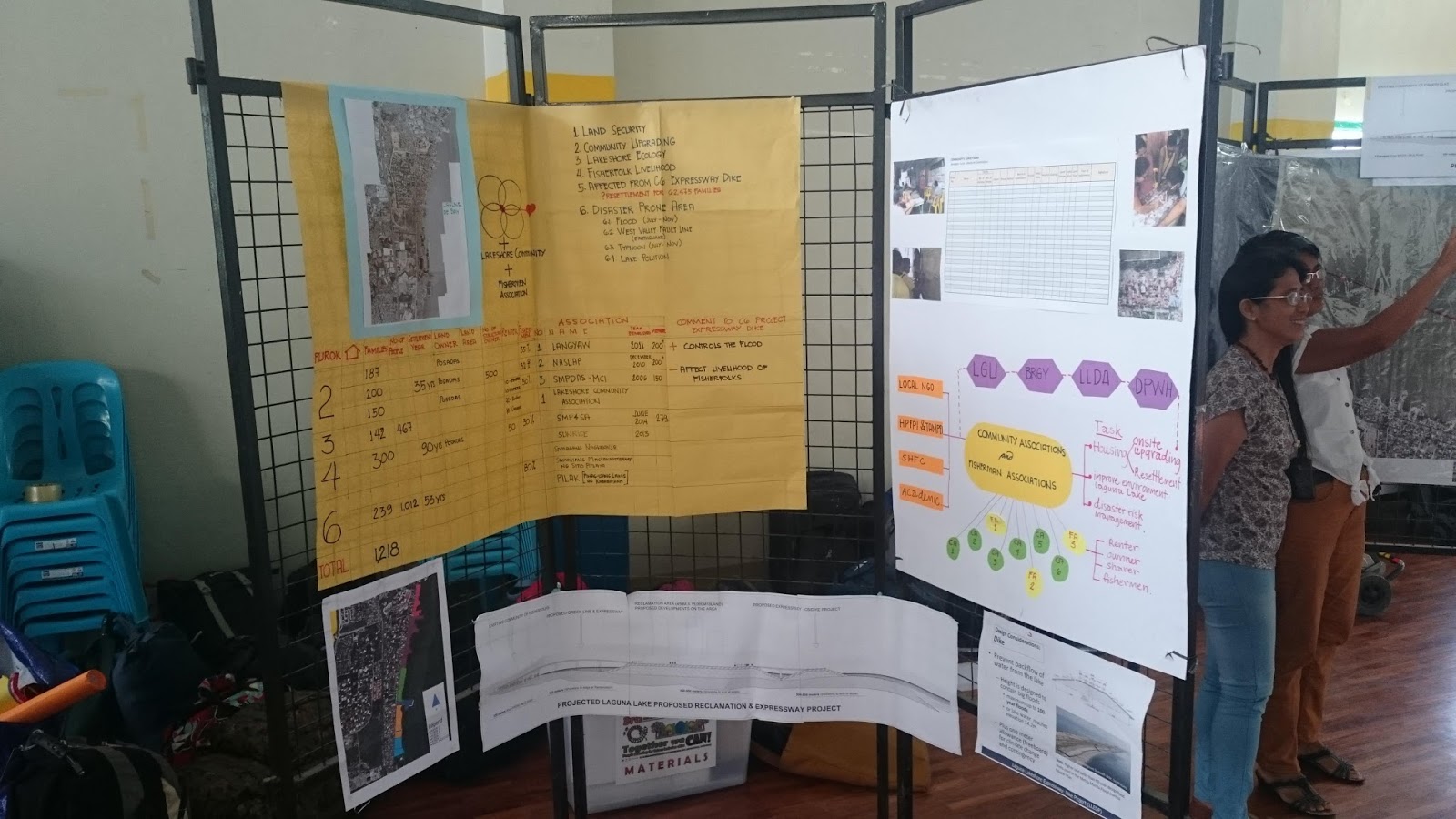
Group Focus Work in Allabang – Consolidating Mapping work for presentation
Sharing valuable skills from participants
This was done while strategically developing a body of work that would be shown to local government stakeholders at a final seminar in both Allabang and Intramuros.
Consolidated Group work for strategic presentation with government stakeholders
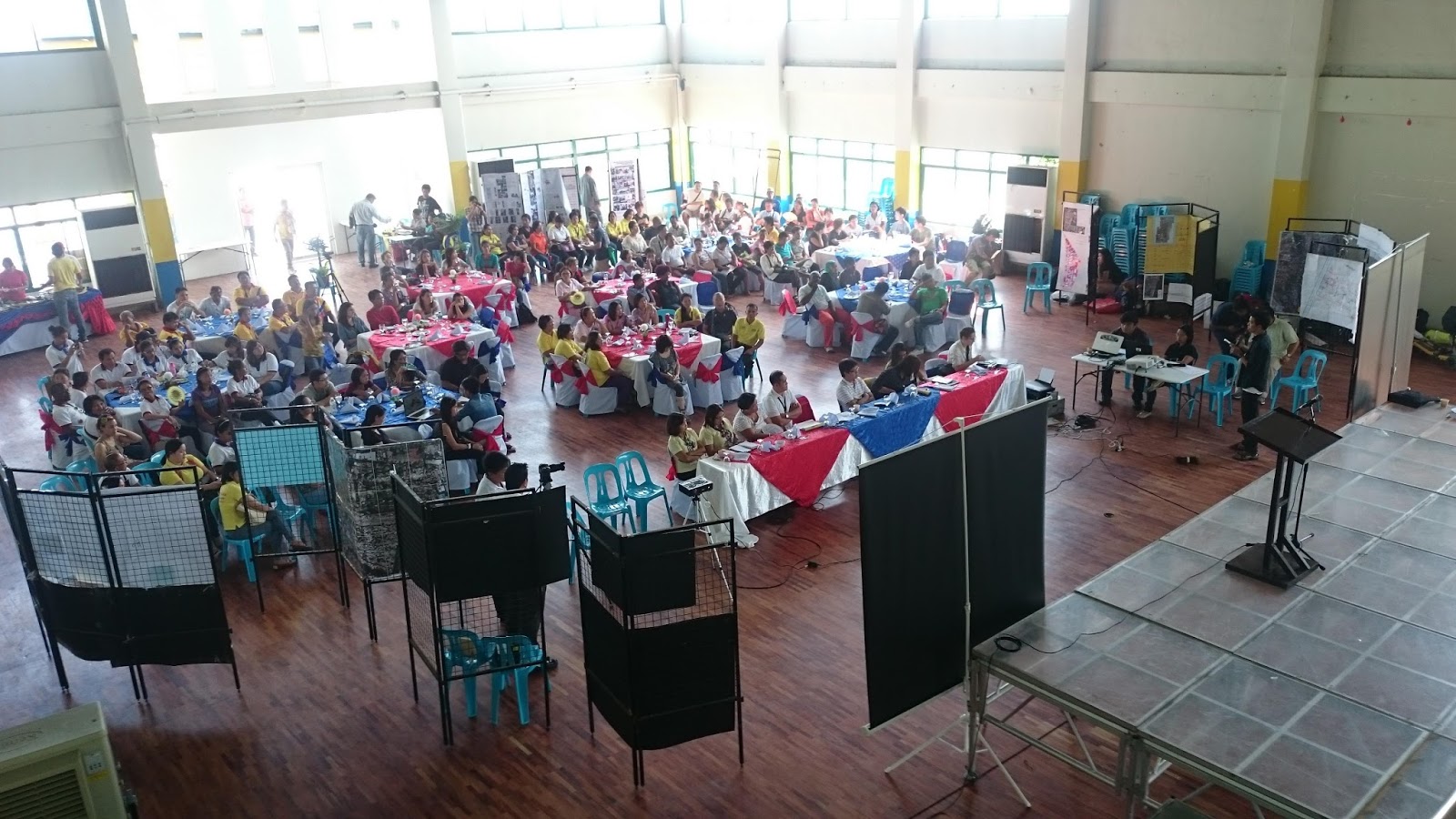
Allabang – Strategic presentation with invited stakeholders
Intramuros – Strategic Presentation
The workshop culminated in a social event on the 24th, celebrating the workshop’s success.
Key Observations:
The workshop was highly successful in bringing together community architects from across the world to share experience and knowledge through the mixture of workshop tasks, social events and working activities.
CAN Practice: intensive workshops
The strategic use of these professionals to hyper-activate local community processes was exemplary in not have the visited communities as passive beneficiaries, while using the work developed in the short time to engage local governance bodies to support local community processes was a highly impactful strategy employed by the workshop organisers.
CAN Practice Capacitation through training
In particular it was impressive to see how ingrained the practices were conducted by both local community support and technical support. There seems to be something in the way the Philippines alliance work that goes beyond technical support and enters into new cultural and social dimensions of such work.
CAN Practice – Strategic grass roots work
Personally, it was amazing to be in the presence of so many like-minded professionals who shared the values of community driven processes and were skilled in facilitative design processes.
CAN Practices in action
This experience further cemented my personal motivation in developing critical co-productive design skills for me and other South African socio-technical spatial designers through community driven development projects.
Through the Unit System Africa, the UJ GPA aims to set the scene for Africa’s most innovative, relevant and creative teaching laboratory by establishing the first three units of the new programme.
“Unit 2 is based on the understanding that the Built Environment comes into existence and transforms as a social/physical ecosystem in which neighbourhoods and buildings are never finished, but rather transform part by part. This unit links strongly with current international trends in thinking and also resonates strongly with present-day South African concerns. Unit 2 offers an exceptional opportunity to engage with an international network of thinkers/practitioners in the field of Open Building, Urbanism and Human Settlements.” Unit 2 Website
We have only reached the half way point of the first year, but already have begun developing interesting and grounded readings of the the sites we have exposed the students too as well as the mechanisms in which to critical engage with the complexity of South Africa’s Built Environment.
Image: Crucial Input from invited friends and supporters of UJ Unit 2
Under the leadership of Dr. Lesley Lokko and support of the UJ GPA staff the next 2 years are set to be an exciting and ground breaking experience for all involved.
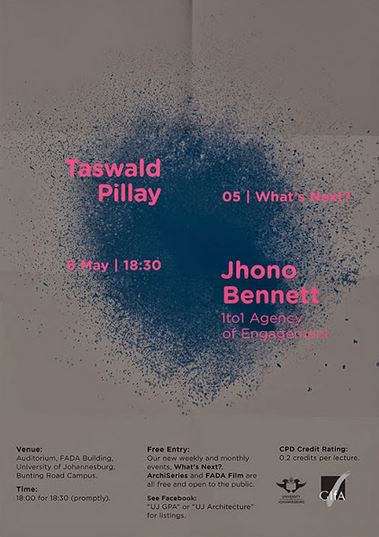
“The Graduate Programme in Architecture at UJ presents What’s Next?, a series of double-talks by a range of dynamic young Jo’burg practitioners – architects, urban designers, artists, researchers, and just-graduated students. The next generation of talent demonstrates new ways of practising architecture in a complex, rich and emergent society, often with unexpected outcomes. Talks range from the scale of a single-family dwelling that celebrates ‘architecture as craft’ (Studio ZA), zooming all the way out to the importance of potential in examining the Gauteng city region (Guy Trangos/GCRO)” What’s Next? Series
My presentation shared the values of 1to1 – Agency of Engagement through some of the work we have been involved in over the last years.
Image: Alex Opper
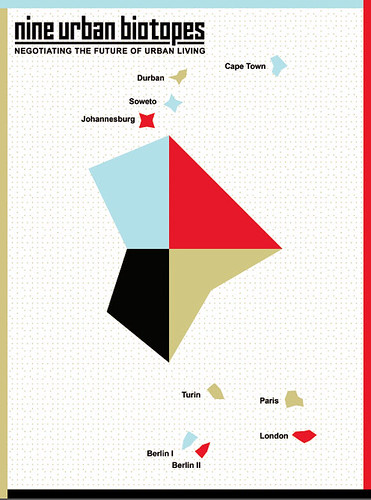
Here I presented alongside Taswald Pillay, who spent 3 months working and living in Paris with the Urban Biotopes Project.
What’s Next?
There is still one more lecture in the series, Guy Trangos and Edna Peres will present on the 20th of May.
Architecture Sans Frontiers – United Kingdom (ASF-UK) has been conducting their Change by Designworkshops since 2009 in various counties; Brazil, Kenya, England and Ecuador.
These workshops explore participatory design as a tool for advocacy and socio-spatial transformation in informal settlements, in collaboration with grass roots organizations, local NGOs and governmental agencies involved in slum upgrading and housing rights.
“The focus of our upcoming workshop is the neighbourhood of Woodstock, in Cape Town, South Africa. Here, ASF-UK is teaming up with the NGO Development Action Group (DAG) and diverse groups of local stakeholders to explore how inner-city urban regeneration can be re-imagined as a process that brings about more equitable and democratic city development in Cape Town”
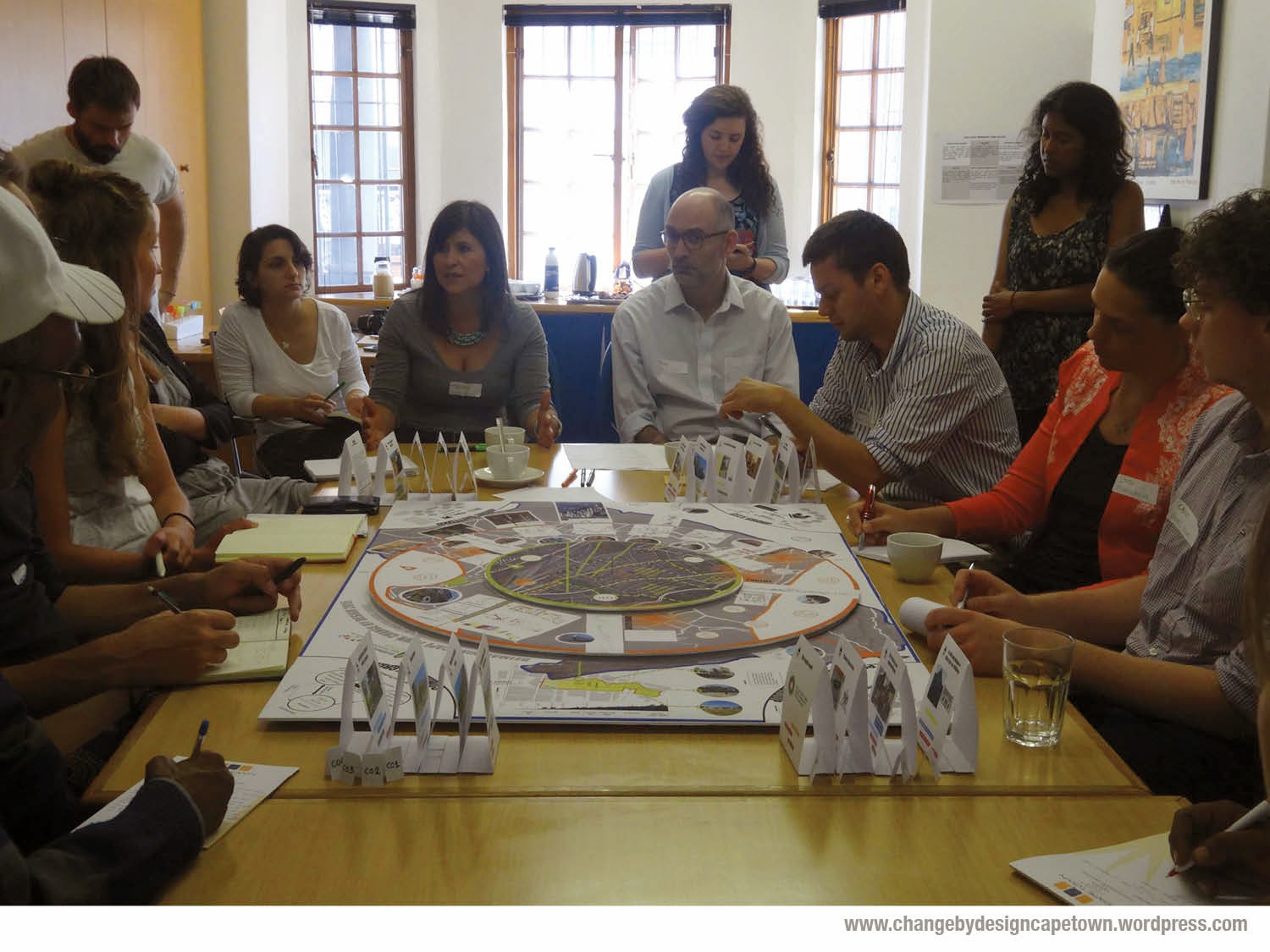
The workshop employs a holistic approach at 4 different scales: Dwelling, Community, City and Policy & Planning that works with existing initiatives (DAG) to support work being conducted on the ground.
We worked from DAG’s newly opened DAG Cafe, a space planned to be a platform for future discussion around DAG’s Re-Imagining Settlement’s Programme.
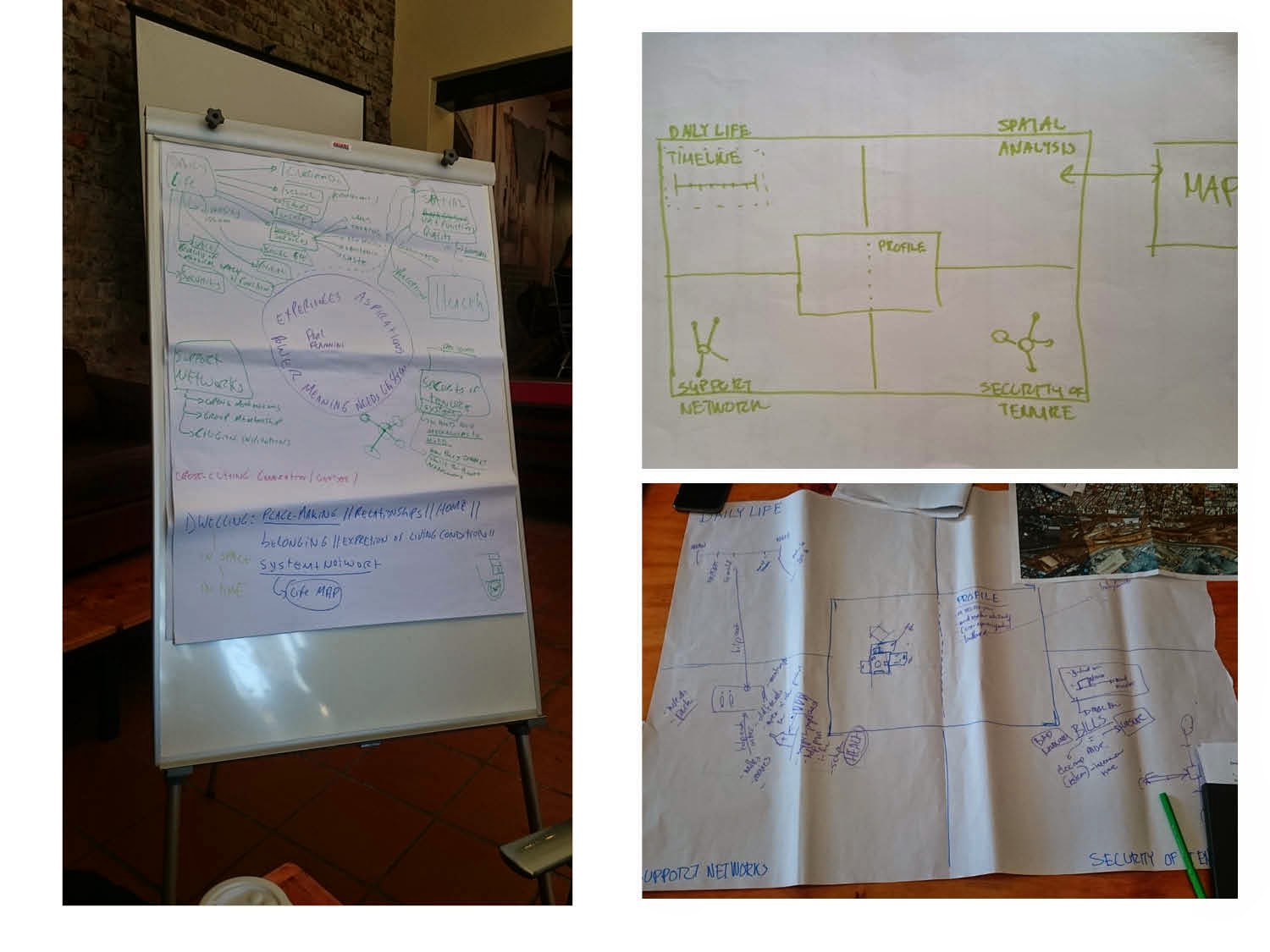
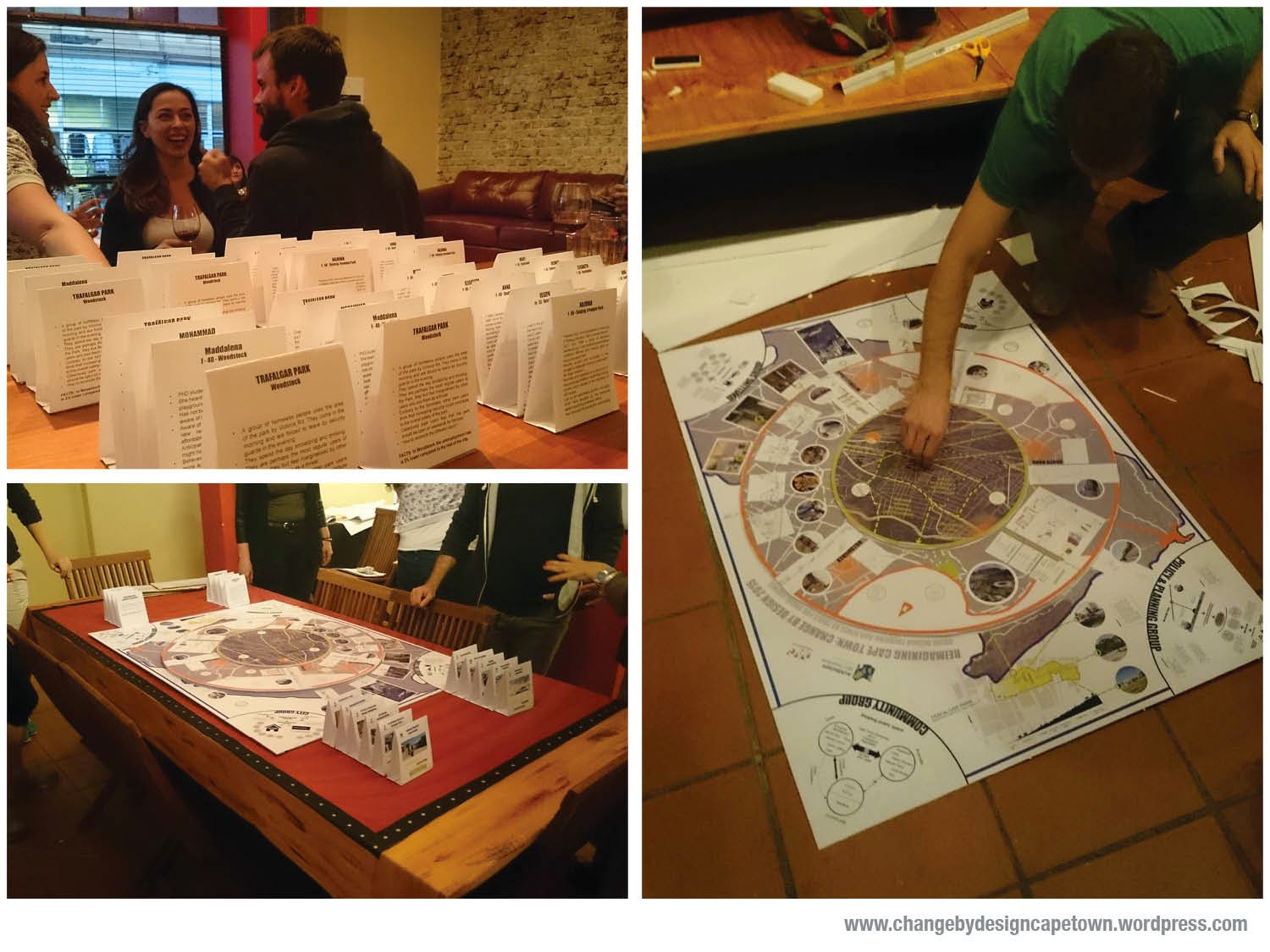
I was assigned to the the Dwelling group where we developed a tool to capture the Life World Mapping of the various sites we set to engage with.
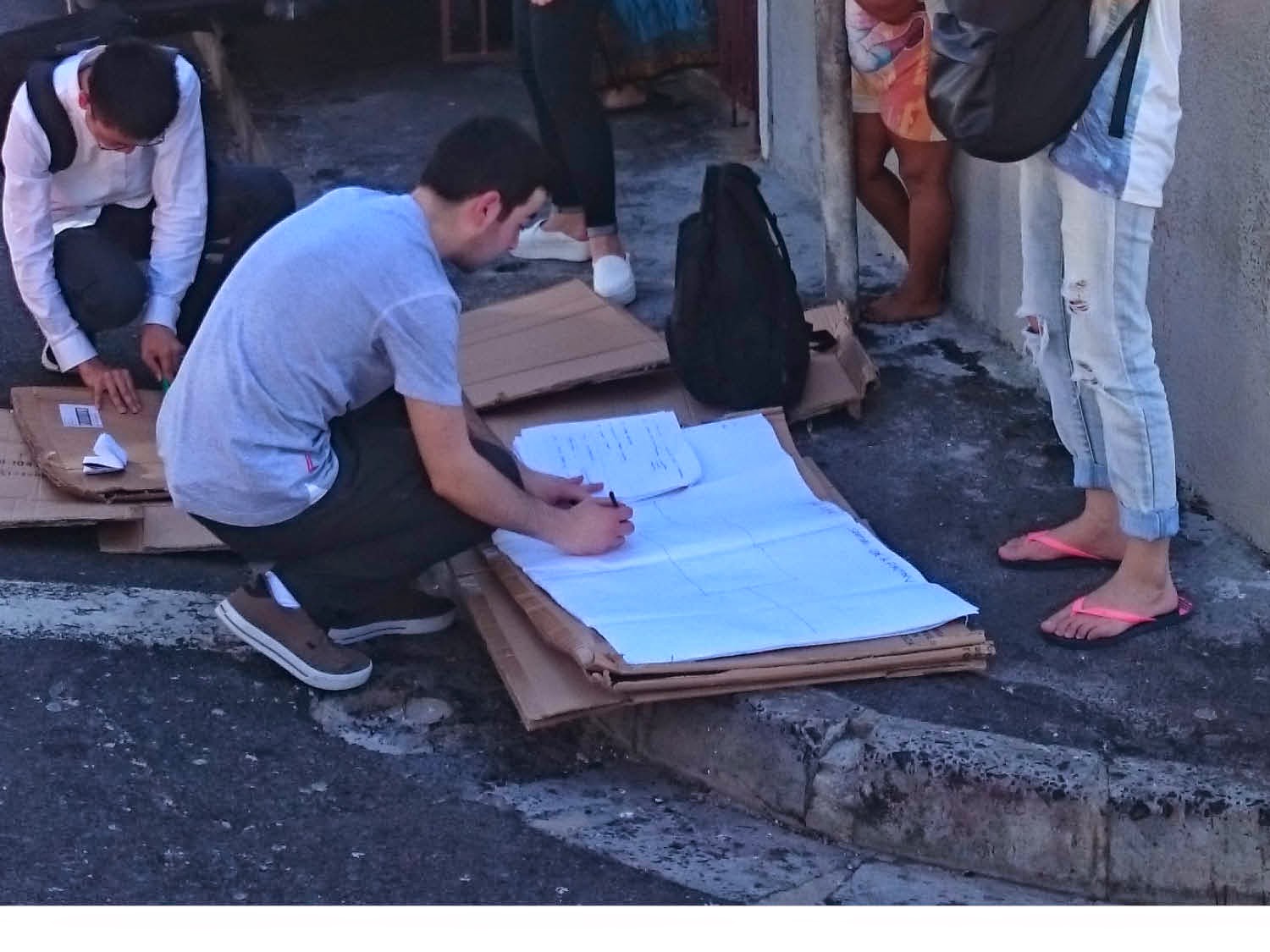
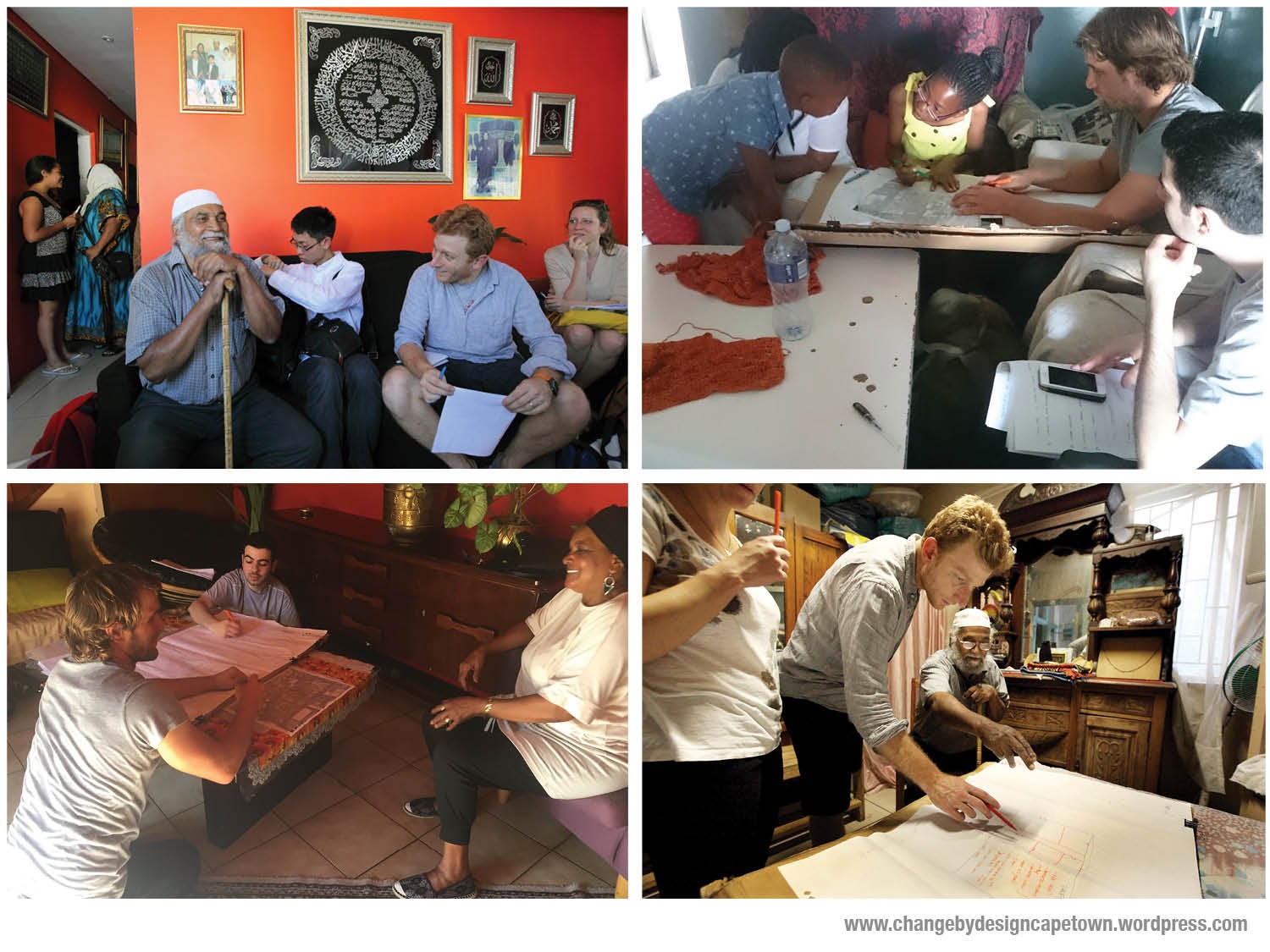
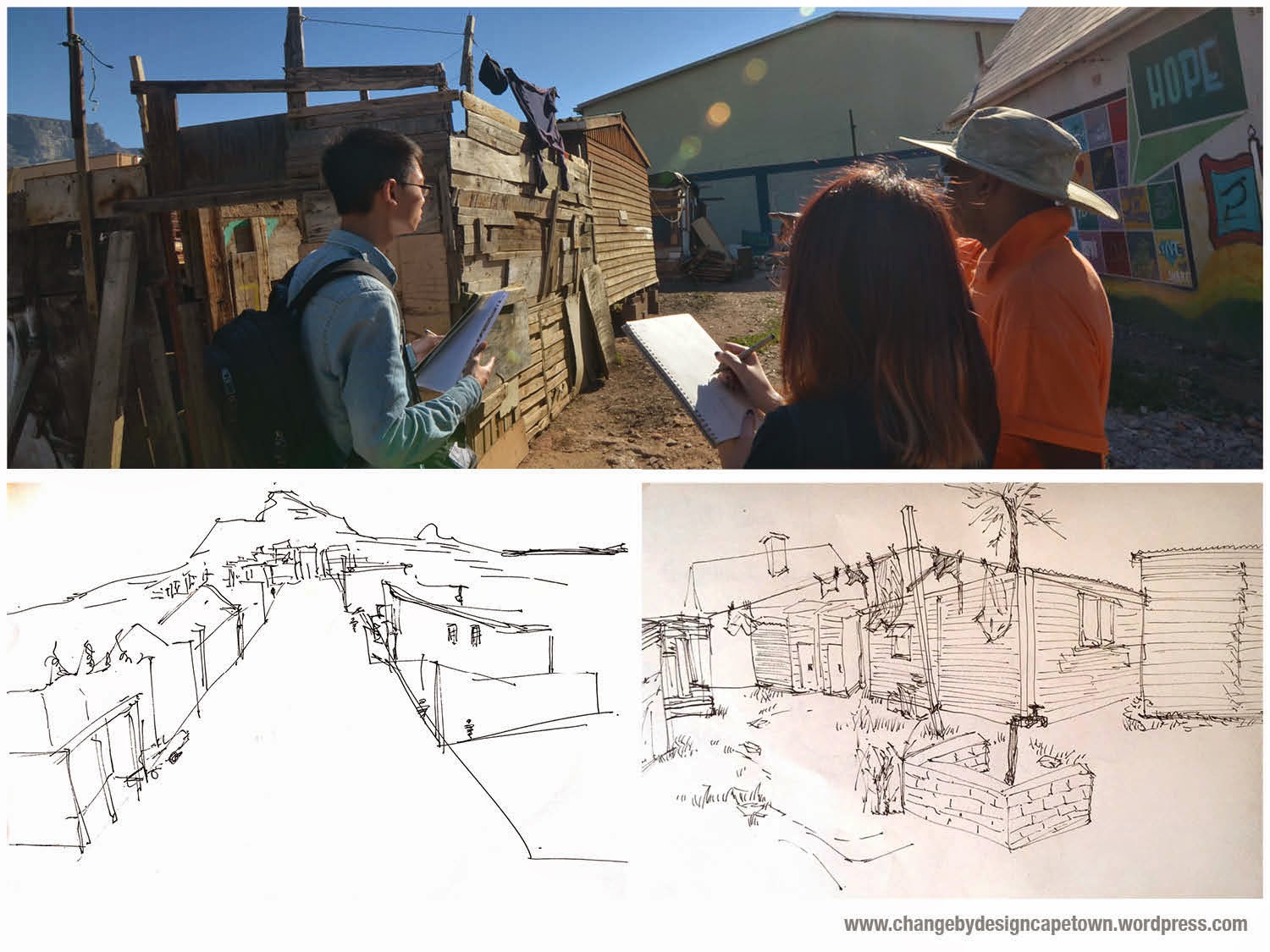
And began the process of participatively mapping with residents of the various sites DAG ia involved with.
Gympie Street Mapping
Bromwell Mapping
Pine Road Mapping
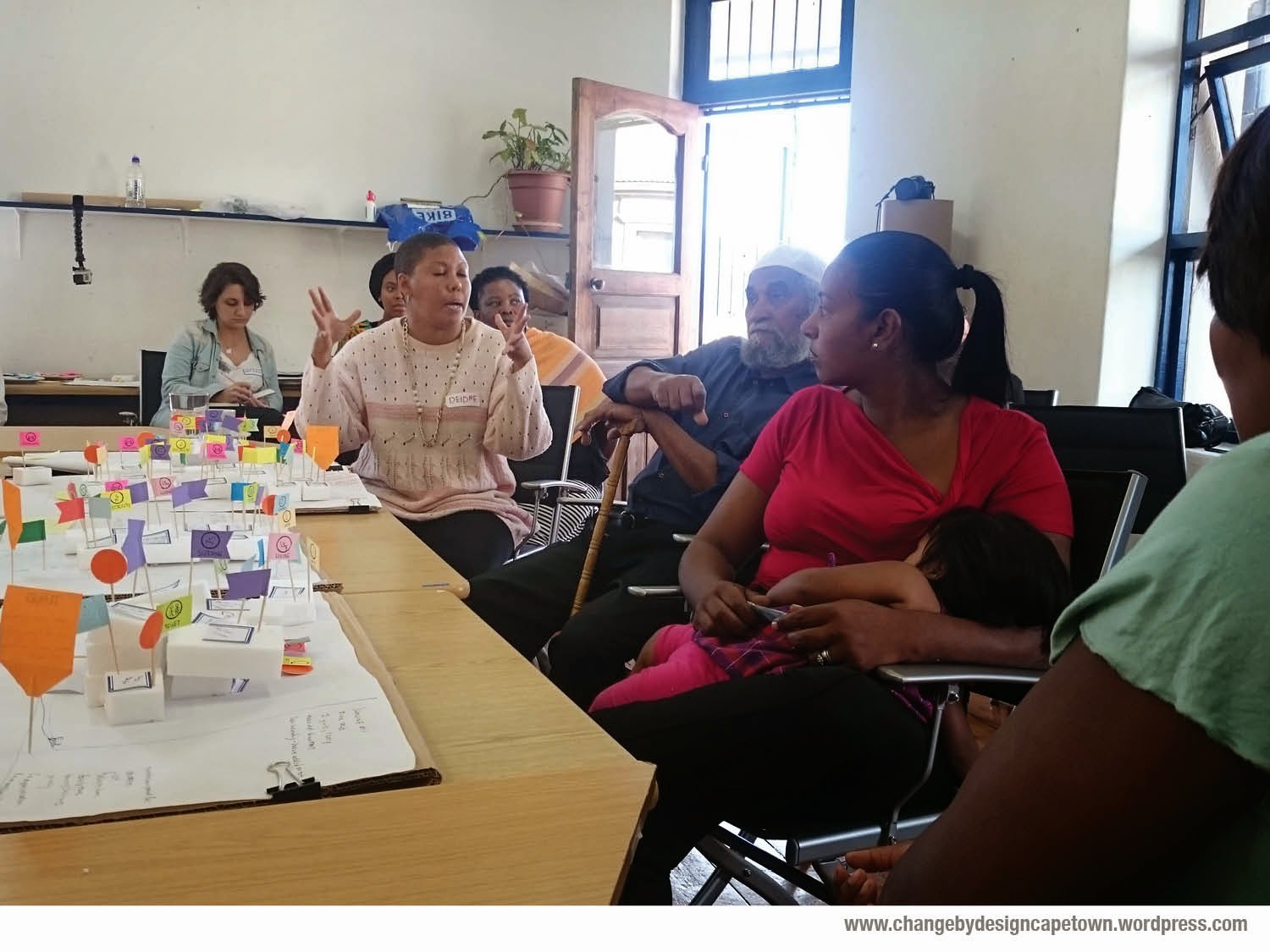
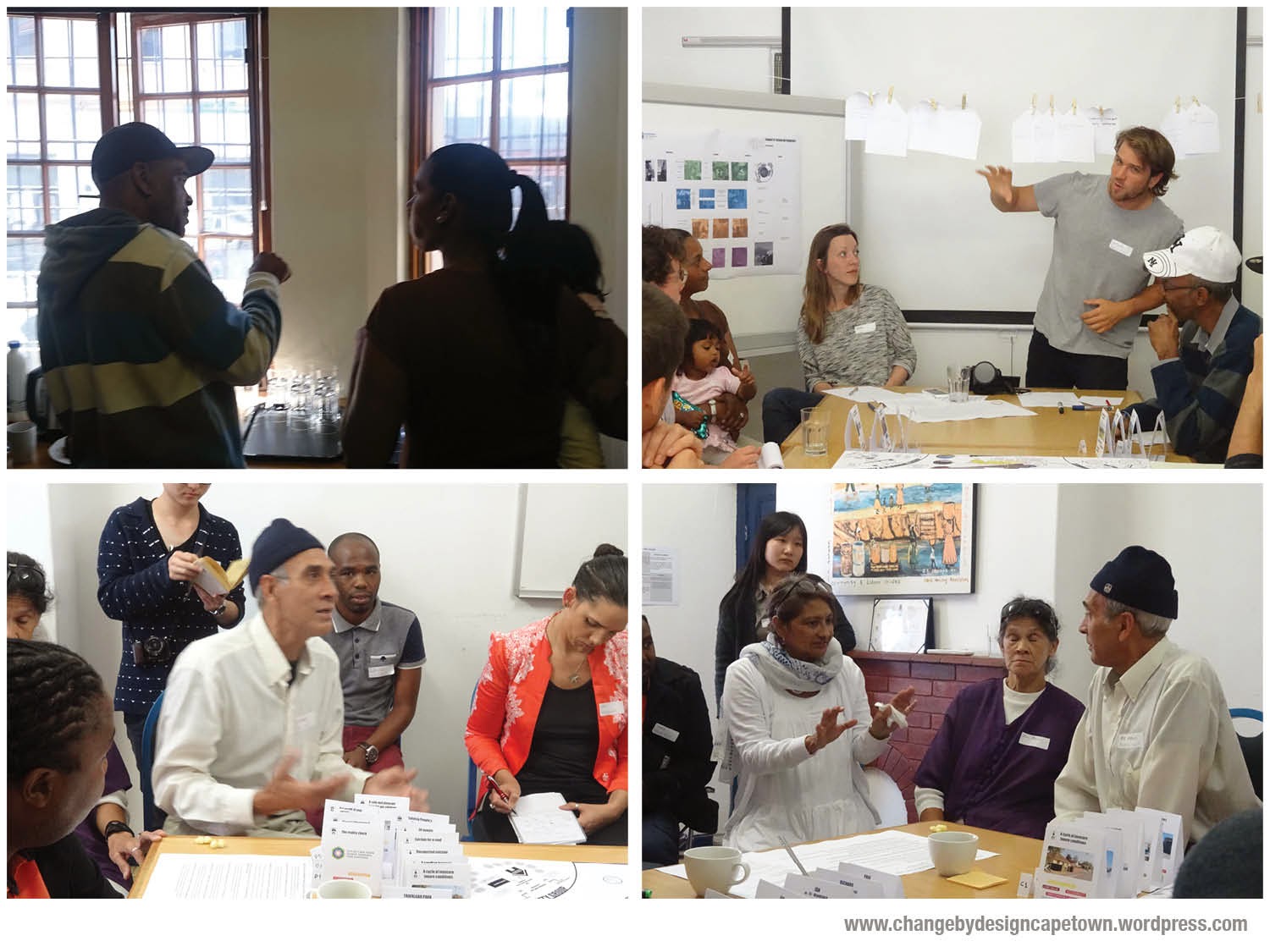
Participative Workshops These findings were then works- hopped through a series of exercises conducted at the DAG Cafe,
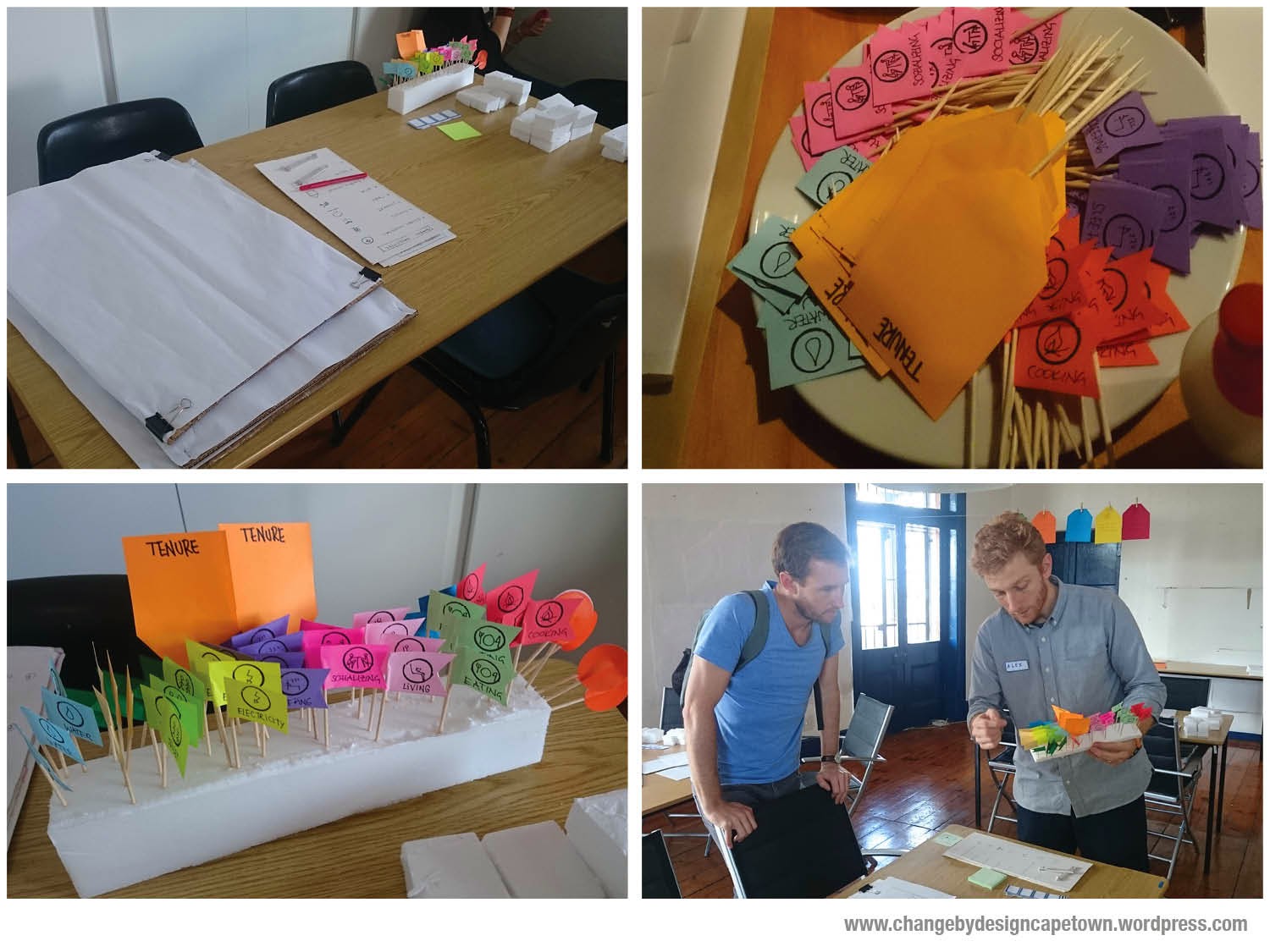
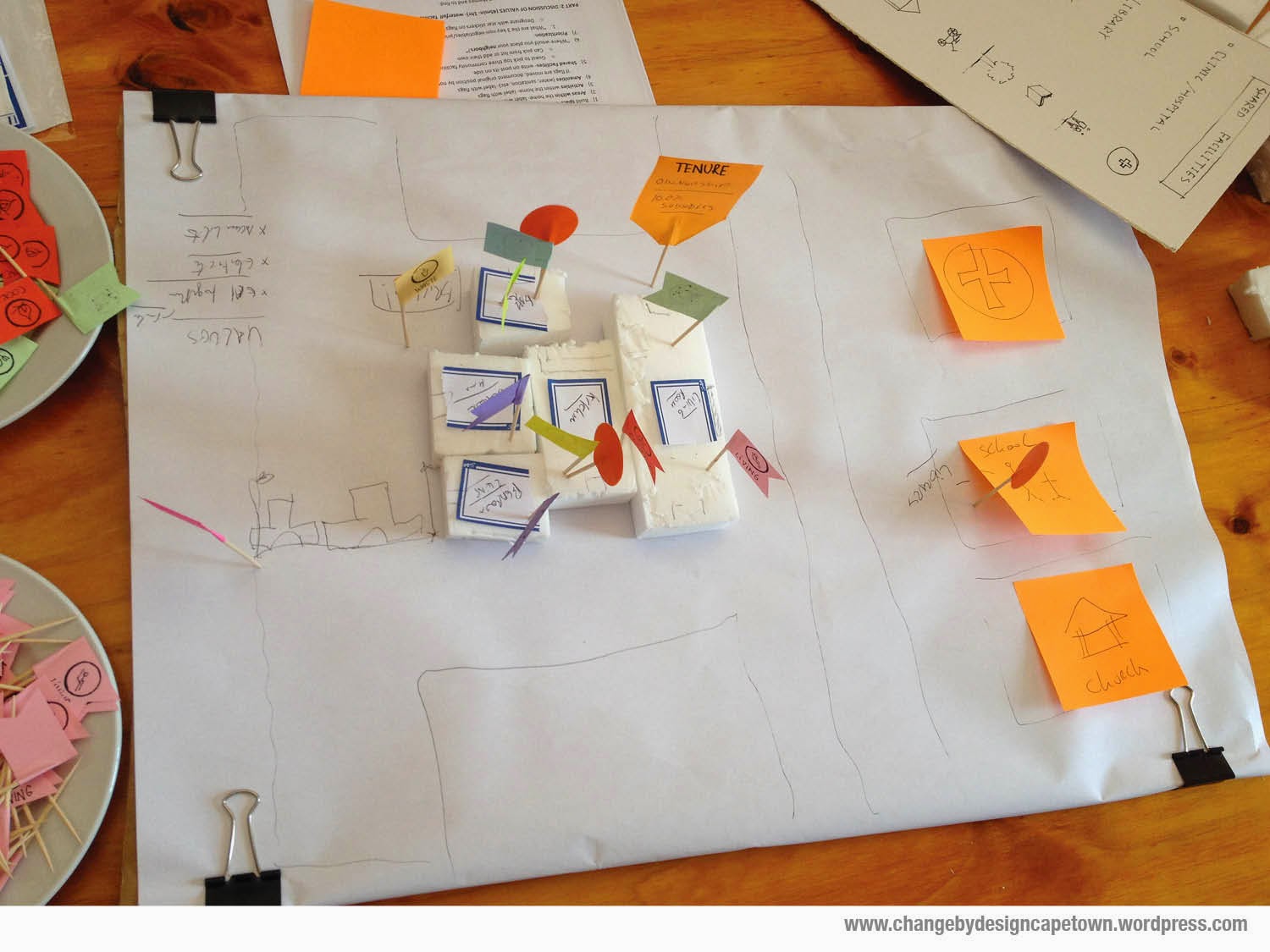
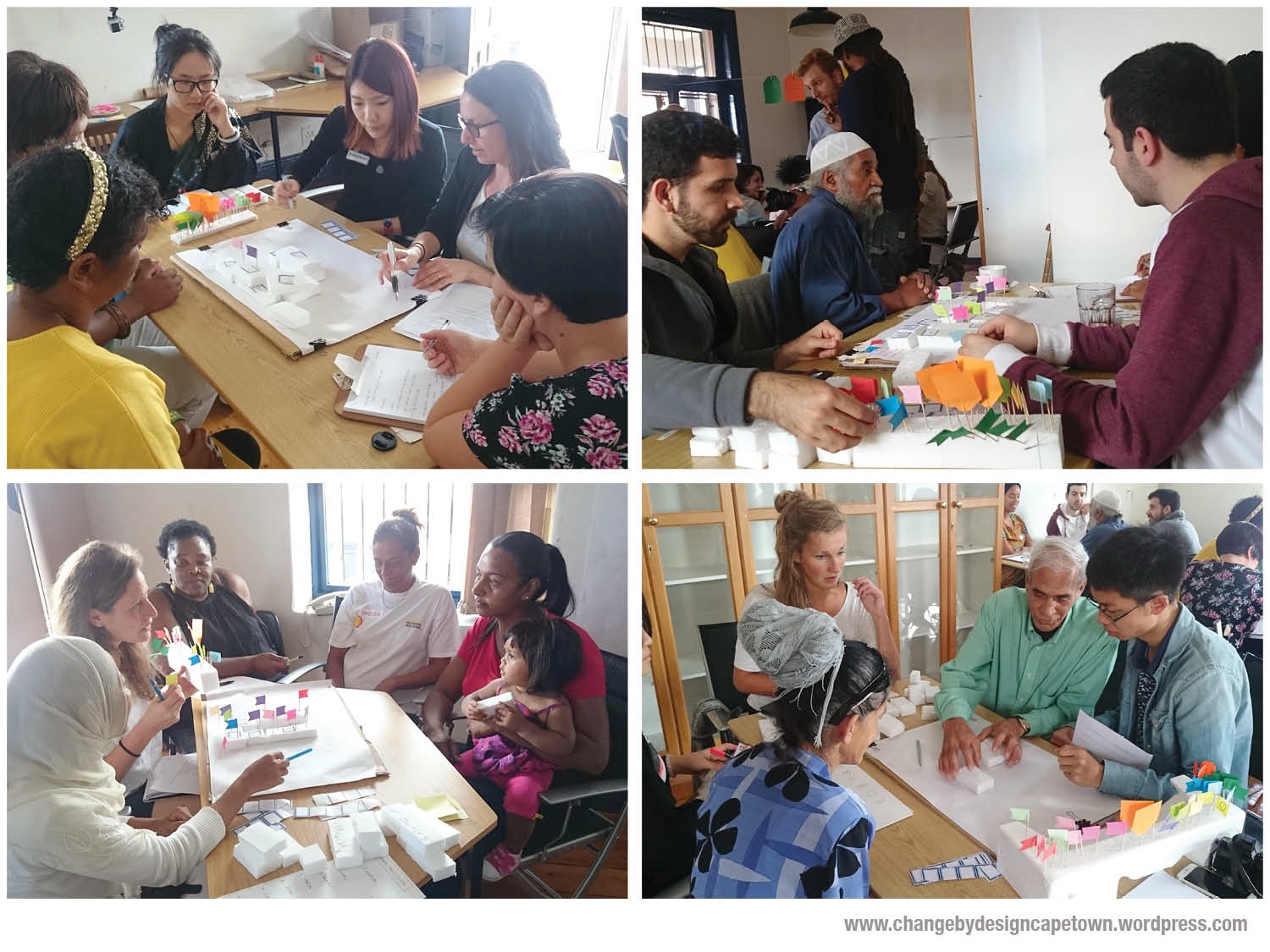
This exercise was carefully designed and facilitated by the ASF Team in two parts, one that asked residents to ‘build’ their dream home, then asked residents to discuss together aspects of neighbourhood and possible links to future threats.
Individual Exercise
Group Exercise
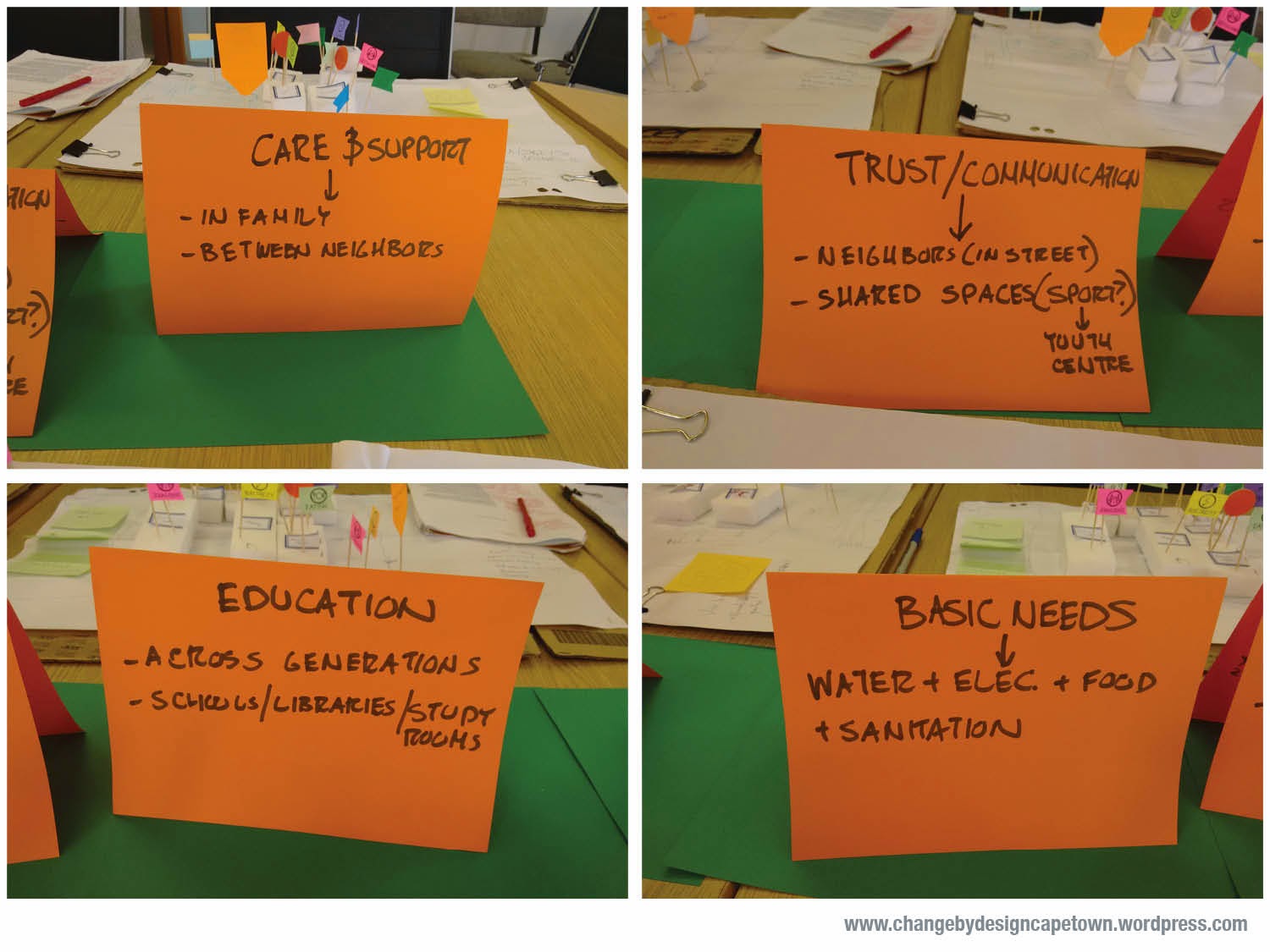
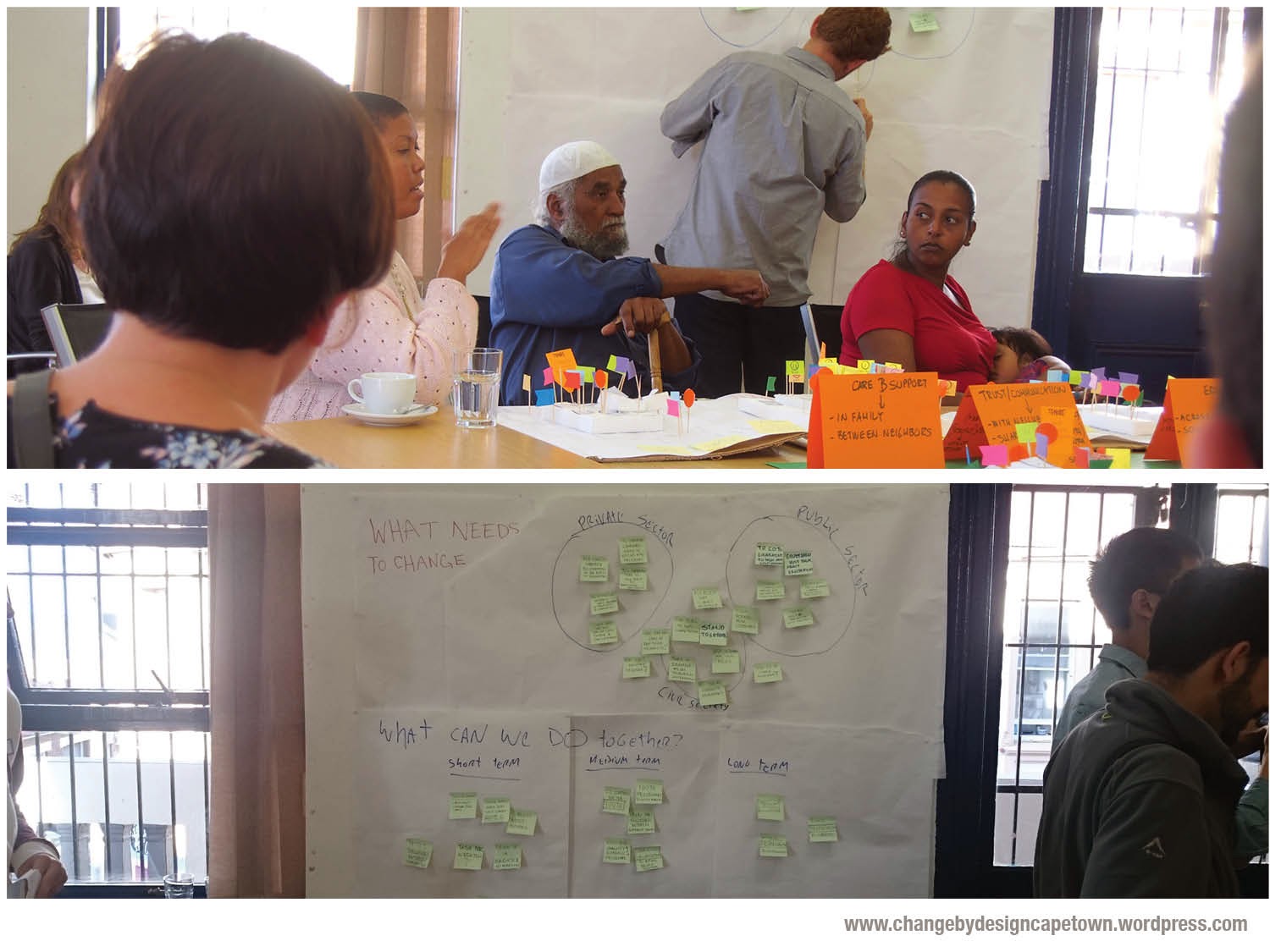
The findings from all the exercises were carefully collected and collated into the final day workshop that brought together all the various scales of the workshop as well as various stakeholders in DAG’s projects.
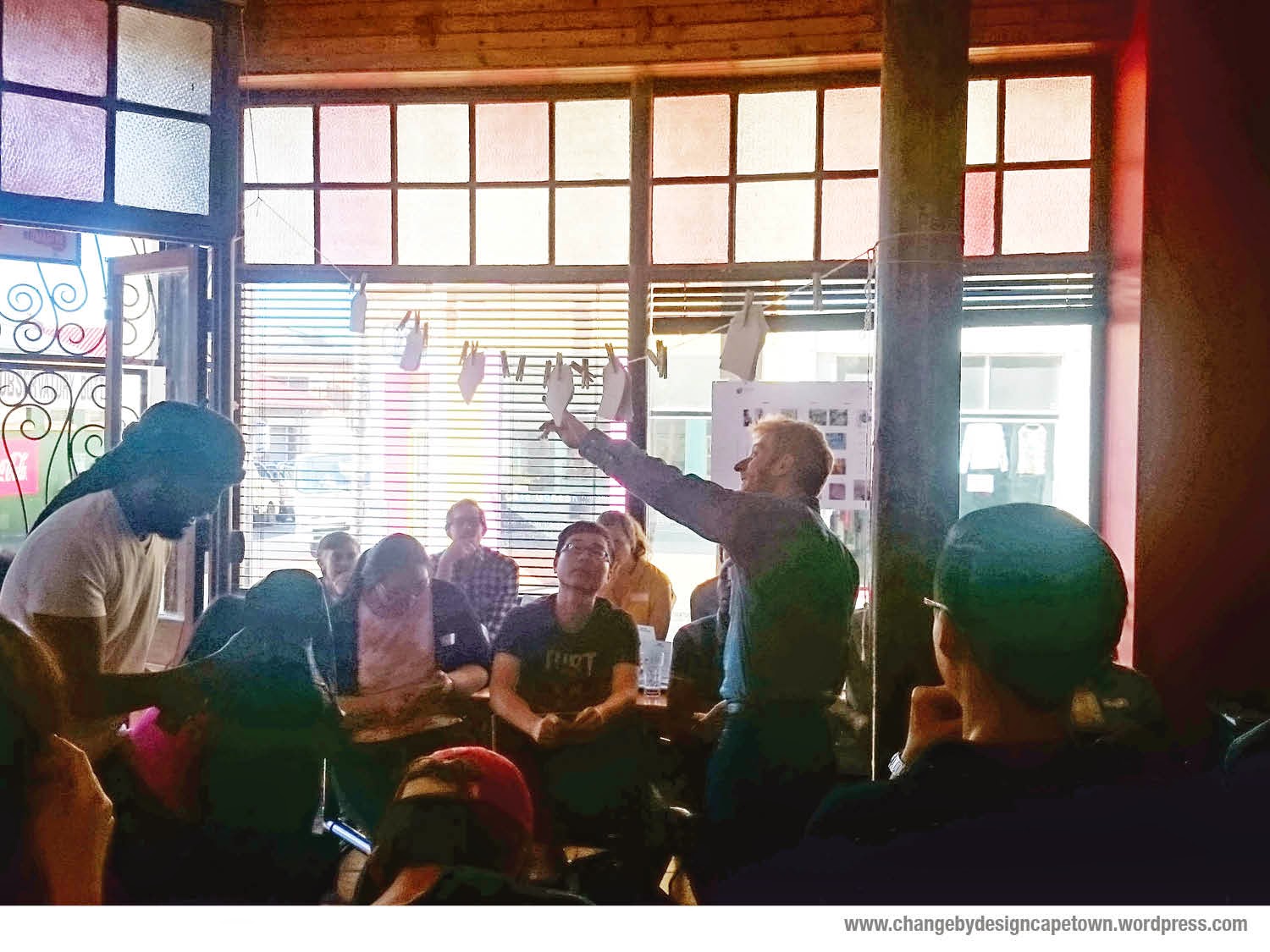
Final Day Exercise
These final workshops were crucial in determining the collective elements of those involved in the different aspects of DAG’s work.
Workshop End
The workshop concluded with a facilitated discussion between the participants and the CBO’s. The next step from the facilitation team is to complete the report for DAG as well as package and share the data gathered during the workshop .


































































































 Jhono Bennett