Change by Design – Joburg 2023: Workshop 1

Overview

The 2023 CBD Workshop in Joburg was developed over many years of preparation with ASF-UK, 1to1 and various stakeholders across Johannesburg. My own doctoral research was tied into this process.

The 2023 Change by Design – Joburg workshop delved into two distinct types of inner-city sites: an informal settlement and a cluster of informally occupied buildings. Leveraging the ongoing efforts and partnerships of 1to1 with advocacy groups and grassroots leadership, the aim was to bolster local residents and their organizations in creating equitable living conditions in the two areas.

The workshop was divided into two parts: an online symposium for preparation, followed by a one-week live workshop culminating in a final event. The workshop aimed to comprehend the role of community-led design and planning in promoting housing justice in inner-city Johannesburg. The team believed that organized collective action was needed to advance the housing rights of inner-city residents and that community-led design and planning could support civic and grassroots actors in their housing justice work.

The workshop utilized ASF-UK’s Change by Design methodology to encourage collaboration and mutual learning about urban space and improve local living conditions. The CBD methodology has four stages: diagnosis, dreaming, developing, and defining, with the workshop focusing on the first two stages. It also emphasized Ethics-in-Action, with a reflective approach to ethical practice and the importance of informed consent and data protection in research practice.

The workshop’s sites, Bertrams and Jumpers, were chosen to facilitate comparative learning, with each site explored at the micro, meso, and macro scales to coordinate three groups of participants. The final event served as an important moment for various project stakeholders to come together, share insights, and collaborate on actionable next steps towards the project’s aims and needs.

The workshop provided several recommendations for the future, including a focus on upgrading occupied buildings, addressing knowledge gaps around affordability and physical conditions, enhancing the capacity of grassroots activists, and promoting knowledge exchange beyond Johannesburg. The next steps involve implementing these recommendations to advance housing justice in Johannesburg, with a focus on policy dimensions around upgrading occupied buildings, addressing knowledge gaps in practice, enhancing grassroots activists’ capacity, and promoting knowledge exchange.


Full Story (re-posted from CBD 2023 Website)

In 2023, Architecture Sans Frontieres – United Kingdom (ASF-UK) and 1to1 – Agency of Engagement (1to1) led a multidisciplinary group of action-research volunteers to support local grassroots efforts in addressing housing challenges within the inner-city of Johannesburg through the Change by Design Methodology.

Participants took part in a one-day online symposium in December 2022 and a one-week live workshop in Johannesburg in January 2023. Throughout this period, they worked closely with 1to1 – Agency of Engagement and their civil society partners, adapting the Change by Design methodology to explore how community-led design and planning can contribute to advancing housing justice in inner-city Johannesburg.

The 2023 workshop explored two different types of inner-city sites: an informal settlements, and a cluster of informally occupied buildings. Building upon 1to1’s ongoing activities and partnerships with advocacy groups and grassroots leadership, the aim was to support local residents and their organisations in their efforts to create fairer living conditions in the two areas.

The workshop was split into two parts: a preparatory online symposium, and one week live workshop that culminated in a final event.

WORKSHOP AIMS

The workshop aimed to understand the role of community-led design and planning in promoting housing justice in inner city Johannesburg. The project team and felt that inner city areas were places where housing deprivation and human rights violations are common and that there is a lack of understanding of the conditions and experiences of housing informality and precarity in these areas.

They believed that community-led design and planning could support civic and grassroots actors in their housing justice work and that organised collective action was needed to advance the housing rights of inner city residents.

The expected outcome of the workshop was to capture and amplify diverse experiences of housing informality in inner city Johannesburg, and the future aspirations of residents and their organisations.

METHODOLOGY

The workshop utilised ASF-UK’s Change by Design methodology to support collaboration and mutual learning about urban space and improve local living conditions. The CBD methodology has four stages: diagnosis, dreaming, developing, and defining. The initial stages are used to facilitate co-design activities at three scales: micro, meso, and macro. The 2023 workshop focused on the first two stages of the process (diagnosis and dreaming) and centred on two sites, Bertrams and Jumpers, to facilitate comparative learning. In each site, the micro, meso, and macro scales were used to guide and coordinate three groups of participants, each supported by ASF-UK/1to1’s facilitators.

Diagram illustrating the stages and components of the Change by Design methodology for participatory design and planning (De Carli and Frediani:2021)

CONSIDERED ETHICS-IN-ACTION

The ethical standards and ethics board of institutions, organisations, and companies tend to focus on legal concerns around ethics or high-level moral principles. However, for the workshop, the focus is on Ethics-in-Action and navigating the complicated interpersonal dynamics that manifest in our work. The workshop outlined key concepts for a reflective approach to ethical practice, including being considerate of one’s presence in contexts of inequality and understanding positionality. It also highlighted the importance of informed consent and data protection in research practice. The document provides resources for further information on these topics and encourages ongoing reflection and learning.


WORKSHOP CONTEXT

INNER-CITY JOHANNESBURG

The city of Johannesburg in South Africa was built in response to extractive industrial forces, with no clear origins, and is situated away from natural water resources. The city’s location was influenced by a meteor strike 2 billion years ago, which brought the gold seam closer to the surface. Johannesburg’s urban form was shaped by the mining belt, which split the city across an affluent-labour force divide. Johannesburg is one of the most unequal cities in the world. Even though the pass laws were revoked and the Apartheid State dismantled in 1994, endemic spatial inequality in South Africa remains.

South Africa’s socio-economic inequality is a broadly discussed topic of research and public debate. However, socio-spatial inequality remains an elusive and collectively murky topic. Johannesburg was built before the Group Areas Act, but the separative patterns of labour, industry and housing put in place by both the Transvaal government and later British colonial forces preceded an urban structure that was later entrenched through the control of labour between the city centre, the townships and the rural homelands through the larger Apartheid system.

The Apartheid City Model (Davies, 1989)

The twentieth-century Apartheid city model, implemented by law, very specifically separated inhabitants and users along strict zoning and racial definitions as set out by city planners and mandated by the national government. Each adopted an internal core – a Central Business District (CBD)- that acted as a hub between industrial areas, outlying white neighbourhoods, and non-white townships and severely controlled access times, modes, and users. The model employed various natural and manmade ‘buffers’ to separate these areas that included industrial zones, rivers, mountains and, in the case of Johannesburg, the unusable mining extracted ore known locally as the ‘mine dumps’.

BERTRAMS

Bertrams is a suburb located on the eastern edge of Johannesburg’s CBD in South Africa. It is named after the property developer who bought the area in 1889. Bertrams is a warm and welcoming suburb, despite its high unemployment rate, and is situated near the University of Johannesburg. The housing in Bertrams ranges from fenced brick houses to apartment buildings, many of which serve as student accommodation.

However, many of these buildings have not been well-maintained, causing health and safety hazards. The priority block, which is located between Gordon Road and Berea Road, consists of buildings occupied by groups of people who work together to maintain the cleanliness and liveability of their buildings. The land is owned by the municipality, with informal social tenure amongst the residents of the buildings.

JUMPERS

Jumpers is a small informal settlement located in Johannesburg’s Cleveland area, to the east of the CBD. The settlement is named after the Jumpers Deep Gold Mine which was established in 1898 and operated until 1913. Most of the people living in Jumpers reside in corrugated iron sheeting shacks, with some living in small brick homes or wooden board shacks.

The settlement has community leaders, a creche, little shops, and bars for entertainment. People living in Jumpers commute to places like Sandton to work as domestic workers, gardeners, in supermarkets, or in taverns. The area is densely packed, with narrow walkways and gravel roads accessible by cars. The settlement has cuca shops where residents sell fruits, vegetables, and daily household items to make an income.

WORKSHOP SUMMARY

In December 2022, an online symposium was organized to support the upcoming 2023 Change by Design workshop in Johannesburg. The symposium aimed to bring together partners, stakeholders, and participants from the broad network, making participation easy and accessible. The symposium was split into two parts: the Workshop Participants Session and the Public Symposium. The Public Symposium had two panels, the first discussing the challenges faced by people living in informal settlements in the city and the second focusing on community-led design and planning agenda.

On January 22, 2023, the 2023 Change by Design workshop began with an opening session, bringing together all participants to encourage reflection and engagement through a series of reflective questions. The following day, the workshop participants took a city tour that provided them with a rich and insightful experience, fostering a deeper appreciation of the challenges and opportunities that arise from designing for social change in the South African context.

On Tuesday, the participants embarked on their first day of fieldwork in Jumpers and Bertrams. The experience highlighted the importance of understanding the social dynamics that underpin settlements like Jumpers and the need for a collaborative approach to designing interventions that can create positive change in these communities.

The third continued the multi-scalar approach, focusing on the micro, meso, and macro levels of the sites to understand shared systems, spaces, and narratives.

The fourth day was the final day of fieldwork, providing an opportunity to tie up any loose ends in the exercises and ensure that all participants were connected to the project’s future.

The fifth and final event was an important moment for the workshop as various project stakeholders came together to creatively and collaboratively design actionable next steps towards the project’s aims and needs. The event was open to city officials, academic partners, NGOs, residents, and anyone interested in the project’s topics and was held at the School of Architecture and Planning in the University of the Witwatersrand’s John Moffat building.

Overall, the final event was a crucial moment in the workshop as it provided space for various project stakeholders to come together, share insights, and collaborate on actionable next steps towards the project’s aims and needs.

REFLECTION & WAY FORWARD

WORKSHOP OUTCOMES

The Change by Design 2023 Workshop was an important step towards addressing the complex challenges surrounding housing justice in Johannesburg, with a particular focus on inner-city informal settlements and occupied buildings. One of the key objectives of the workshop was to support community facilitators in their training skills and to help make and record the evidence of the work that various project partners have been doing for years. The workshop brought together stakeholders from various backgrounds, including grassroots networks, NGOs, academic institutions, and government officials, to collaborate and share knowledge.

The workshop was organized into three main groups, each focusing on different scales of the sites in Bertrams and Jumpers. The groups explored a range of issues, including collaborative networks, multi-stakeholder approaches, and the difficulty of translating policy into practice. The lack of a policy for upgrading occupied buildings and limited options for community-led housing were identified as significant challenges. As a result, the workshop provided several recommendations for the future, including a focus on upgrading occupied buildings, addressing knowledge gaps around affordability and physical conditions, enhancing the capacity of grassroots activists, and promoting knowledge exchange beyond Johannesburg.

The workshop also served as a platform for stakeholders to collaborate and share their experiences, strategies, and best practices. The event concluded with a presentation of initial work and an open discussion about potential ways forward for these sites. Attendees included representatives from grassroots networks, NGOs, and academic institutions. The workshop supported community facilitators in their training skills and helped make and record evidence of the work that various project partners have been doing for years. Overall, the workshop was an important step towards advancing housing justice in Johannesburg and promoting sustainable solutions for inner-city informal settlements and occupied buildings.

NEXT STEPS

The workshop brought together stakeholders to collaborate and share experiences, strategies, and best practices and supported community facilitators training. The next steps will involve building on this momentum and working collaboratively towards sustainable solutions for inner-city informal settlements and occupied buildings.

The next steps following the Change by Design 2023 Workshop will involve implementing recommendations made between the project team in order to advance housing justice in Johannesburg, with a focus on policy dimensions around upgrading occupied buildings, addressing knowledge gaps in practice, enhancing grassroots activists’ capacity, and promoting knowledge exchange.
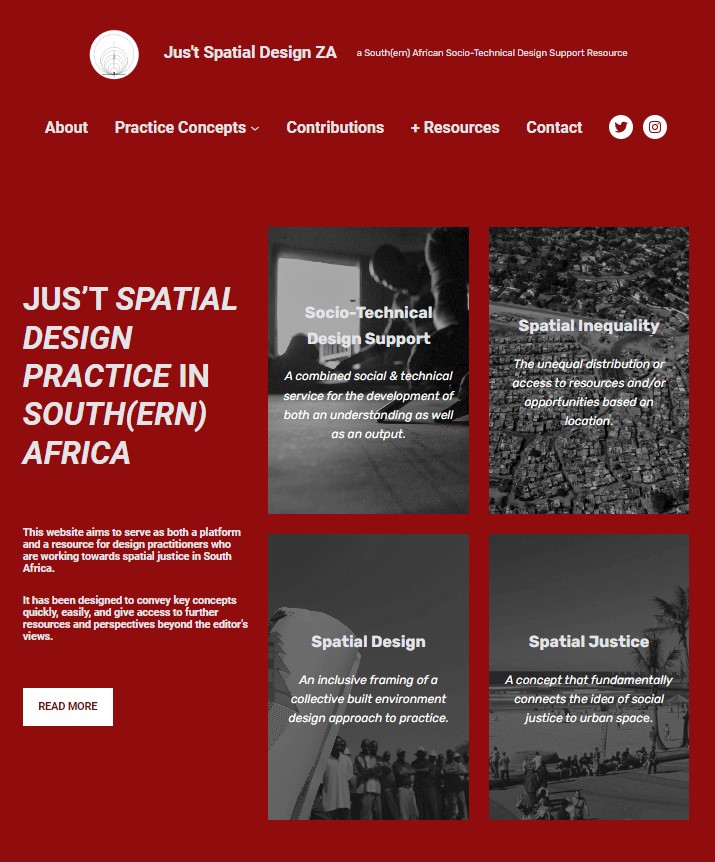
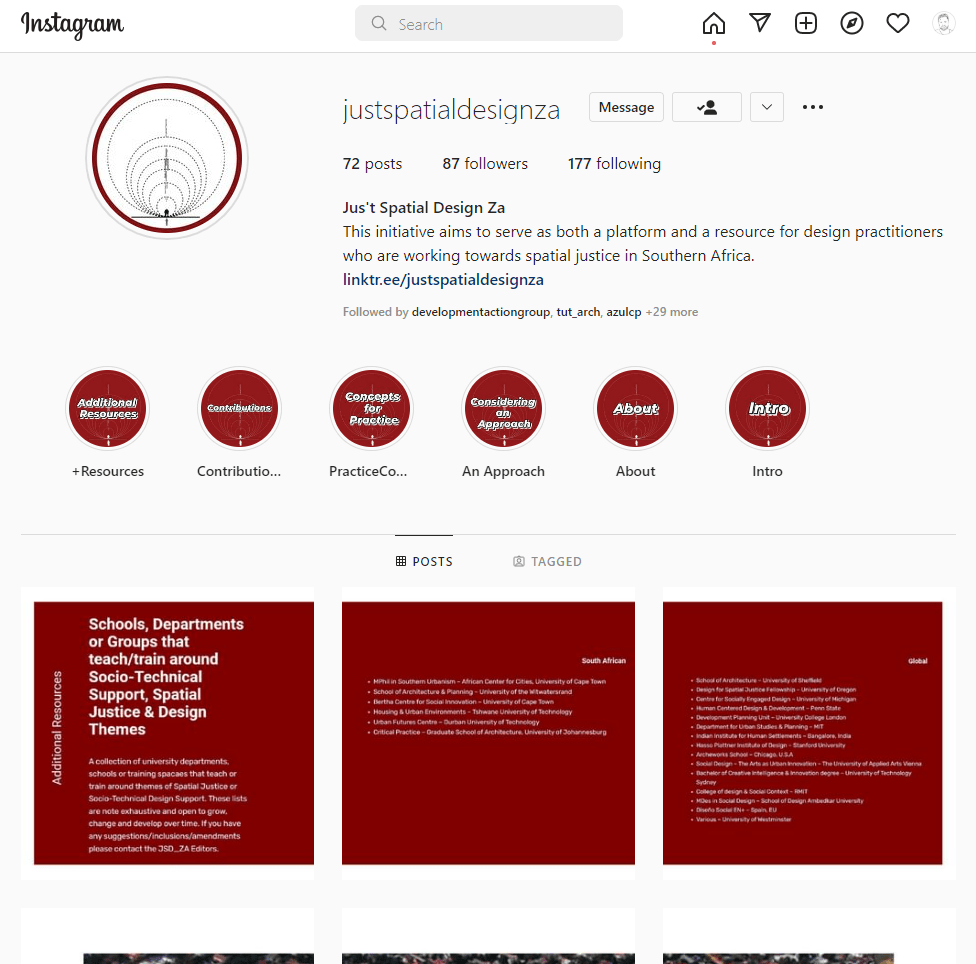
Jus’t Spatial Design Digital Resource Platform

Developed during the first lock-down in 2020, this initiative was conceived as a means of translating the ‘back-of-house’ research and training work that was being done through 1to1 – Agency of Engagement and my doctoral research. We named this initiative Jus’t Spatial Design ZA and worked to make it accessible to as many people who could use it in their work.

The platform was developed from an early digital resource that I developed while teaching at the University of Johannesburg and was seen as a way to support practitioners (research, design and socio-technical) in their work towards Spatial Justice in South African cities. Each of these terms are carefully unpacked and include quick links, academic references and a local/global comparison for each part:

The website offers a series of Practice Framings that aims to assist those working across this sector a way to describe their work through local and global terms.

The platform has been further enhanced with the support of Adheema Davis to include a Contribution Section that is busy collecting a multitude of different voices on this topic, with a regular publication schedule. Contributors are invited to submit a short writing, visual or other media idea in exchange for editing, development support and a cohort of similar writers that we have been facilitating.

Contributions Page

Cohort 1 Profile Page

Writing Club Cohort 1 – Co Production Miro Board

These are shared and connected across the various social media platforms that the initiative manages.

The platform also houses a growing set of resources that I add as my own doctoral work covers these fields. This is imagined to grow and adapted in the future to be more thorough and relevant.

Additional Resources Page

Jus’t Spatial Design ZA is still largely in development, but is seen as a collaborative project. If you are interested in join or get involved in way – please contact the team!

BUDD DPU Practice Engagement: Sheffield Otherwise

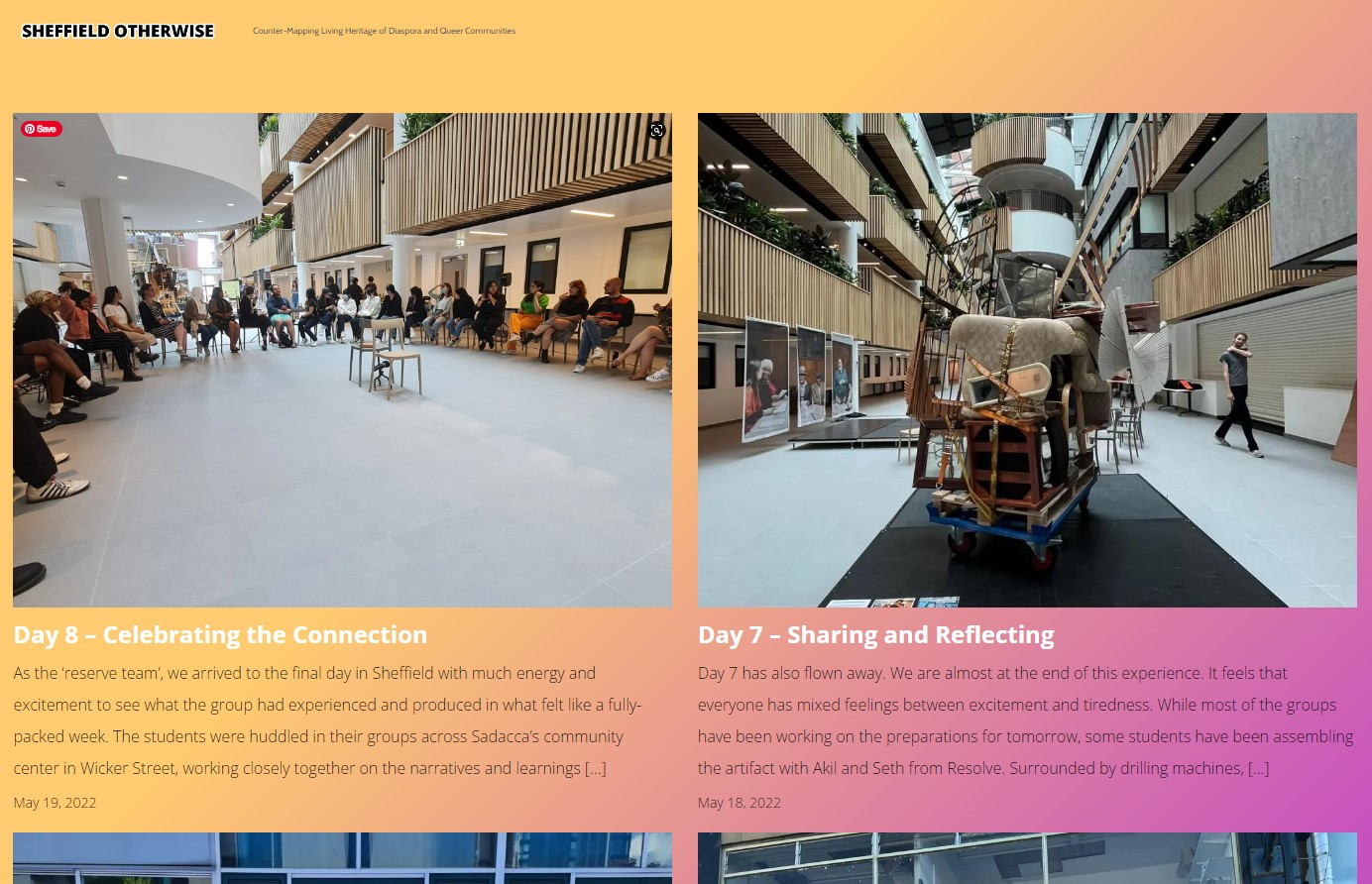
As part of my work with the DPU’s BUDD Programme, I assisted in the digital structuring and communication of their yearly Overseas Practice Engagement. Due to the limitations of the pandemic, this year it was held in Sheffield, England with Resolve Collective, Gut Level and SADACCA with the support of Urban Ark at Sheffield Hallam University.

Project Website Summary

The project was developed and executed by Dr. Catalina Ortiz, Dr. Natalia Villamizar, Dr. Giorgio Talocci and Laia Fernandez Garcia from the DPU, with myself and Nihal Hafez in support.

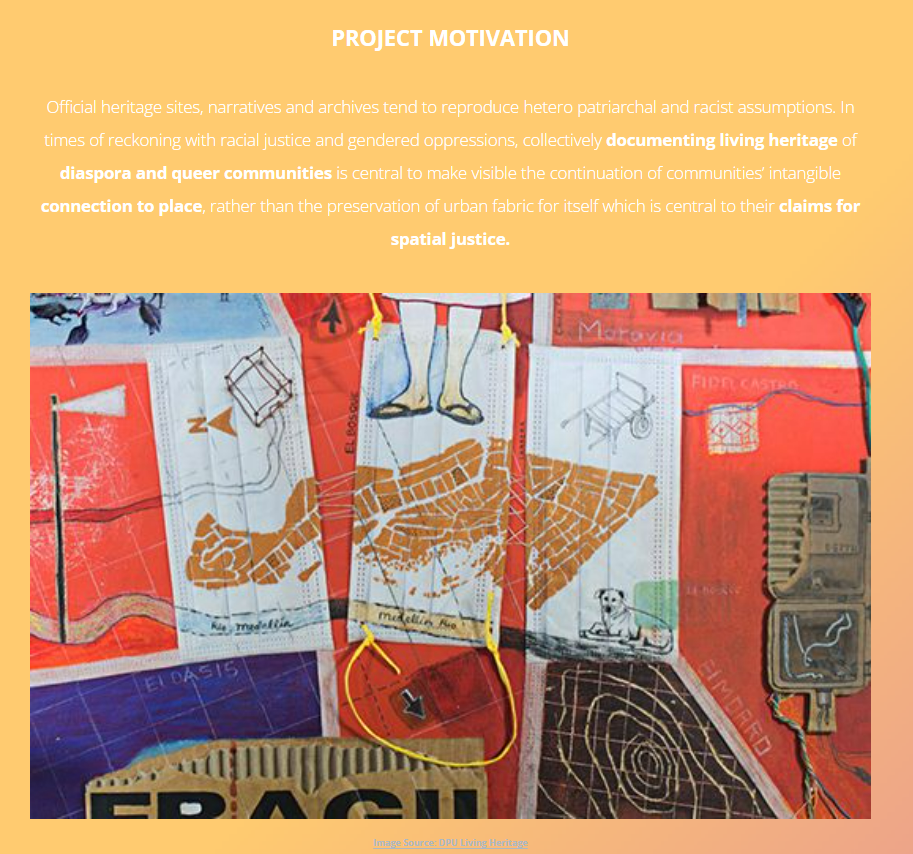
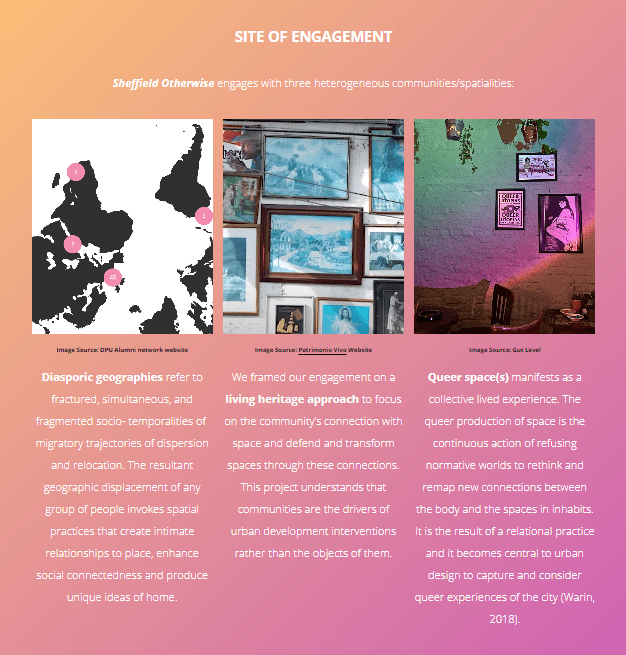
Project Thematics Areas (developed by BUDD Tutors & shared from project website)

The short and cussed participative engagement was broken into 4 thematic lenses that had students working closely with the project partners to engage with a series of action research questions and co-design exercises in supporting the work of those involved.

Project Background (developed by BUDD Tutors & shared from project website)
Projects Aims (developed by BUDD Tutors & shared from project website)
Project Focus (developed by BUDD Tutors & shared from project website)

The week was supplmented by a series of public events that brought together a host of different local actors, practitioners and people from across Sheffield.

Public Events (developed by BUDD Tutors & shared from project website)

The week was packed with engagements, and had the students staying and working on site each day and each evening.

Project Background (developed by BUDD Tutors & shared from project website)

The workshops was carefully documented in both a Daily Blog, as well as a live Instagram account, allowing the project partners involved to share and connect through the week’s activities.

With a final project report that shared and covers all of the student research and design proposal work which was shared and made available to all involved in the project, and publicly accessible here.

1to1 2.0 – a new chapter

1to1 Agency of Engagement's avatar1to1 - Agency of Engagement

HOW DID 1TO1 START?

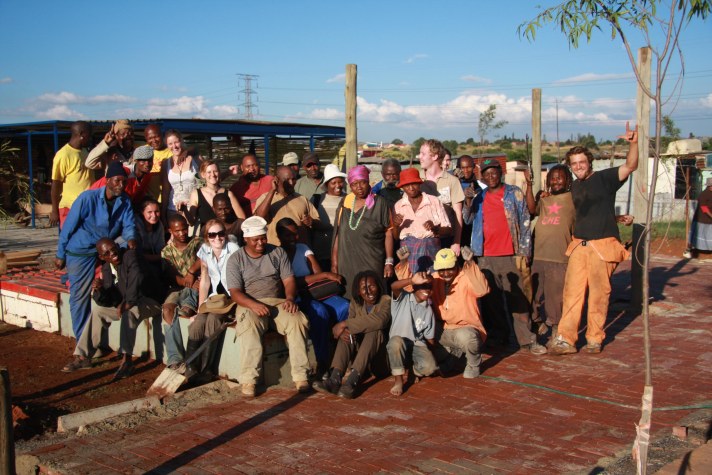
1to1 began in 2010 when a group of students from a South African university were given an opportunity towork with the residents and leadership of Slovo Park, theSlovo Park Development Forum, as part of their masters in architecture programme.
During the initial project of co-designing and co-building a small tactical intervention in Slovo Park, theSlovo Hall,the group were exposed to another way of working and city-making, as people first then as practitioners – they sought to grow this additional mode of practice into something that could support similar projects while creating a platform for engagement with other stakeholders and students. This initial student group went on to develop the1to1 Student Groupinto 1to1 – Agency of Engagement andregister the organisation in 2012 as legal entity.

HOW HAS 1TO1 ADAPTED?

Since2010, 1to1 has grown, reflected and adaptedthrough…

View original post 680 more words

1to1 – A Reflective Hand-Over

After 8 years of being the leader of 1to1 – Agency of Engagement, I have stepped aside as the executive director of the Non-Profit we started in 2010 and begun a parallel (and supportive) journey to reflect and ground what I’ve experienced and learnt over the years into a PhD.

A Reflective Engagement

1to1_A Reflective Engagement_spreads large_Page_01

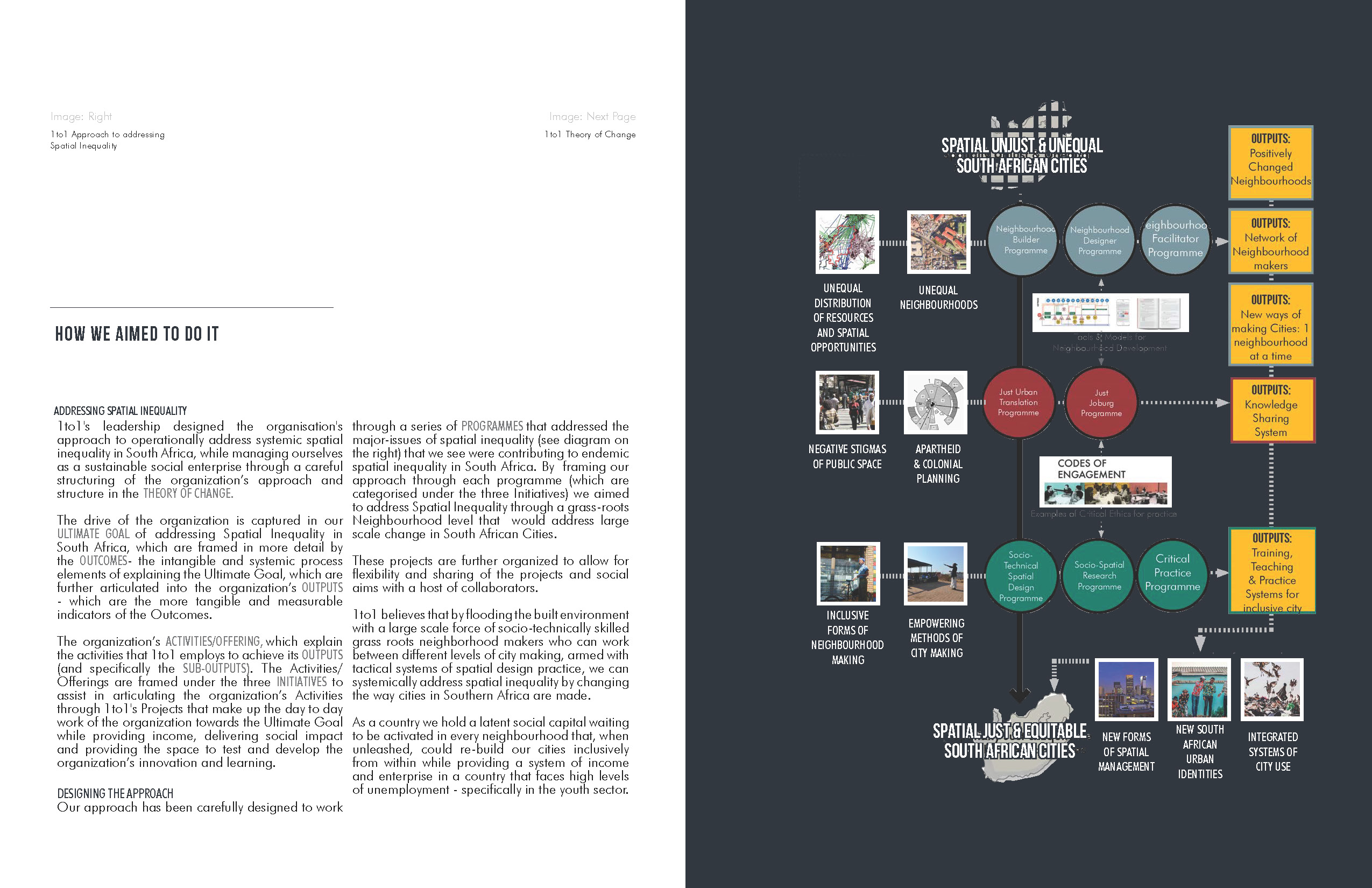
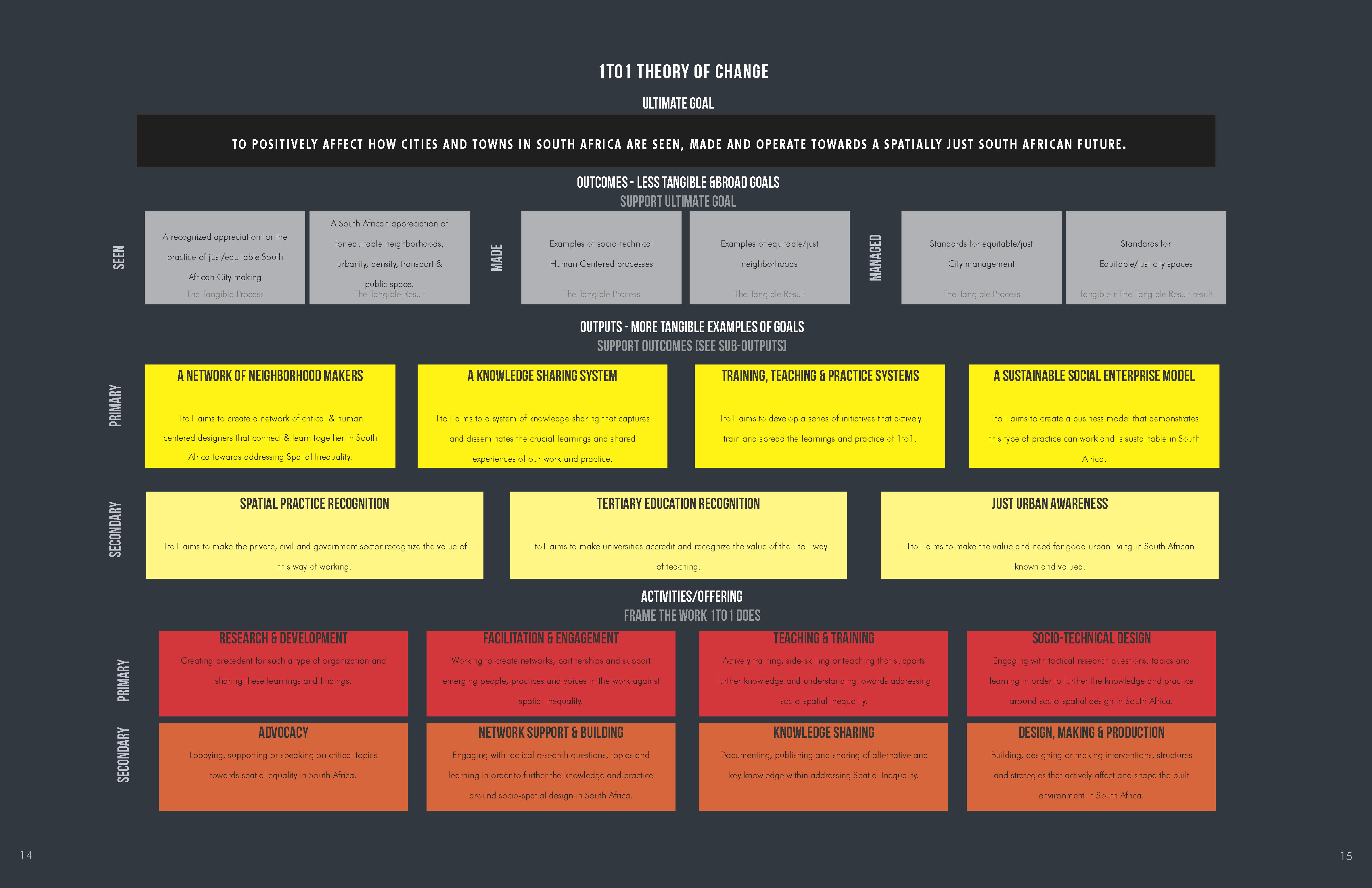
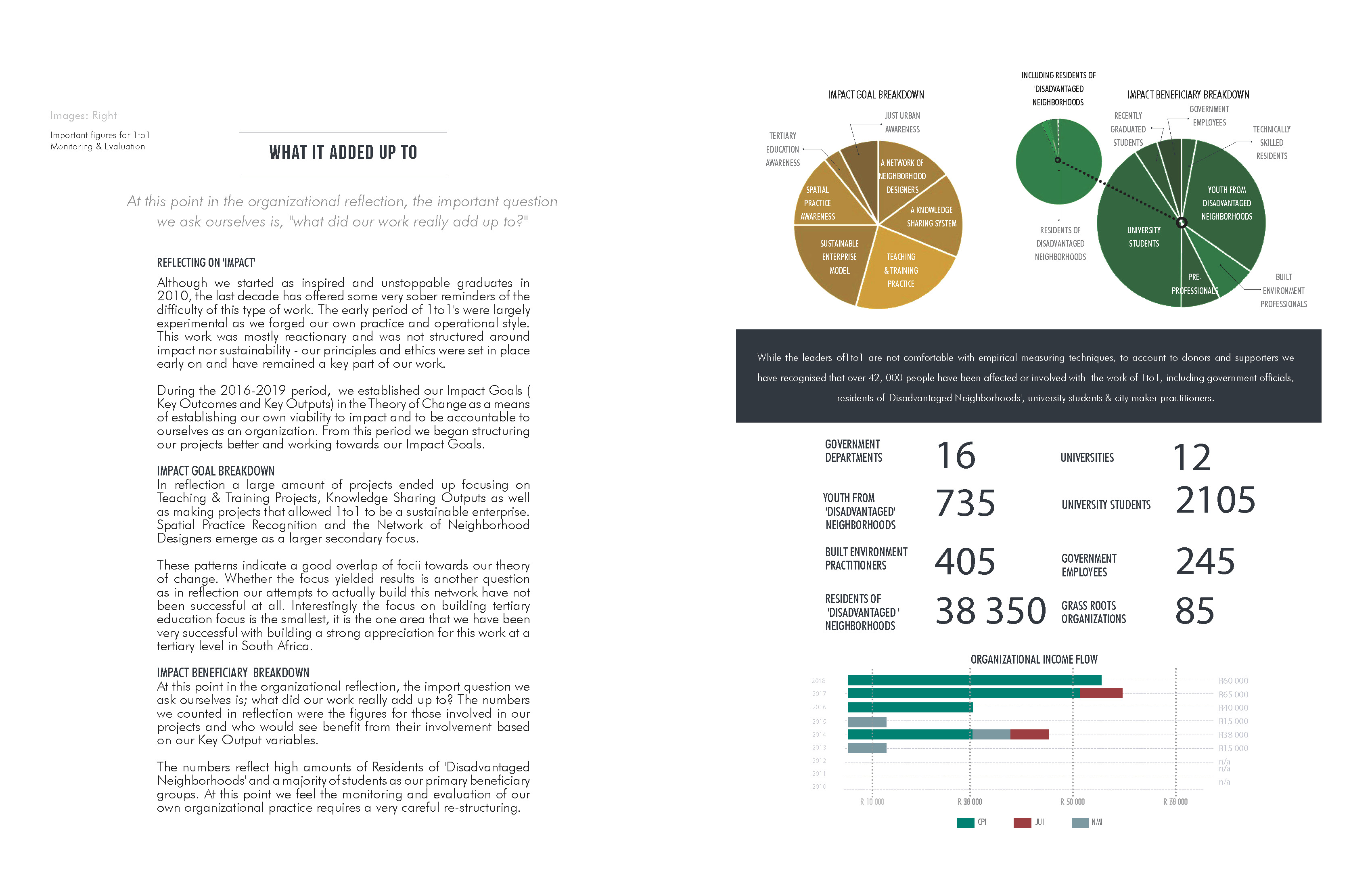
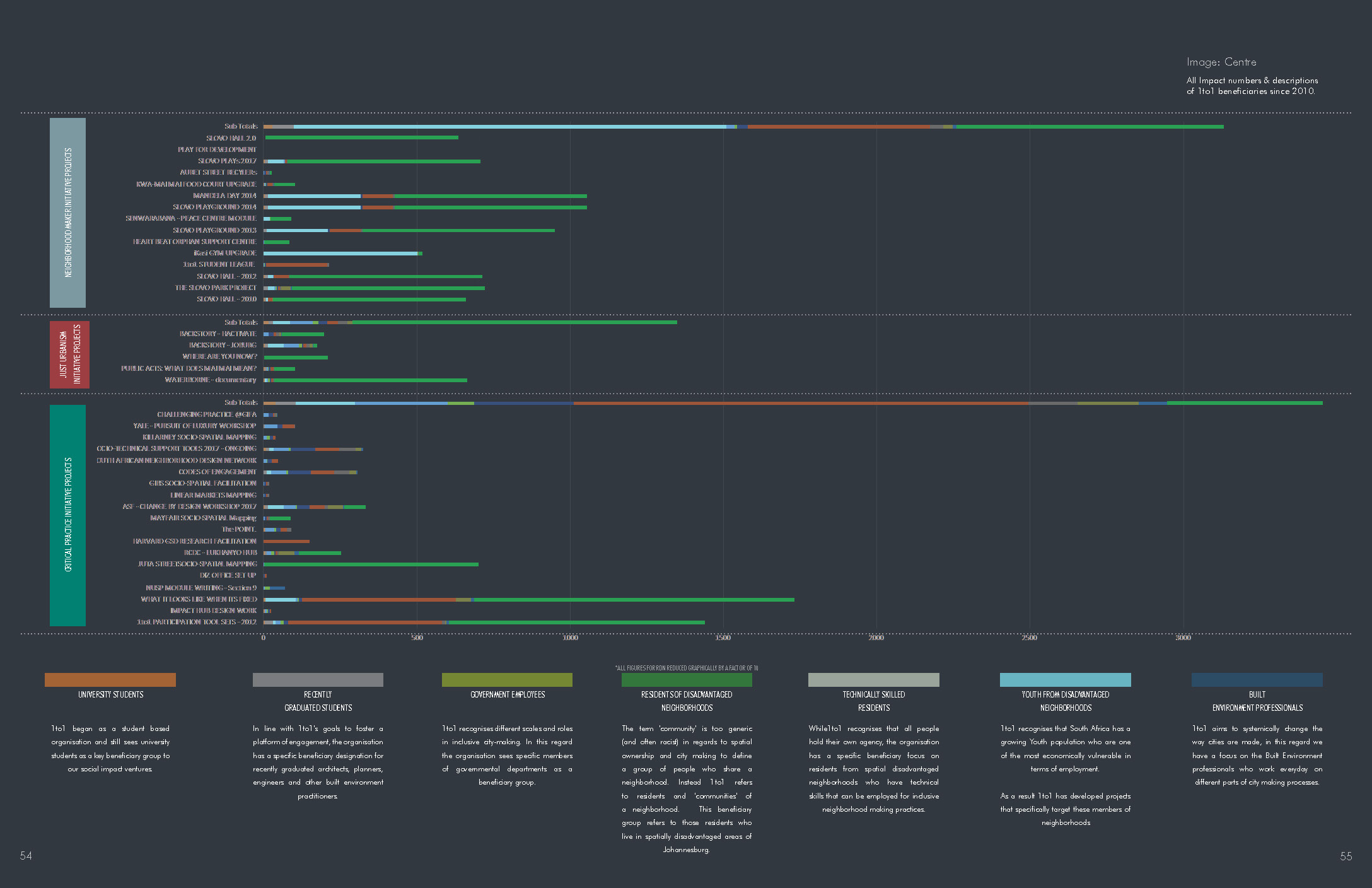
As a means of handing over, reflecting and trying to make sense of the last 8 years we have put together a reflective document that we hope will capture and share the experience for other practitioners, our supporters and the people who have joined us so far. (Link here: https://issuu.com/1to1_enyekwenye/docs/1to1_a_reflective_engagement_snglep)

The report is intended to offer a critical take on what we as 1to1 have done since we started, while celebrating the small wins, recognising the various  people who have made this possible and charting a new path towards a more resilient and effective organisation.

1to1_A Reflective Engagement_spreads large_Page_031to1_A Reflective Engagement_spreads large_Page_071to1_A Reflective Engagement_spreads large_Page_08

The report additionally serves as a record of our work and where we began. We tried to frame 1to1 in this moment, as we prepare to shift and change under new leadership and a more focussed view on the future.

1to1_A Reflective Engagement_spreads large_Page_091to1_A Reflective Engagement_spreads large_Page_111to1_A Reflective Engagement_spreads large_Page_181to1_A Reflective Engagement_spreads large_Page_221to1_A Reflective Engagement_spreads large_Page_23

We archived and recorded all our projects, our partners and offered a retrospective view on the ‘impact’ that we felt held merit and should be re-examined in 1to1 2.0.

1to1_A Reflective Engagement_spreads large_Page_261to1_A Reflective Engagement_spreads large_Page_271to1_A Reflective Engagement_spreads large_Page_281to1_A Reflective Engagement_spreads large_Page_29

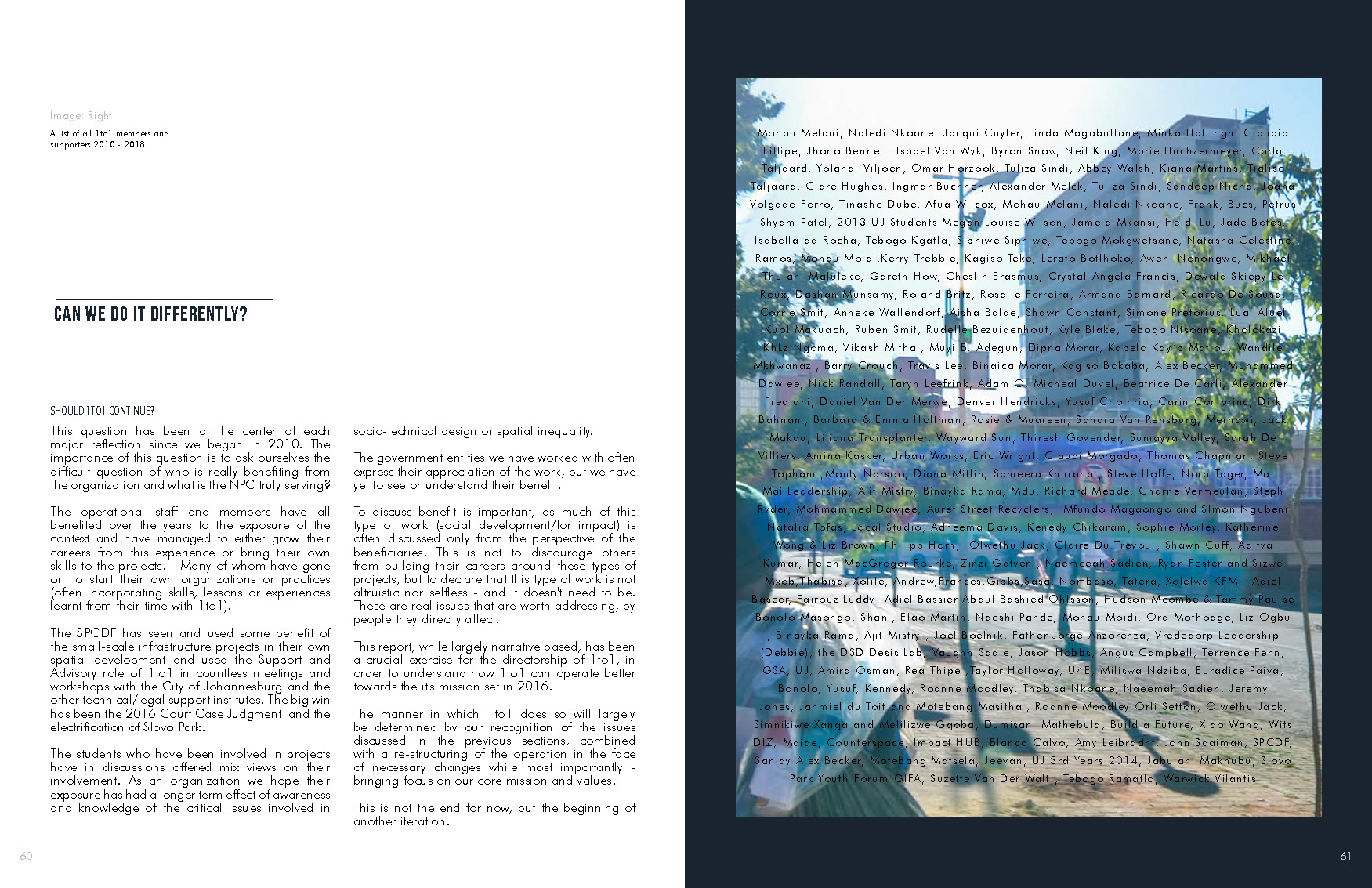
Finally we looked hard at the pitfalls and successes of the organisation and asked the hard questions within ourselves – should we keep the entity alive?

1to1_A Reflective Engagement_spreads large_Page_31

This document bears record of every person who has made an active contribution to 1to1 and hopefully sets down the first step towards a better, more resilient organisation.

I wish my colleagues much luck in their new roles and I will always be close by to support and work within my new capacity as Just Urbanism Initiative Lead.

AT: Positive Numbers

*shared from www.aformalterrainjoburg.wordpress.com*

The Positive Numbers project was developed as one of the tangible outputs for the MOU through the 3 year engagement with the Denver leadership, residents and local NGO’s. The concept evolved from the challenges based in social enumeration and spatial planning in informal settlement upgrading processes.

The project involved linking the co-developed spatial development plan to the numbering process that typically involved spray-painting numbers on the sides of existing homes.

AT, working with Tyler B Murphy and local residents developed a system of sign making that , using colour coding, linked the spatial development to the social enumeration to allow for incremental neighborhood development to take place while waiting for governmental support.

This short film documents the process of the Positive Numbers Project which formed a part of a larger research initiative in Denver Settlement, Johannesburg in 2017.

The project was developed in partnership with active NGOs, signage and way-finding for residents in the settlement and links to the larger short-to-long term upgrading strategy of the Community Action Plan (CAP).

The Positive Numbers Project was a collaboration between the Aformal Terrain research collective and artist Tyler B. Murphy, supported by Open Societies Foundation: Higher Education Support Programme.

Tlhakantsha Colloboration Week 2017

The 2017 Tlhakantsha Collaboration Week was held in the Faculty of Art, Design and Architecture over the week of February 24 – March 3.

Over 230 3rd third year students collaborated on a project that emanated from the original FADA Green Week, which brought students together around working on real world issues, in groups, through design with real clients.

The difference this year was that the organisation team aimed to simplify the complexity of the week, and focus more on collaboration, group work and design process, with a particular focus on decolonising FADA. This was workshopped with staff and students and through a co-productive research resulting in a new name for the week – Tlhakantsha.

Brief development and aims:
The organisation team wanted students to develop critical skills in understanding complex real world situations while fostering good design process and group work skills. An open ended brief with 1 major theme and 3 sub themes was used to achieve this:
Theme: FADA-ship – What makes us FADA?
Sub-Themes of engagement:
 
A series of sub-themes were developed to allow students a broader approach to the specific themes the organisatoin team wanted the larger group to tackle.
Why is FADA? – ‘Accessibility’ of FADA as a student (Design of decolonisation of FADA)
Where is FADA? – Capacity of the neighbourhood of FADA (Spatial design of/around FADA)
What is FADA? – Resource use and management of FADA (Resilience in design FADA)
http://www.tlhakantsha.wordpress.com/
Students were encouraged to use tools as a means of research, collaborative techniques and design. They were given a resource developed by the DSD DESIS Lab that outlined several key tools for use in the project. This was shared digitally through a website that was created for the week-long project: https://tlhakantshatoolbox.wordpress.com/ Students were incentivised to design and use their own tools in order to add to this resource for use by future FADA students.
Methodology of engagement:
 
• Tools/Tool-Sets of engagement – process as the ‘artefact of design’ in the form of methods and strategies that are made visible in the form of tools that support co-design.
 
“In an age where design has been commoditised to an extent that its value is often only seen in relationship to the ‘product’, a focus on the importance and value of the thinking and reflective processes within design are more imperative than ever.
 
As young designers in South Africa, you will face this challenge in practice, and in order to equip you with the ability to sell the value of process in your practice, we feel an immersive recognition of tools and toolsets around strategies for design is crucial. Tools in these contexts can be understood as methodologies, methods, techniques or models that facilitate design thinking and practice, but can also give value to the necessary process of design and group work. “
– Rationale for tool/method use from Tlhakantsha Collaboration Week 2017 Brief
Intended Outcomes:
 
Each group was asked to submit their work in the following categories for the judging:
The Final Strategy, a group developed strategy that looks holistically at the identified issues and systems in your project. (40%)
The documentation of the Design Journey which describes the various tools, methods and approaches used as well as a group reflection of on the project. (60%)
Emphasis was placed in the marking around group work, boldness and a specific call for ‘strategies’ – as strategies allow for design students to focus on addressing the identified problems and not just working towards a product within their disciplinary expertise. A sub-set of prizes encouraged
students to focus on good collaboration and design process:
• Best group work tools/methods:
o To the group who demonstrates the best display of co-design and collaborative practice, t his should be seen in discussion/presentation at judging)
 
• Most innovative & effective strategy/tool:
o To the group who shows the most ‘out of the box’ and innovative strategy to deal with the issue at the hand while demonstrated a grounded and realistic proposal.
• Boldest Proposal:
o To the group who took the biggest ‘chance’ and put themselves out there to achieve their aims.
The Tlhakantsha Week:
 
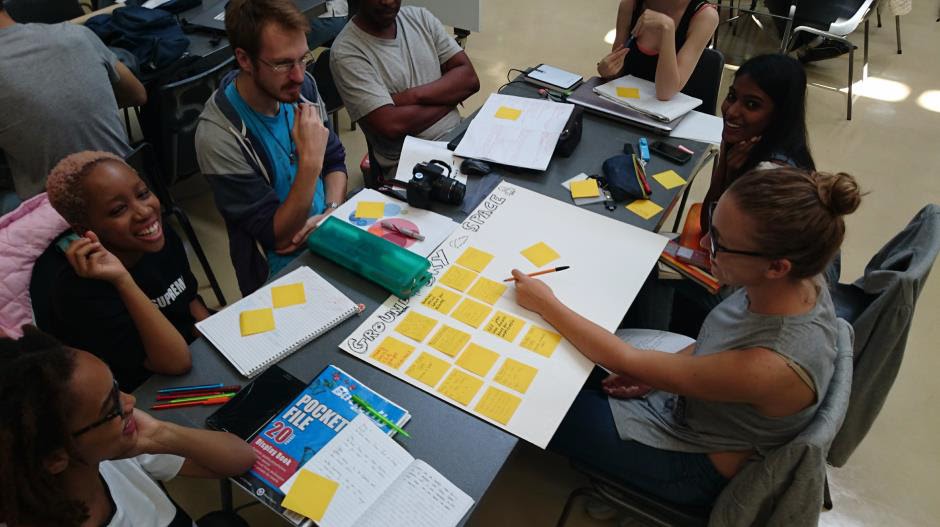
The week started on the afternoon of the 24th of February with a briefing session from staff which included an introduction to the brief, a short presentation on the sub themes, and a quick group exercise to get the students mixing outside of their departmental comfort zones.
Over the week long period the students took the brief with lots of energy and colloboration.

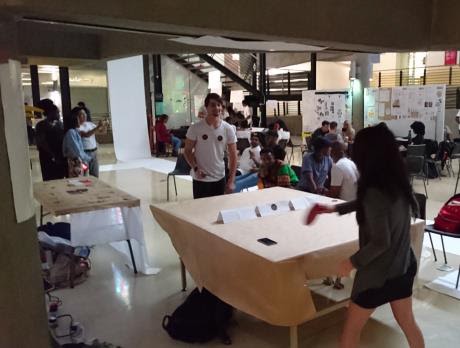
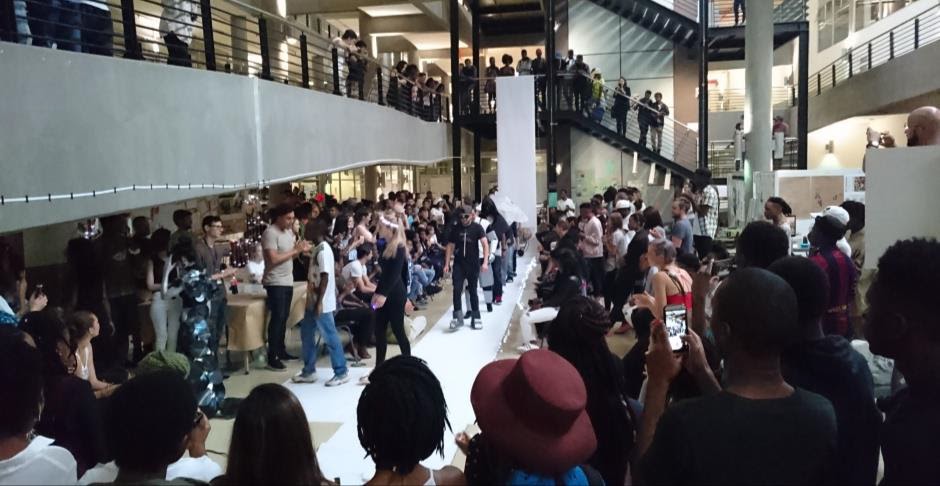
Impromptu Fashion from the Architecture Department’s 1st Years

Final Judging Day & Prize-Giving

Next Year…
 
The week was a great success and we are busy planning for next year. The project student work has been collated and shared across several platforms, the easiest can be seen here on YouTube:

Lukhanyo Socio-Technical Facilitation

The Lukhanyo Hub project seeks to develop a system of support to residents in marginalised areas of urban South Africa through programmatic and built infrastructure. The newly formed entity RCDC are currently working in the BT section of Khayalitsha by assisting local groups through a small scale farming and early childhood development programmes.

“Lukhanyo Hub in Site C, Khayelitsha is a new ‘catalytic’ model developed by RCDC to deliver affordable housing, high quality education, training, recreation programmes and health services alongside employment opportunities delivered through innovative buildings, energy systems and outdoor spaces in economically under-resourced areas.
The system is supported through public-private partnership creating an economically sustainable system through public-private partnerships. The overall system is being developed to be replicable in multiple contexts whilst being responsive and respectful of its context and adaptive to changing conditions over time.”  http://rcdcollective.com/
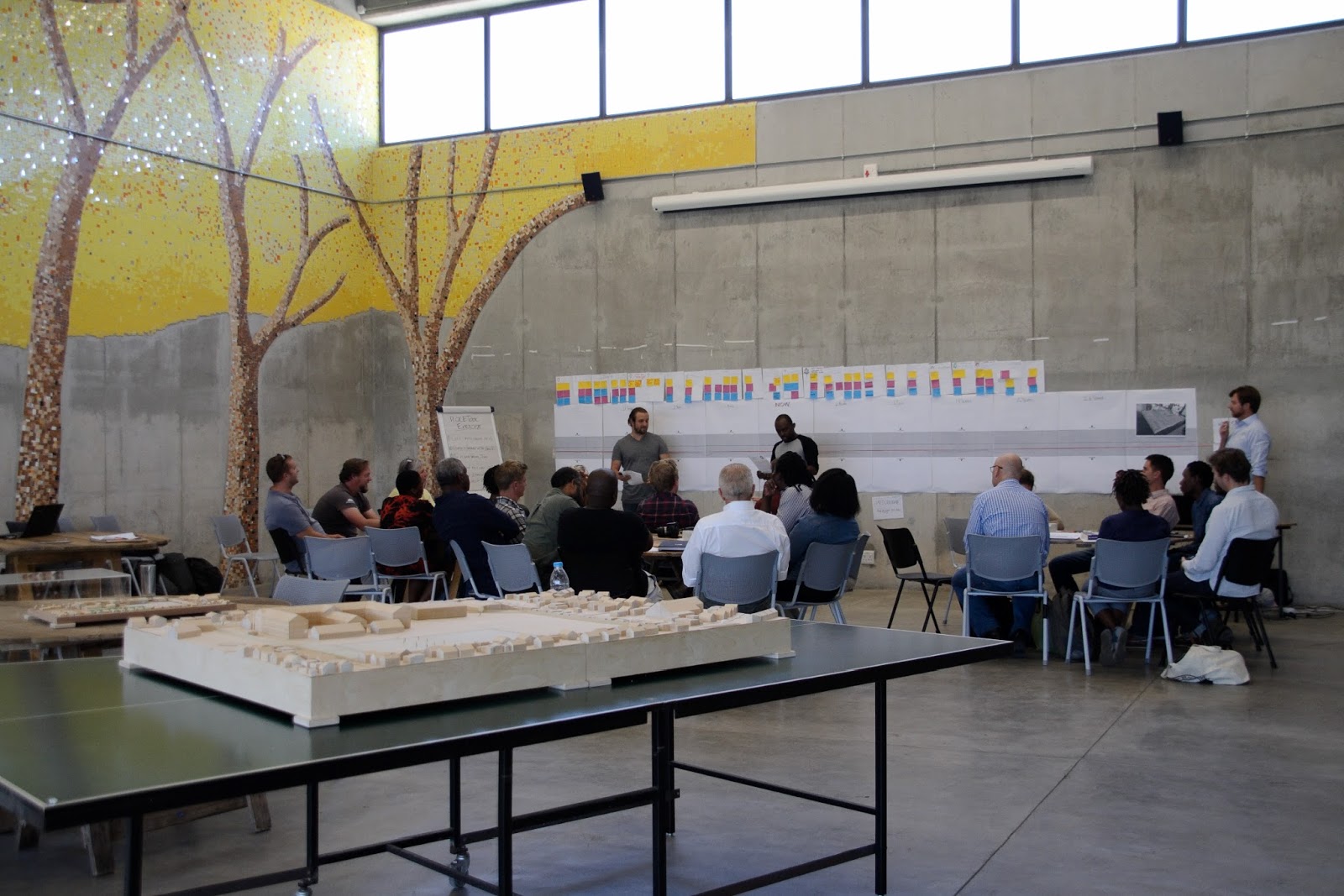
Through 1to1 , I was requested to support in the socio-technical development of a brief around what the Infrastructural requirements for support in the area should be. 1to1 worked with local planner and socio-technical expert Sizwe Mxobo and Natalia Tofas to host a 1 day workshop in order to co-produce a brief with the different stakeholder groups.
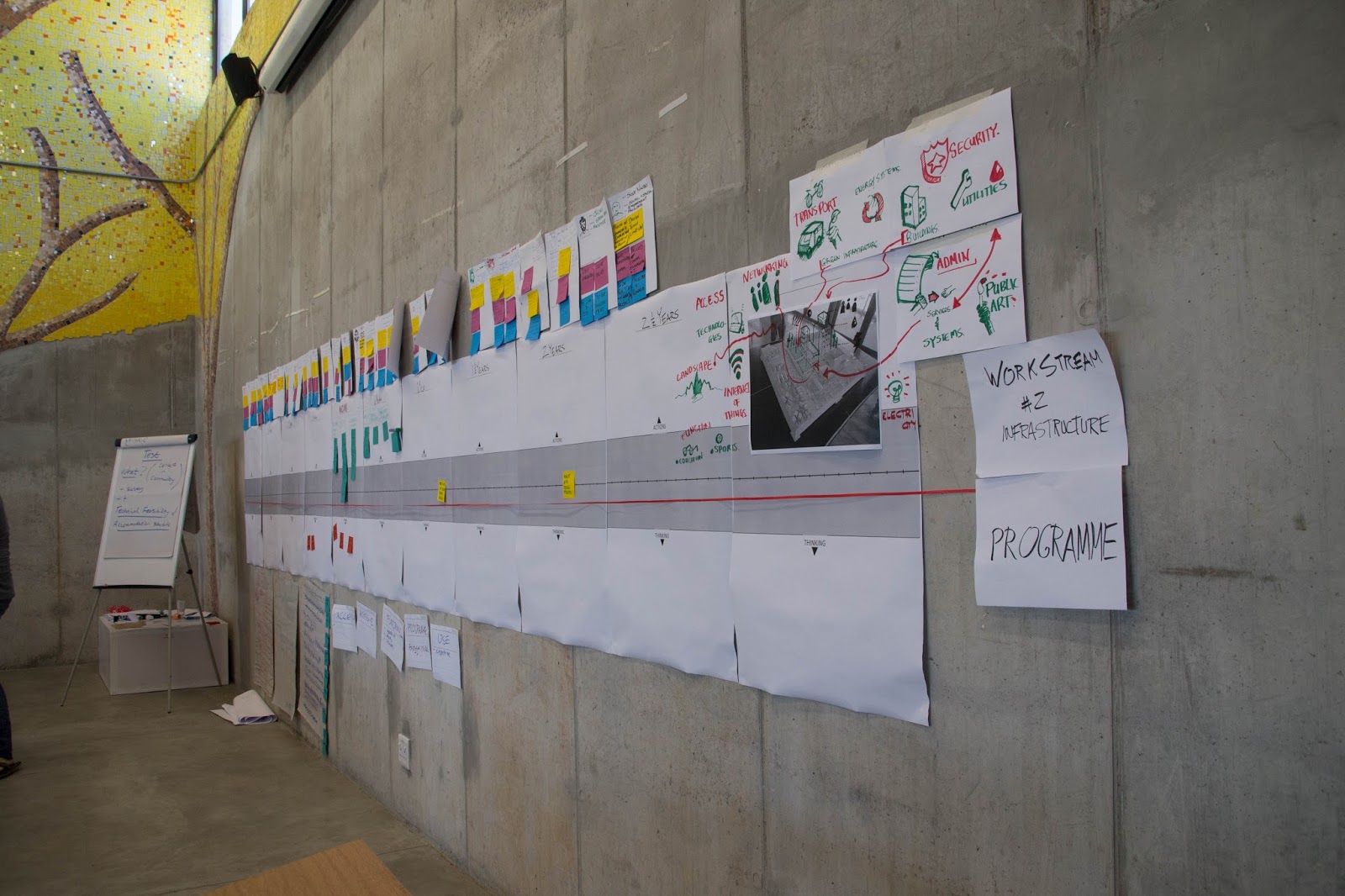
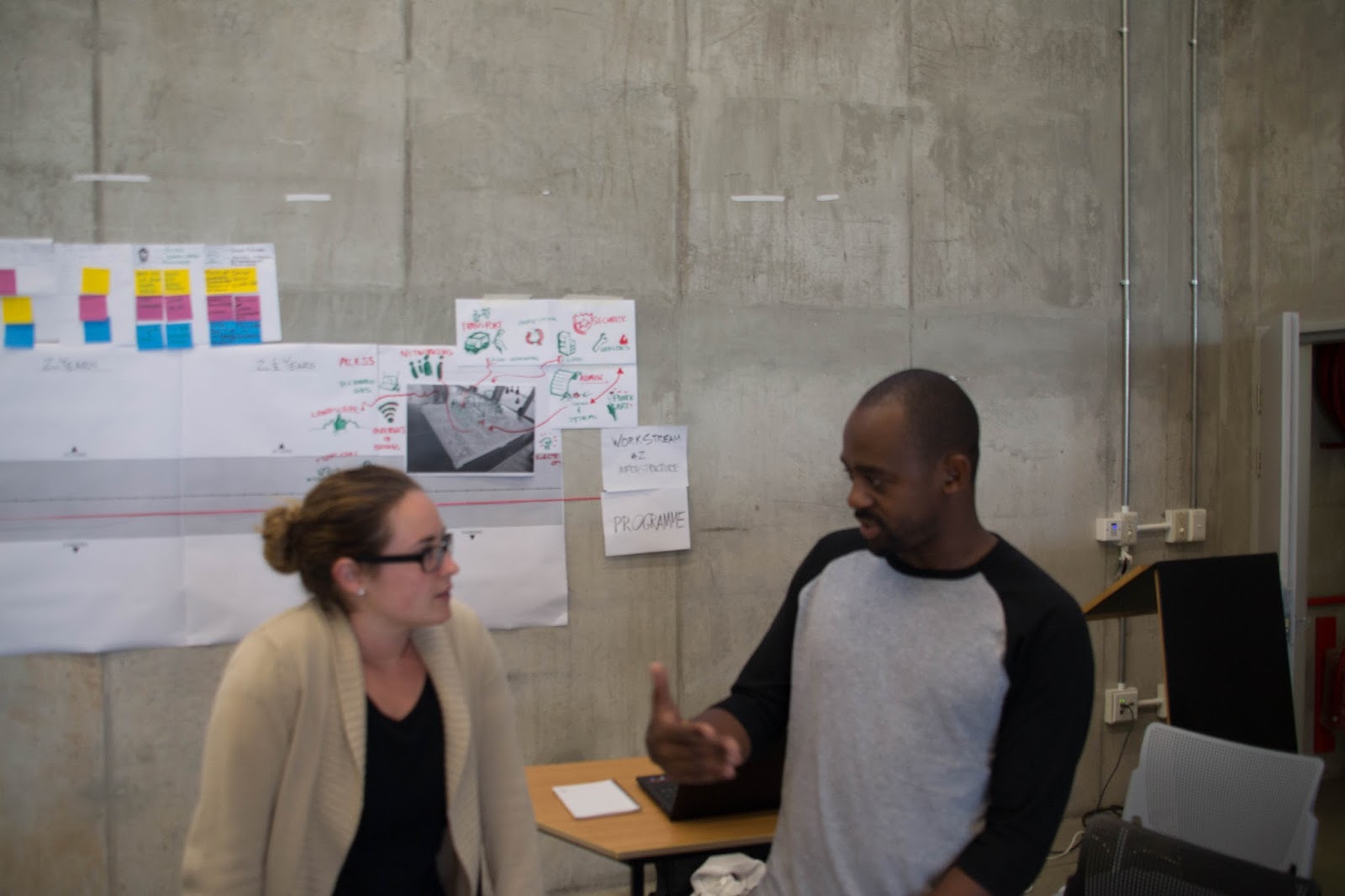
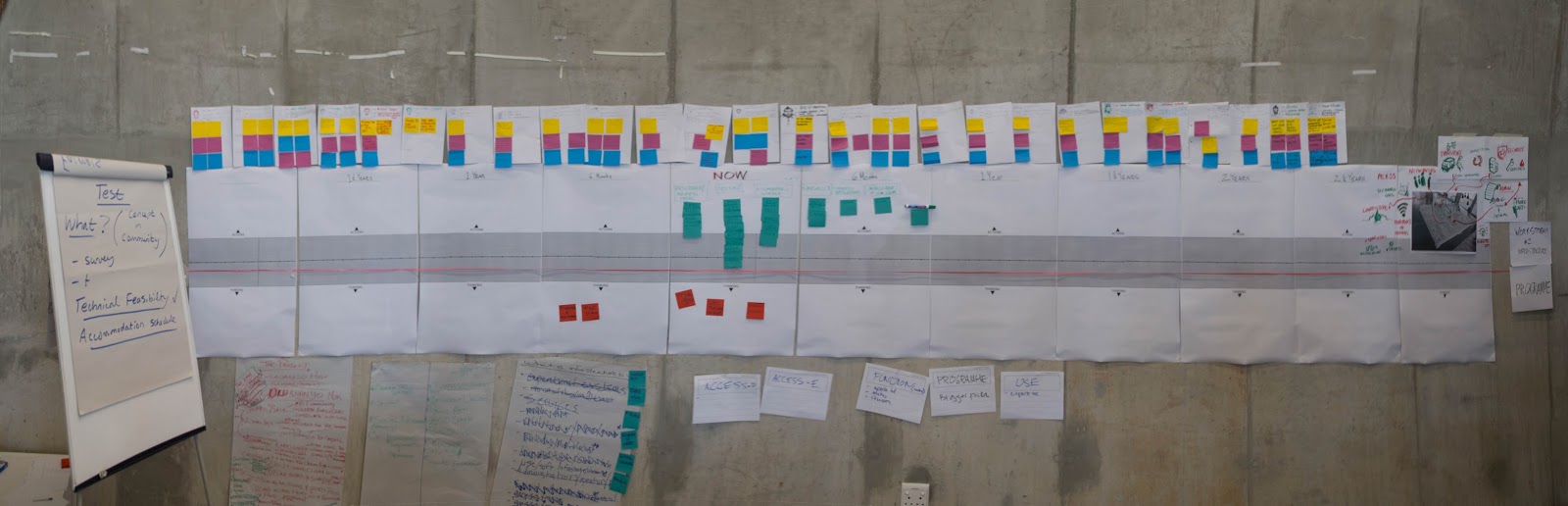
The team employed a facilitation tool developed by 1to1 that used the concept of  a timeline as a means to collect valuable information from what has already taken place on site and how the stakeholders see the future of the project.
The time line structure was supported with smaller toolsets that created a common and accessible language format for different types of people and supported visual and design thinking processes.

The tool was successfully used and due to it’s design has become the format from which future workshops, the documentation of the process and the Monitoring and Evaluation process will be used from.

AT: Community Action Plan Hand Book

*shared from www.aformalterrainjoburg.wordpress.com*

One of the most important outputs for the engagement with the Denver leadership was the Spatial Layout for the Community Action Plan (CAP). The layout was co-developed with residents, leadership and driven by the data and social capital built during the studioATdenver programmes and additional work conducted by AT.

The layout responded to key issues of emergency vehicle access, shared space, social cohesion patterns and green space allocation identified during the studios and larger forum discussions.

The spatial layout, alongside a series of support materials was packaged into an accessible and shareable format. AT conceptualized this in the form of a Hand Book that could be easily distributed and used format as a ‘Toolbox’.

A day-planner format was conceptualsied as a possible structure for this handbook, as many local leaders already used this type of booklet in their work. The idea behind the small format, would allow for the books to be used together to forma a larger layout (A1 size) if brought together.

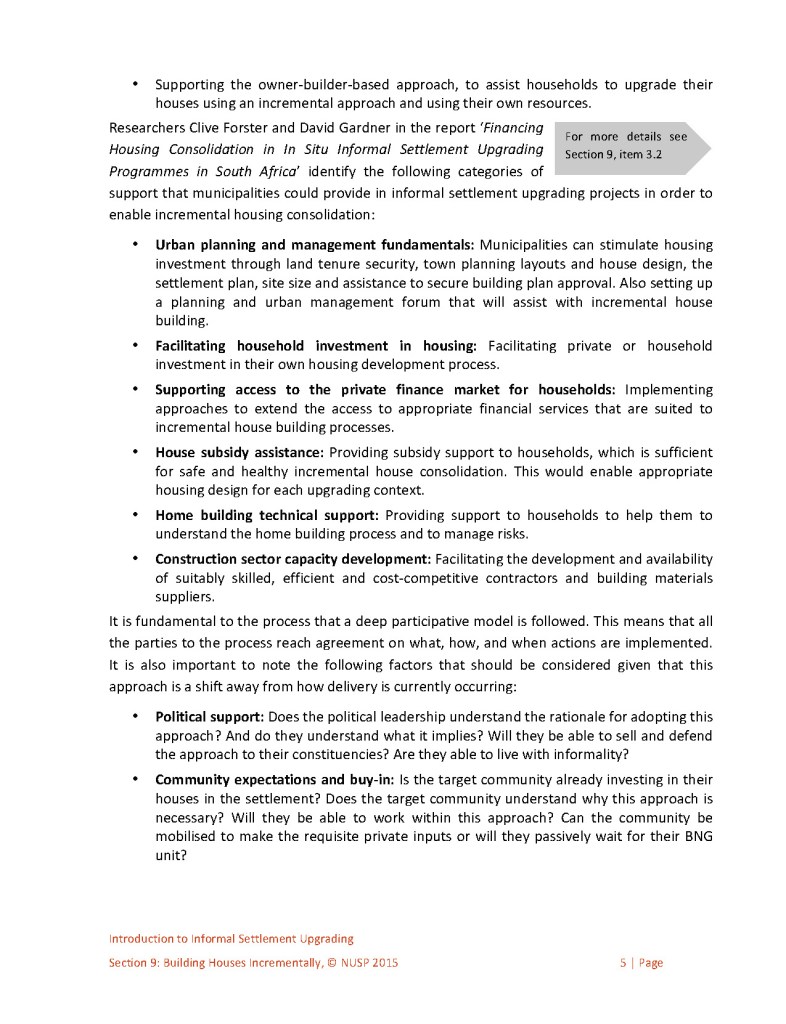
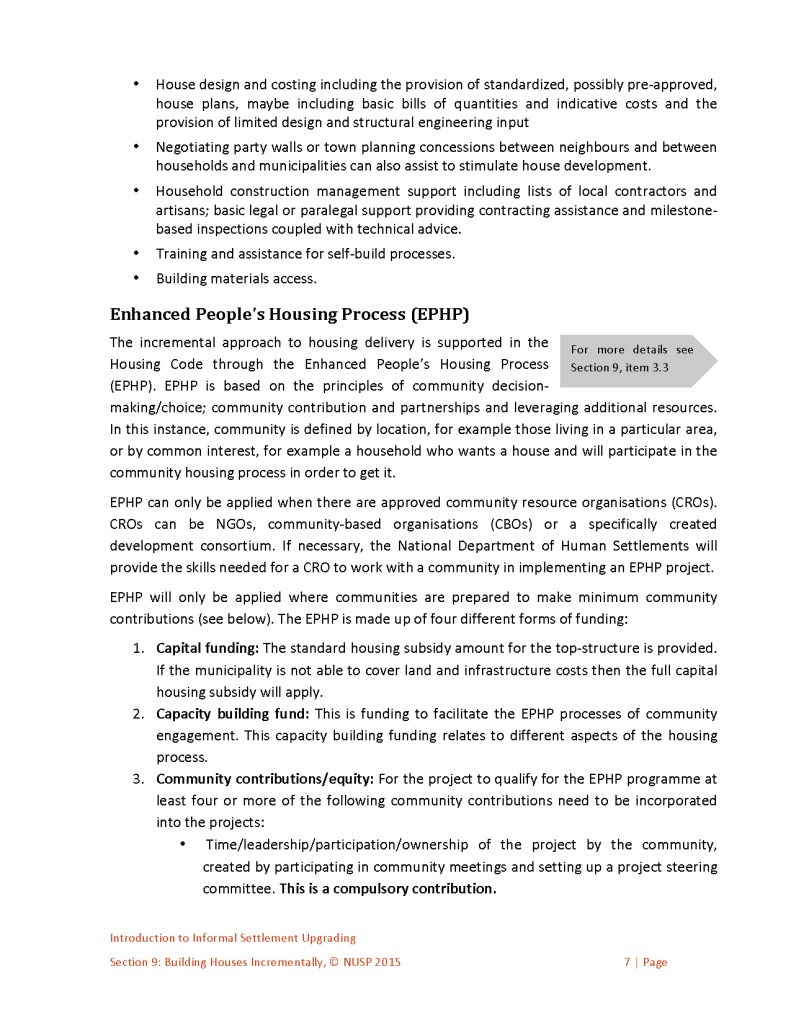
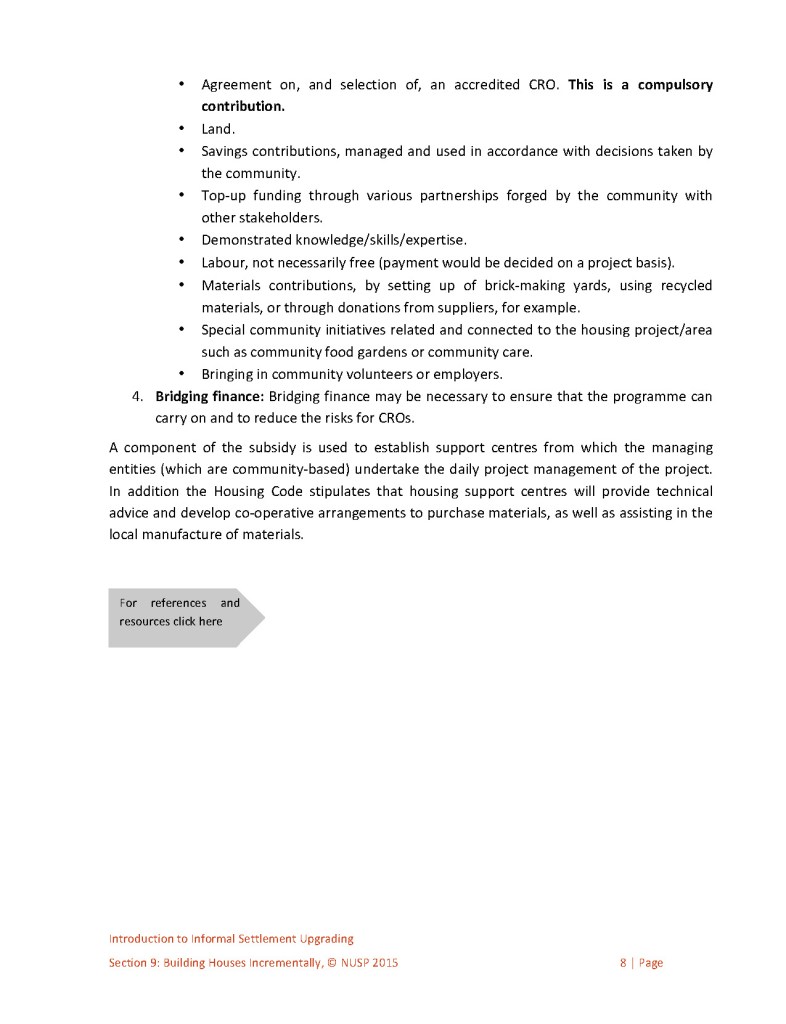
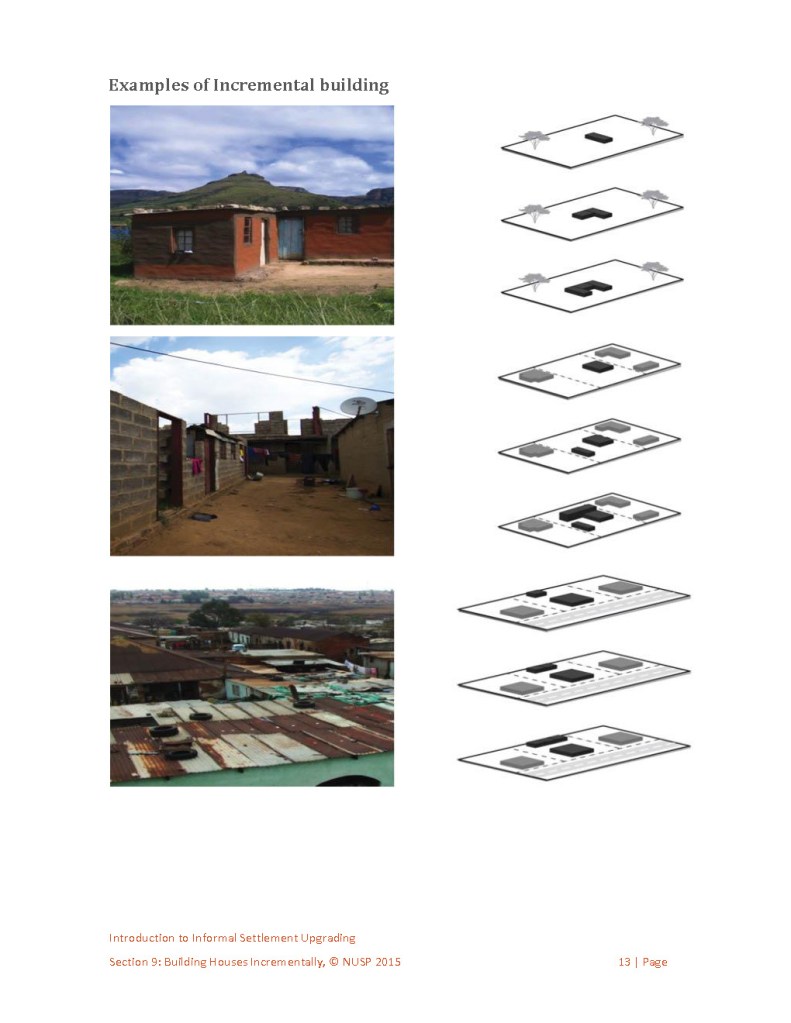
NUSP Incremental Building: Teaching Module

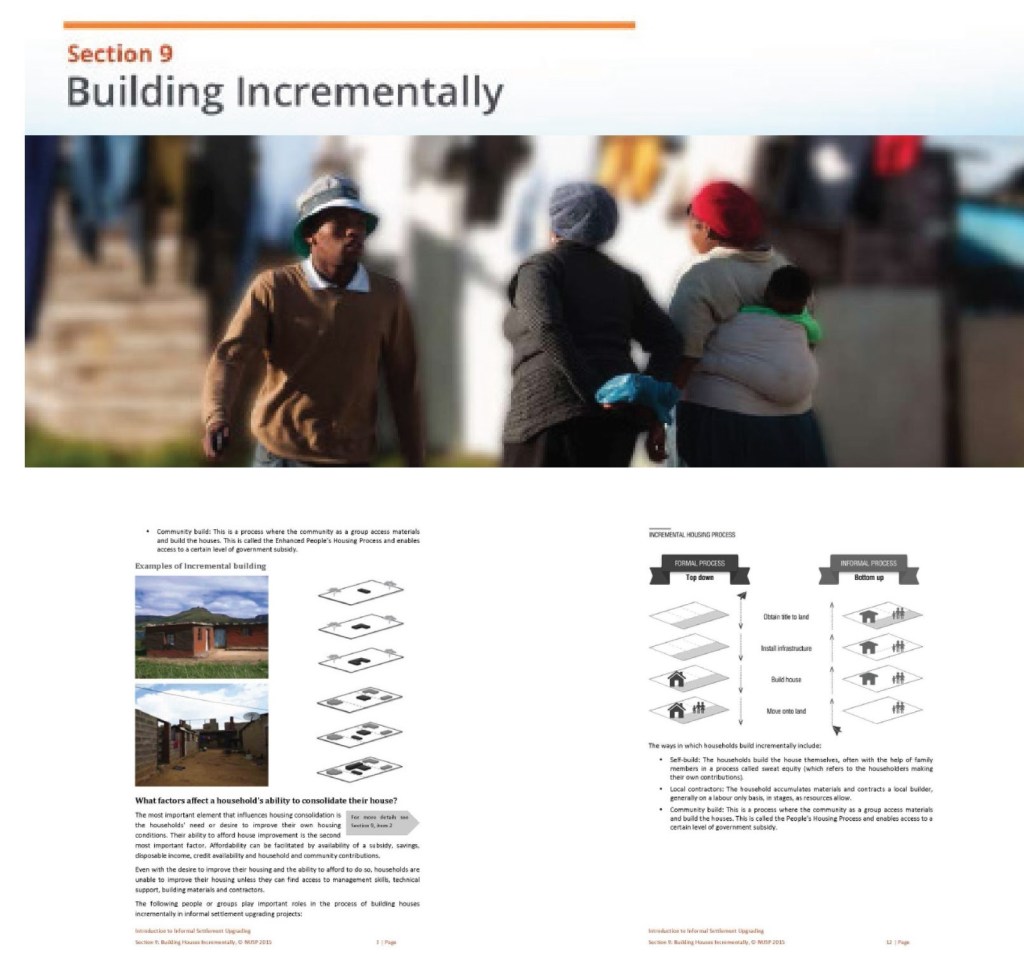
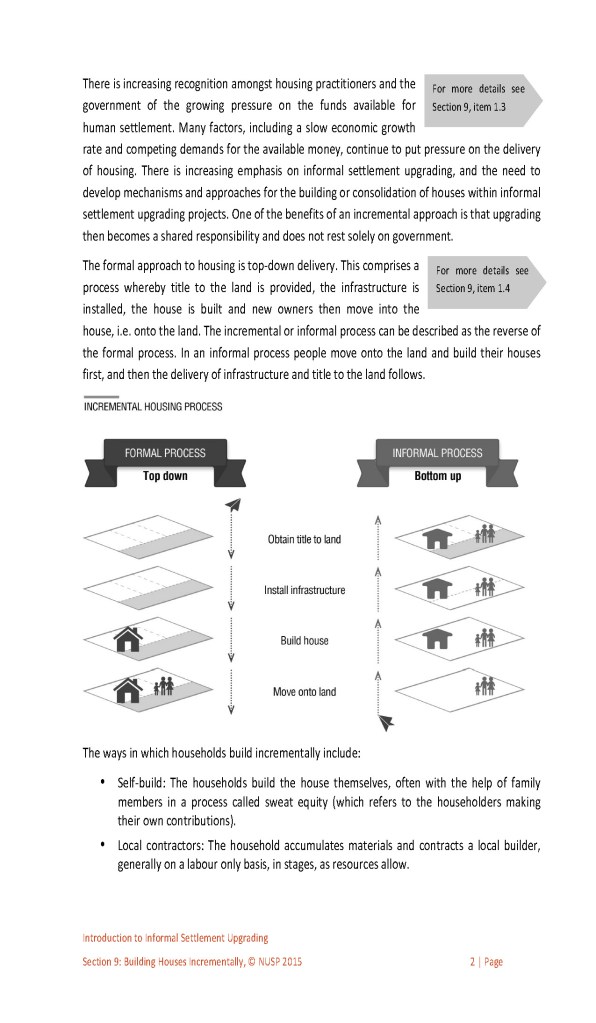
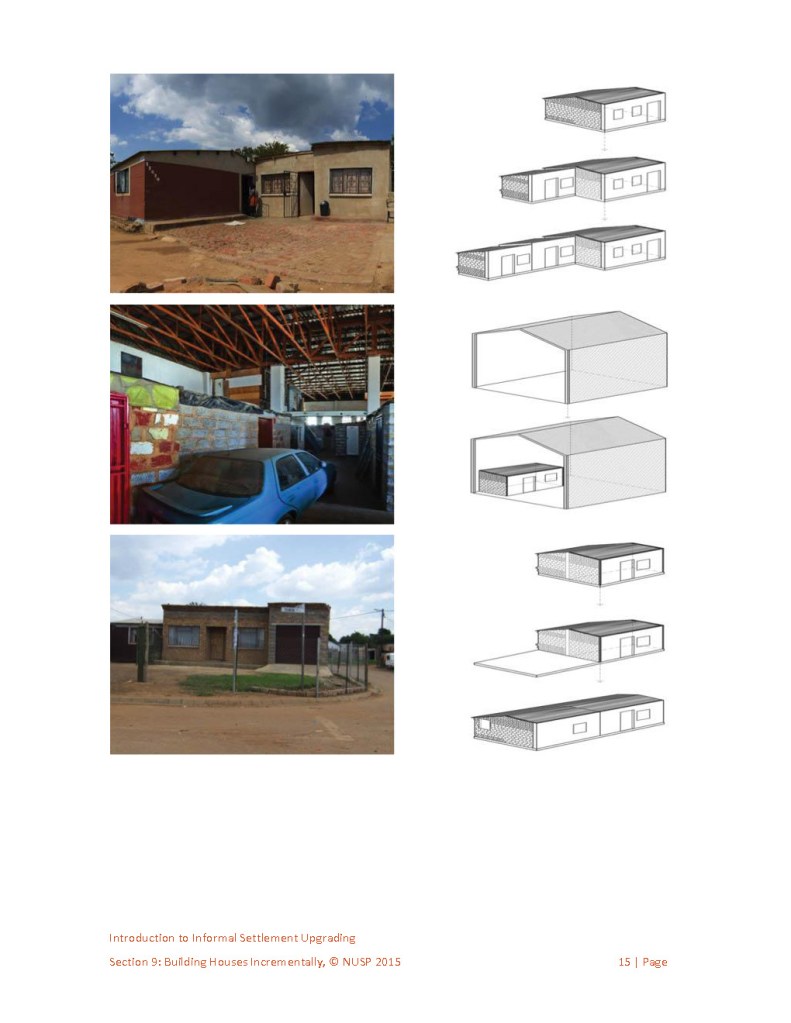
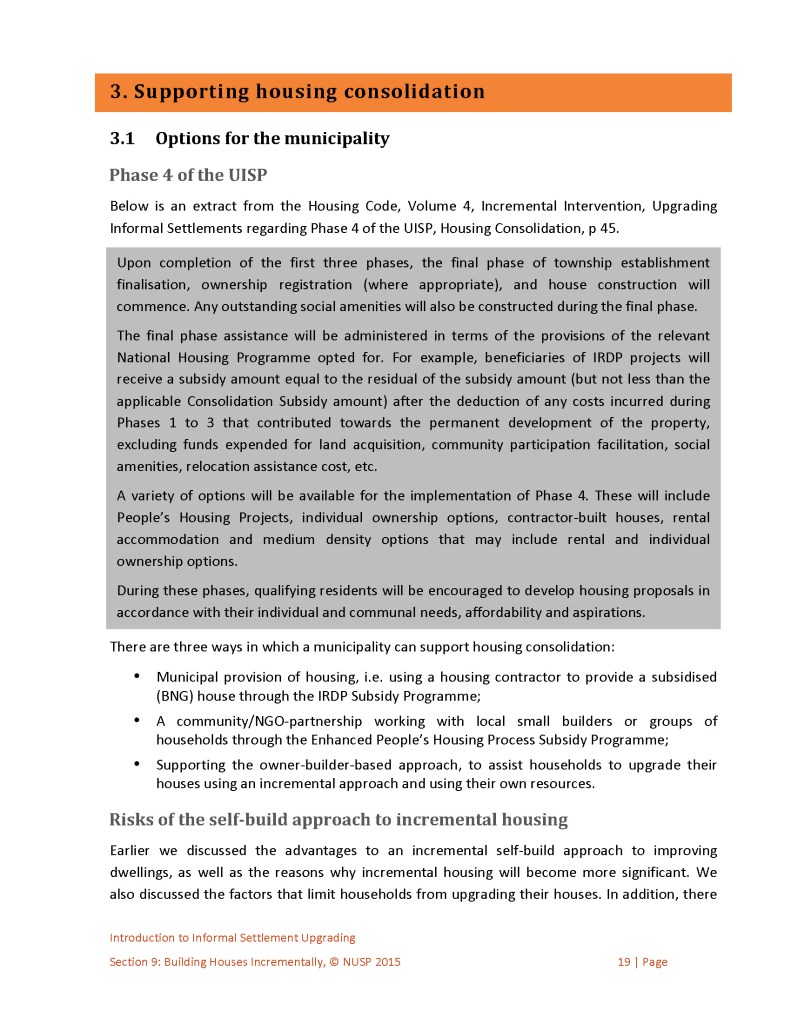
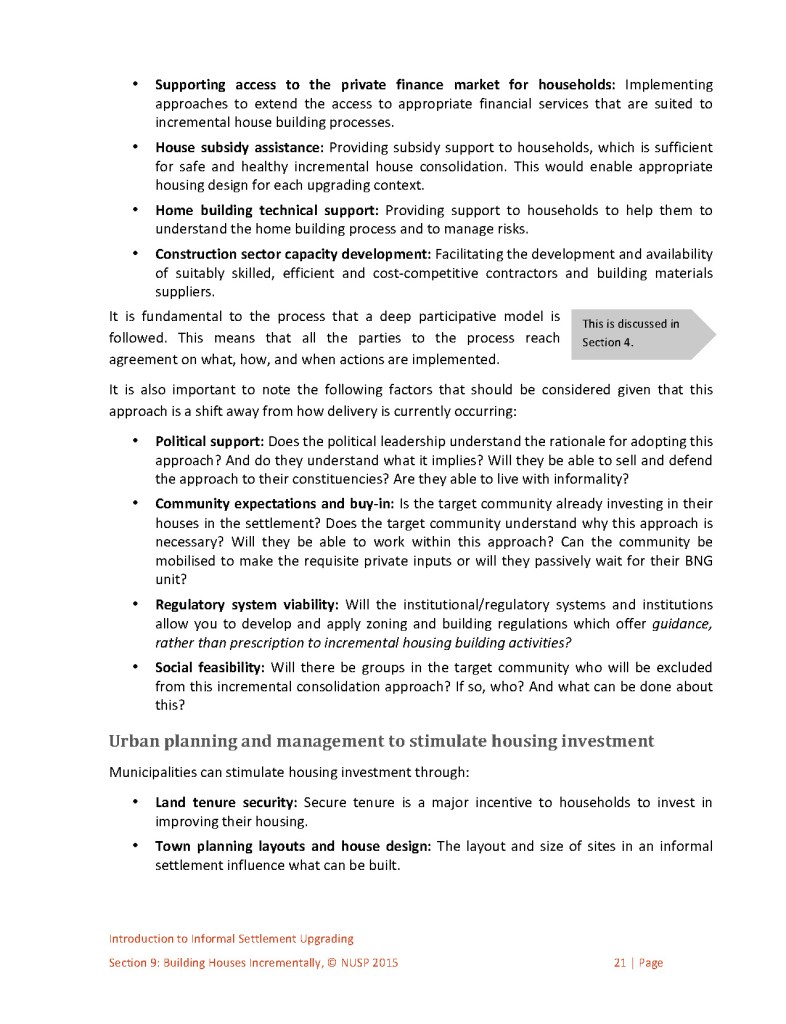
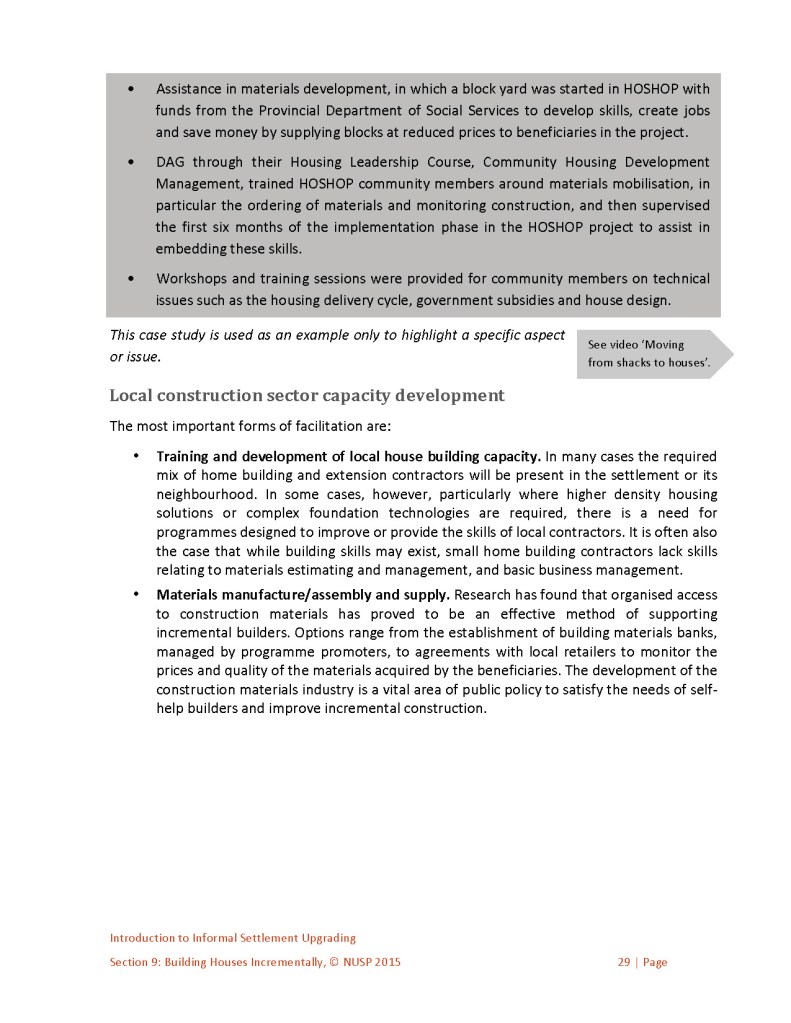
In 2013, through 1to1, I worked with BOOM Architects under Shisaka Development Management Services to write the incremental infrastructure module for the NUSP Socio-Technical Support Manuel for City Officials in Informal Settlement Upgrading for South Africa.


The Section 9 module visually unpacked the variables to consider when allowing for incremental upgrading in informal settlement development as well as requirements for technical allocation.

The full toolkit should be available online at: http://www.upgradingsupport.org

Transforming Johannesburg: Kya Sands

In early Costanza La Mantia invited myself and several other researchers, lecturres and practitioners to assist in the running of  a 10 day workshop in Johannesburg’s Kya Sands Informal Setttlement through a project named ‘Transforming Kya Sands’

The organisation team worked as facilitators on the project and guided the participants, made up of a mix of professional, government and students from South Africa and abroad, through the the difficult challenge of how to develop and meet the needs of the kya sands residents.

My group was looking at public space and how it would be addressed in the larger project development. The project is still being published and will be shareable soon.

This project was linked to my ealrier teaching with Costanza at Wits in the Planning School:

http://www.jhonobennett.com/2014/09/teaching-university-of-witwatersrand.html

Juta Street Socio+Spatial Mapping

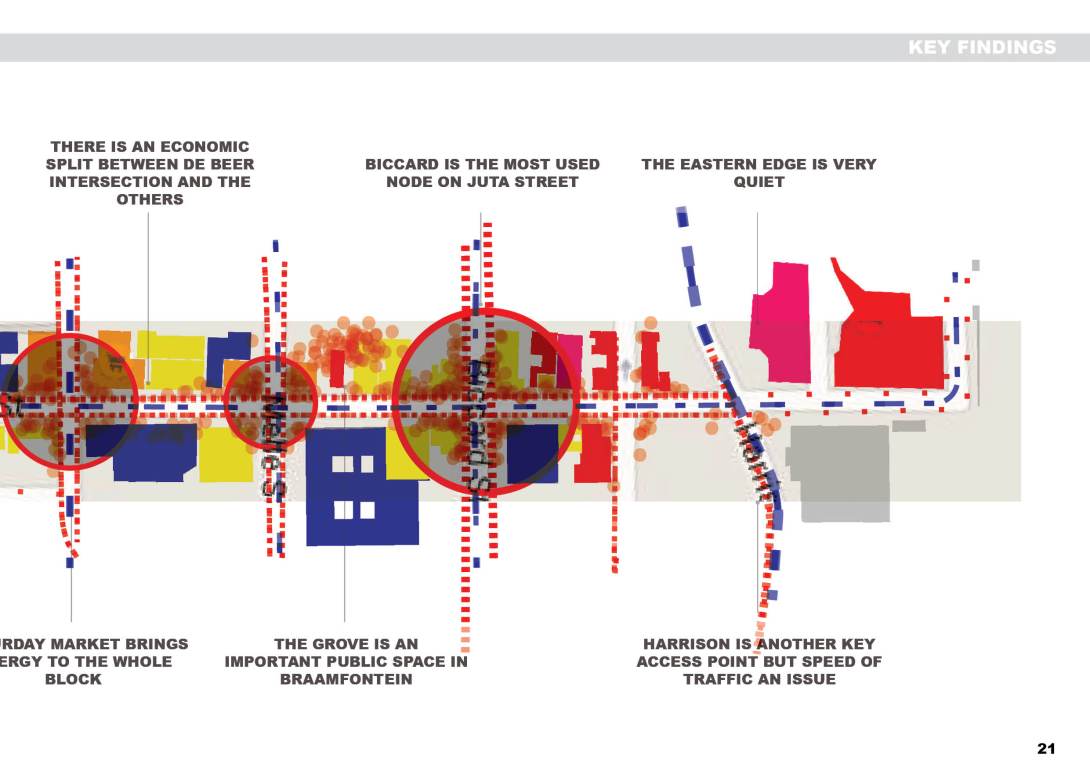
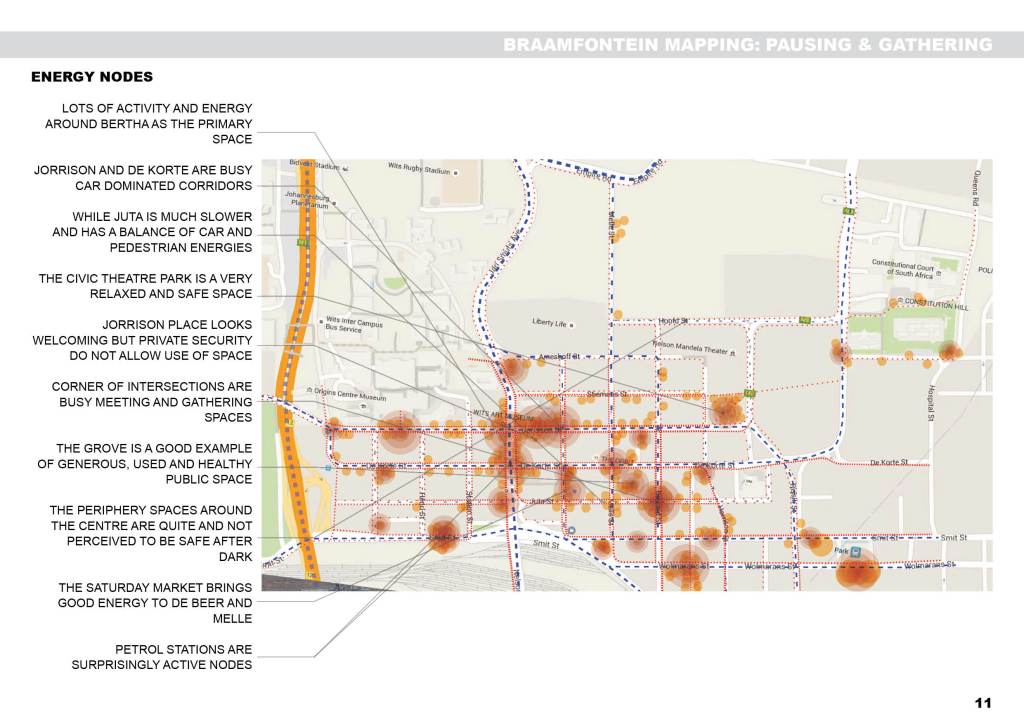
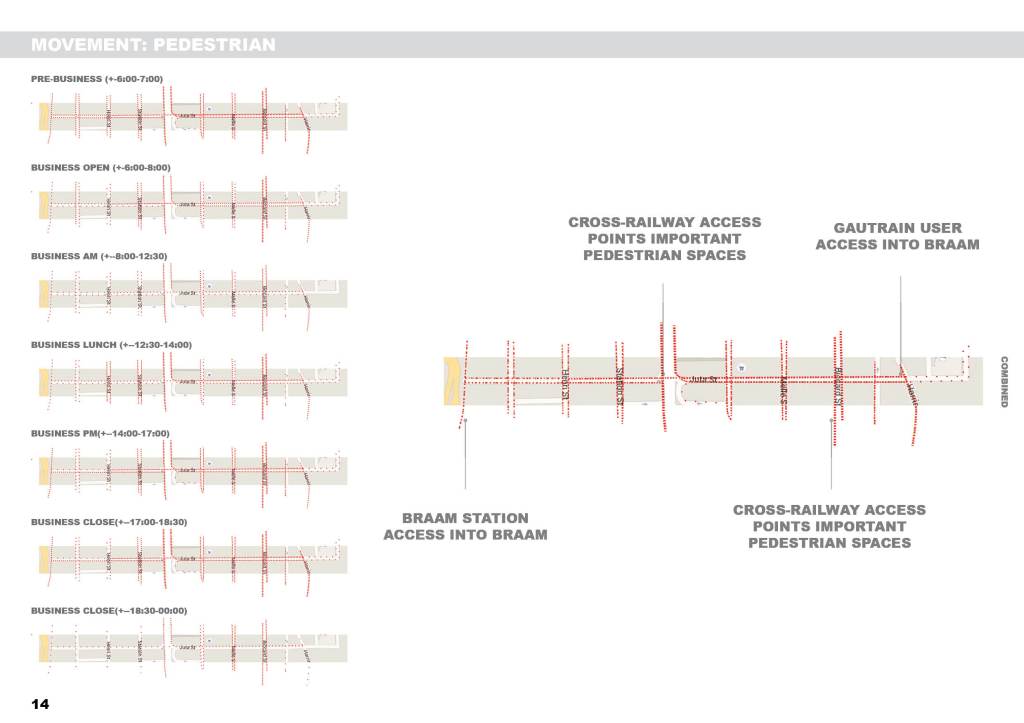
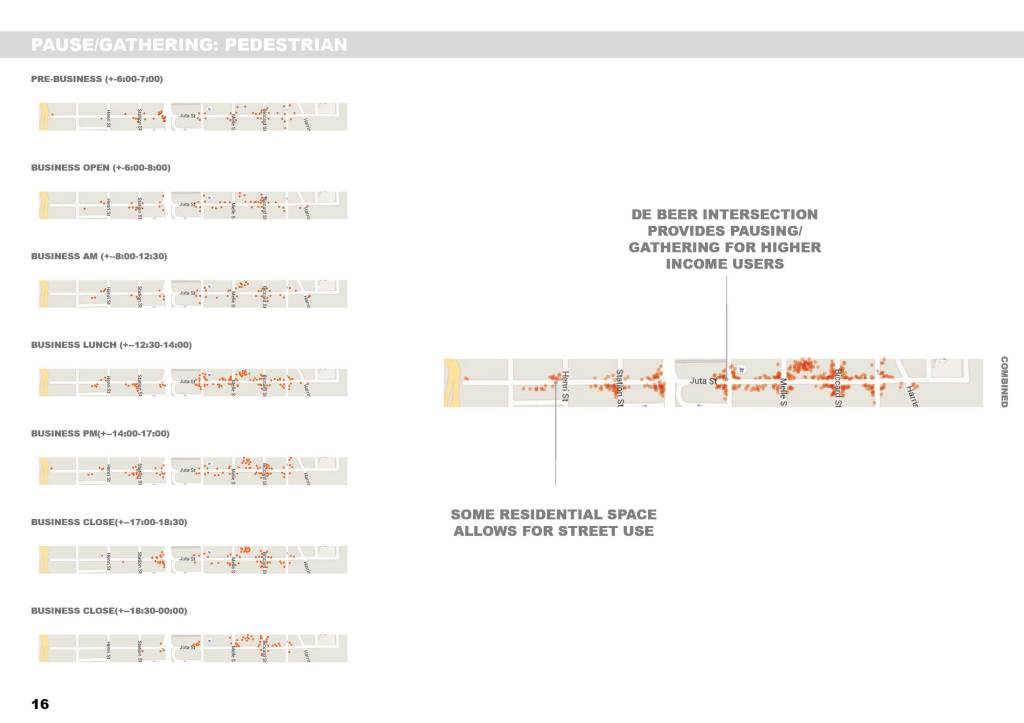
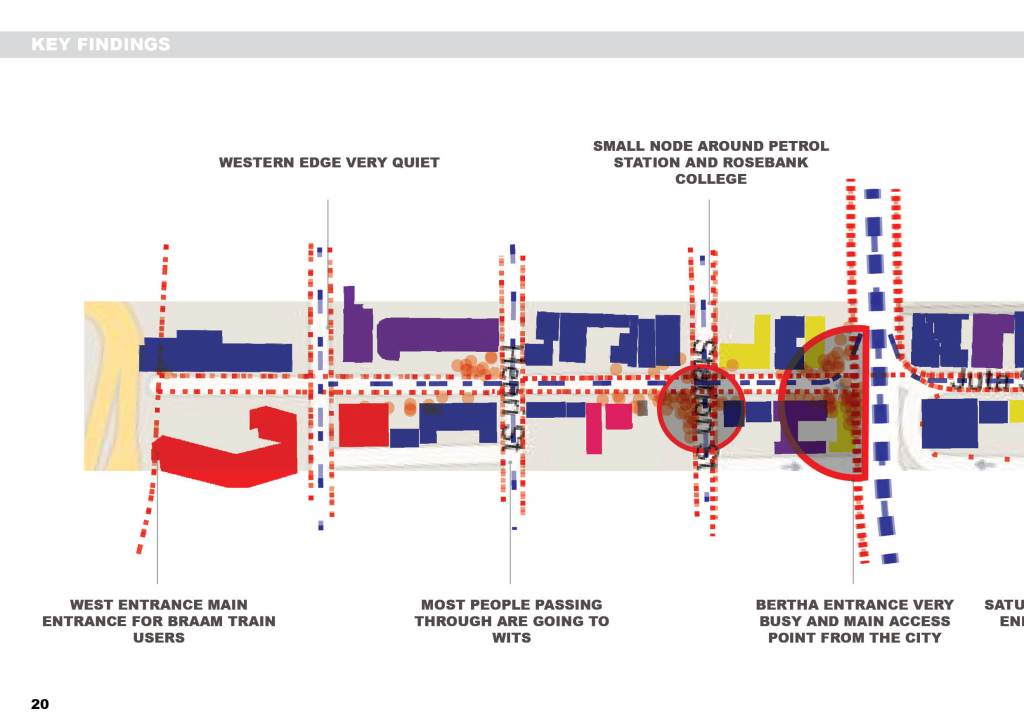
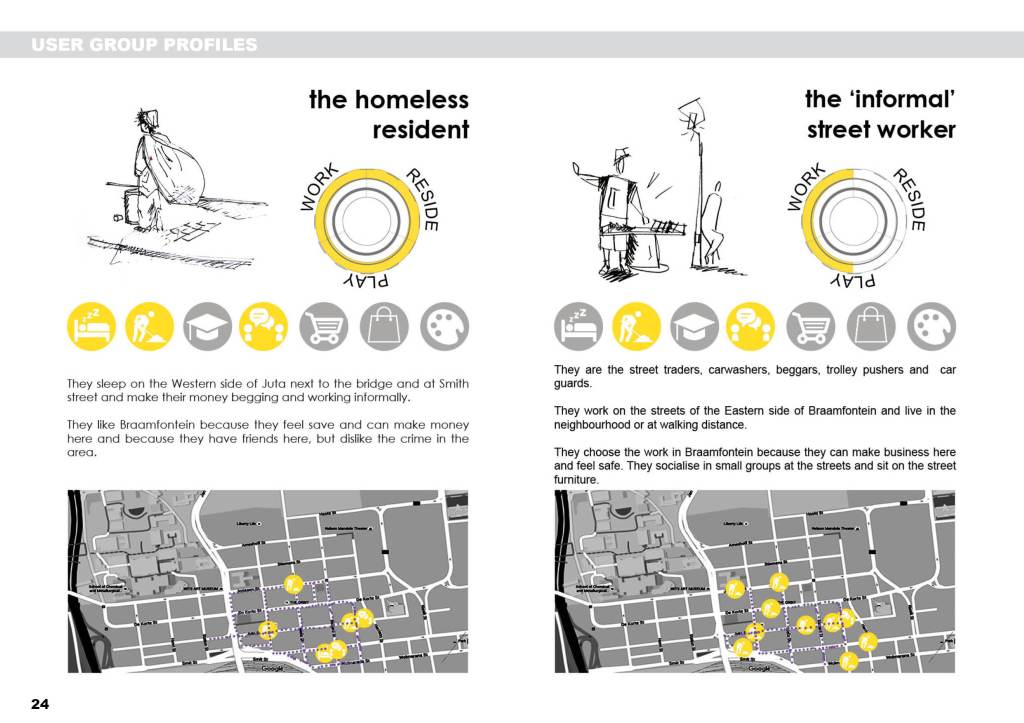
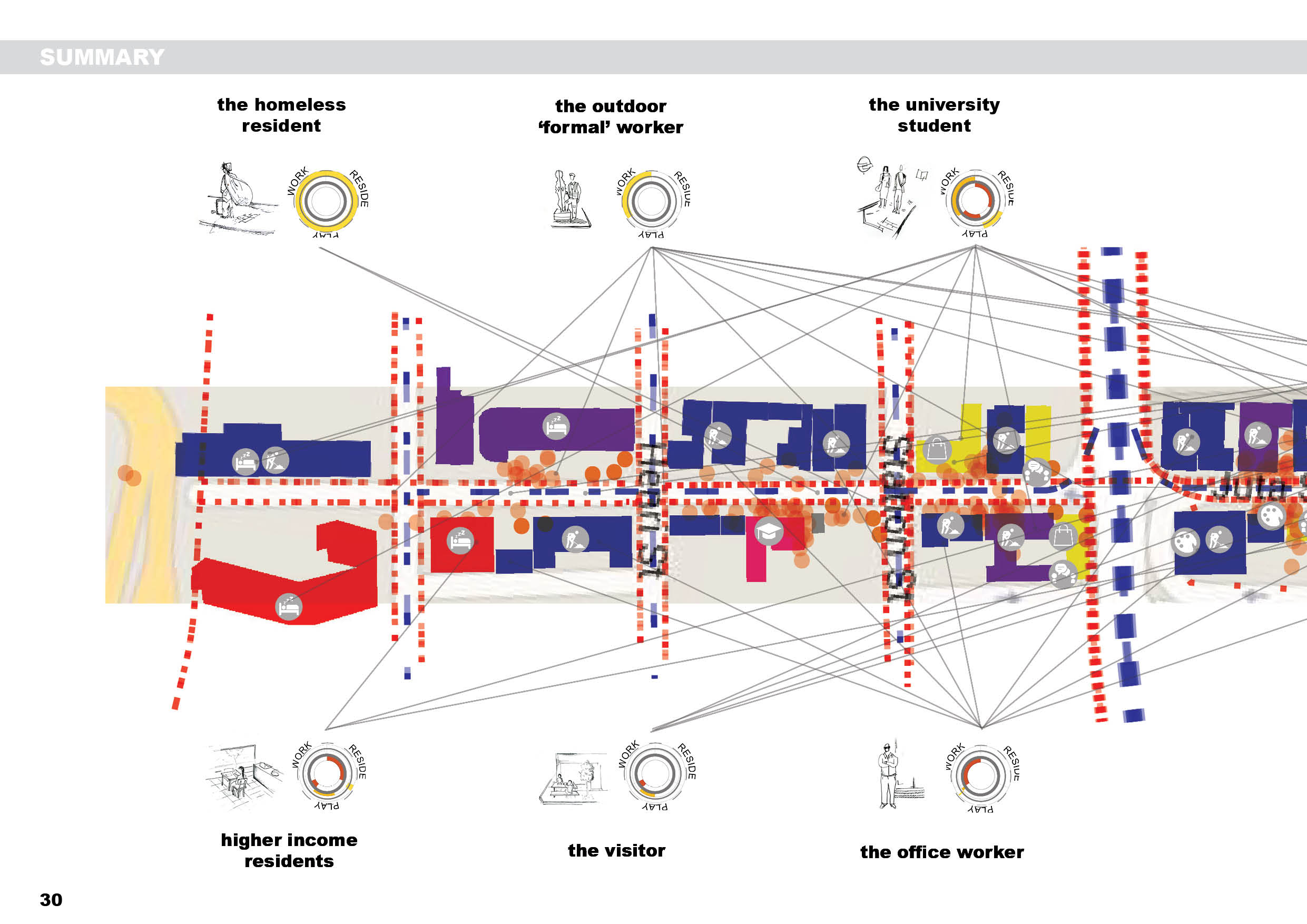
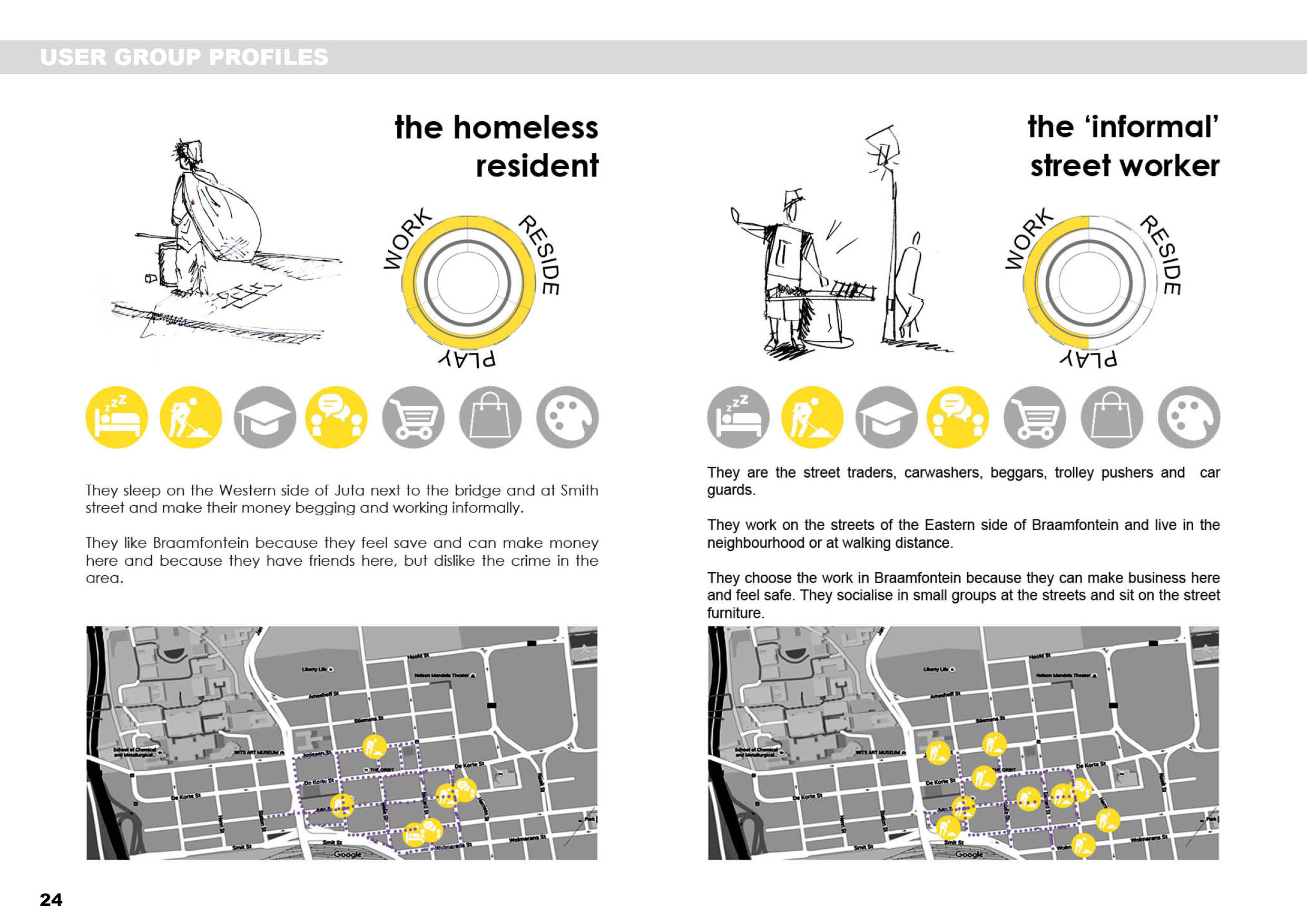
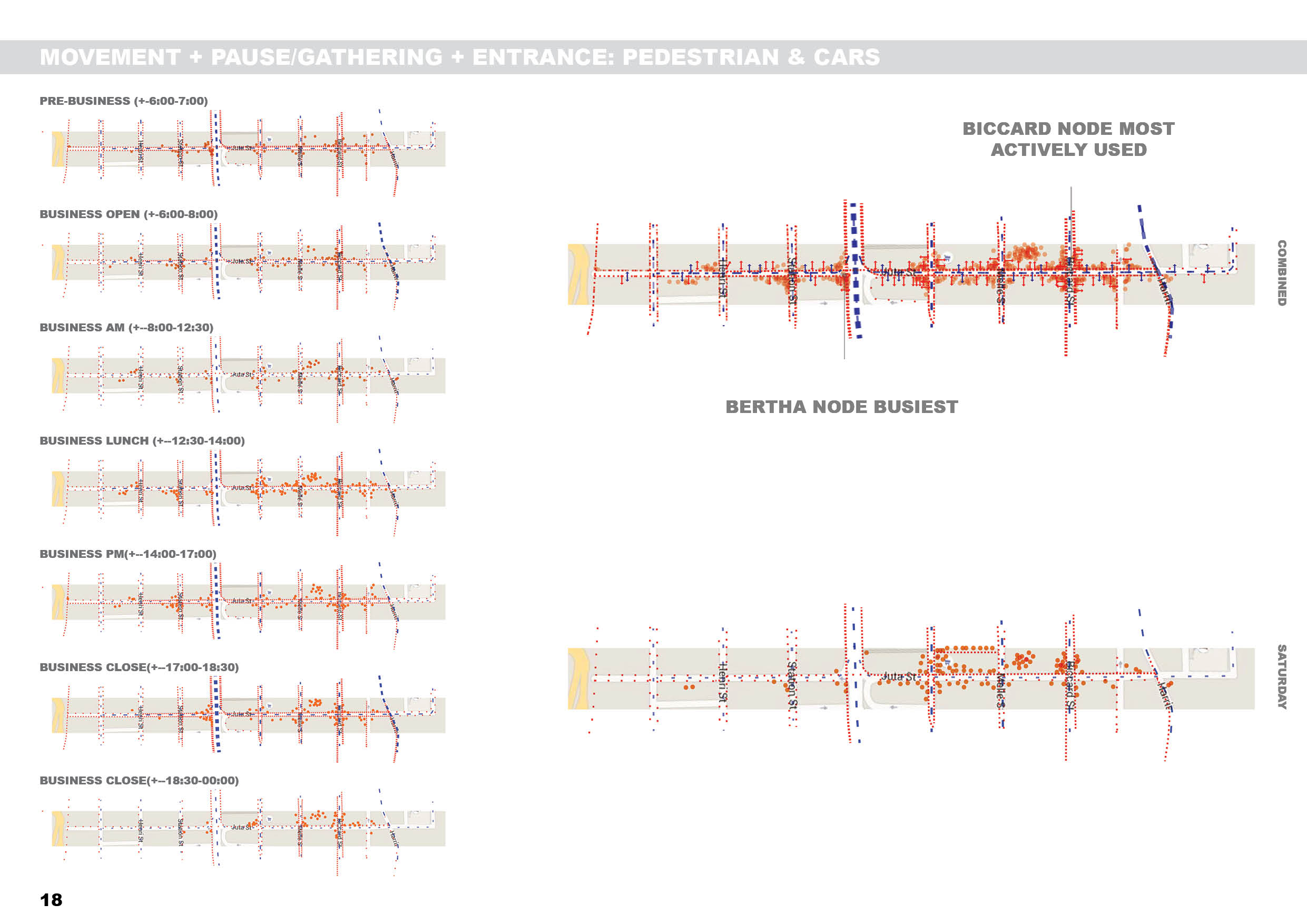
Through 1to1, I was commissioned by Local Studio alongside Urbanists for Equity (U4E) to complete a quick, robust and detailed survey of Juta Street in Braamfontein by Local Studio.

Local Studio required a detailed study of the area to support a proposal for an urban park in
Braamfontein and wanted a detailed analysis of the user groups, activities and socio-spatial nature of the area.


1to1 and U4E employed the services of UJ students and completed the entire study in a single
week.

This work underpinned a later project with the University of Sheffield’s Masters in Urban Design

Used for work with Sheffield University

University of Sheffield – Masters in Urban Design 2016/2017

  I was again invited by Dr. Beatrice De Carli to teach in the Urban Design Masters at Sheffield for the 2016/2017 teaching period. This was done as part of a larger network project that has been set up with University of Sheffield (Sheffield, UK), Nanjing University (Nanjing, China), CEPT (Ahmedabad, India) and the University of Johannesburg…

University of Sheffield – Masters in Urban Design 2015/2016

In 2016 I was invited by Dr Beatrice De Carli to assist in the teaching of the Masters in Urban Design at the University of Sheffield’s School of Architecture for the ‘Design from Afar Module”. We set the brief in Johannesburg’s Braamfontein and aimed to create a teaching/research model that would allow students in Sheffield…

Sheffield Mobility: Spatial Design Research

2018 marks the final year of a 3 year mobility exchange between the University of Johannesburg’s DSD Desis Lab and the Sheffield School of Architecture. RAUM #2 Day 1. Rathul sharing the debate on Public Space as a teaching method for CEPT A post shared by Jhono Bennett (@jhonobennett) on May 8, 2017 at 7:12am…