The Colgate University has a global programme that brings over 20 undergraduate students from their small university to Cape Town and Durban each year. These students are exposed to the soci-cultural complexity of post-1994 South Africa and guided to engage with this difference and layered issues through a reflexive and considered approach by Mark Stern and his colleagues.
Based on my experience with the Harvard group I was asked to assist in arranging their Durban visit and employed the assistance of Adheema Davis and Miguel Juan in arranging the visit.
The highlight for me personally was the speed-ate session between the Durban students and the Colgate, we have hosted exercises like this before and each time the results are amazing: as a former student in Durban, we are plagued by a internalised view of Durban that disconnects us from the rest of the world – these sessions always do big work in making local students feel there are not huge differences between themselves and ‘international students’.
“NLÉ is led by Kunlé Adeyemi, an architect, designer and ‘urbanist’ with a track record of conceiving and completing high profile, high quality projects internationally. His recent work includes ‘Makoko Floating School’, an innovative, prototype, floating structure located on the lagoon heart of Nigeria’s largest city, Lagos. This acclaimed project is part of an extensive research project – ‘African Water Cities’ (http://www.nleworks.com/team-member/kunle-adeyemi/)
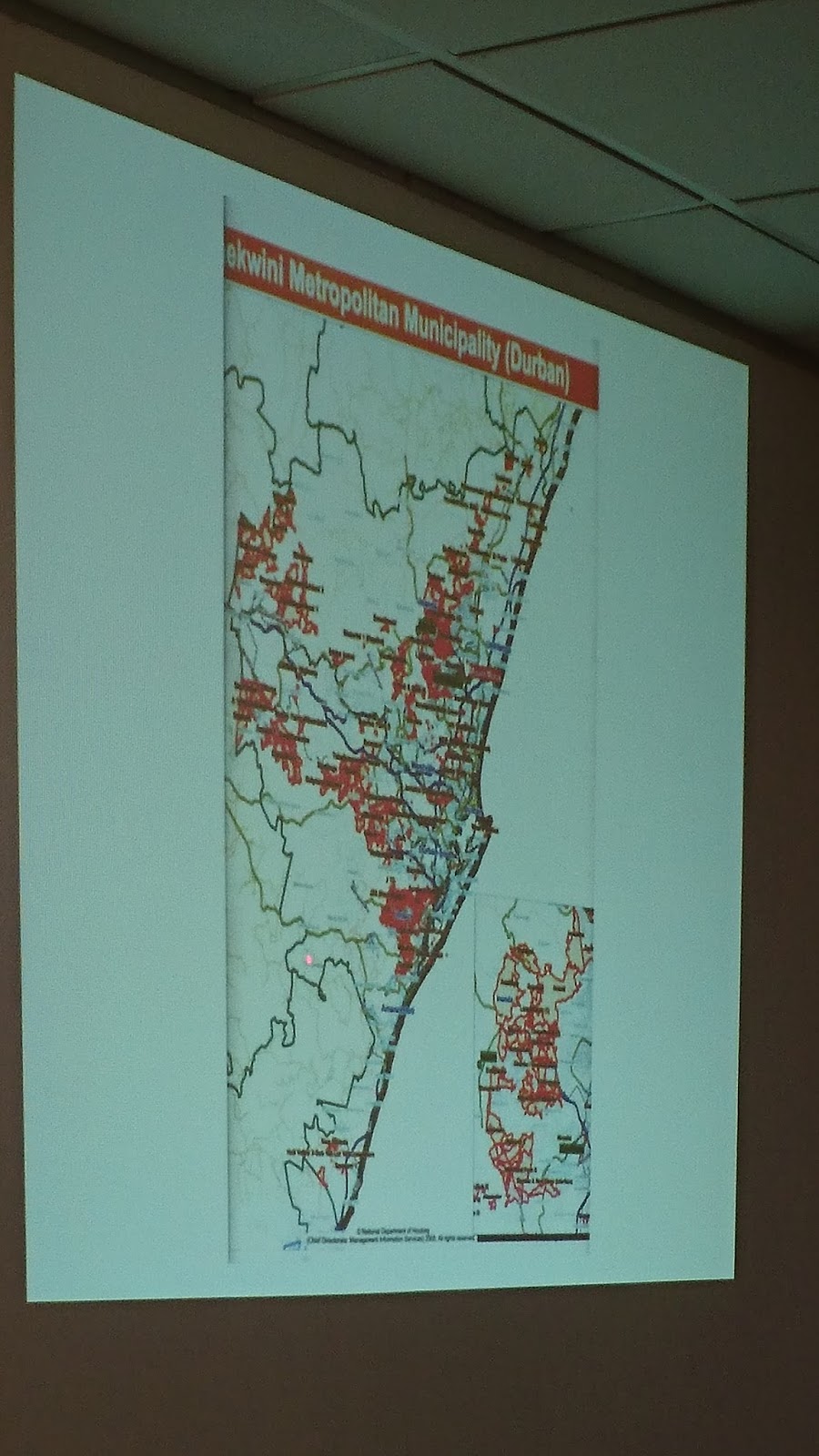
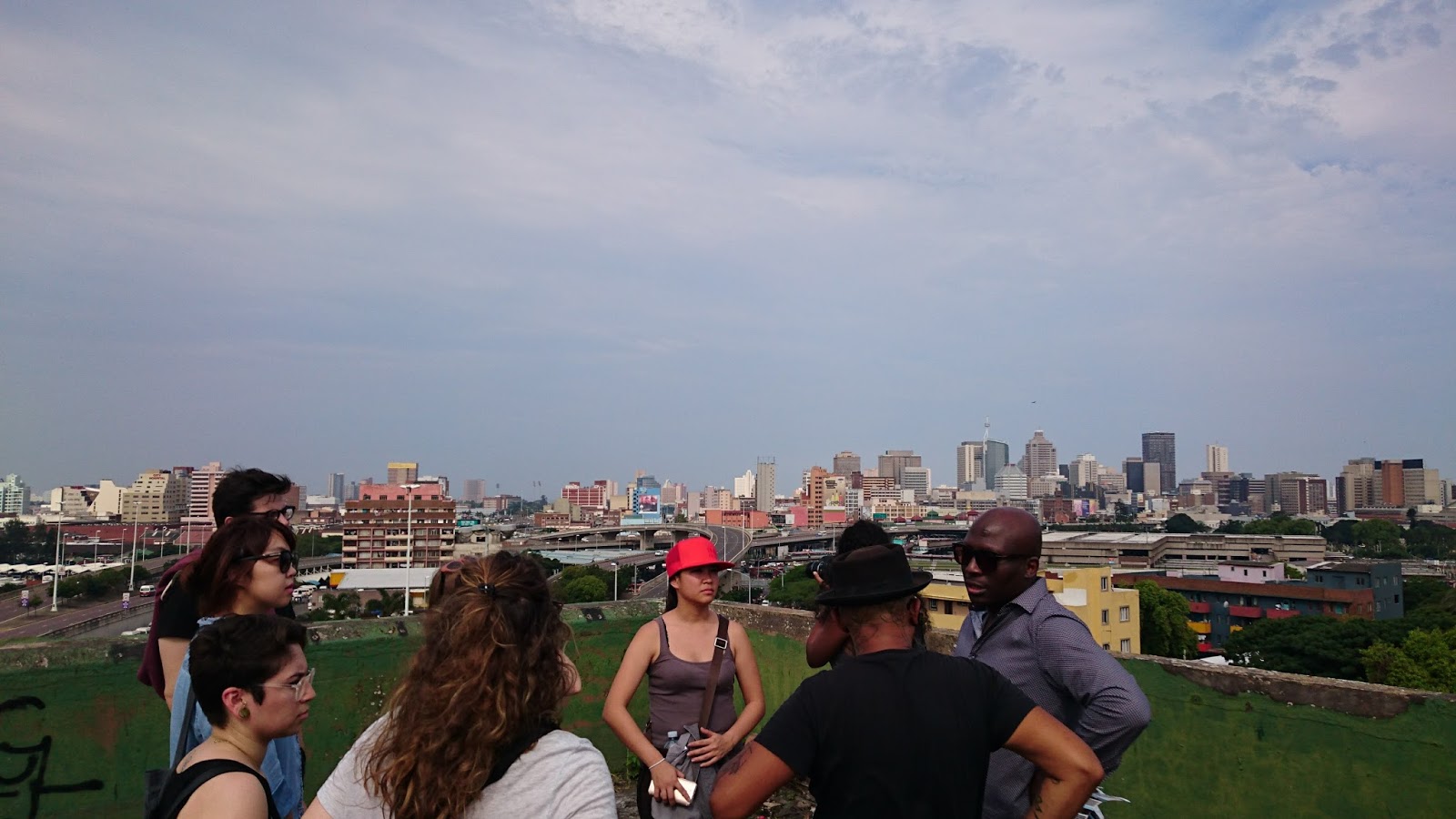
I was assisted by Adheema Davis and our goal was to expose the students from Harvard to the broad complexities of Durban as an African City while also linking in as many local practitioners, students and organisations as was possible in the 1 week studio visit: UKZN Students, DUT Students, Beset Durban, Cameron Finnie, Mark Bellingan, Doung Jahangeer, Lindsey Busche, Tsidi Moahloli and Asiye eTafuleni to name a few. We planned the events to offer maximum exposure for all students and even arranged an Archi-Speed Date between the different groups. The studio visit was additionally supported by Sumayya Valley and Mpho Matsipha.
A series of meetings, tours and discussions were planned for the week’s engagement.
BUILDING INDUSTRIES IN AFRICAN WATER CITES
“This studio explores the city of Durban to examine the challenges and opportunities presented by the impacts of urbanization in the social, physical, and environmental context of the African continent. The aim is to build industries–to produce a series of new architectural, infrastructural, and urban solutions learning from the local environment with a responsible infusion of relevant global values. Through documentation of international and regional practices, the studio will focus on Durban to investigate the city and its edge conditions, to understand its transformations and adaptations and socio political and economic dynamics.
The studio develops models of small to medium scale infrastructure interventions, scalable through locally managed industrial processes and technologies. In an increasingly globalized world, and particularly in the African context, a pedagogical aim of the studio is to also critically analyze the role of architecture, the architect, and forms of practice that offer sustainable values that shape and stimulate development in African cities and communities.
Starting with urban research, the studio will analyze Durban, South Africa based on seven registers: Demographics, Economy, Socio-politics, Infrastructure, Morphology, Environment and Resources (DESIMER). The studio will draw from NLÉ’s African Water Cities Project (AWC), which explores the impacts of urbanization and climate change in African cities and communities, deducing the fastest growing African cities are also some of the most vulnerable to climate change. Durban, a rapidly urbanizing coastal city, falls within the high to the extreme high-risk zones.
The studio team will visit Durban in the early phase of the research. Throughout the research and design phases, we will engage advisors in various disciplines to guide the DESIMER research and also establish relationships with local organizations, student groups, institutions, and partners in South Africa.
The outcomes of the studio will be presented at the New Solutions of the World Economic Forum on Africa taking place in Durban in May 2017. The goal is to escalate the research and design outcomes into real possibilities of prototyping and industrialization.
Final Presentation of work for critique from local researchers and practitioners.
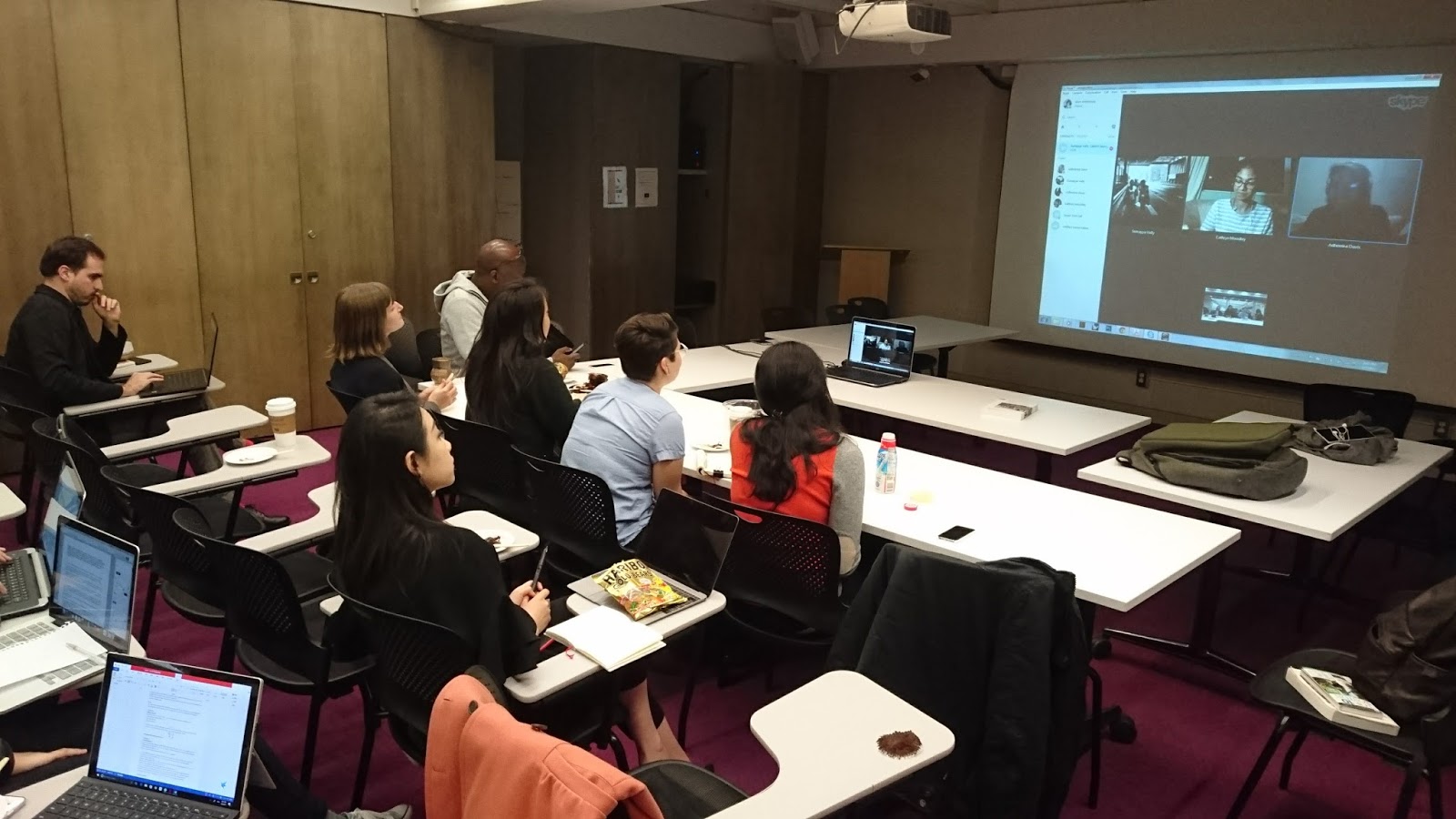
I was fortunate enough to secure funding to then attend the Design Crits in Harvard as a guest critic and support the student’s enquiries during my visit through a few desk crits at the Gund Hall as well as faciliate a skype crit between the South African students and the Harvard students.
The Lukhanyo Hub project seeks to develop a system of support to residents in marginalised areas of urban South Africa through programmatic and built infrastructure. The newly formed entity RCDC are currently working in the BT section of Khayalitsha by assisting local groups through a small scale farming and early childhood development programmes.
“Lukhanyo Hub in Site C, Khayelitsha is a new ‘catalytic’ model developed by RCDC to deliver affordable housing, high quality education, training, recreation programmes and health services alongside employment opportunities delivered through innovative buildings, energy systems and outdoor spaces in economically under-resourced areas.
The system is supported through public-private partnership creating an economically sustainable system through public-private partnerships. The overall system is being developed to be replicable in multiple contexts whilst being responsive and respectful of its context and adaptive to changing conditions over time.” http://rcdcollective.com/
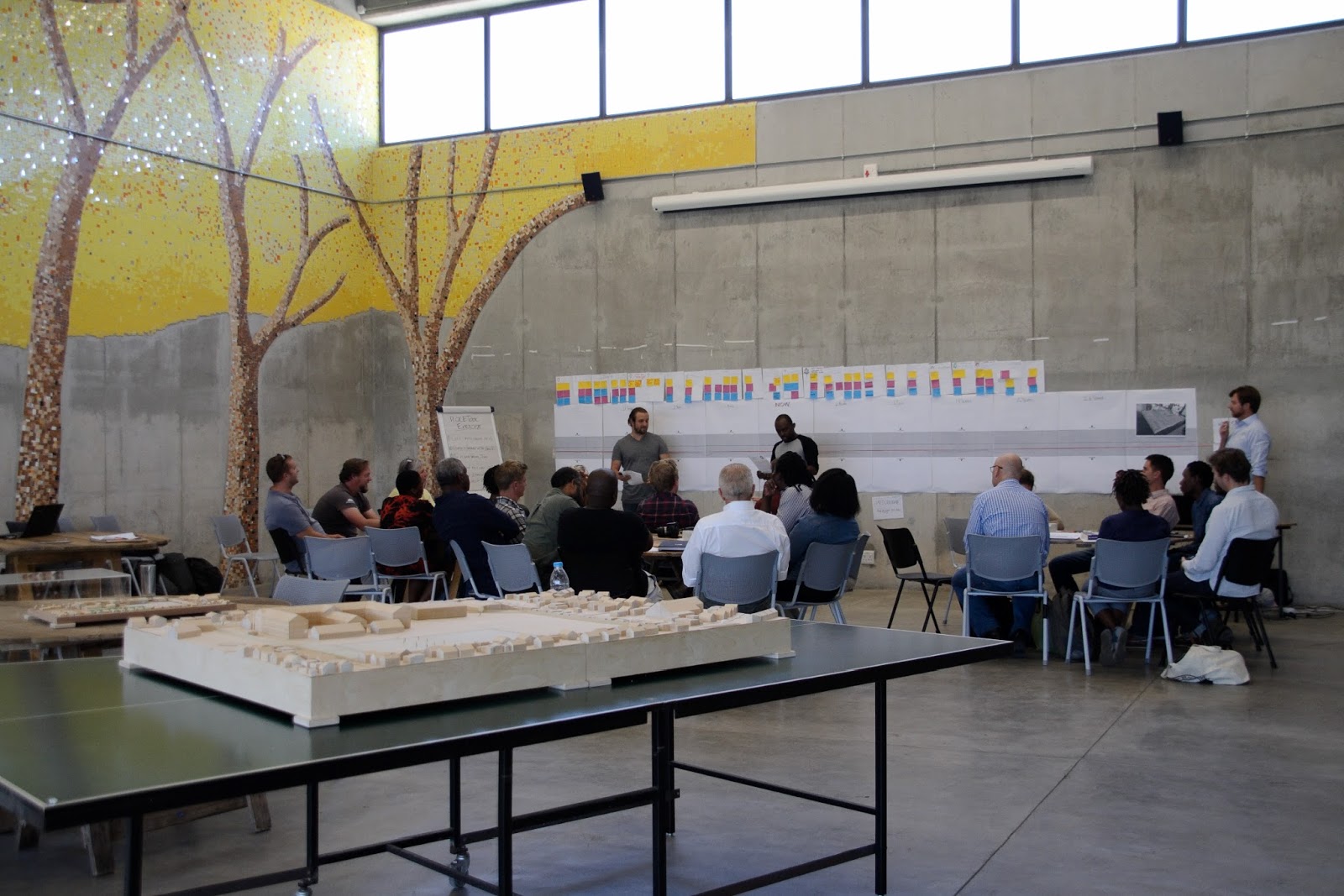
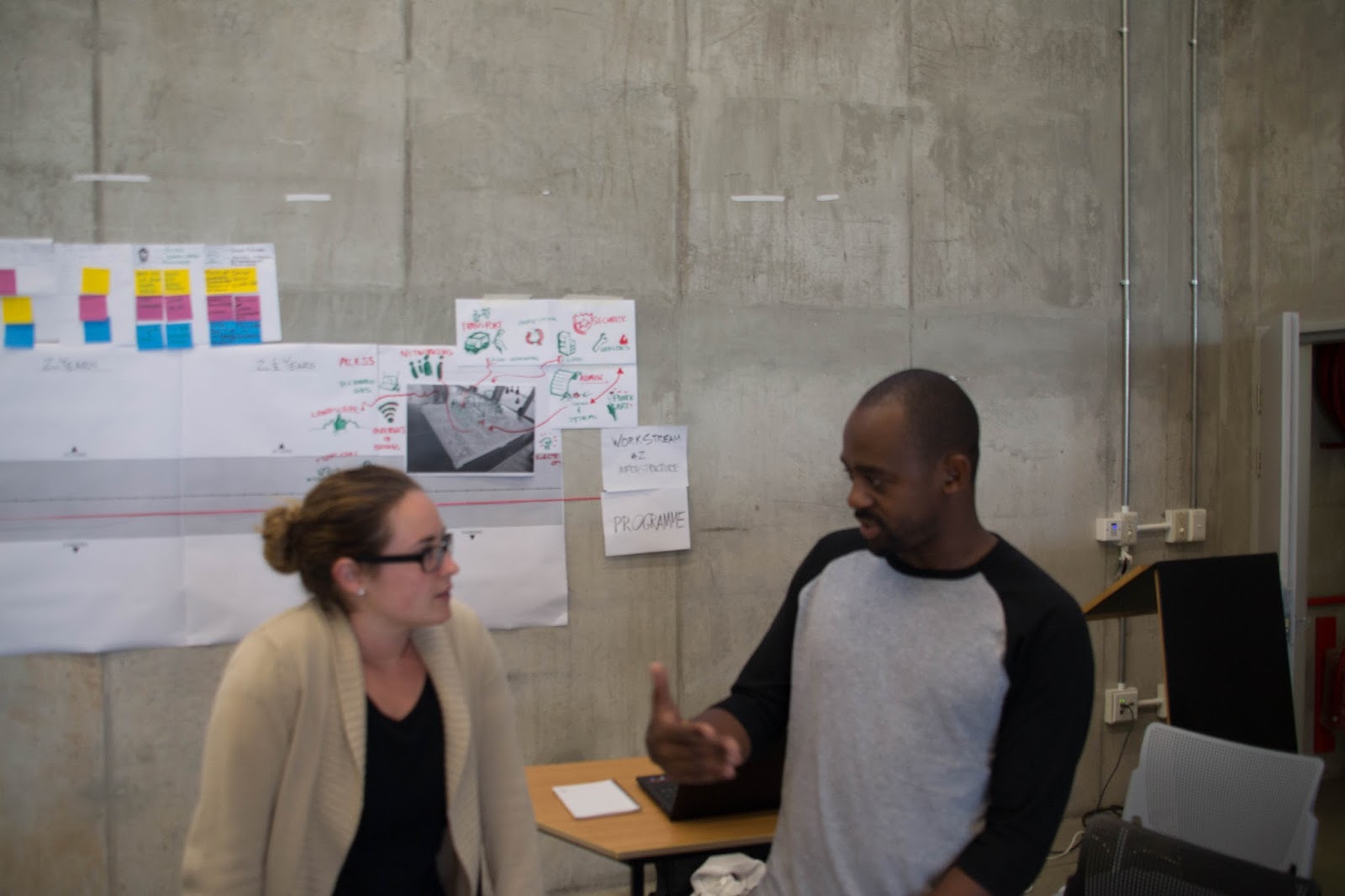
Through 1to1 , I was requested to support in the socio-technical development of a brief around what the Infrastructural requirements for support in the area should be. 1to1 worked with local planner and socio-technical expert Sizwe Mxobo and Natalia Tofas to host a 1 day workshop in order to co-produce a brief with the different stakeholder groups.
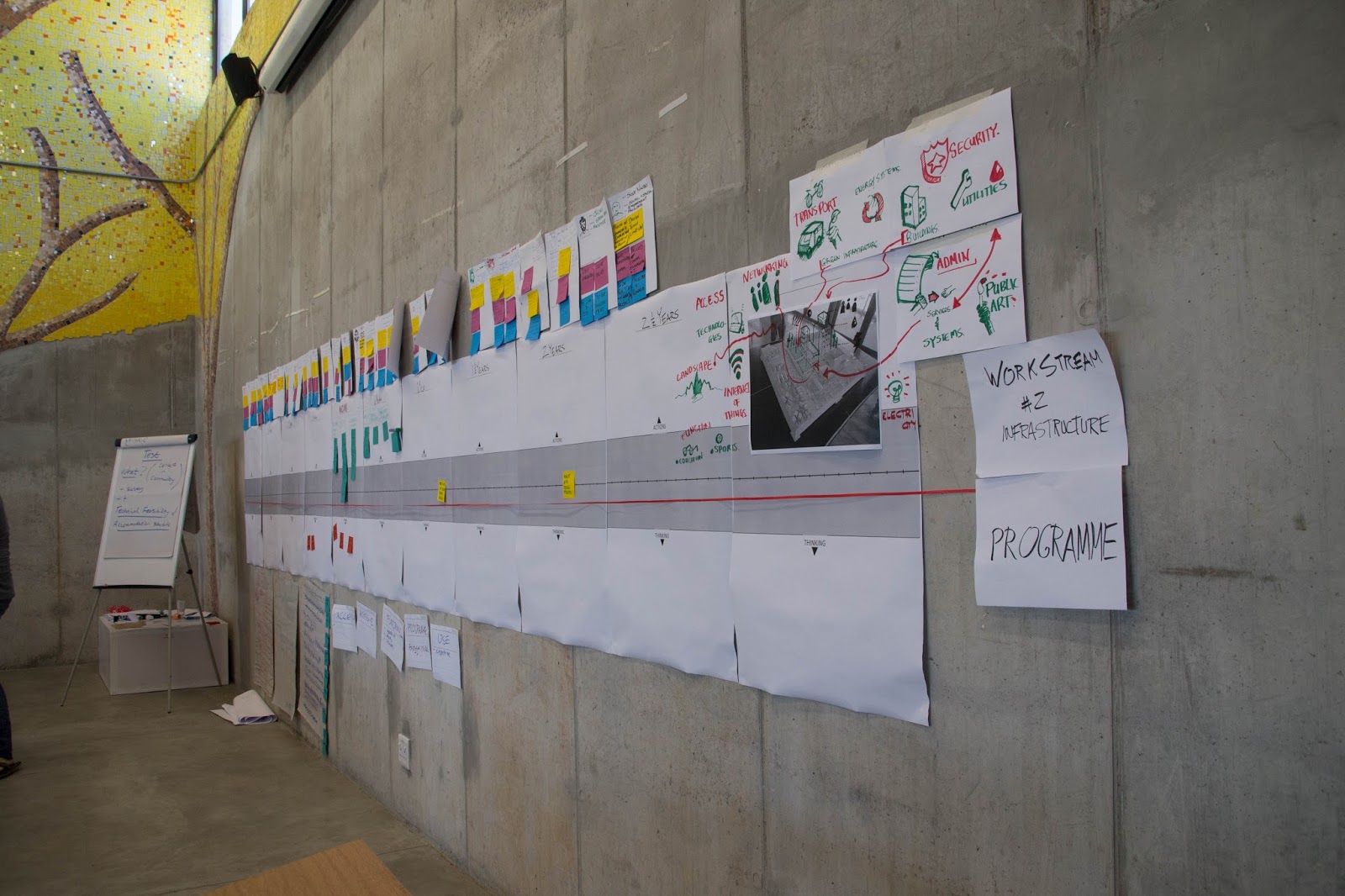
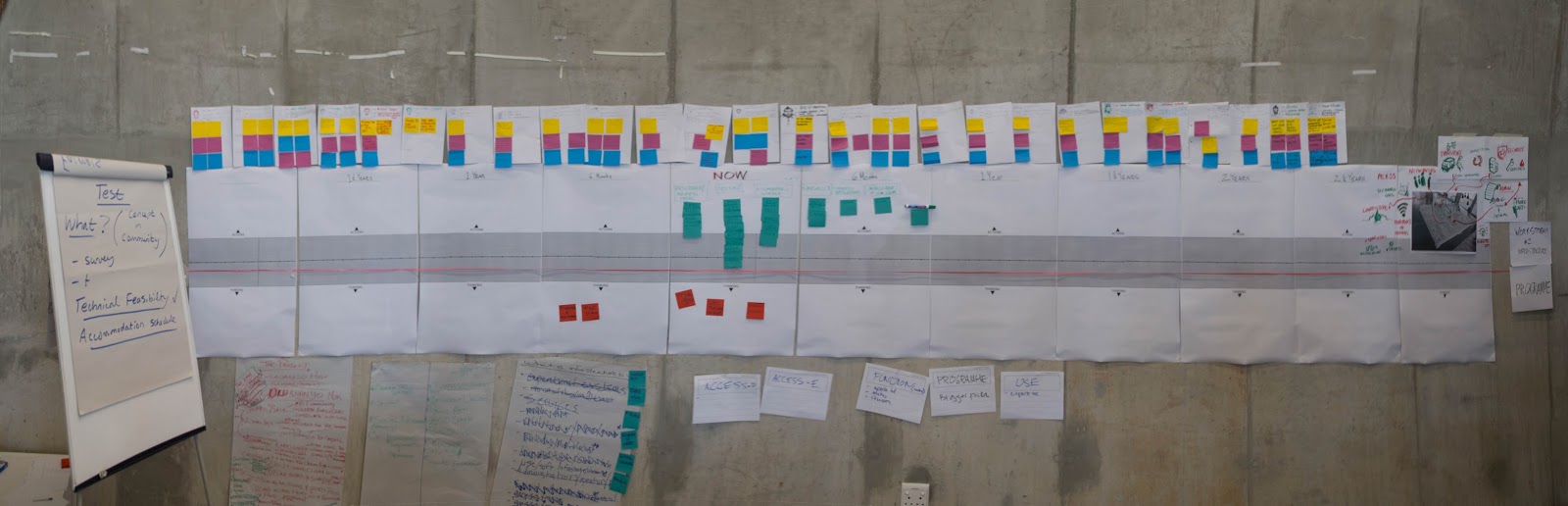
The team employed a facilitation tool developed by 1to1 that used the concept of a timeline as a means to collect valuable information from what has already taken place on site and how the stakeholders see the future of the project.
The time line structure was supported with smaller toolsets that created a common and accessible language format for different types of people and supported visual and design thinking processes.
The tool was successfully used and due to it’s design has become the format from which future workshops, the documentation of the process and the Monitoring and Evaluation process will be used from.
One of the most important outputs for the engagement with the Denver leadership was the Spatial Layout for the Community Action Plan (CAP). The layout was co-developed with residents, leadership and driven by the data and social capital built during the studioATdenver programmes and additional work conducted by AT.
The layout responded to key issues of emergency vehicle access, shared space, social cohesion patterns and green space allocation identified during the studios and larger forum discussions.
The spatial layout, alongside a series of support materials was packaged into an accessible and shareable format. AT conceptualized this in the form of a Hand Book that could be easily distributed and used format as a ‘Toolbox’.
A day-planner format was conceptualsied as a possible structure for this handbook, as many local leaders already used this type of booklet in their work. The idea behind the small format, would allow for the books to be used together to forma a larger layout (A1 size) if brought together.
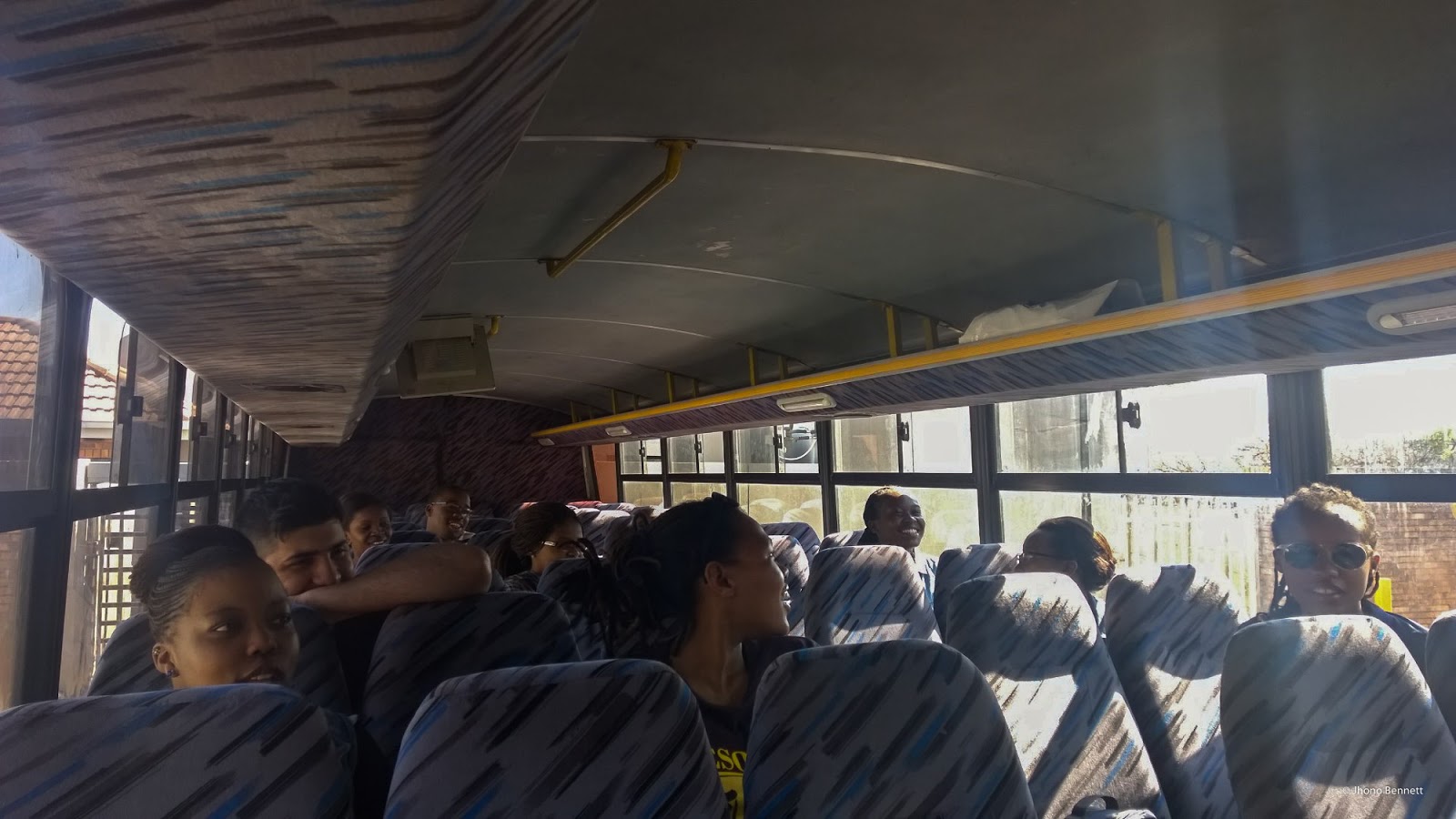
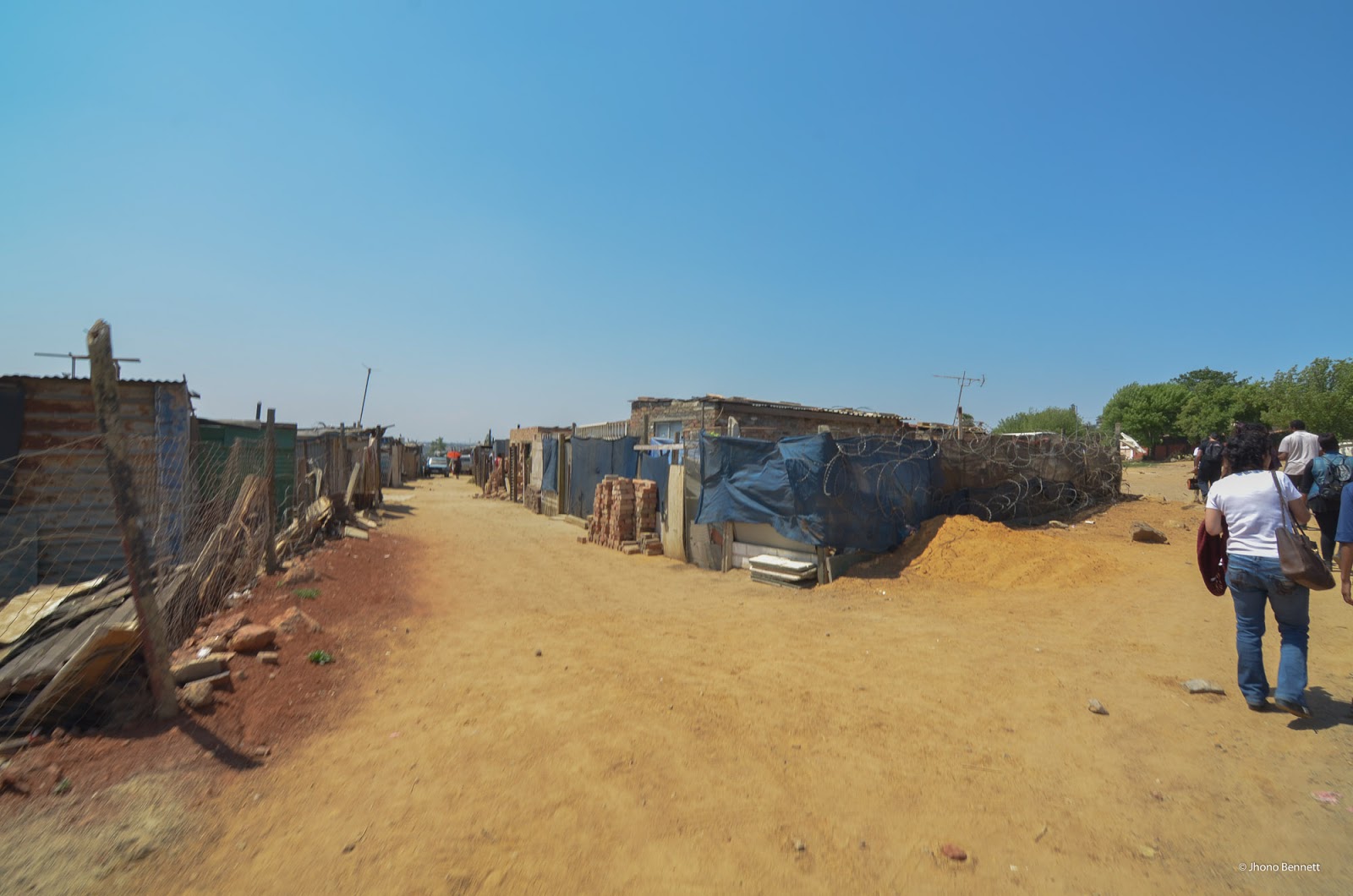
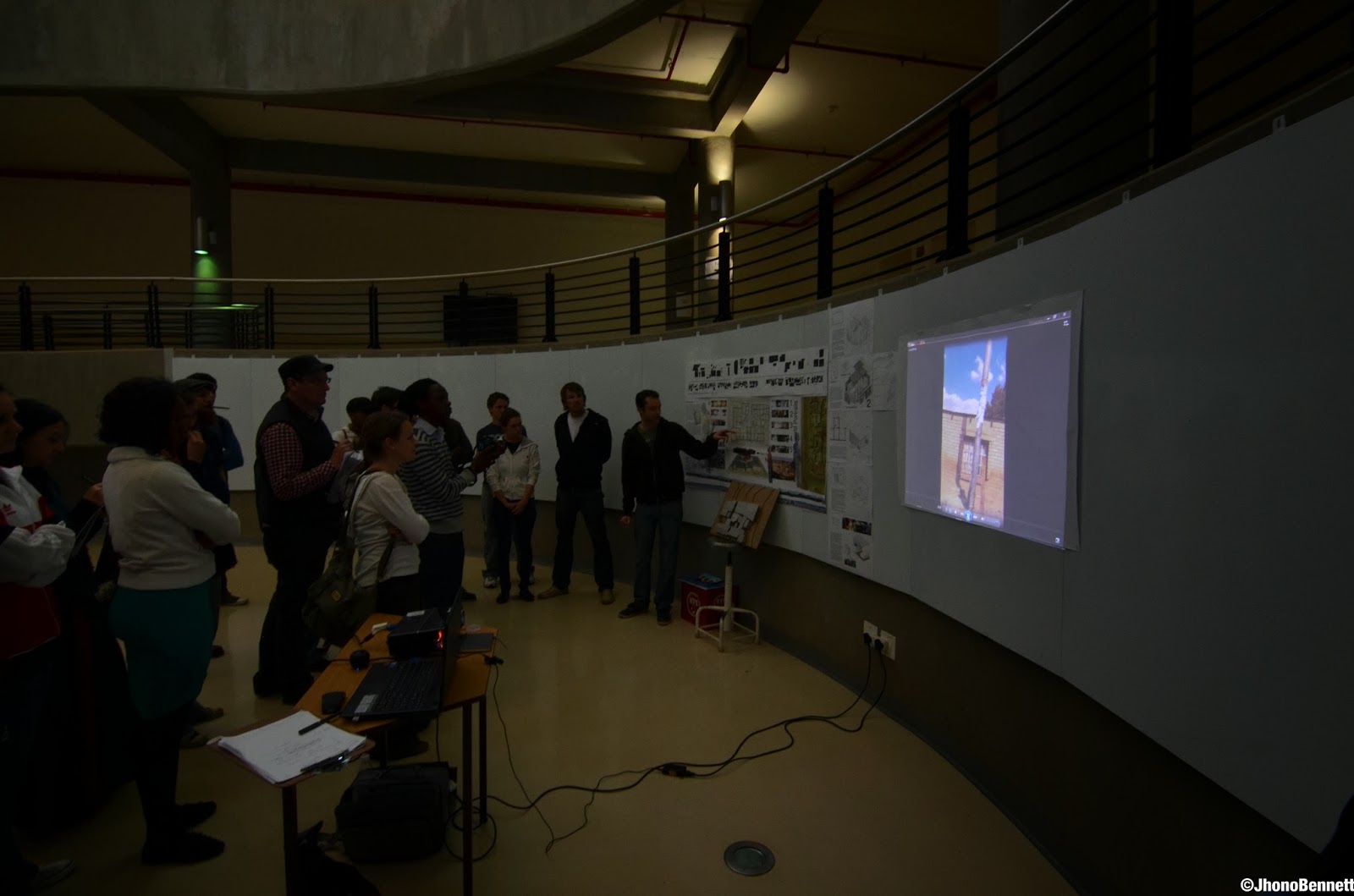
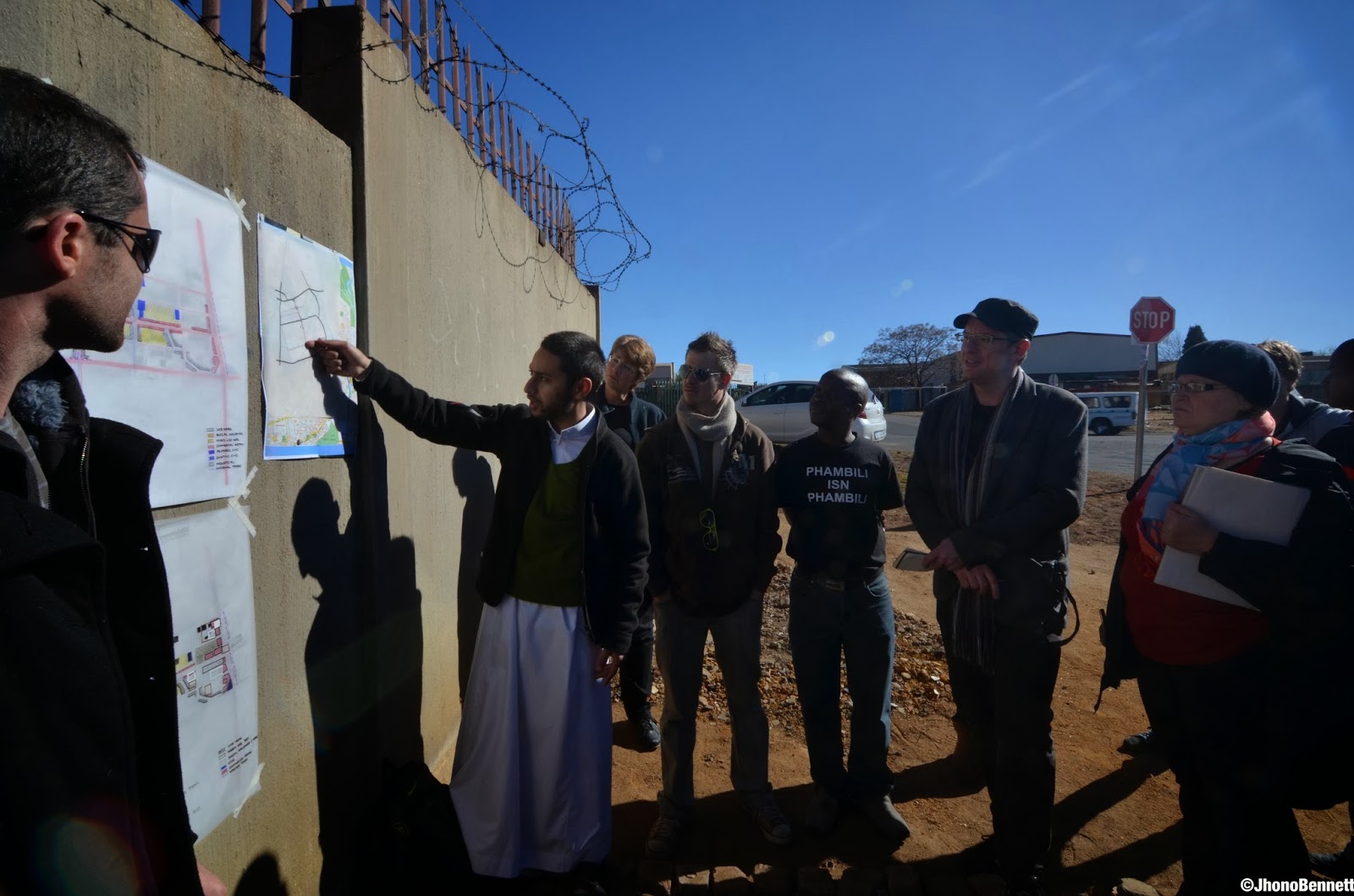
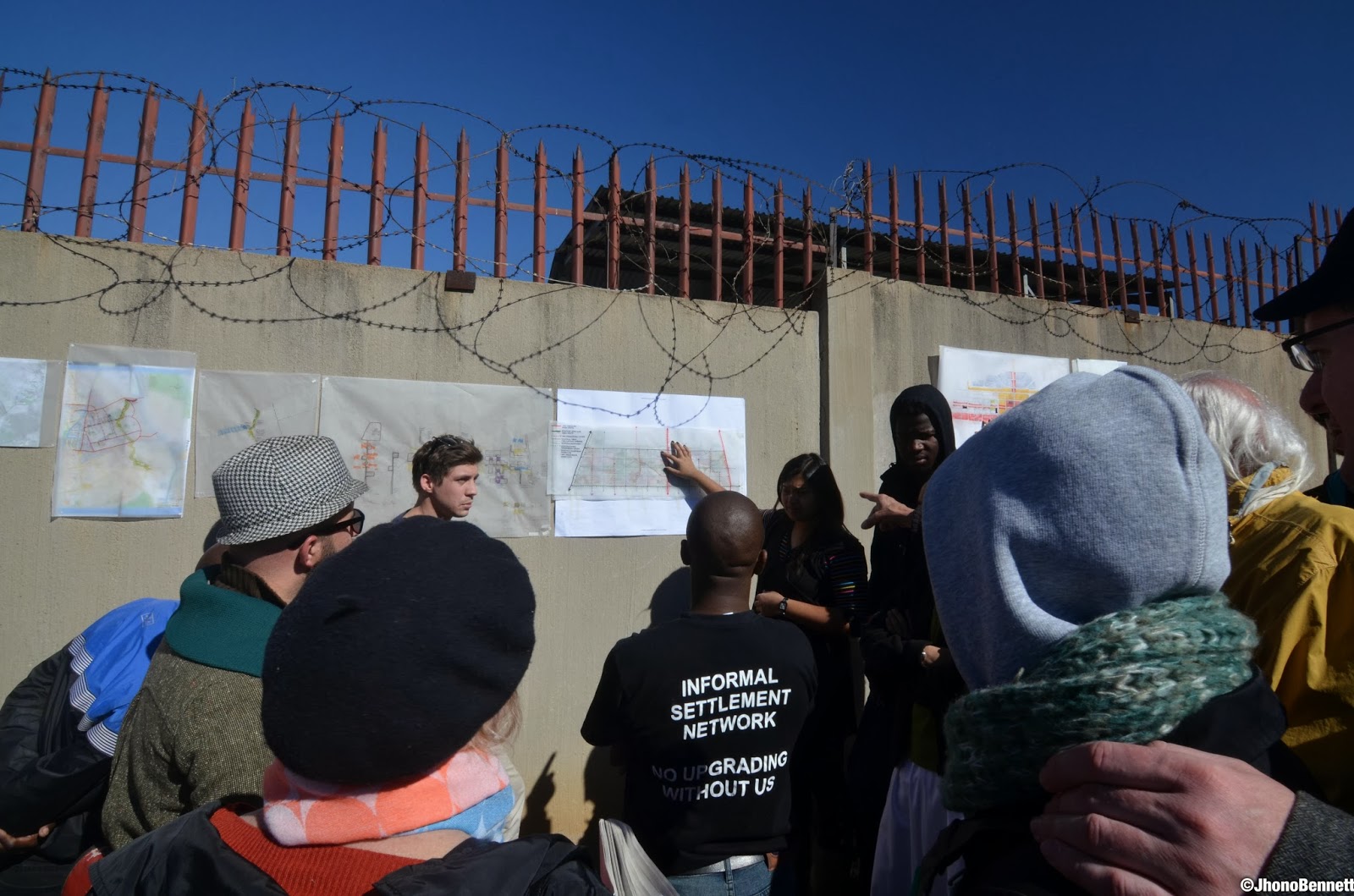
In early Costanza La Mantia invited myself and several other researchers, lecturres and practitioners to assist in the running of a 10 day workshop in Johannesburg’s Kya Sands Informal Setttlement through a project named ‘Transforming Kya Sands’
The organisation team worked as facilitators on the project and guided the participants, made up of a mix of professional, government and students from South Africa and abroad, through the the difficult challenge of how to develop and meet the needs of the kya sands residents.
My group was looking at public space and how it would be addressed in the larger project development. The project is still being published and will be shareable soon.
This project was linked to my ealrier teaching with Costanza at Wits in the Planning School:
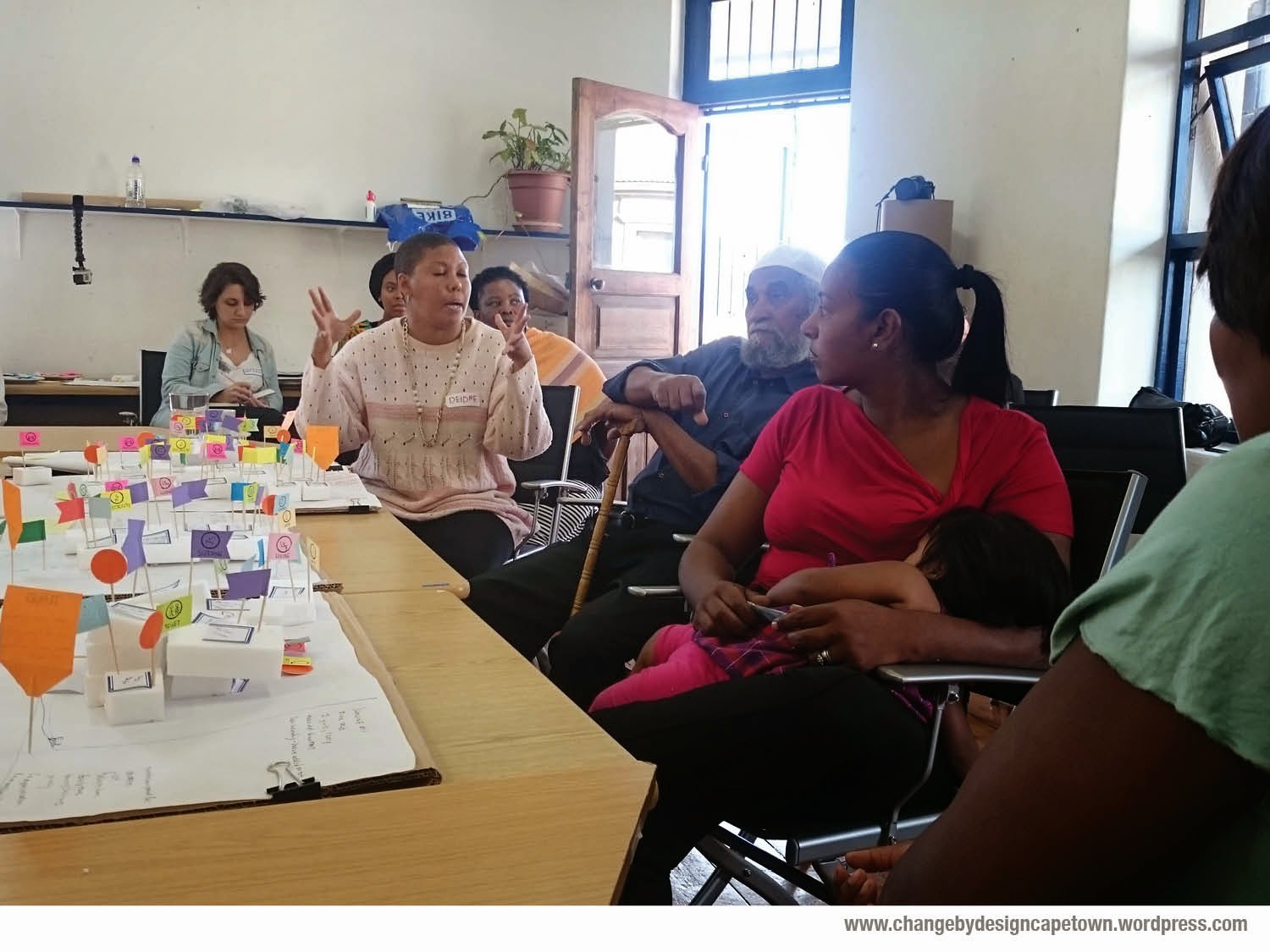
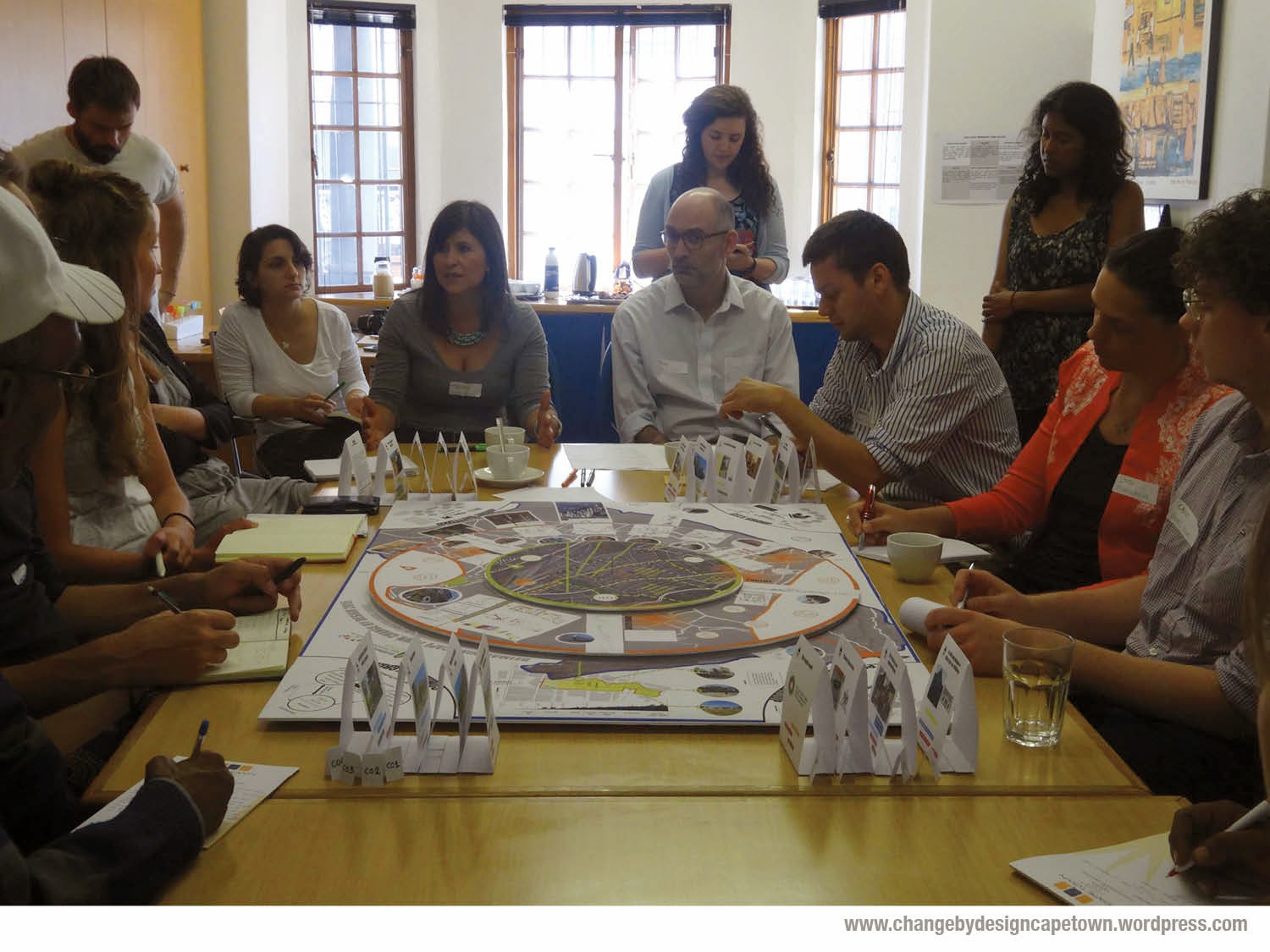
Architecture Sans Frontiers – United Kingdom (ASF-UK) has been conducting their Change by Designworkshops since 2009 in various counties; Brazil, Kenya, England and Ecuador.
These workshops explore participatory design as a tool for advocacy and socio-spatial transformation in informal settlements, in collaboration with grass roots organizations, local NGOs and governmental agencies involved in slum upgrading and housing rights.
“The focus of our upcoming workshop is the neighbourhood of Woodstock, in Cape Town, South Africa. Here, ASF-UK is teaming up with the NGO Development Action Group (DAG) and diverse groups of local stakeholders to explore how inner-city urban regeneration can be re-imagined as a process that brings about more equitable and democratic city development in Cape Town”
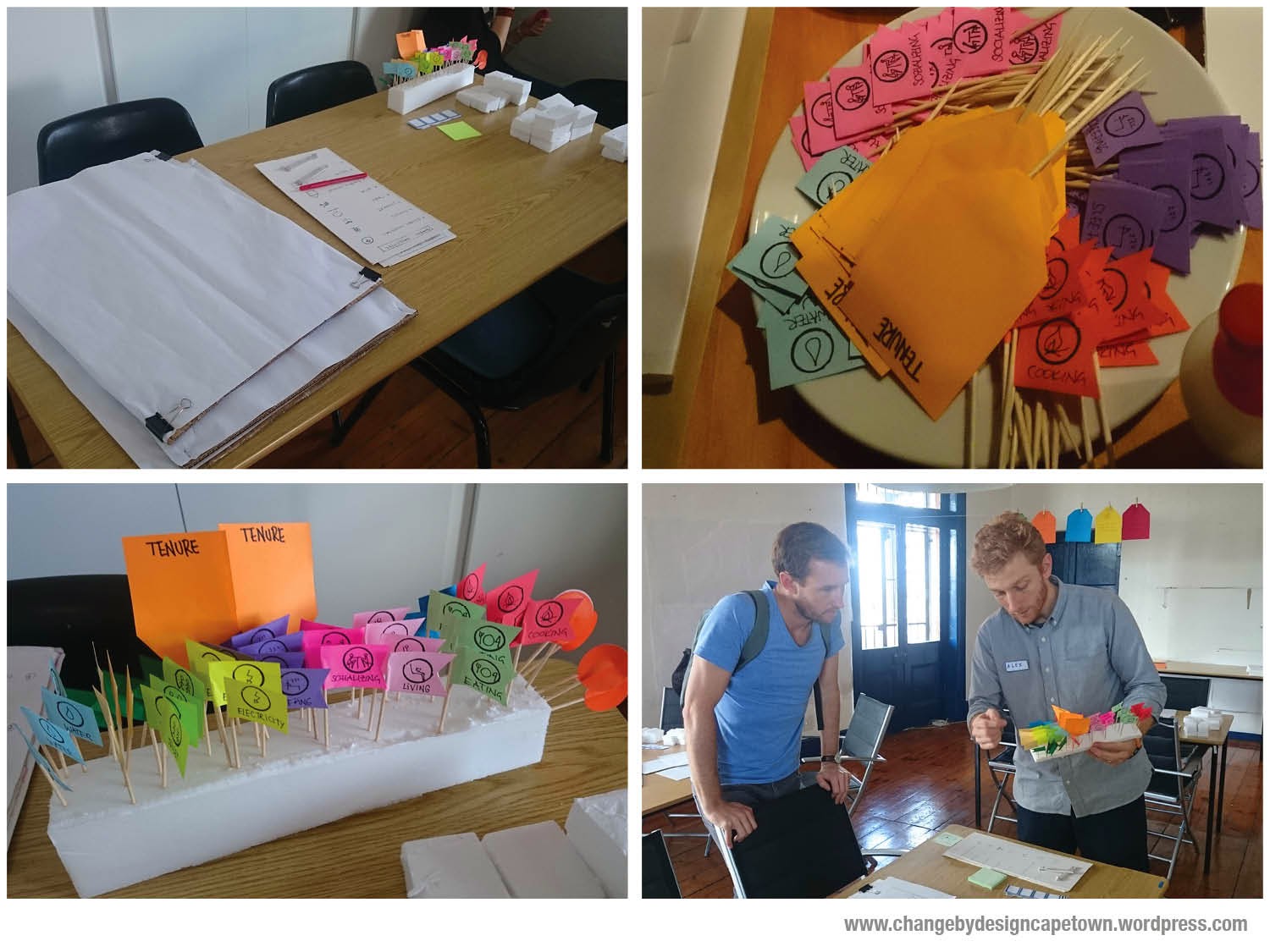
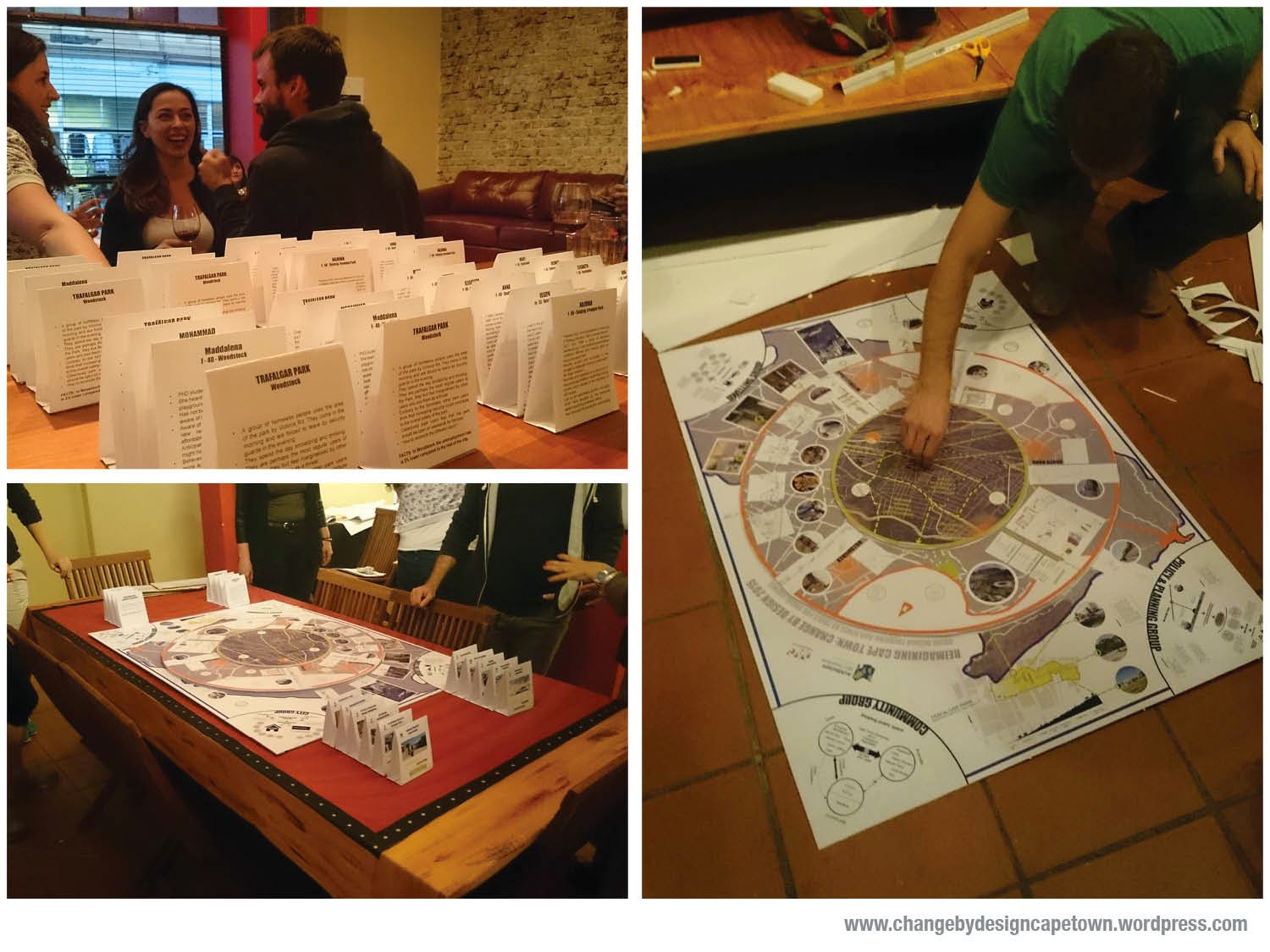
The workshop employs a holistic approach at 4 different scales: Dwelling, Community, City and Policy & Planning that works with existing initiatives (DAG) to support work being conducted on the ground.
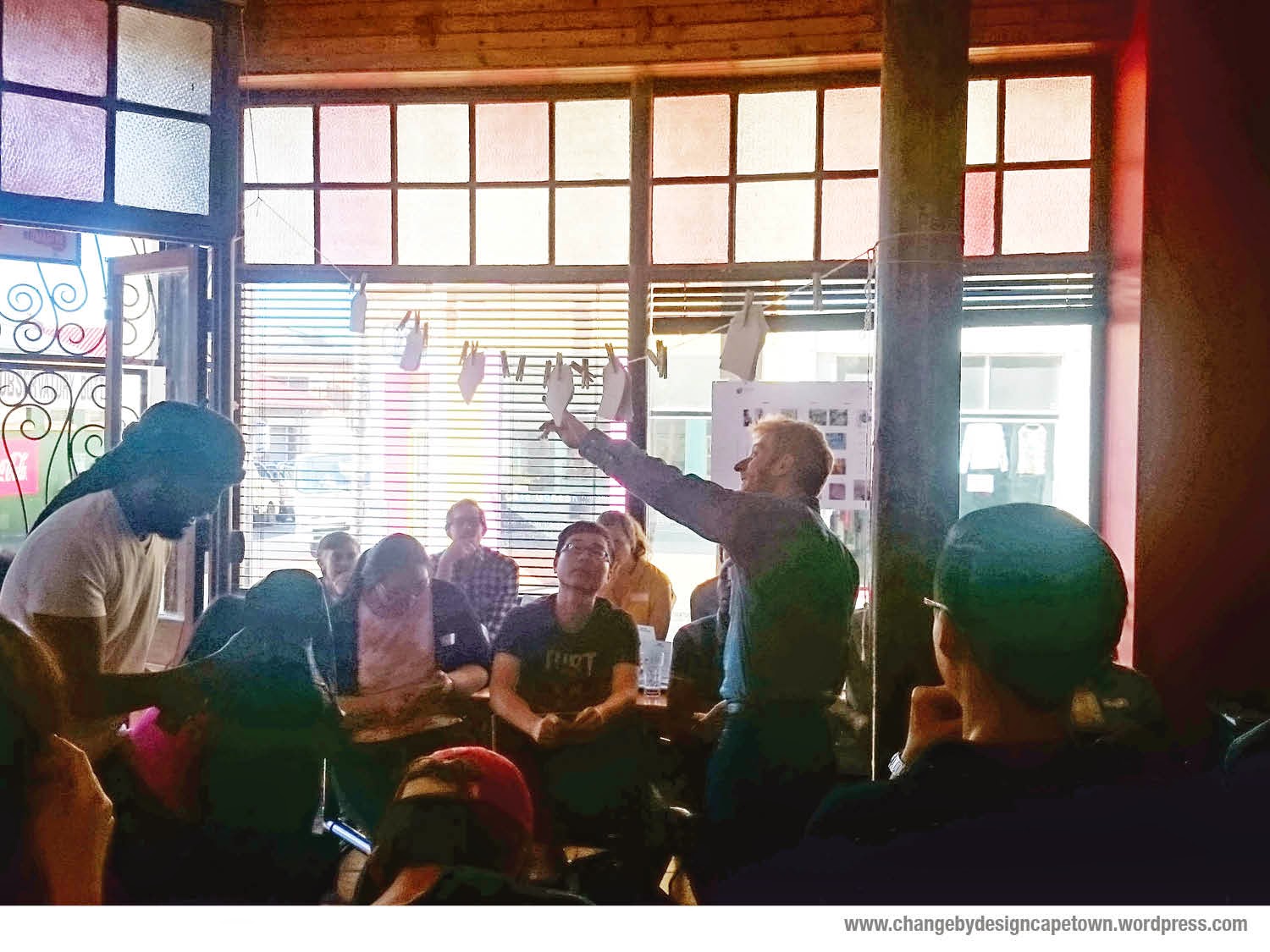
We worked from DAG’s newly opened DAG Cafe, a space planned to be a platform for future discussion around DAG’s Re-Imagining Settlement’s Programme.
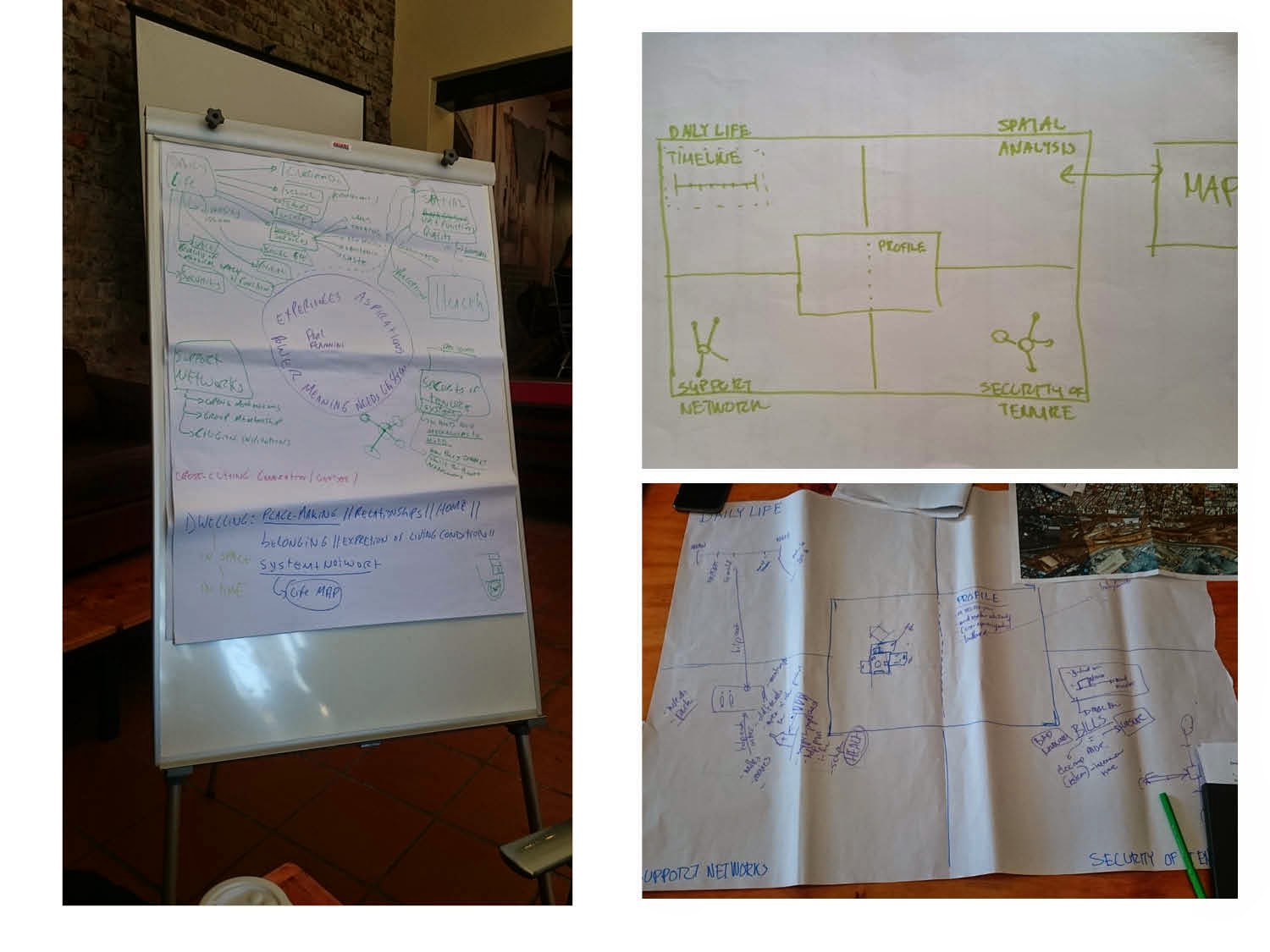
I was assigned to the the Dwelling group where we developed a tool to capture the Life World Mapping of the various sites we set to engage with.
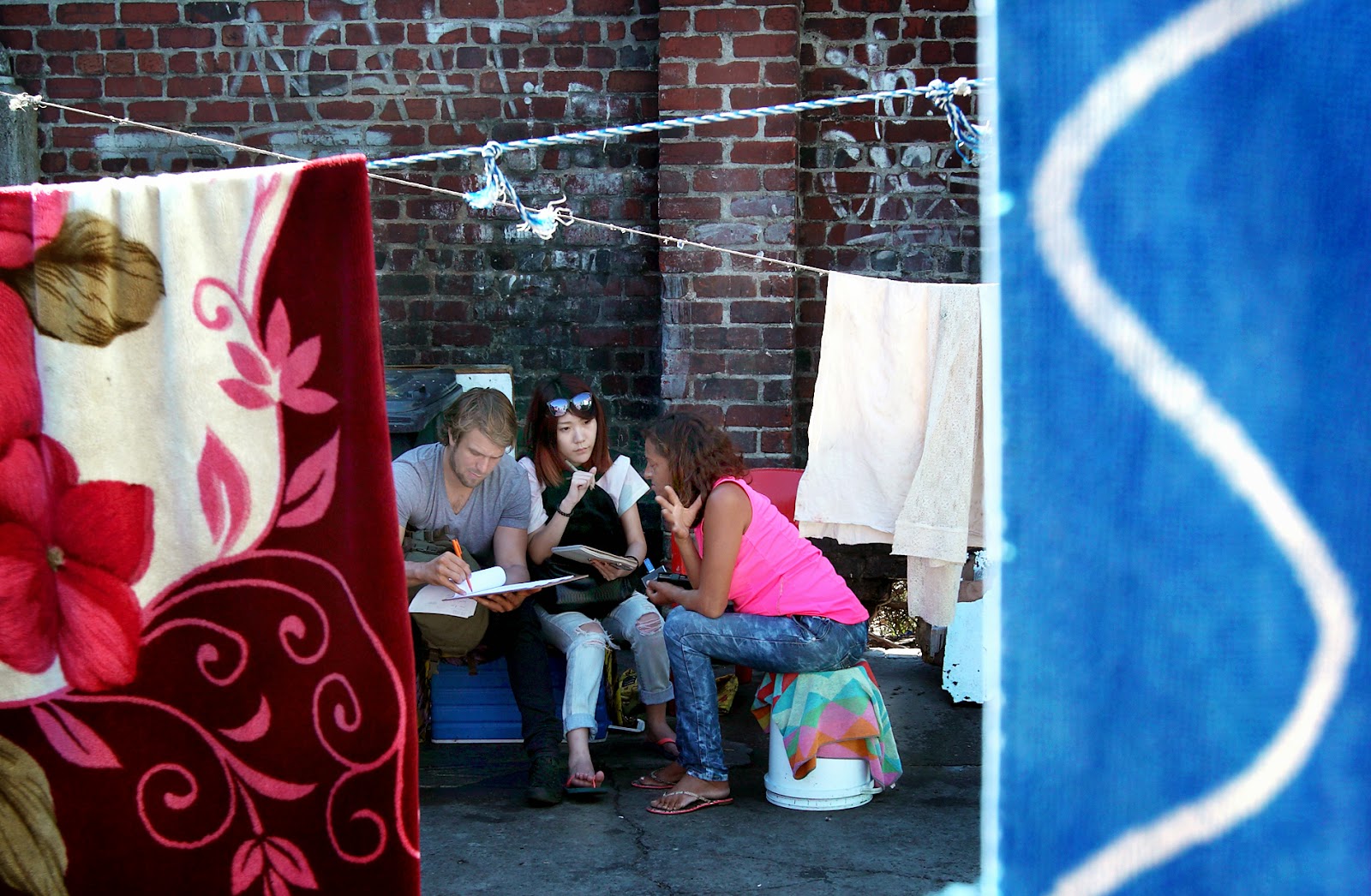
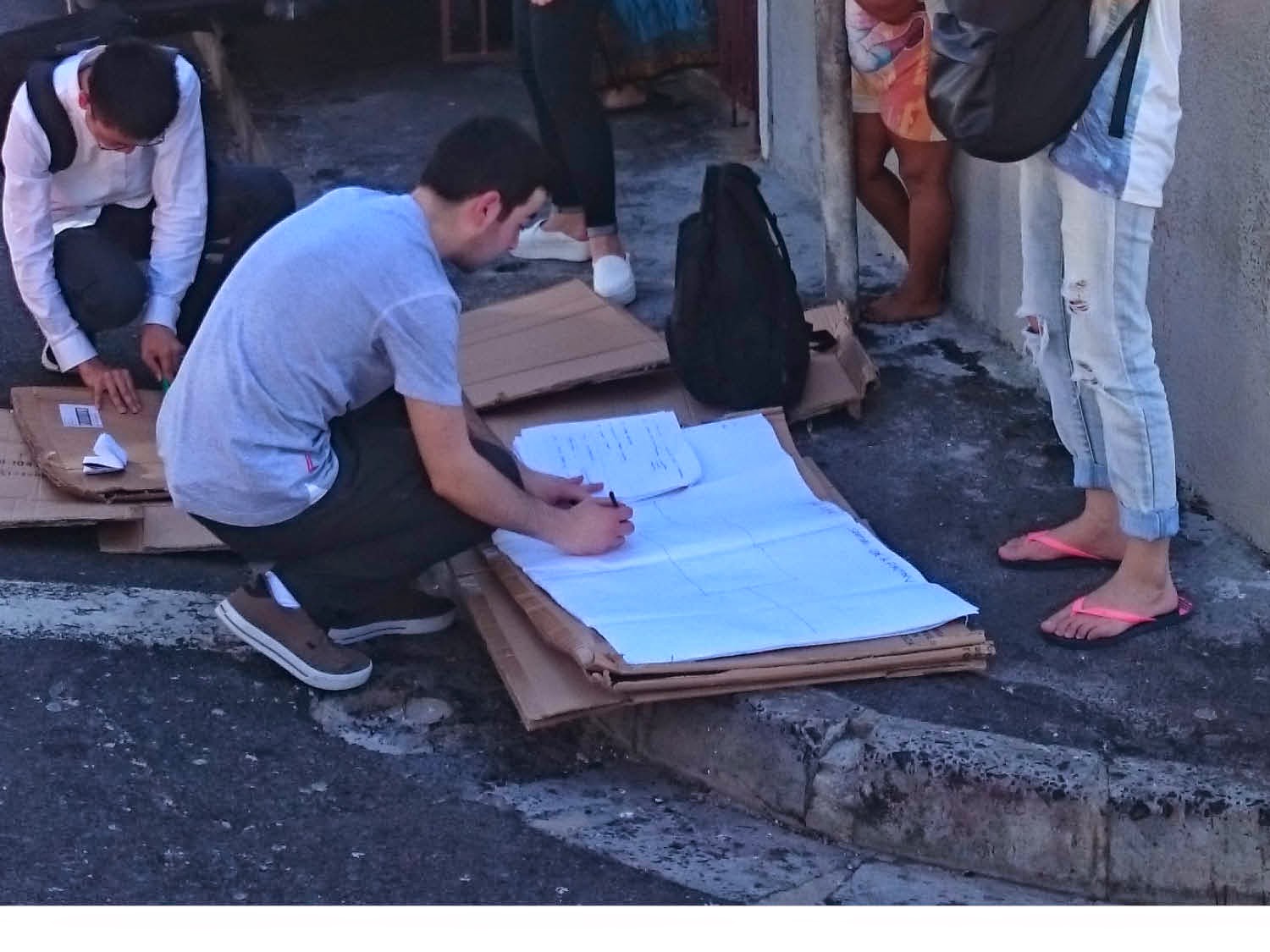
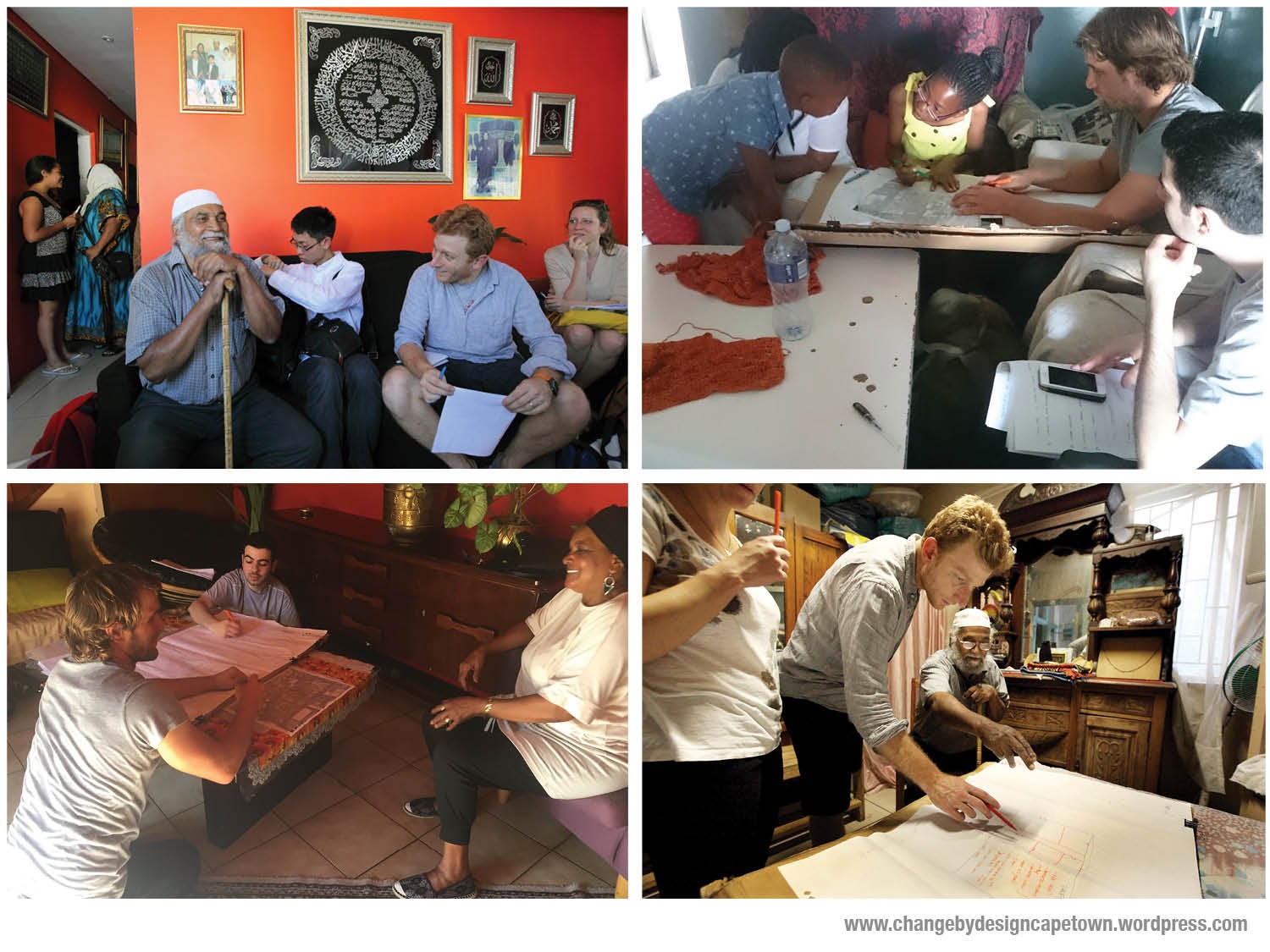
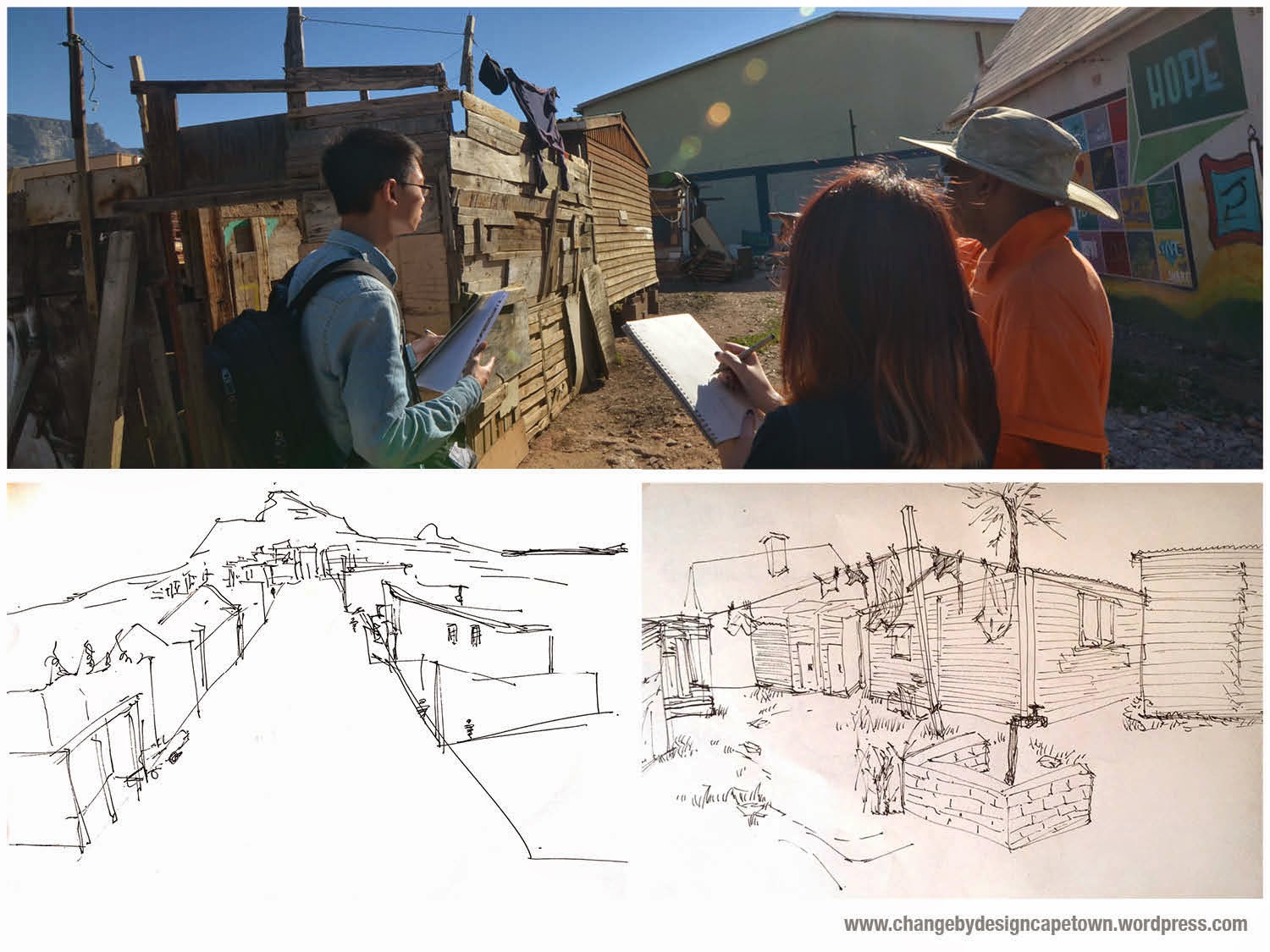
And began the process of participatively mapping with residents of the various sites DAG ia involved with.
Gympie Street Mapping
Bromwell Mapping
Pine Road Mapping
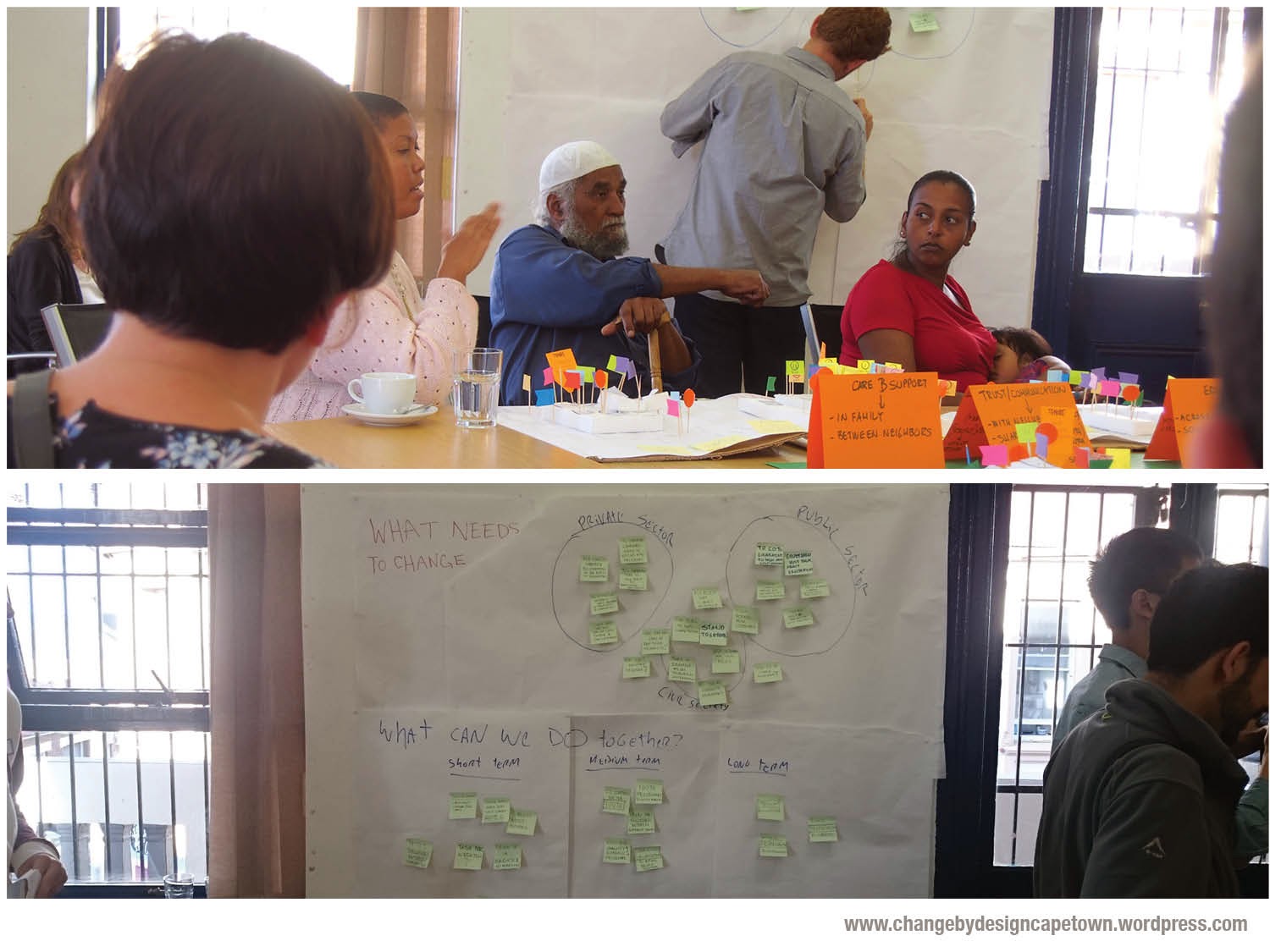
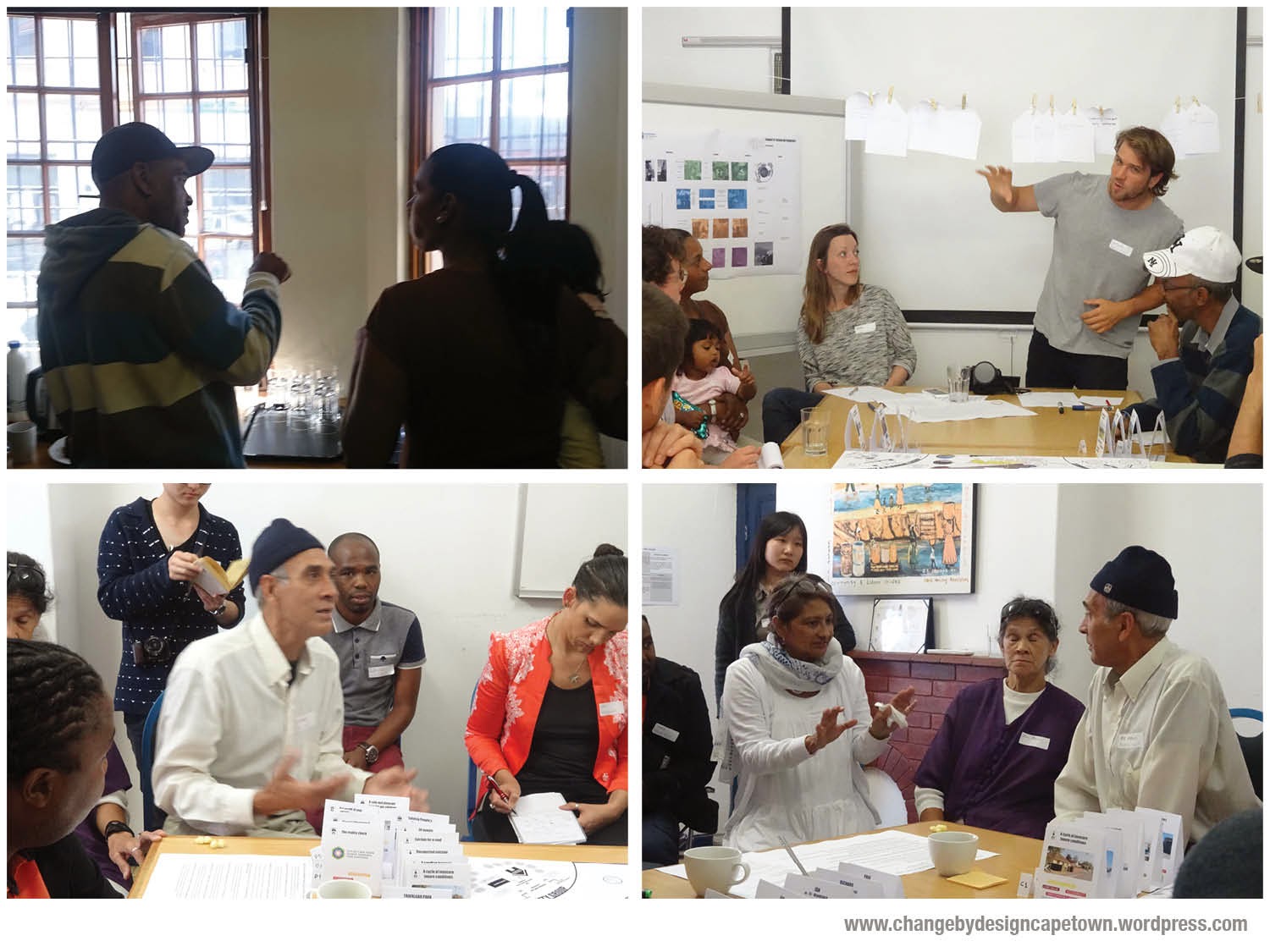
Participative Workshops These findings were then works- hopped through a series of exercises conducted at the DAG Cafe,
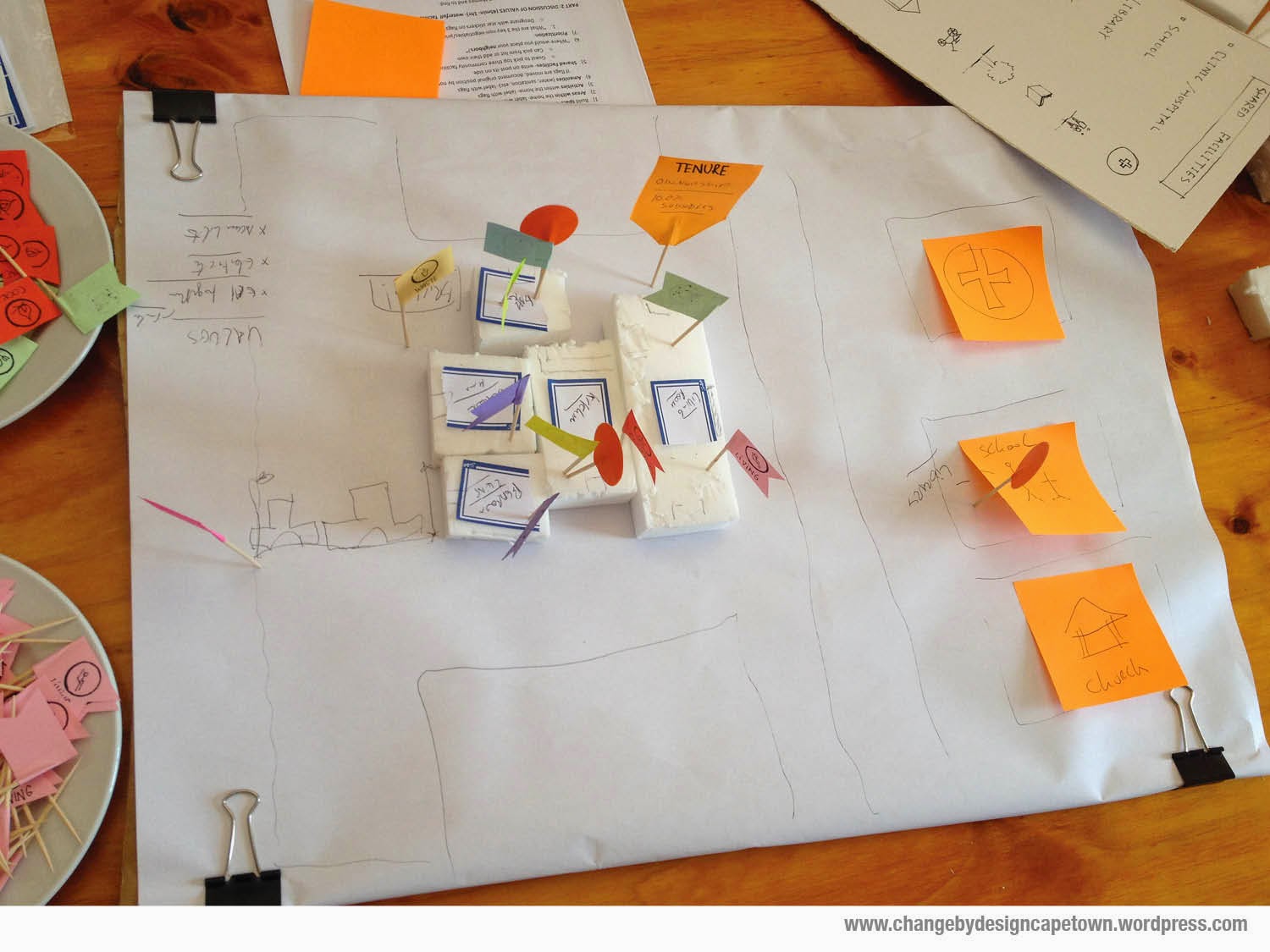
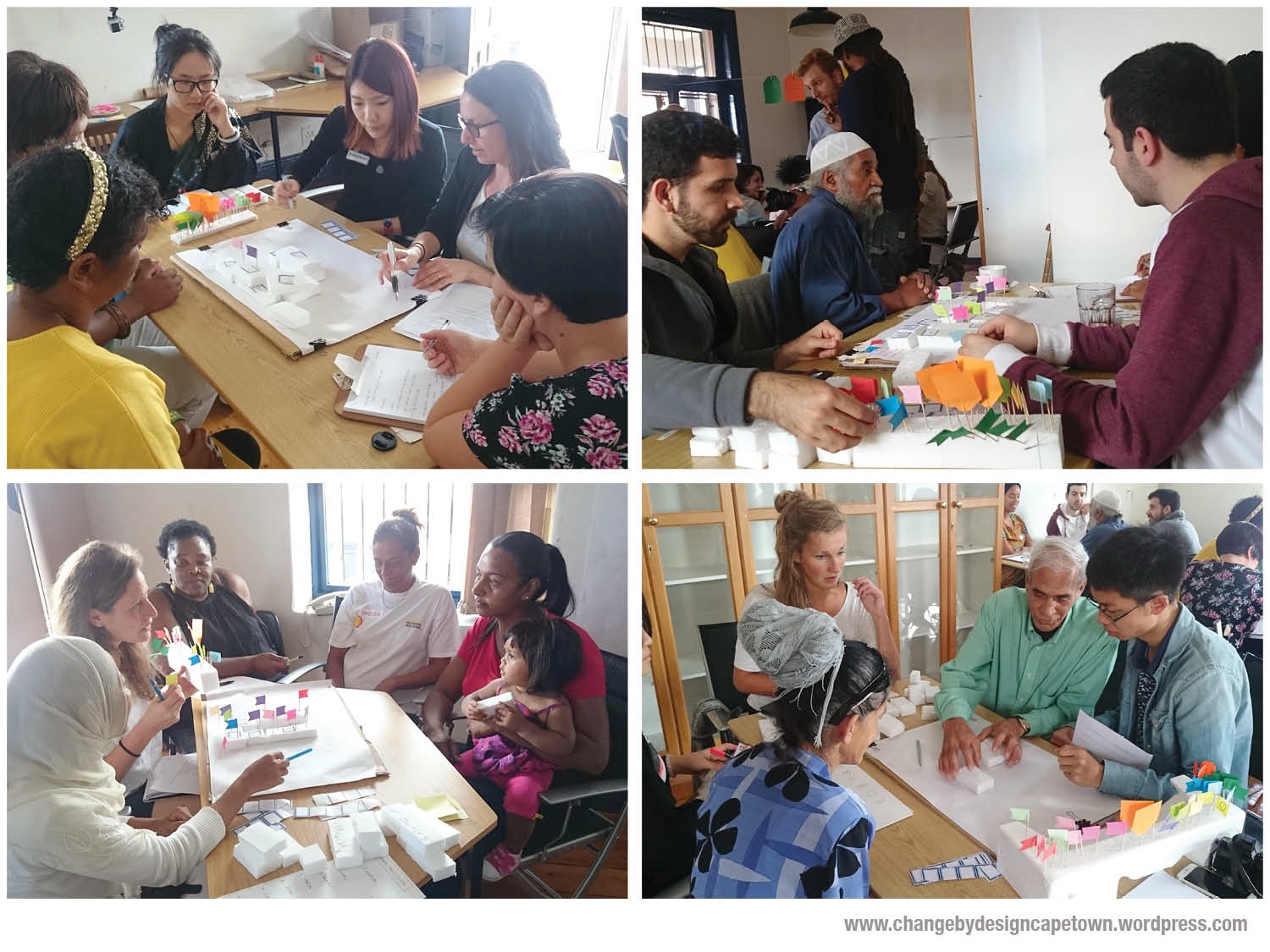
This exercise was carefully designed and facilitated by the ASF Team in two parts, one that asked residents to ‘build’ their dream home, then asked residents to discuss together aspects of neighbourhood and possible links to future threats.
Individual Exercise
Group Exercise
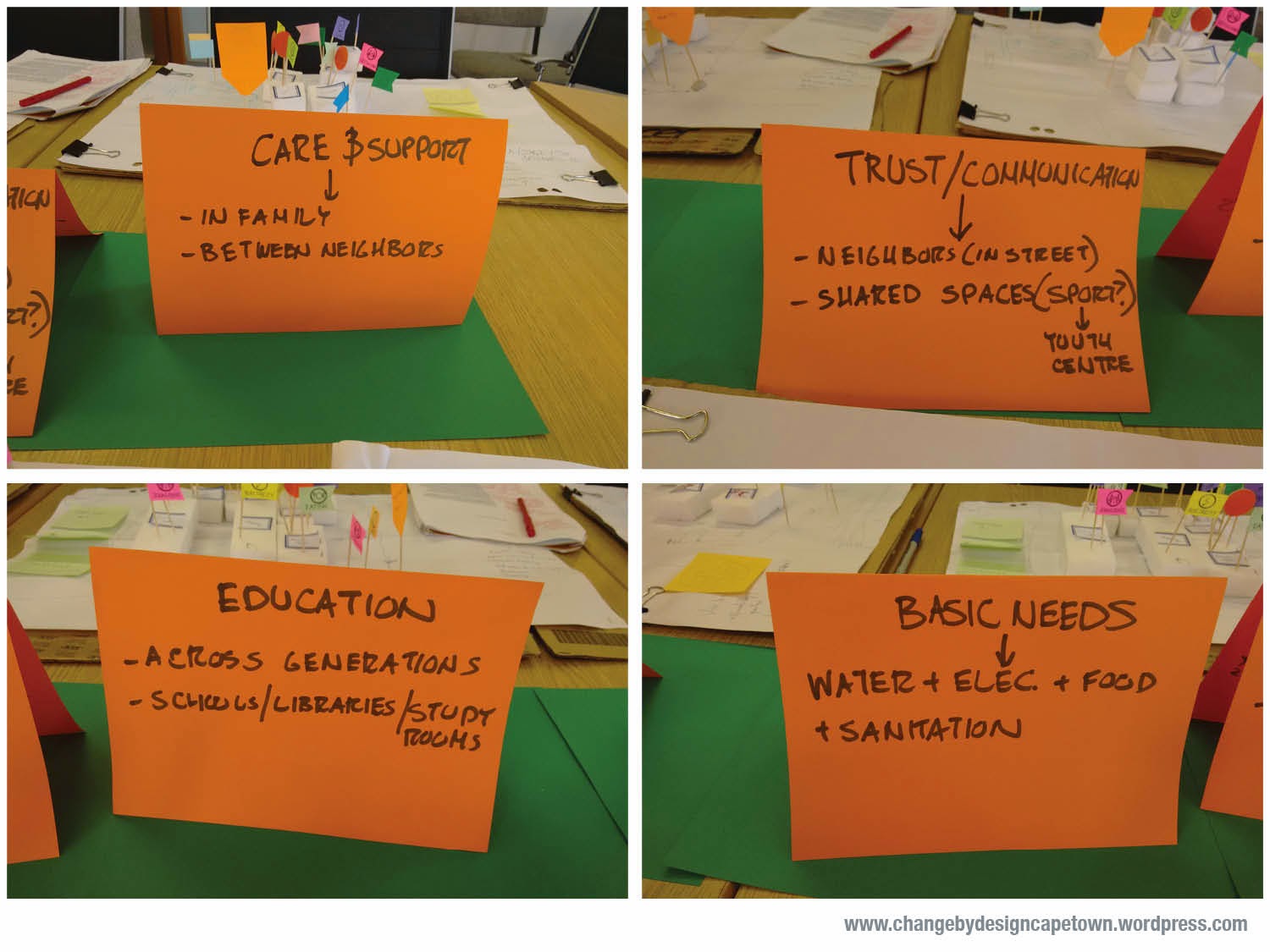
The findings from all the exercises were carefully collected and collated into the final day workshop that brought together all the various scales of the workshop as well as various stakeholders in DAG’s projects.
Final Day Exercise
These final workshops were crucial in determining the collective elements of those involved in the different aspects of DAG’s work.
Workshop End
The workshop concluded with a facilitated discussion between the participants and the CBO’s. The next step from the facilitation team is to complete the report for DAG as well as package and share the data gathered during the workshop .
The module was taught through research and participatory engagement with various community based organisations that work within Kya Sands.
Kya Sands sits in an uncomfortable tension with it’s suburban neighbour of North Riding.
The studio was conducted at the University, but a several site visits were arranged to understand the context of Kya Sands.
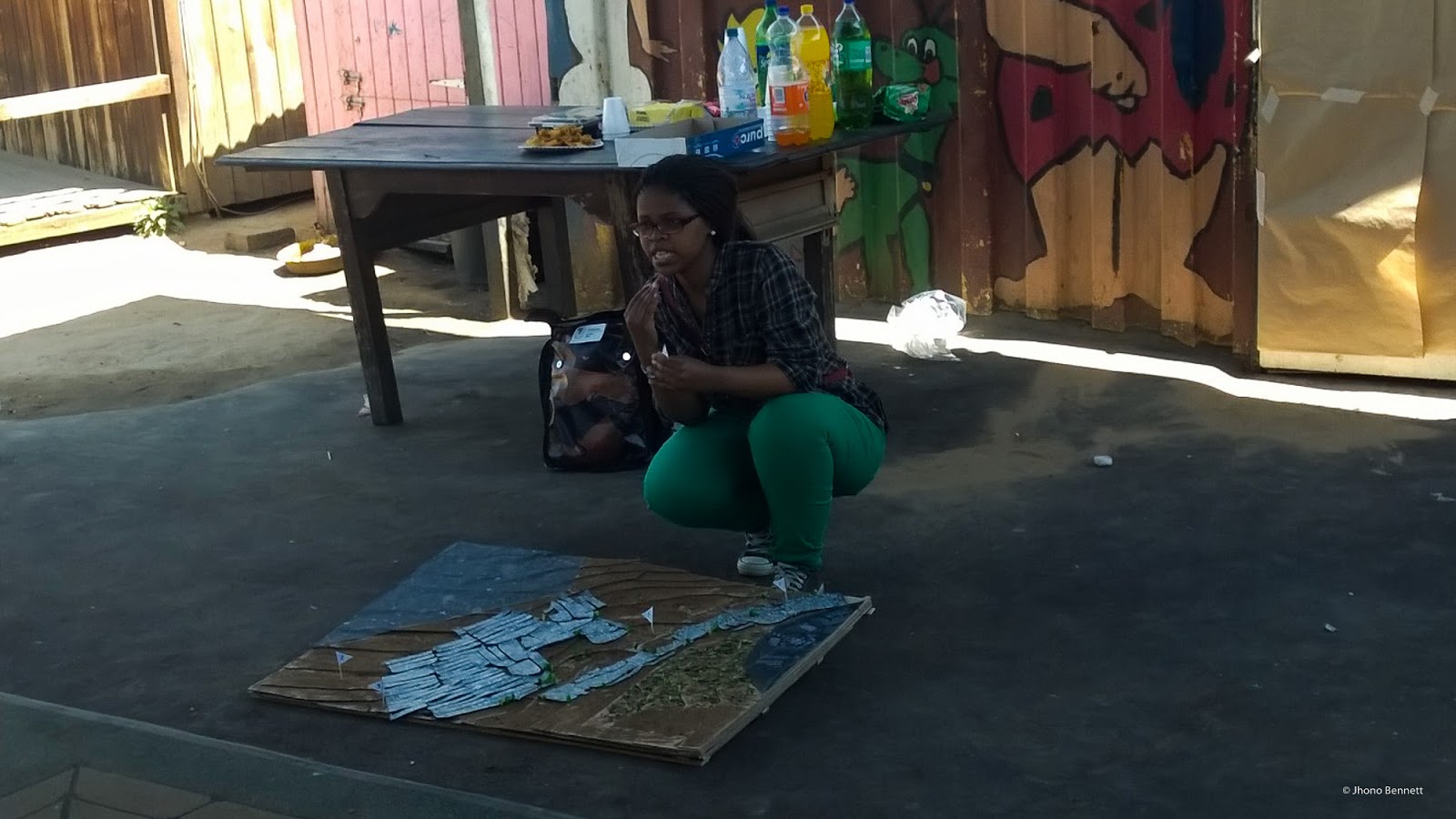
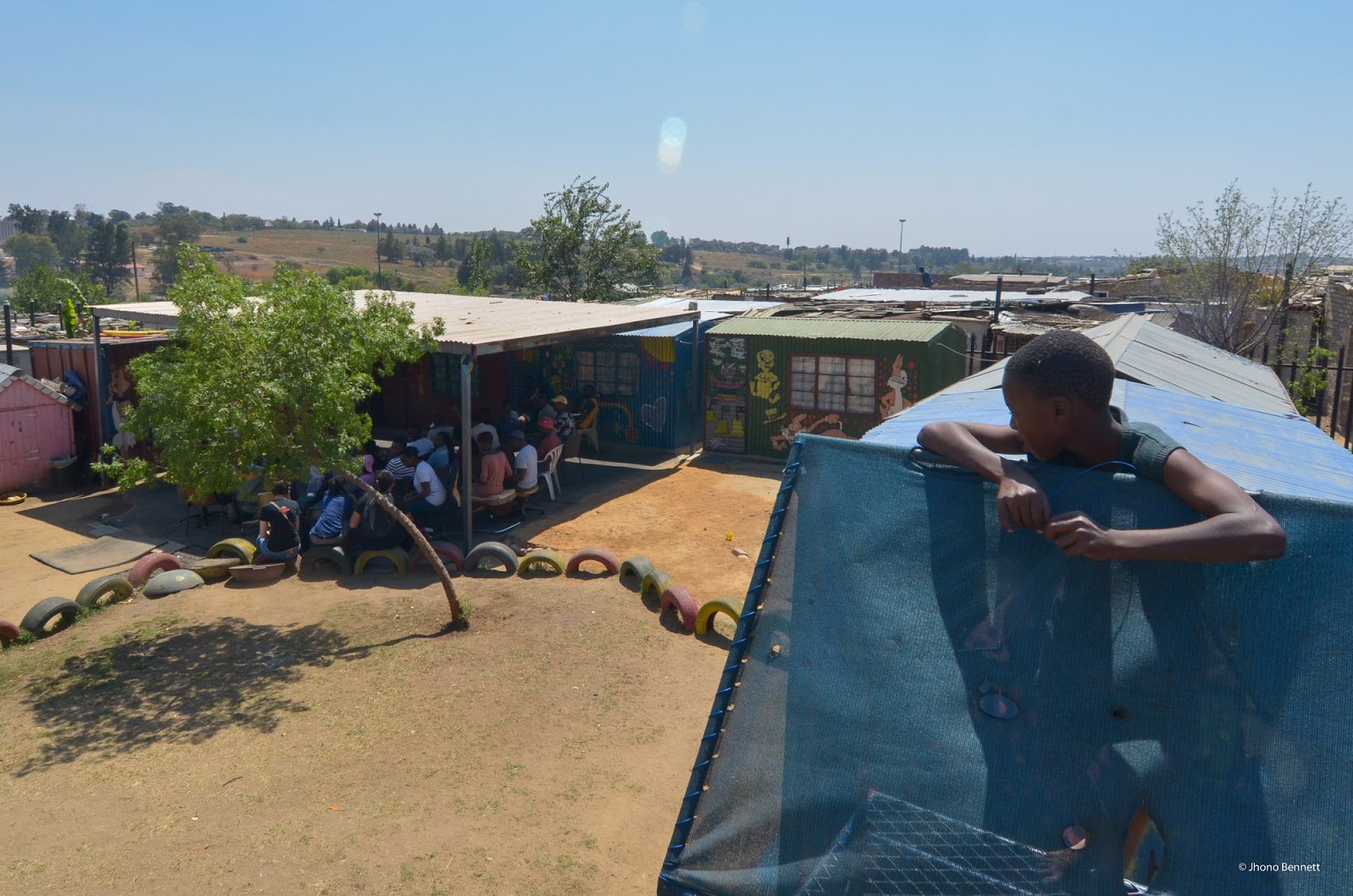
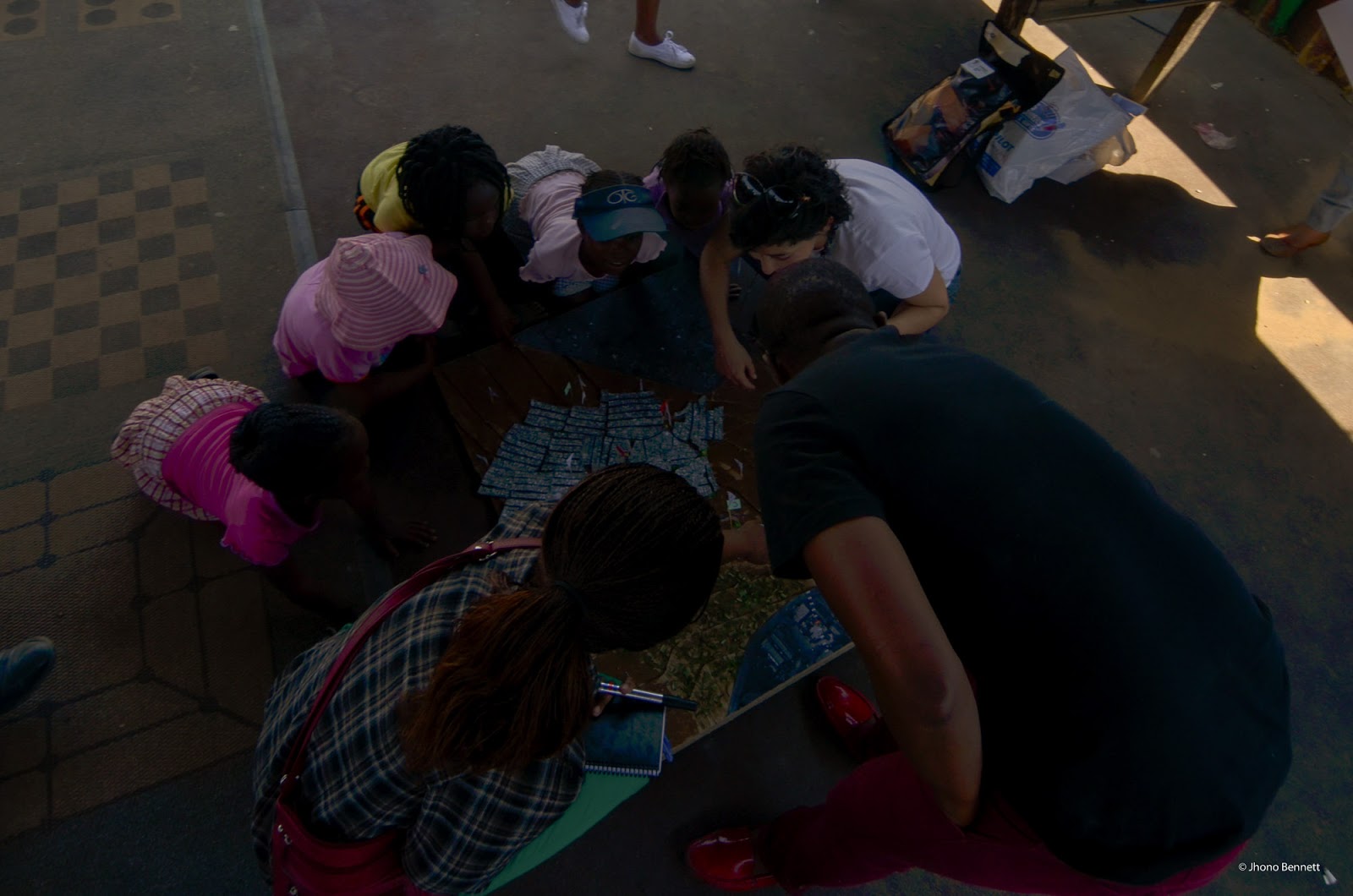
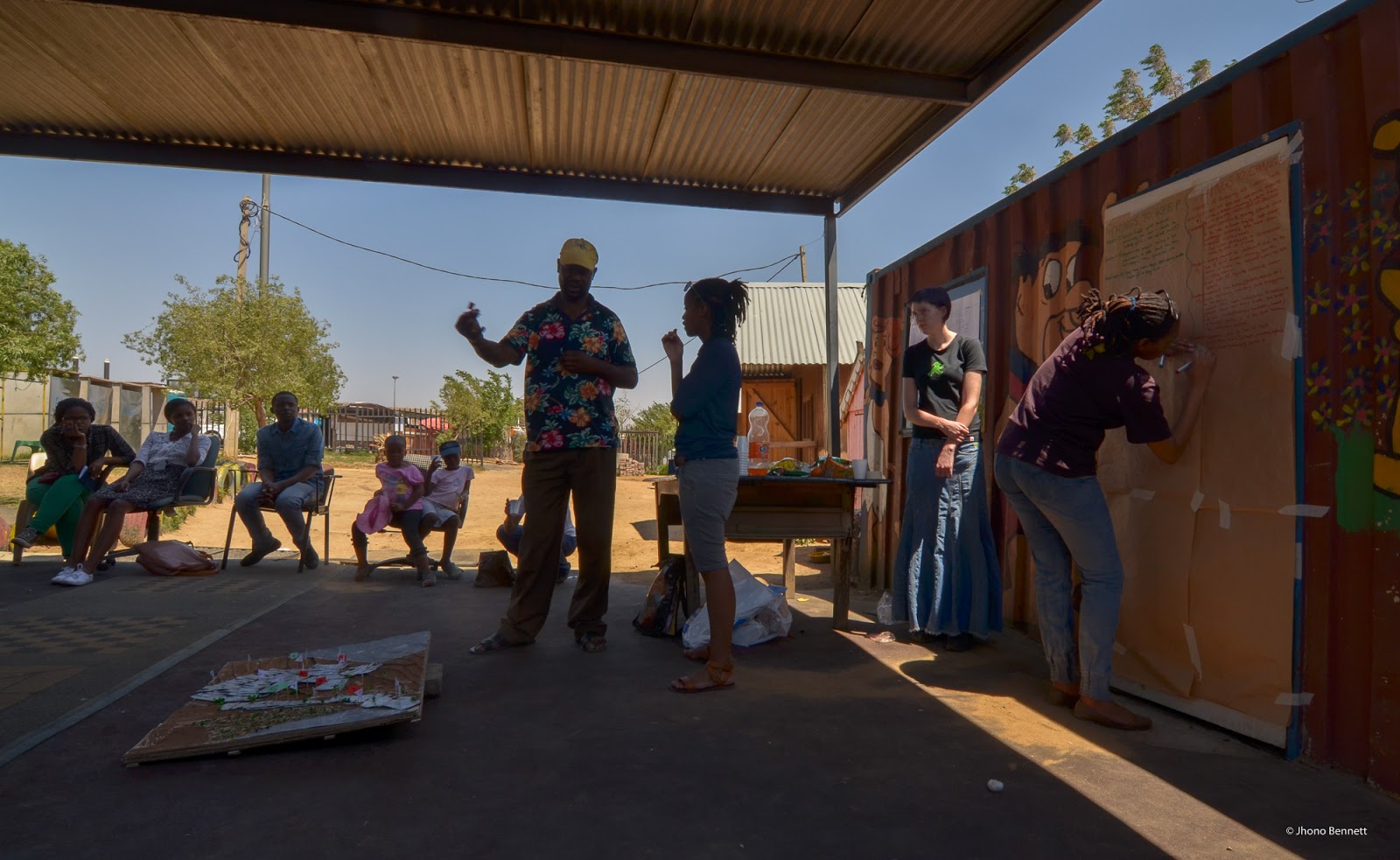
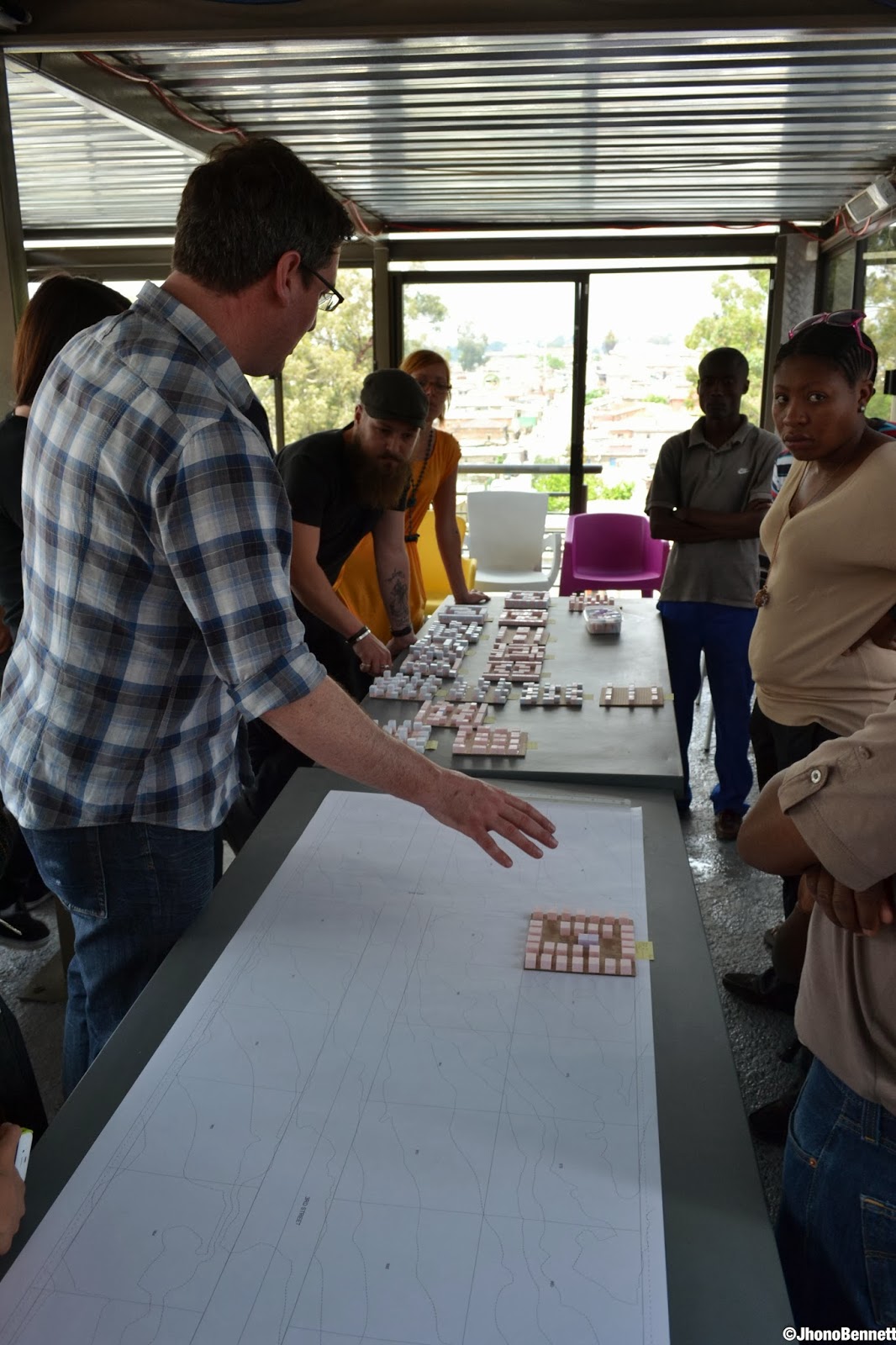
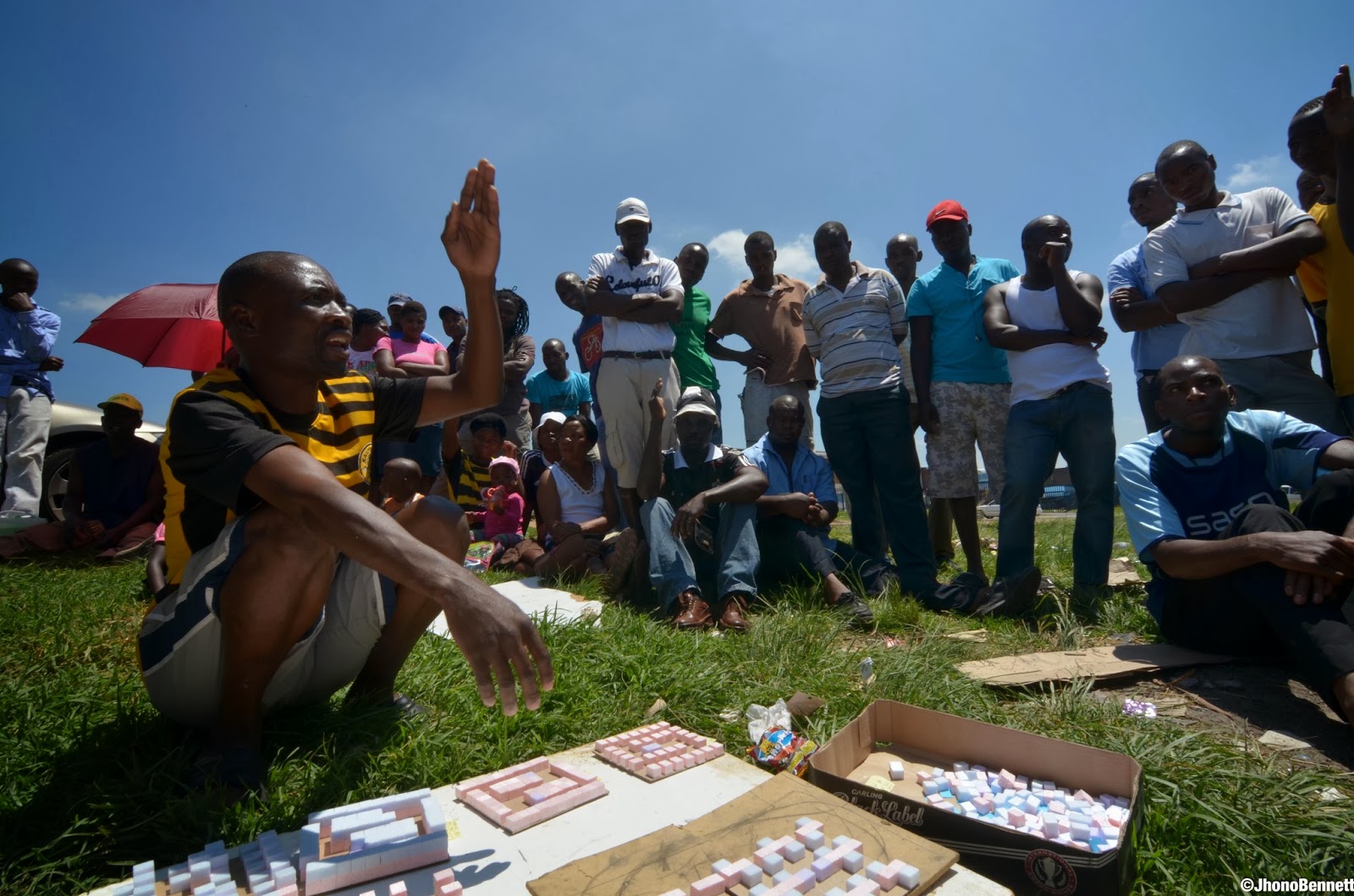
A scaled model was developed and used in a critical exercise to determine the collective aspirations and values held by the various community based organisations.
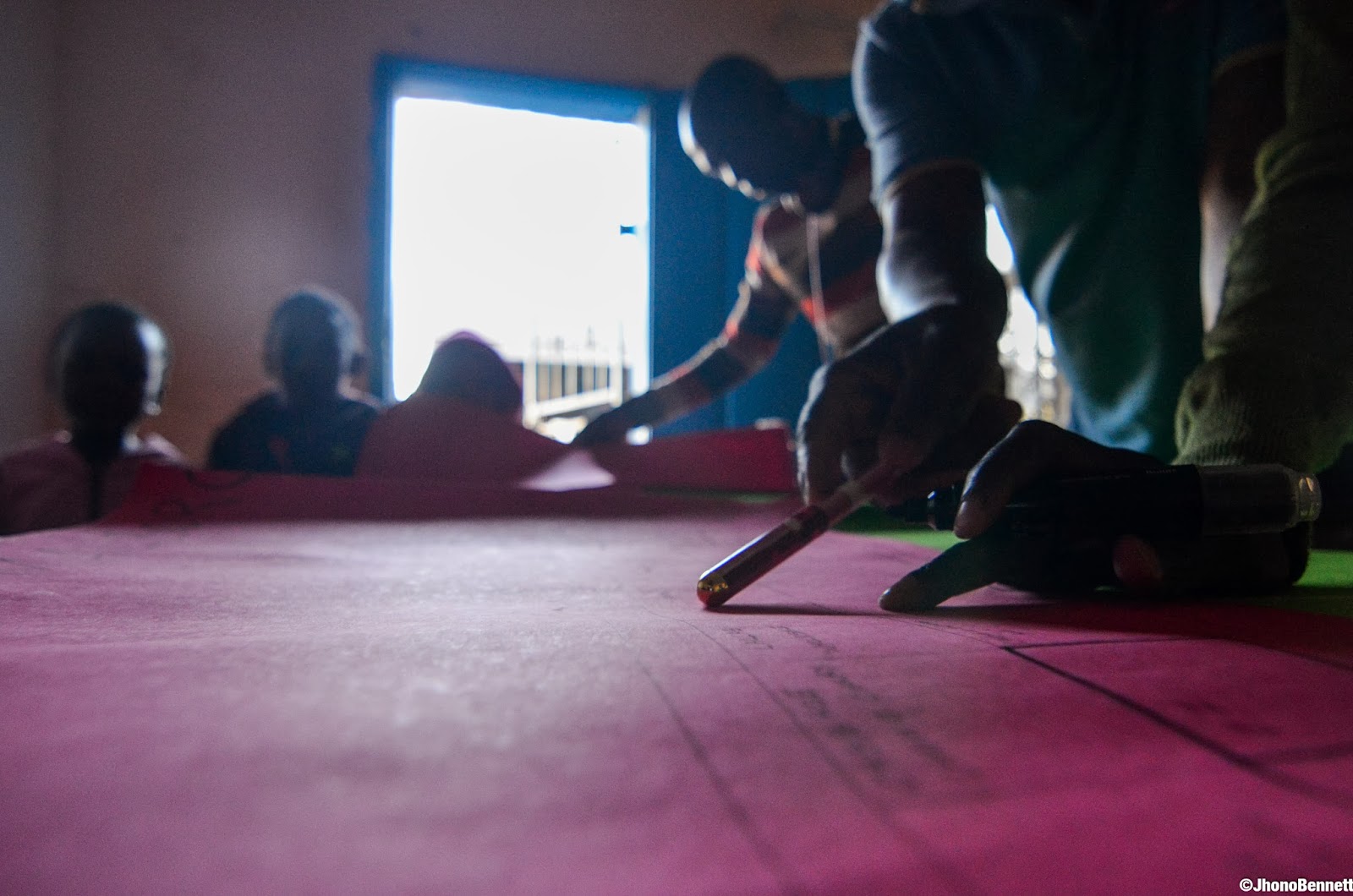
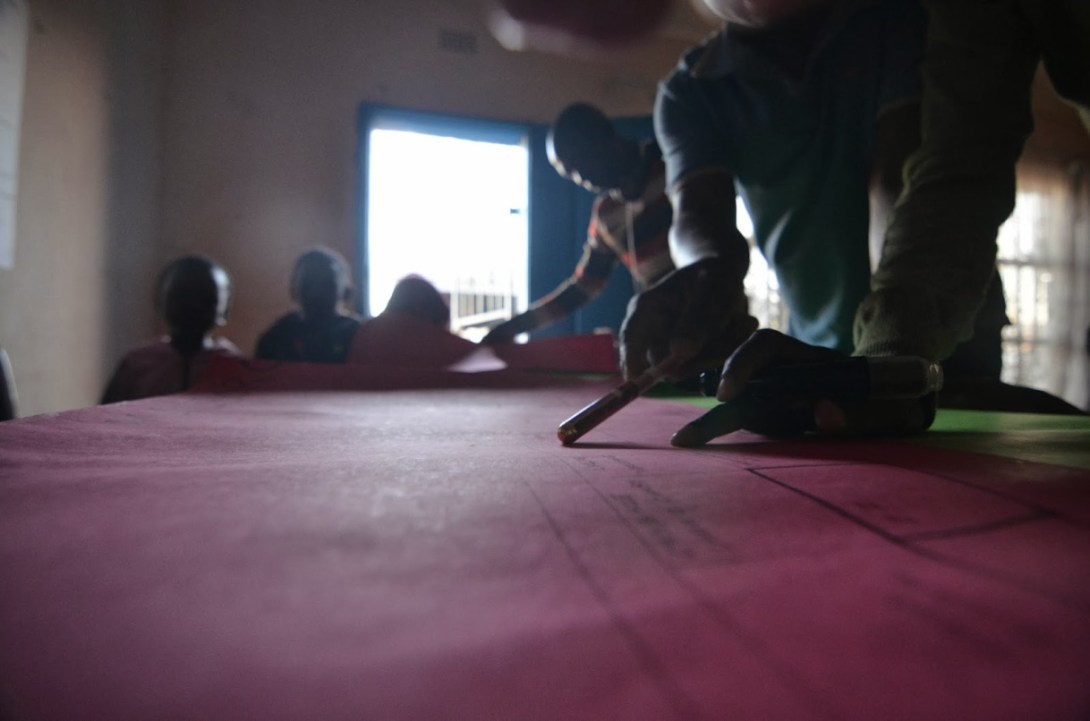
The exercise was held at a local creche and students worked closely under the guidance of Costanza and myself.
Residents surrounding the the creche were encouraged to attend by the students.
The planning students conducted the participatory engagement and crossed many langauge and social barriers through the exercise.
Through the process, the values and findings were carefully collected, and shared with the participants and added to the ongoing research and engagement being conducted through Wits.
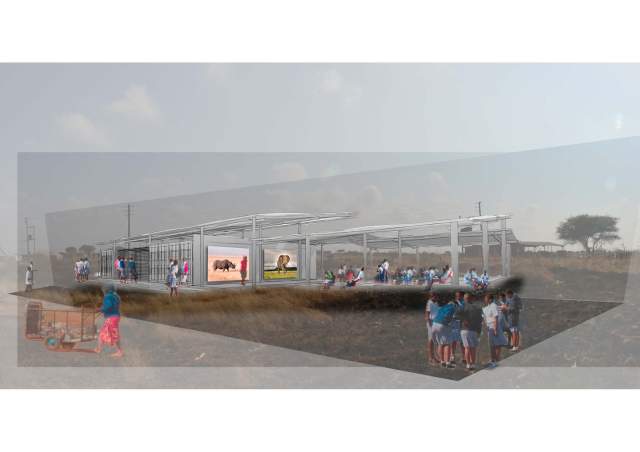
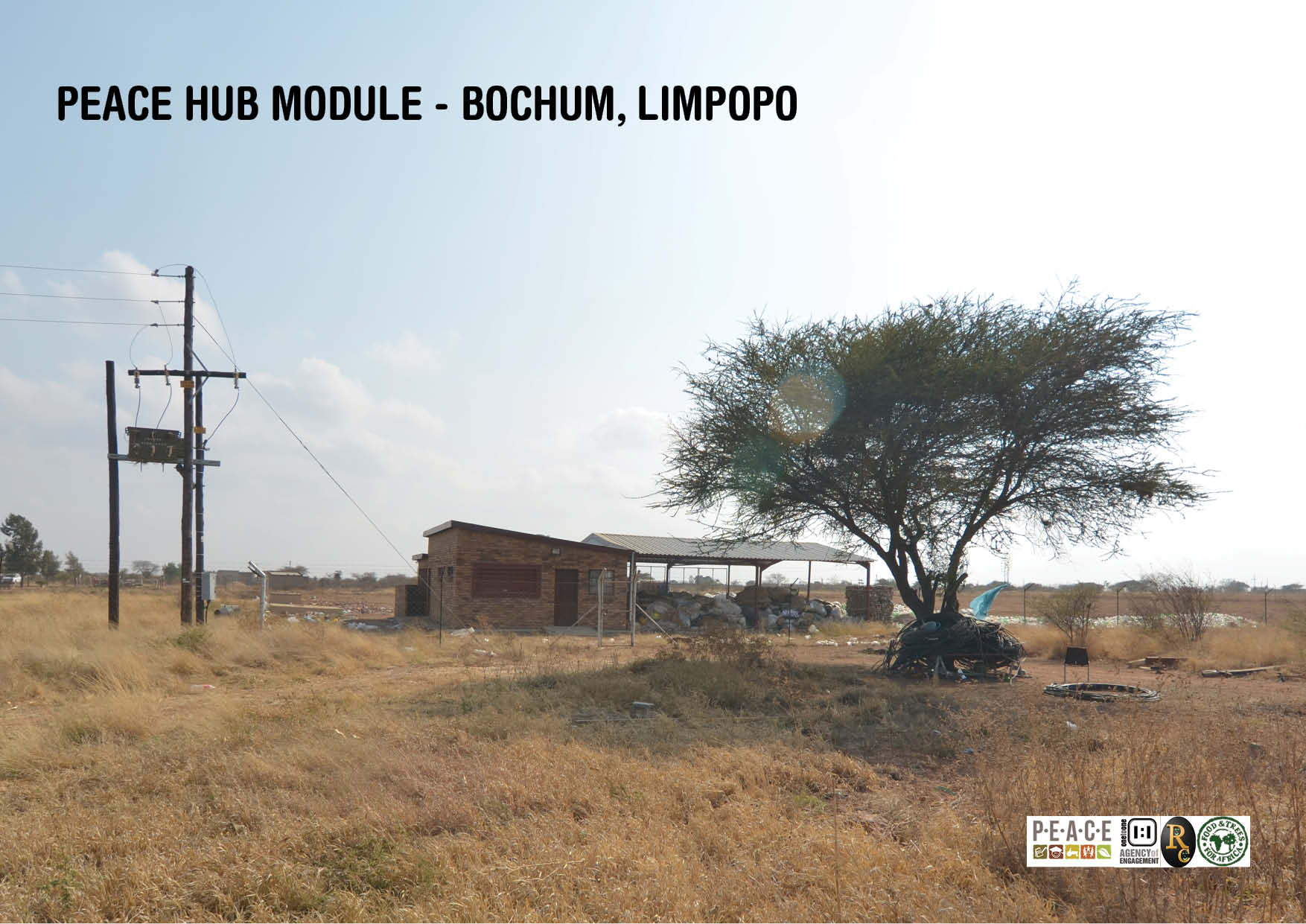
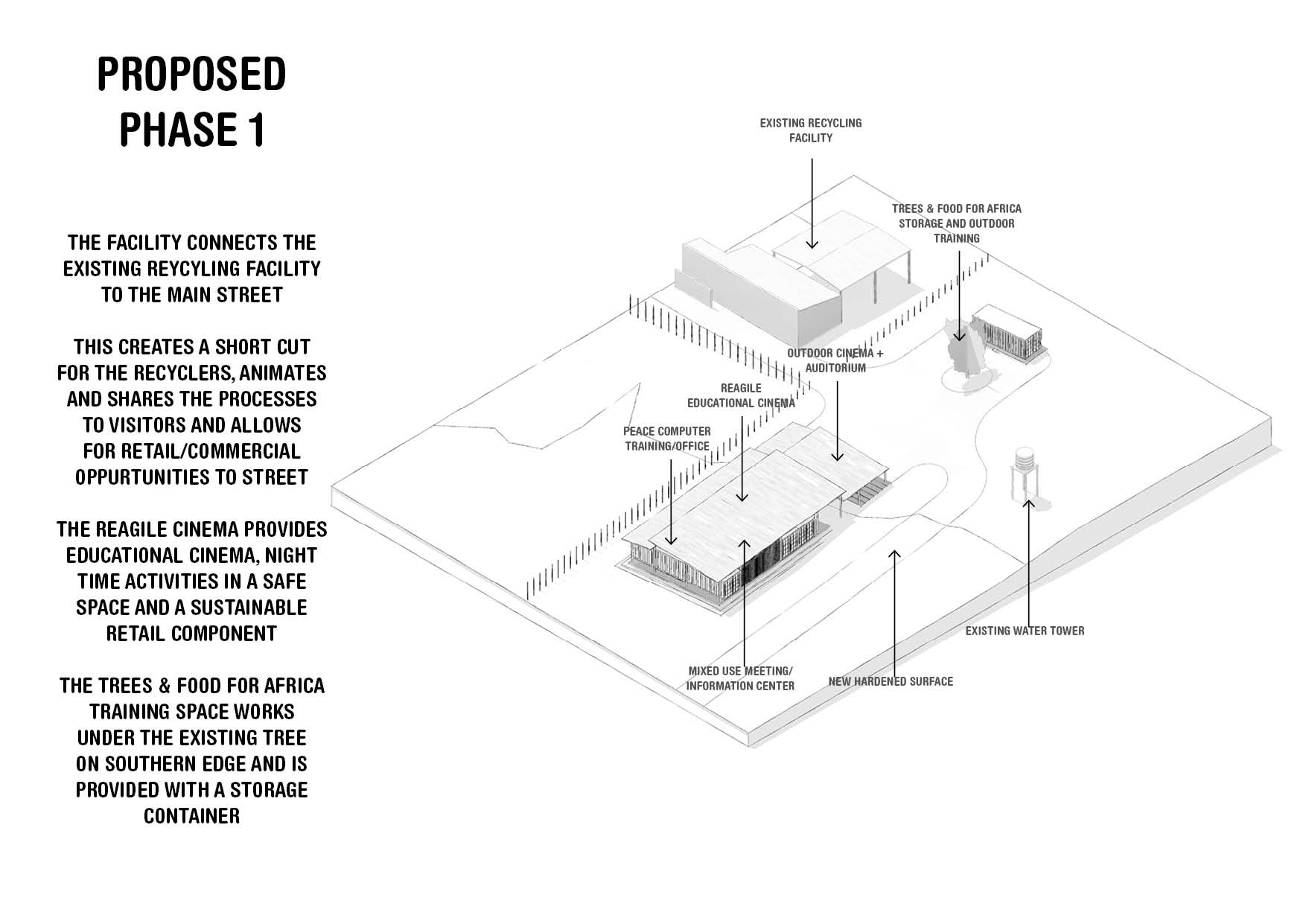
Through 1to1 I was commissioned by the PEACE Foundation to design a multi-purpose rural centre that will be deployed to tactical areas across northern South Africa. These PEACE Centres will be used to support various NGO’s and institutional operations that work with and for the PEACE Foundation.
The prototype centre has been designed to support an existing waste management facility in Senwabarwana (Bochum), Limpopo. This centre’s main activity is through educational training around computer literacy and environmental awareness.
In 2014, we (Eric Wright, Claudia Morgado & myself) as a team of architects, lectures and urban researchers assembled a collective architecture/urbanism/landscape laboratory which closely engages with complex urban conditions of South African. We termed this collective Aformal terrain (AT).
Our first experimentation with this collective was through a critical studio with the leadership of Denver, Informal Settlement in Johannesburg CBD through the studioATdenver. This project was established to take course over a period of 3-5 years and support s much larger development process that Denver is already a part of in regard to the Department of Human Settlement’s work in Gauteng and South Africa. In addition AT worked on a variety of projects in our defined research area:
Aformal Terrain is a collaborative research group based at the University of Johannesburg’s Faculty of Art, Design and Architecture.
Background
Aformal Terrain (AT) is a collaborative and collective architecture/urbanism/landscape group who closely engages with complex urban conditions.
AT focuses on integrating resources and skills towards promoting awareness and generating appropriate responses to the context of rapidly changing and often unstable contemporary urban phenomena.
This approach is underpinned by people-driven methodologies for engagement, research, design responses and planning strategies.
Aformality
The use of the term ‘Aformal’ frames a critical investigation (immersion) into complex spatial, social, cultural, economic and physical urban scenarios as an ‘in-between’ condition, or terrain. This direction is rooted in working with, and, within urban informal settlements with a focus on incremental in-situ upgrading and organic urbangrowth – interrogating current polarised definitions of the ‘formal’ and ‘informal’, and the often confused interpretations between legality and illegality.
Each Studio (project, exhibition, publication etc) is aimed at identifying and interconnecting multiple role-players (actors).
This occurs through an immersive, collaborative and co-produced process of engagement, establishing a platform to enable trans-disciplinary exchange and capacitation, consequently activating public, private and community joint efforts.
AT directs this purpose to three areas of action:
Teaching & Learning
To generate an awareness of varying urban conditions at multiple scales ranging from regional, through neighbourhood, to specific people groups. This action relies on trans-disciplinary collaborative exchange with the aim of leading to well-informed and achievable plans that assist and support community-led development.
An embedded intention here is to further inform current professionals, settlement residents, local/city officials and current students (future professionals) about the nuances and complexities of participatory processes through immersive, real life projects (studios).
Awareness & Knowledge
Strongly tied to teaching-and-learning processes this action is underpinned by the co-production of knowledge and information through collective and mutual exchanges. This process identifies two main sources towards the production of relevant and useful knowledge:
Existing Data – sourcing, analyzing and sharing current data about the specific area of work/study. This includes; local upgrade plans (at city level), National upgrade plans (NUSP and the like), Global references and tools (investigating ‘Global South’ relationships and networks).
Local Knowledge – identifying collective community plans and objectives through discussions and exchange with local residents. This process aims to build on local knowledge with the aim of drawing connections between bottom-up and top-down processes.
Real Projects
AT intends to cultivate long-term sustainable relationships with the networks generated through the teaching-and-learning studios.
Real Projects refers to this intention – to identify potential roles for professionals and spatial practitioners through on-the-ground collaborative processes – assisting community action plans and governmental upgrade plans through providing relevant spatial and design services fitted to contexts of informal settlements.
AT Team: Eric Wright (BOOM Architects), Claudia Morgado (BOOM Architects), Jhono Bennett (1to1 – Agency of Engagement), Stephen Hoffe (Build A Future), Katrine Lategan (ARUP),
AT Collaborators: Tyler B Murphy (Sins of Style), Tuliza Sindi (BRN WSH), Jabu Makhubu (UJ Lecturer), Blanca Calvo (CORC), Motebang Matsela (CORC), Gloria Pavita (UJ Student), Taylor Holloway (1to1 – Agency of Engagement), Phil Astley (UCL)
South African Shack Dwellers Alliance: Sandra Van Rensburg, Rosy Mashimbye, Maureen Sikepo, Dumisani Mathebula
Local War Councillors: Clnr Neuren, Clnr Simelane
Critical Friends: Simon Sizwe Mason (City of Joburg – Management), Moabi Pekone (City of Joburg – Region F: Housing), Nicolette Pingo (Johannesburg Development Agency), Monty Narsoo (NUSP)
University of Johannesburg Students: [2014] Ayanda Madi, Daniele Cronje, Jade Botes, Jamela Mkansi, Martin Jones, Mitchel Thirwell, Moeketsi Phori, Mulalo Mafela, Nathan Abrahams, Lucille Jacobs, Wandile Bongwa Mahlanga, Gareth How, Mohau Moidi, Brian Maila, Victor Martins, Ashish Nathoo, Alwyn-Jay Pretorius, Musa Mathe, Joana Ferro, Dewald le Roux, Crystal Francis, Melissa Brandt,Vikash Mithal, Tlali Nyareli, Sibusiso Lwandle, Pierre Perrault, Kerry Trebble, Isabella da Rocha, Megan Wilson, Wandile Mkhwanazi, Simone Pretorius, Siphosezwe Mahlangu, Thabang Semenya, Mohammed R Suliman, Travis Lee, Mfundo Magongo, Julian Almond, Aisha Balde, Rudelle Bezuidenhout, Kgaogelo Mashego, Karabelo Mlangeni, Binaica Morar, Kholokazi Ngoma, Ruben Smit, Jessica Rousseau, Kagiso Teke, Kyle Blake, Jaco Jonker, Maruscha Govenden, Palesa Khumalo, Ricardo De Sousa, Armand Barnard, Kagiso Bokaba, Nyasha Chirinda, Yusuf Dadabaay, Rosalie Ferreira, Lance Ho Hip, Tebogo Ntsoane, Thabo Ranaka, Mandy Shindler, Roland Britz, Llenette Jones, Lindani Langa, Tebogo Madito, Kashiya Mbinjama , Thabang Montle, Carol Phophi, Roberto Pinheiro, Leme Swanepoel, Nicholas Abrahams, Lerato Bothloko, Sanjay Jeevan, Tebogo Kgatla, Irena Konstantinova, Morena Mahlare, Tebogo Mokgwetsane, Njabulo Ndaba, Joshua Sampson, Reinhard Van Niekerk
[2015] Allen N, Da Rocha I, Erasmus C, Gama J, Jamieson R, Kubayi T, Mabaso M, Makutu N, Mamba S, Mantle W, Mokgwetsane T, Molekoa K, Mothoagae O, Msiska A, Musehane K, Naicker S, Ncube T, Ramos D, Samsodien C, Thirlwell M, Trebble K, Tshivhase M, Vasconcelos T, Nkoana M, Moutloatse L, Adu Agyei D, Behane M, Botlhoko L, Carstens G, Chokoe M, Dekker A, Di bon J, Fourie B, George R, Hollis K, Jama A, Madi A, Makofane T, Malanda J, Mashinini N, Mayes J, Mlambo S, Mlangeni K, Paiva E, Perrault P, Phaladi K, Russwurm J, Saloojee Y, Suliman M, Wilmans M, Tsheoga M, Gono T, Carvalho M, Dart T, Ebrahim F, Greeff M, Isia F, Knobloch A, Makhubele N, Masango B, Mazwi N, Mntambo W, Moore S, Murakata P, Mvakade Z, Ngobeni V, Sikepe M, Sithole S, Tatham P, Thomas N, Van Rooyen R, Zwane J, Machaka M, Mahlangu R
The core underpinnings, purpose and relevance of AT stems from and builds on the development of,and involvement in,these preceding studios
[i]informalStudio: Ruimsig (http://2610south.co.za/gallery24.php) Teaching staff: Thorsten Deckler (principal at 26’10 south Architects), Alexander Opper (director of architecture master’s programme, UJ), Lone Poulsen (architect and urban planner at ACG Architects), Melinda Silverman (urban design theory, UJ). \Ruimsig Community: The community of the Ruimsig informal settlement, including Dan Moletsane, Dingaan Matia, the community leadership and the eight ‘community architects’: Irene Mohale, Rosalina Mphuti, Julia Mashaba, Mildred Thapeni, Albert Masibigiri, Jemina Mokoena, Watson Sibara, and Alfred Mthunzi.UJ Students: Dewald Badenhorst, Dean Boniface, Dirk Coetser, Dana Gordon, Zakeeya Kalla, Daniel Lyonga, Julian Manshon, Matthew Millar, Karabo Mokaba, Jarryd Murray, Trisha Parbhoo, Sean Pillan, Taswald Pillay, Miguel Pinto, John Saaiman, Salome Snyman.Support: Goethe-Institut South Africa has financially and logistically supported the project from its inception; Steve Topham (NUSP); Andy Bolnick (Ikhayalami); Connie Molefe (of the Roodepoort Athletics Stadium management); Max Rambau & André Mengi (CORC); Tolo Phule and Lungelo Mntambo (Delite Visual Archives Studios); Pheagane “Jakes” Maponya, Pumla Bafo & Thabo Molaba (City of Johannesburg); Lisa Ngagledla, Nomahlubi Ncoyini & Pricilla Mario (for sharing the expertise of the Sheffield Road community in Cape Town); Mzwanele Zulu (ISN, Cape Town); Thembile Majoe, Sihle Mbatha, Phiwe Makubu, Mfundisi Masithe (ISN, Gauteng); & Andisa Bidla (CoJ Informal Settlement Formalisation & Regularisation).
[ii]informalStudio: Marlboro South (http://www.informalstudio.co.za/) Teaching staff: Thorsten Deckler (principal at 26’10 south Architects),Anne Graupner (principal at 26’10 south Architects), Alexander Opper (director of architecture master’s programme, UJ), Eric Wright (3rd year lecturer, UJ), Suzette Grace (3rd year lecturer, UJ), Claudia Morgado (3rd year lecturer, UJ). Support staff (UJ): Melinda Silverman, Suzette Grace, Leon Krige, Amira Osman, Annemarie Wagener, Absalom Makhubu, Dr.Finzi SaidiMarlboro South Community: The community of the Marlboro South informal settlement, including the Marlboro Warehouse Crisis Committee (MWCC): Charles Gininda, Thapelo Mogane, August Tswai, Maluleke David, Loveson Motlapa, and the community architects: Winnie Ngubane, Queenie Nkosi, Happiness Nkosi, Khanyisile Soncgca, Fezeke, Baliswa Mahono, Khanyi Ncube, Nonthando Madondo, Thabo Masenyetse, Phili Thafeni, Karabo Mokaba, Promise Nxumalo, Agnes Lekgotla, Mapule Lekgotla, Anna Mathibedi, Melissa, Jabulani Dwiazawa,Thulie Shabalala, Wonderboy Butheklezi, Andries Tzumbezo, Asanda Magqabi, Ayanda Libala,UJ Students: Francois Mercer, Elaine Engelbrecht, Francisco Hamilton Alves, David Cloete, Rick van Heerden, Shani Fakir, Nakedi Nkoana, Lance HO Hip, Brent Proudfoot, Renee van Rooyen, Dylan Watkins with Steffen Fischer, Jolien Dreyer, Eugene Ncube, Naeem Kooreyshi, Katrin Tenim, Martin Bam, Philip van As, Debbie Pienaar ,Laura Strydom, Katty Harris, Dewald Coetzer, Jurgen Rubirske, Lemohang Sekhoto, Shyam Patel, Joseph Matebane, Ashlea Weaver, Calvin Copeling, Basil Moutsatsos, Nhlamulo Ngobeni, Samantha Trask, Jaco Jonker, Lungelo Zulu, Alex Verissmo, Grant Woodward, Jaques Wienekus, Motebang Matselela, Sachin Mistry, Caitlin Bell, Robin Theobald, Keron Muller, Michelle Jordaan, Thabiso Siwana, Gareth Jones, Marc Sherrat, Glen Jordan, Lucille Jacobs, Tlale Masiu, Hanle van HuyssteenSupport: Goethe Institut South Africa has financially and logistically supported the project from its inception; Steve Topham (NUSP); Andy Bolnick & Ryan Bosworth (iKhayalami); Sandra Van Rensburg, Andre Mengi, Jhono Bennett & Jacqueline Cuyler (CORC); Tolo Phule and Lungelo Mntambo (Delite Visual Archives Studios); South African Shack Dwellers International Alliance (SDI): Rose Molokoane (FEDUP), Patrick Magebhula (ISN)
This project was initiated by the PublicActs/Johannesburg (www.publicacts.org) programme, conceived and curated by Katharina Rohde & Thireshen Govender, under interventions (Act #5 and Act #6) of the greater PublicActs/Johannesburg Project:
Mai Mai Market in the morning (Image: Jhono Bennett)
“Focusing on new and emerging public spaces PublicActs/Johannesburg aims to investigate and showcase its many different manifestations and potentials.
Producing a catalogue of urban public conditions based on criteria that respond to the contemporary reality of our city and represent its diverse geographies, six sites are identified for their critical value. These meander between the New Imaginaries, the Everyday, the Grand and Spectacular, the Ephemeral and Politics, Power and Protest.
Acknowledging different interpretations of publicness, six creative collaborators alongside local actors are invited to produce a series of actions, site-specific interactions or performances in defined sites, to provoke discussion and the imagination around future public spaces in Johannesburg.
The project culminates into 24hour choreographed Public Acts which invites spectators to playfully engage and interact with the creative interpretations on site. Additionally to the artistic outputs, the festival program will engage local stakeholders and a greater public to critically reflect and comment on the projects findings, speculations and provocations. This will allow for thought about the conditions and production of public space in Johannesburg
With the research and experiences generated we aim to challenge urban actors and decision-makers to engage and construct public spaces in Johannesburg in innovative and democratic ways. Our findings and creative outputs shall function as a guide on how to approach, use, misuse, appropriate and imagine public space in African cities”. (text taken from www.publicacts.org)
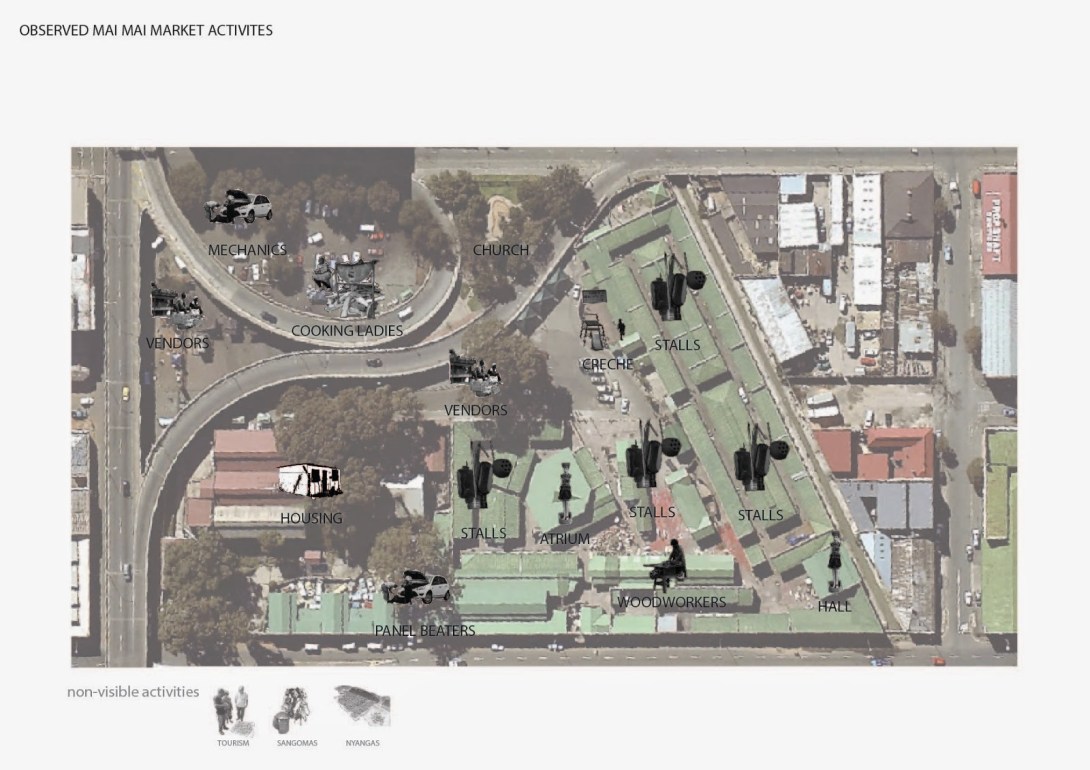
The Kwa-Mai Mai socio-spatial action research intervention was the 6 week culmination of a critical process of engagement with the Kwa-Mai Mai Committee and the Mai Mai users. This article explains the process undertaken by those involved and summarises the experience highlighting the key findings and discoveries along the way.
Through a series of discussions, informal workshops and mapping exercises fellow PublicActs provacateurs, Liliania Transplantor and WayWord Sun of AMBush Gardening Collective and myself began investigating the complex and layered qualities of the socio-spatial dynamic of the Kwa-Mai Mai Bazaar (referred to locally as the Mai Mai Market and the entire area as Mai Mai) in Johannesburg’s Central Business District.
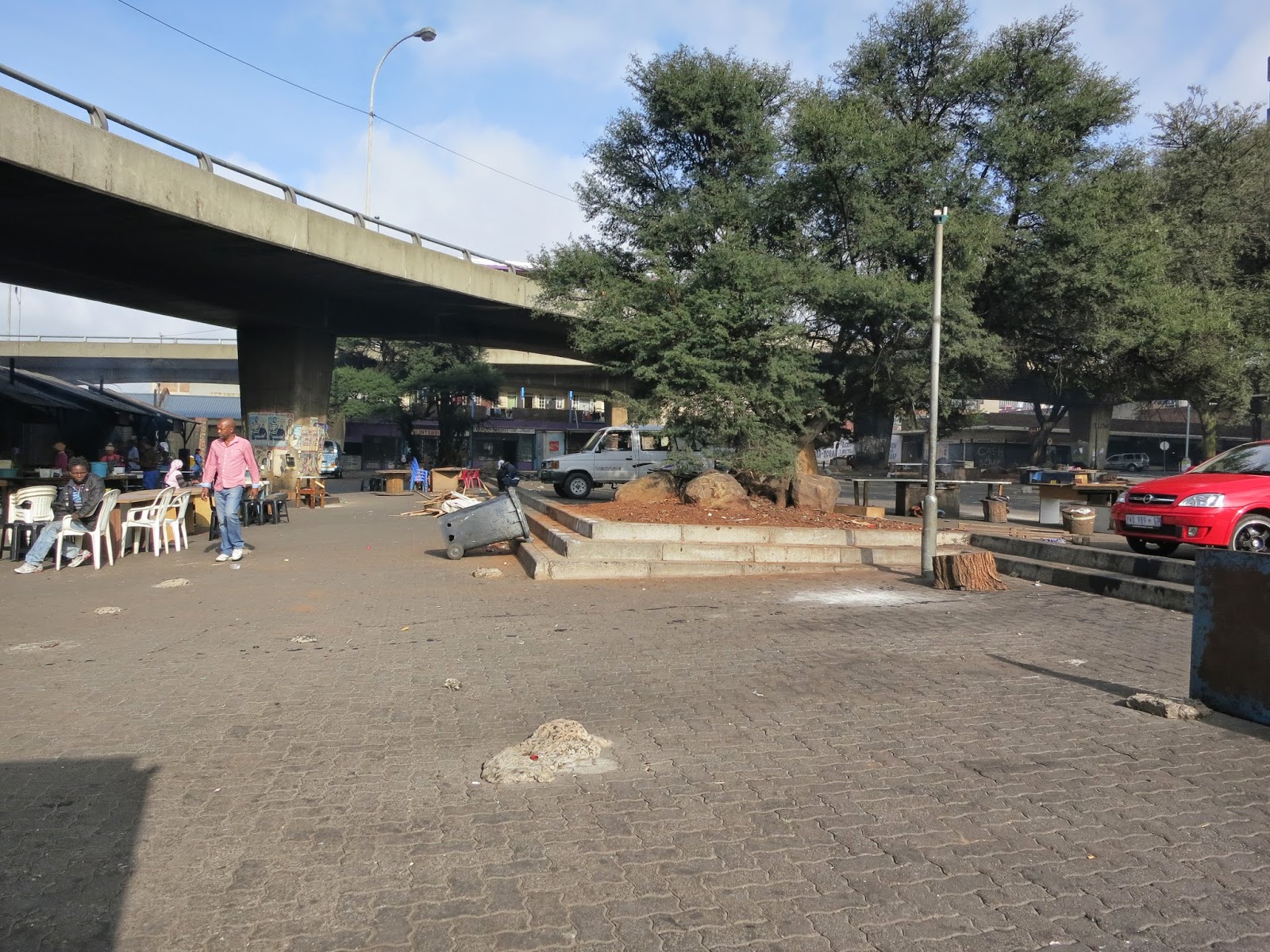
What was amazing was not in the fact that they were taken, but that as the day progressed the chairs were slowly returned to the site as the extended leadership from within the Mai Mai Market exercised its control over the entire Mai Mai site, and through co-ordinated movements all chairs were returned back to their original placement.
Mai Mai Food Court before the Act began – with chairs re-appropriated (Image: Jhono Bennett)
Mai Mai Food Court before the Act began – as the chairs began returning (Image: Jhono Bennett)
Mai Mai Food Court before the Act began – as the chairs began returning (Image: Jhono Bennett)
Mai Mai Food Court before the Act began – all chairs returned (Image: Jhono Bennett)
This finding eluded to a much more complex and organised form of leadership and governance that exists in Mai Mai. Simultaneously, more intricate territories amongst the food court users were revealed as the chairs became a symbol of territorial control as users claimed ownership over various arrangements.
Findings
While the experiment did not meet the original aim of constructively provoking forms of seating and gathering it revealed many of the intangible connections and controls that allow the Mai Mai Food Court to work as a highly successful and productive democratic public space in appearance, but a deeply territorialised and governed space in the public realm.
This initial engagement was the first step in a much longer envisioned engagement from both 1to1 – Agency of Engagement and AMbush Gardening Collective with the Kwa-Mai Mai Committee and its users in their own goals of developing Mai Mai into their collective vision.
What the process revealed to us, and our project partners, was how crucial the delicate and negotiated process of trust building that is required through critical engagement to even begin to uncover important social and spatial relationships areas such as the Mai Mai Market.
More so, how important it is for city planners and spatial practitioners to understand that not all systems reveal themselves at face value and often in such complex and rich public spaces, one needs to more engaged and critical when interrogating public space towards an understanding or an intervention.
This is essentially a photo essay of the events from my perspective, with supplemented referenced links from on-line sources, that depicts my involvement in the MWCC’s processes during this period.
The MWCC had been established after a fall out with various civil and local authority groups who had negotiated for the residents on their behalf to their right to occupy the warehouses.
The MWCC working with CORC technical member
As Socio-Technical support a large part of our our job consists of being in leadership meetings.
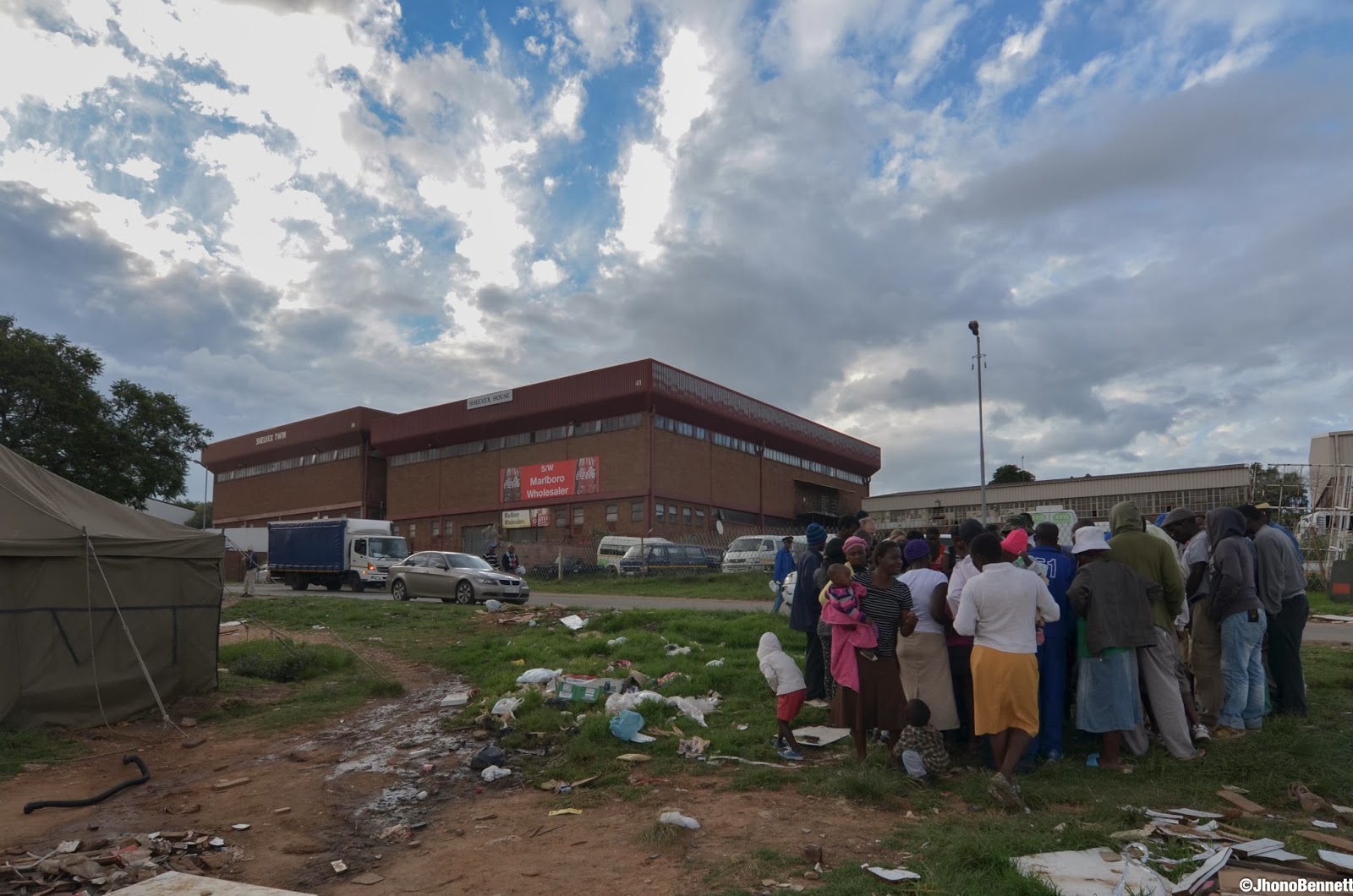
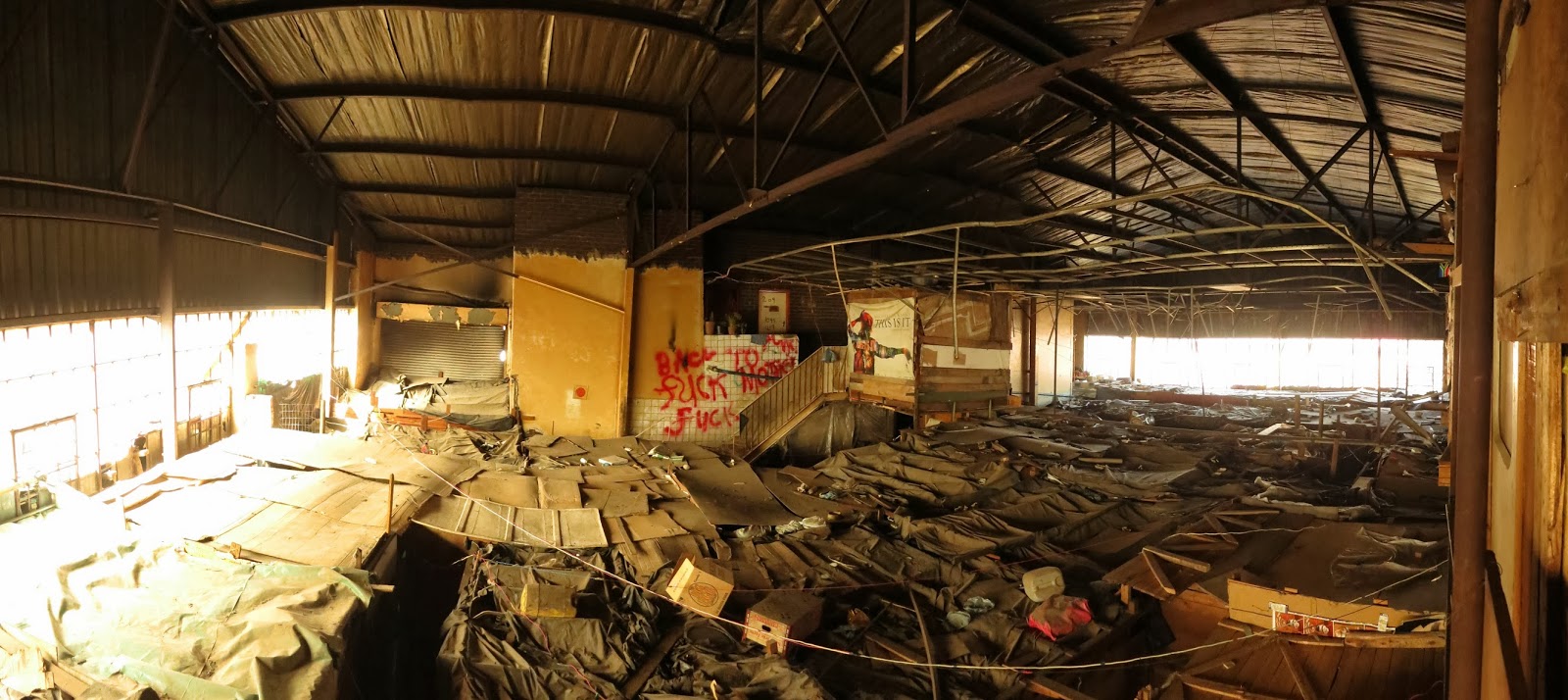
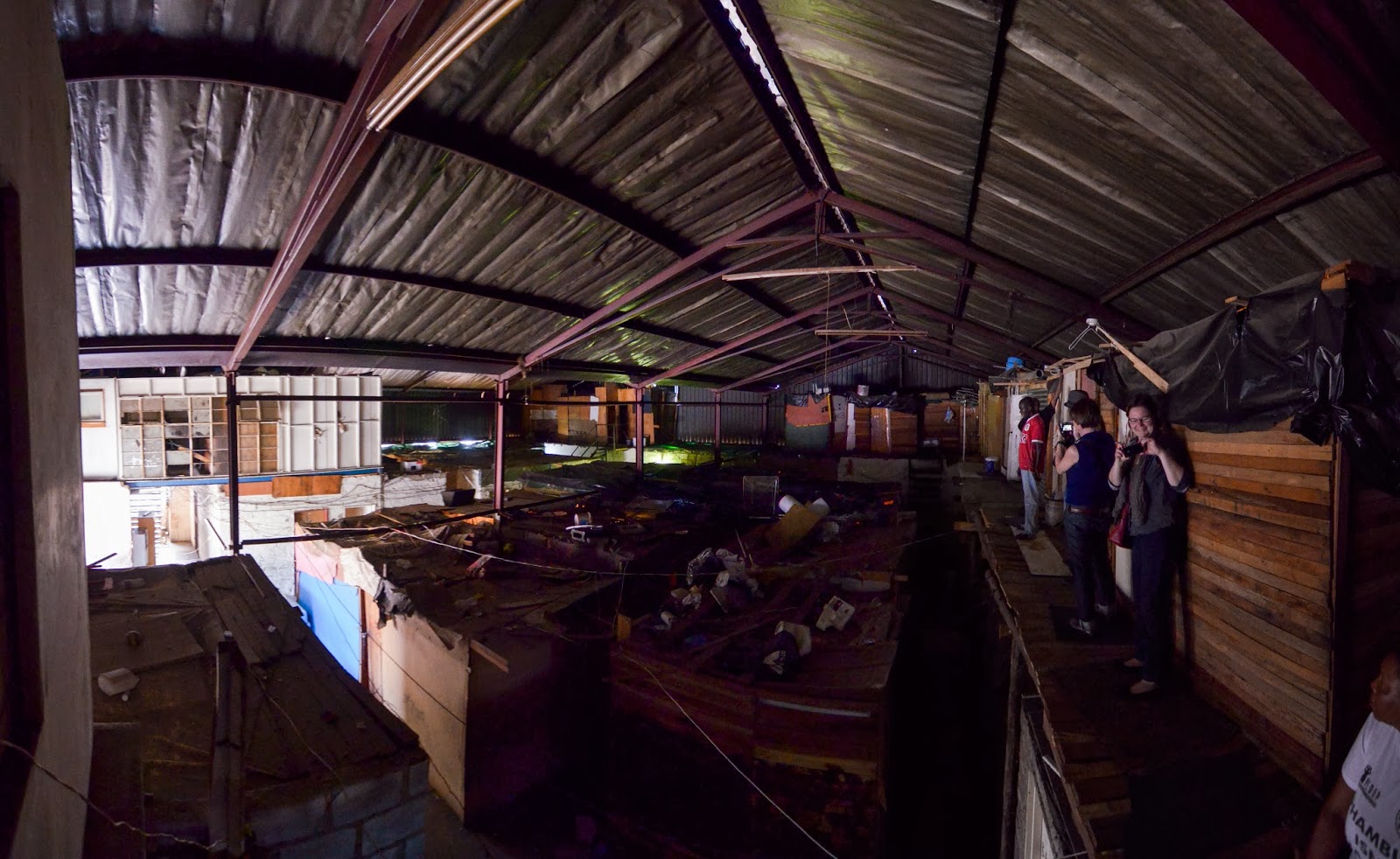
In total the MWCC represented 53 occupied warehouse who spatially had re-furbished factories ‘abandoned’ during the violent periods in Marlboro South during the early 1990’s.
Some warehouse were occupied with minimal changes
Other warehouse were completely adapted internally
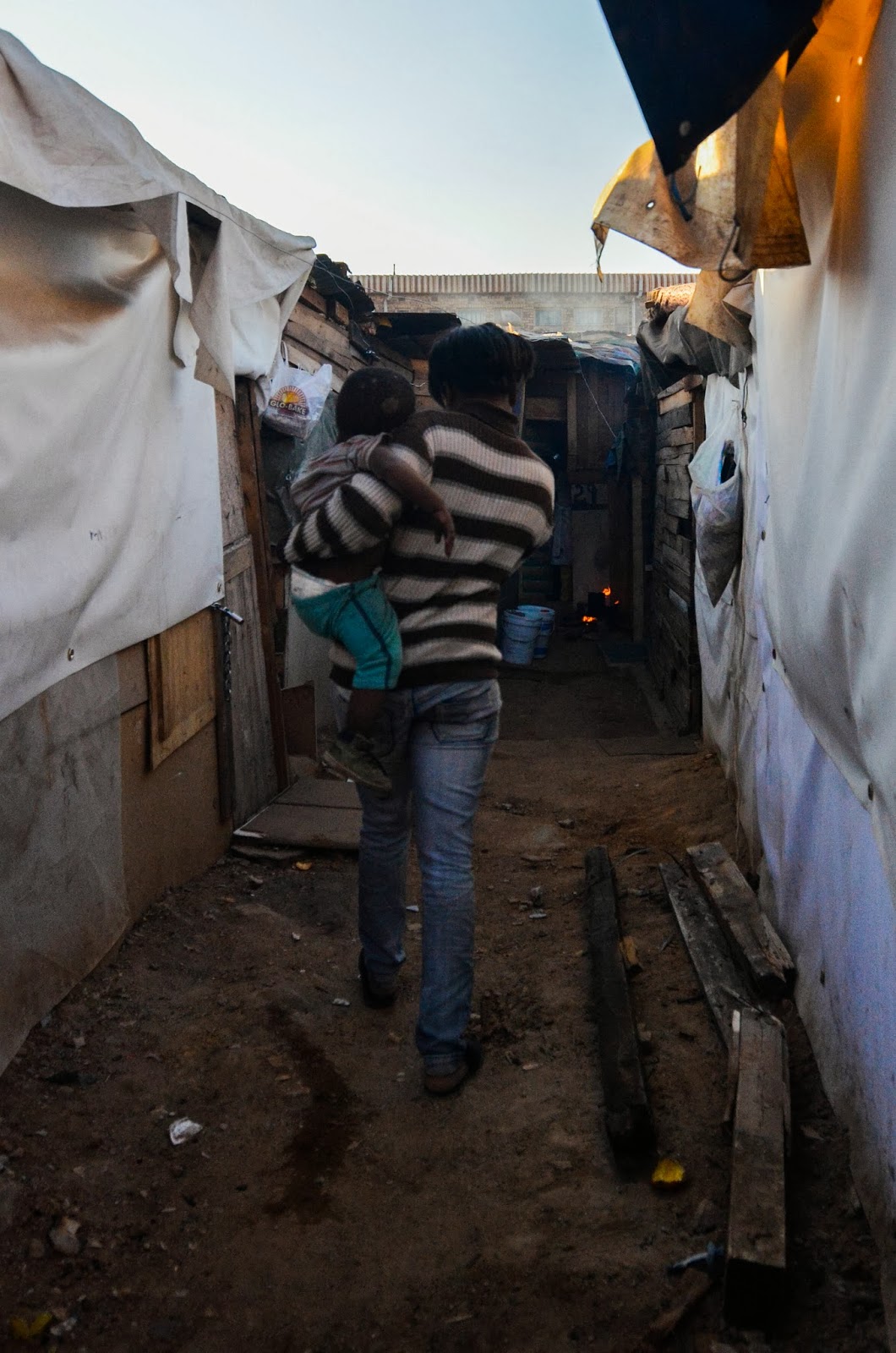
While other had their internal delivery yards converted into housing.
At the time, I had just taken over from a former colleague, Jacqueline Cuyler, who had recently completed a temporary housing solution for residents under the MWCC while working for CORC in response to an earlier illegal eviction with the MWCC weeks before.
These temporary houses were part of the SASDI’s Community Upgrade Finance Facility (CUFF) project process, and were intended to house MWCC members while the leadership engaged the powers that be.
The idea of what is considered temporary emerged many times during my work in Marlboro South. These structures were erected in less than 3 days and were later dissembled in a shorter time, but are considered permanent by most institutional bodies for very obscure reasons.
What is interesting is which elements of the houses are considered crucial such as the stoep’s – an important social space – that doubles as structural stabilisation and a weather foot. As well as numbers and entrance features when built at this speed and for this purpose.
Retail and other business opportunities are quickly seized upon.
My first project was to help in a savings group that was looking to install a new toilet through the CUFF process. This involved assisting with the design, costing and facilitation through the various social processes that the SASDI work through.
Intern on site in Marlboro South
During this time I held a dual position between the University of Johannesburg (UJ) as a part time lecturer and researcher while working at the SASDI, and as part of my interest in developing and sharing socio-technical spatial design skills (1:1 Student League) I would bring interested students to various meetings to expose them to these complex spaces.
The (in)formal studio undertook their first project in 2011 in Ruimsig, working with SASDI members, and sought to continue the project in 2012 in Marlboro South with the MWCC, and I was charged by the NGO with facilitating the relationship.
UJ lecturer Alex Opper and Architect Thorsten Deckler walk through Marlboro South with ISN memeber Albert Masibigiri
The challenge in developing the brief, was to satisfy the academic nature of a Architectural investigation into a complex socio-political environment with the crucial needs of such residents in their potentially un-spatial requirements.
My dual position between UJand theSASDI allowed me to play an important role in facilitating the needs of the MWCC while assisting in the development of the brief forUJ’s Architecture Department.
What emerged was an incrementally structured brief that broke down the site of investigation and design into 3 scales of research and intervention that eventually culminate into a potential architectural product that was the sum of an intense process of engagement with and for residents and the MWCC members.
The studio was then broken into sections of engagement on a weekly basis from large scale land use analysis to participative mapping site scale mapping all the way down to life-world analysis of individual residents of Marlboro South warehouses. This was done in mixed teams of post graduate and undergraduate students and Marlboro residents under the guidance of the SASDI Alliance.
Extract from UJ brief (University of Johannesburg, 2012 Brief Hand Out)
The studio was arranged with weekly meetings in both the settlement site and the University studio on campus, this was done in order to share the spatial realities of both participating groups.
Members of ISN and MWCC arriving at UJ
UJ Students arriving in Marlboro South
Mapping and measuring exercises at UJ with ISN, MWCC and students
Mapping and measuring research in Marlboro South with ISN, MWCC and students
Mapping and measuring exercises at UJ with ISN, MWCC and students
Mapping and measuring research in Marlboro South with ISN, MWCC and students
Mapping and measuring exercises at UJ with ISN, MWCC and students
Mapping and measuring research in Marlboro South with ISN, MWCC and students
Mapping and measuring research in Marlboro South with ISN, MWCC and students
Mapping and measuring exercises at UJ with ISN, MWCC and students
Mapping and measuring research in Marlboro South with ISN, MWCC and students
Mapping and measuring exercises at UJ with ISN, MWCC and students
Mapping and measuring research in Marlboro South with ISN, MWCC and students
Mapping and measuring exercises at UJ with ISN, MWCC and students
Mapping and measuring research in Marlboro South with ISN, MWCC and students
Students were then divided into smaller groups and asked to determine site specific design intervention solutions at a framework level and present this back to the MWCC and the residents for feedback in the scheduled workshop meetings. The groups would then begin to propose possible solutions within this framework from a small scale level of intervention to possible larger ones.
Student presentations in Marlboro South occupied Warehouses
Student presentations in Marlboro South occupied Warehouses
UJ Student presentation at UJ Architecture Department
Student presentations in Marlboro South car wash facility outdoors
UJ Student presentation at UJ Architecture Department
Student presentations in Marlboro South occupied Warehouses
Student presentations in Marlboro South occupied Warehouses
Student presentations in Marlboro South occupied Warehouses
UJ Student presentation at UJ Architecture Department
UJ Student presentation at UJ Architecture Department
Student presentations in Marlboro South occupied Warehouses
UJ Student presentation at UJ Architecture Department
Student presentations in Marlboro South car wash facility in Marlboro South streets
Student presentations in Marlboro South car wash facility outdoors
Student presentations in Marlboro South car wash facility outdoors
Unfortunately an impromptu later deemed illegal eviction of several sites occupied by residents and the MWCC by the City of Johannesburg made the issues of capacity and focus very difficult, as well putting the students at potential risk.
UJ students at one of the sites of the eviction
The studio was altered and majority of participatory work happened on the University campus and other adjacent venues.
Local restaurant in Marlboro South chosen due to evictions
From an academic standpoint the studio was highly successful in opening up student perspectives on the various forms of tangible and intangible support designers can offer, as well as exposing some of the student body to contexts and cultures not critically experienced before.
This studio process revealed how important it is for these processes to be managed by larger social groups, as universities do not have the capacity or scope to support such large social movements or deal with evictions and the repercussions of such an act. At first the large team sizes were difficult to manage, but put together large amounts accurate socially sensitive of data very quickly – this proved invaluable in the ensuing lawsuit against the city, while creating a large volume of work from which further exercises can be held.
Land Use Diagram that was instrumental in proving the illegality of the eviction by JMPD
While the design studio exists as one of the most flexible and adaptable spaces to navigate the intricate and dynamic world of socio-technical design processes, it needs to be considered in the larger picture of what design pre-professionals are required in the ‘real world’. If the processes employed in these spaces are not done so with an understanding of the expected role of the students then result can be defined by a product and process that only benefits an academic inquiry into development work, but not a pragmatic one.
These ‘living laboratories’ require sustainable systems of development through socially inclusive and open processes. These systems need to be clearly documented and the set up in a manner that does not rely on the individuals gains of singular entities, but speak to a larger drive of all parties involved; that of socially conscious open minded people within groups that are up front in their intentions around engagement.
The relationships that the design studio establishes and nature of the enthusiasm open minded pre-professionals carry through into the real world should be guided by a strong acceptance of these process by not only the tertiary bodies that facilitate, but by the profession that needs to look at its role in this and support those pushing through the current limitations.
The underlying ethos of these studios should not be one of design professionals entering an informal context and superimposing the values of formality in their support, but of seeking to understand and ‘un-learn’ in order to respond in such a way that works with the energies and capacities of the informal context. This approach distances the designer from control of the final ‘product’ of support, but allows for long term sustainability of support facilitating the most key aspect of design support – ownership
Eviction – August 2012
On August 17, 2012 I received a call from the a member of the MWCC. He was speaking fast and all I could hear over the background roar was that JMPD were evicting people from the warehouses and that a bulldozer had killed someone. Not sure what to do, I phoned the lawyers (SERI) we were working with who told me all we could do was try and get the physical court order document and gain an interdict as soon as possible.
Armed with this knowledge and my camera I rushed to Marlboro South, but was denied access to the area by JMPD. After parking my car deep in Alexandra I ran the 2km gauntlet around the police blockade to the MWCC office, here I found out that no one was dead – but someone had fainted after a police bulldozer had knocked down her home.
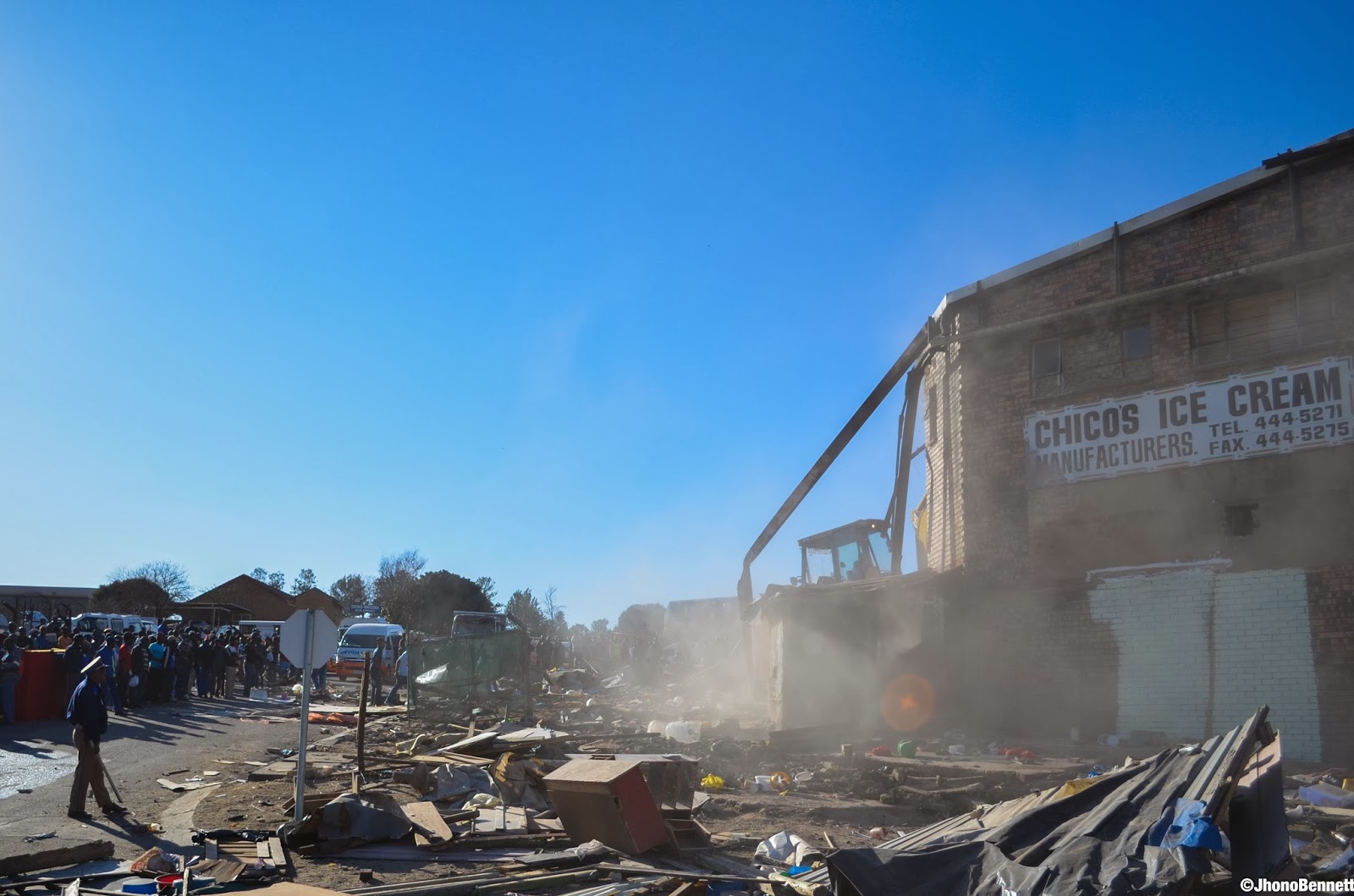
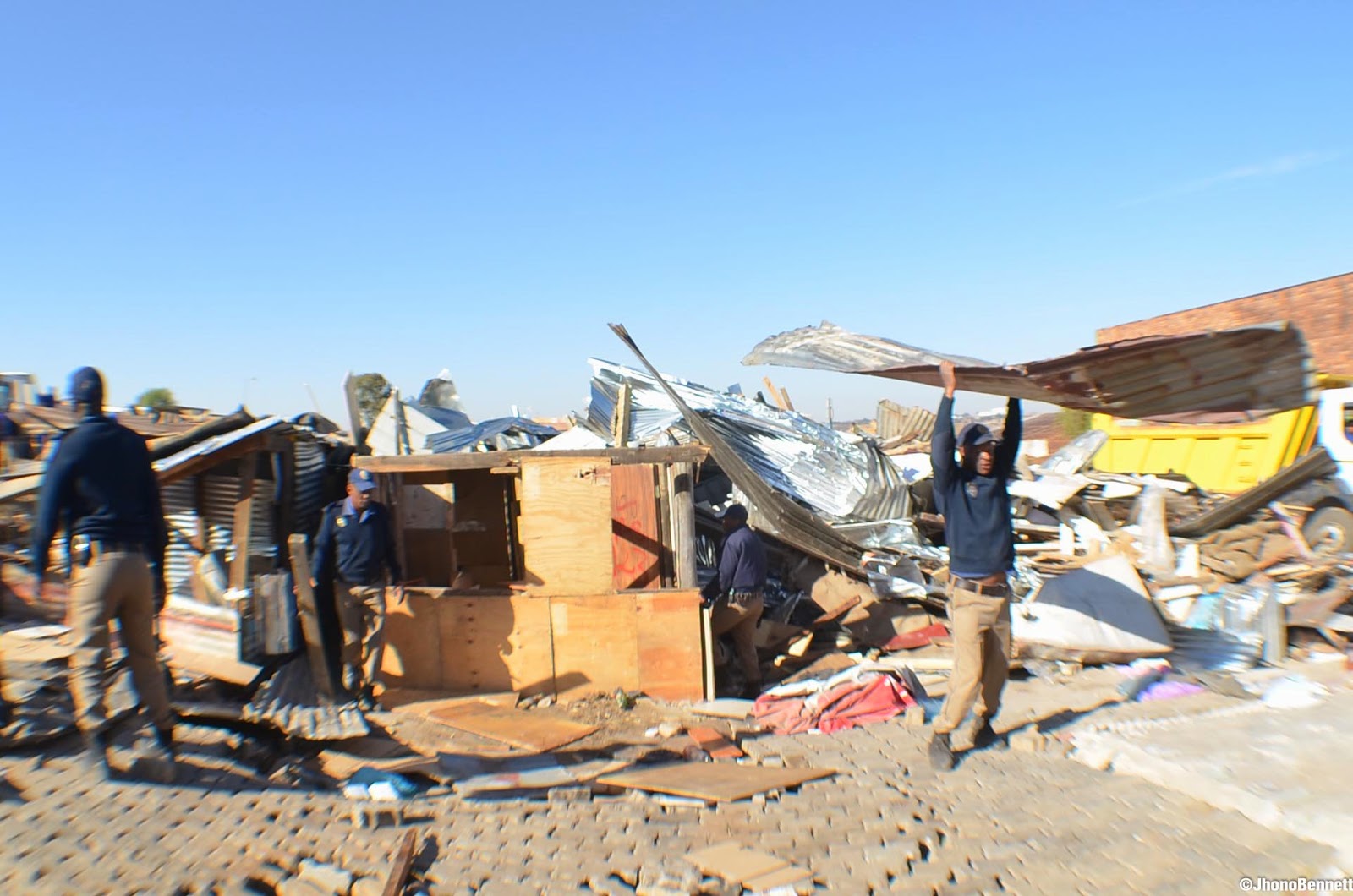
Marlboro South was overrun with JMPD, a later estimated 500 plus members of orange and blue were demolishing selected sites over the industrial belt.
With the MWCC behind me I approached several official looking members of the police to try and find the court order, when I had eventually reached the top of the hierarchy I was joined by a journalist friend I called en route and the lawyers from SERI. Here we were shown the ‘official’ document for the eviction – a handwritten note.
There was very little the lawyers, the NPO or the MWCC could do but watch as the police demolished their homes, as the process to block the order was delayed and most of the residents were at work at the time.
some residents chose to burn their homes rather than have the material confiscated (formerly mentioned CUFF project)
Other residents attempted to salvage what they could (CUFF project seen above)
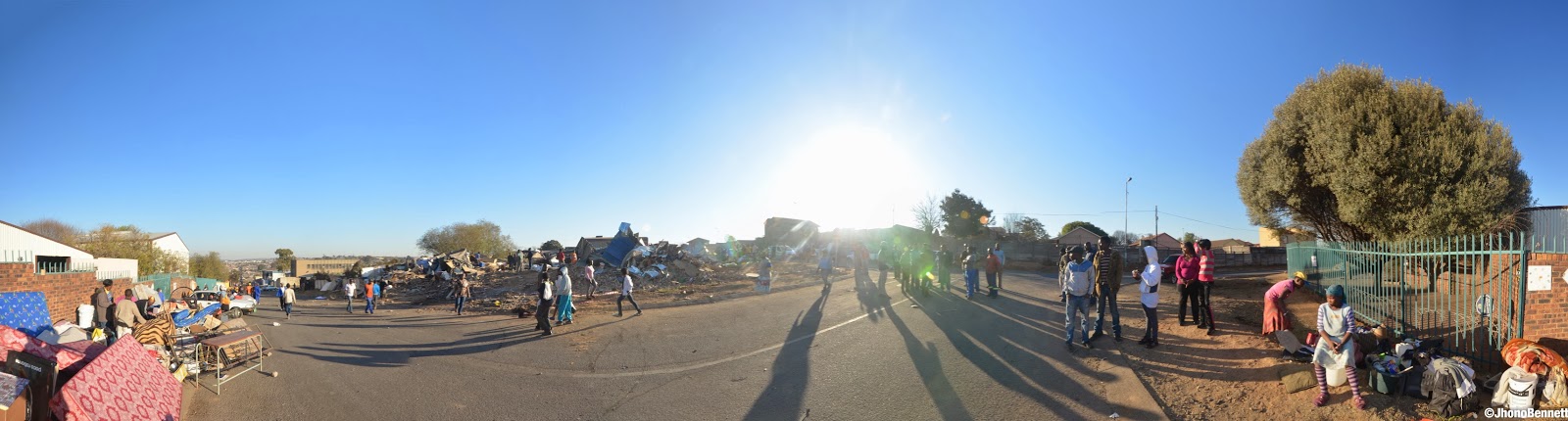
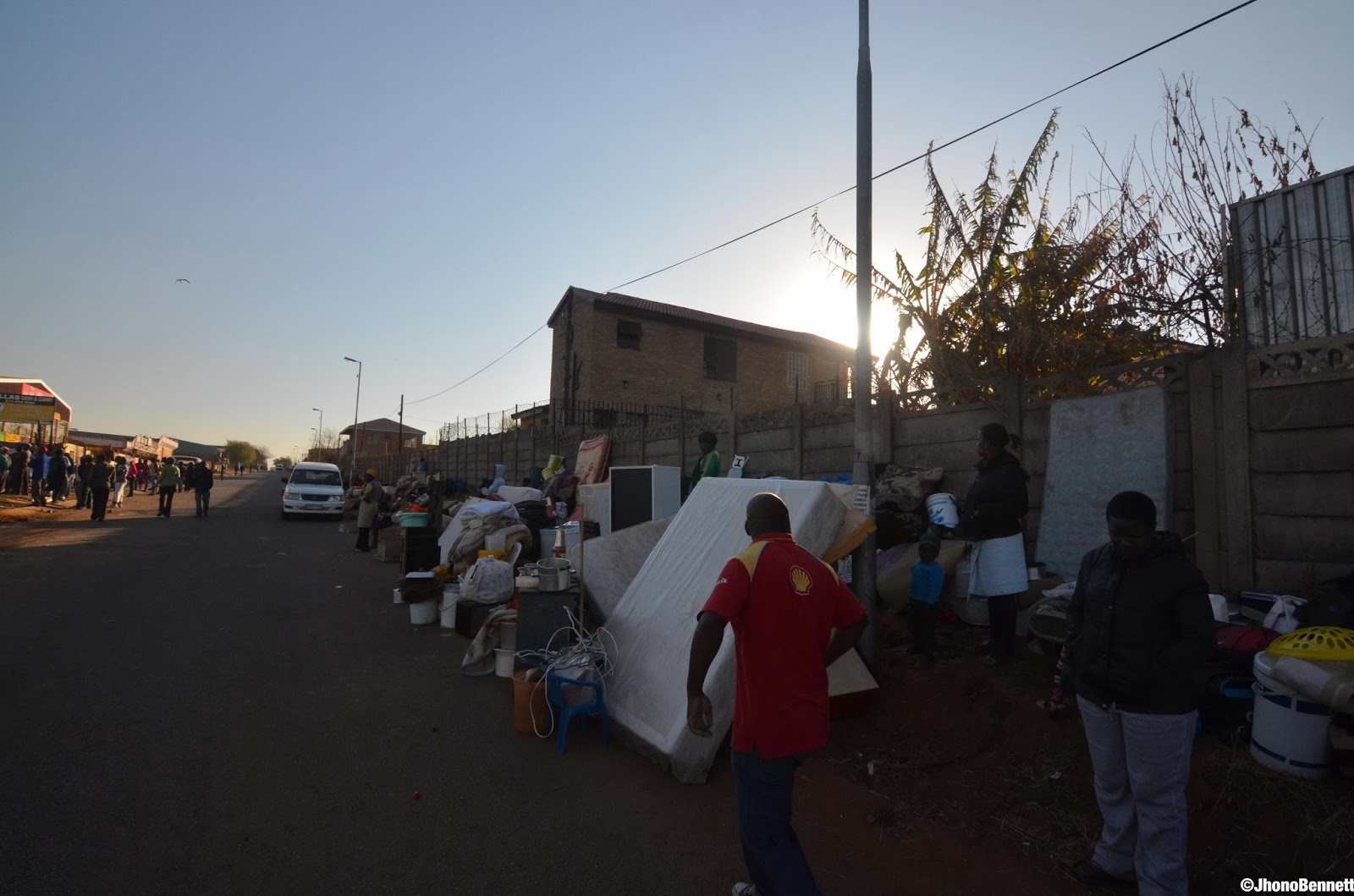
As most of the inhabitants were at work, they returned that evening to find their homes destroyed and the material confiscated along with their personal belongings and valuables.
Post Eviction
The evictions continued for several days intermittently, the MWCC attempted to protest by blocking JMD access into Marlboro by placing obstacles in the roadways. Which resulted in JMPD employing crowd control methods including rubber bullets.
Residents were shot with rubber bullets during an attempted protest and block of further police evictions.
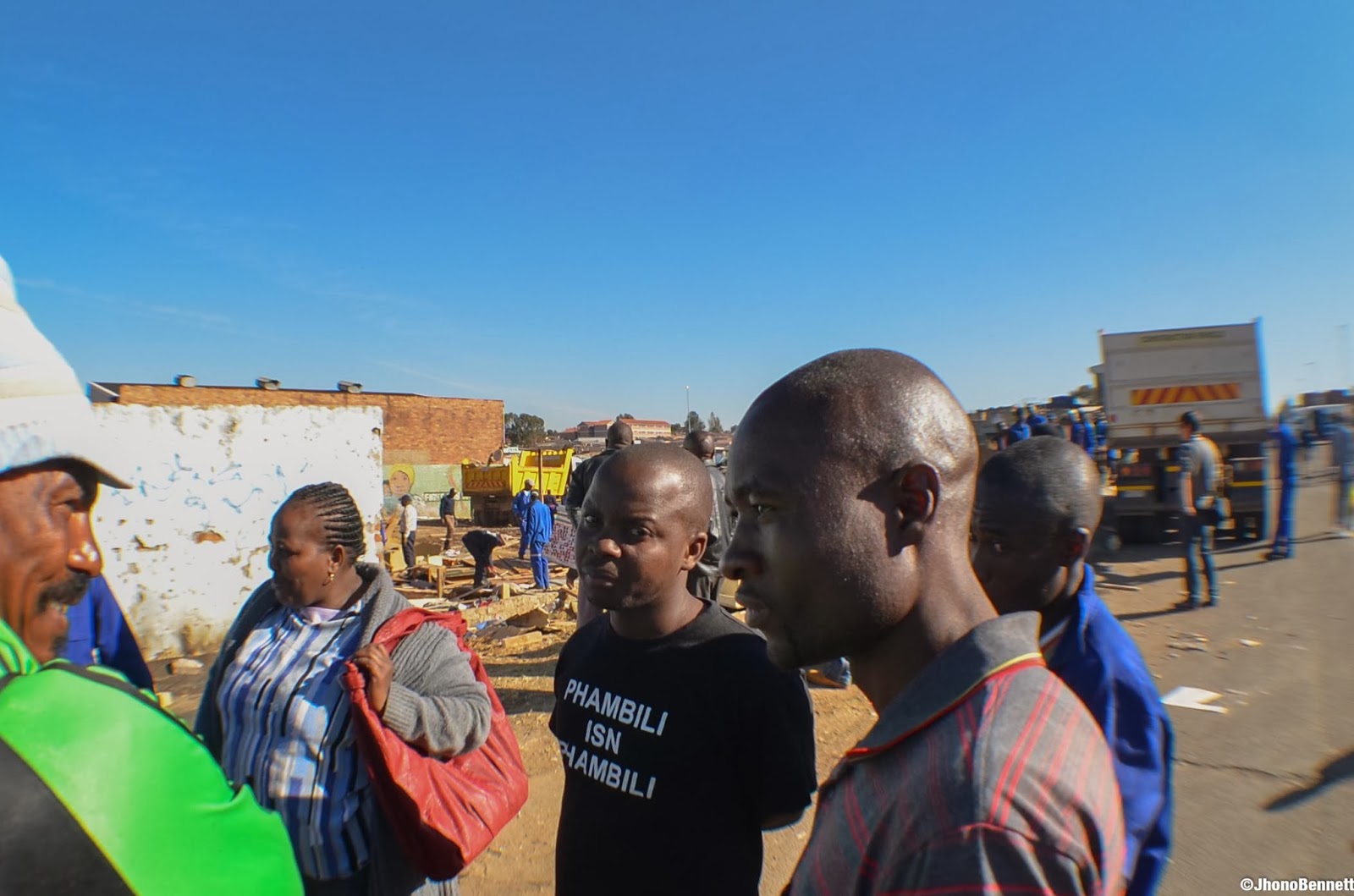
After the initial eviction, the Gauteng ISN and FEDUP, the Community Based Organisation (CBO) under the CBO’s within the SASDI, assembled in Marlboro to support the MWCC.
Asihambe (We won’t go: IsiZulu ) Solidarity March
While the Lawyers for Human Rights (LHR) worked to obtain the official interdict, the CBO’s under the SDI prepared a formalised march to address the City of Johannesburg around the eviction.
Other technical members of the SDI, specifically a planner from the U.S working at the alliance worked tirelessly to examine housing and policy law to assist the lawyers in the case, while the my most valuable skills at this stage I could offer were that of photo-documentation and poster design to support the march.
Several single mothers sheltered in the MWCC office during the eviction
During the process of gaining a temporary interdict for 65 families that could not be sheltered anywhere, the City of Johannesburg’s lawyers offered the residents ‘temporary’ occupation of the site on condition that they would not erect structures more than 1m high, that could not be made of ‘iron metal’ and that had no structural support – as seen here in the documentary “Landless”:
Using the South African Housing code’s stature on temporary housing as being a minimum of 24 sqm, and 2.4m high made of material that offered occupants safety and privacy. The city then replied that the structures could be 2.4m high, not ‘permanent’ and have ‘poles’ that could not be longer than 2m.
The SASDI offered support in providing temporary shelter for these families, but had very little money to support this. This put forward an interesting design brief for us providing the socio-technical support, as what the city had stated in writing was a clear omission of spatial and material elements and heigh restrictions.
As practitioners we offered an interpretation of that order to possibly build it out polycarbonate panels, and what if the houses were all put together in 1 large ‘tent-like’ structure maybe made of hydra form (non permanent bricks) – essentially working around the legal requirements through design.
We were advised by the lawyers to respect the spirit of the order and not be to clever in such a delicate situation.
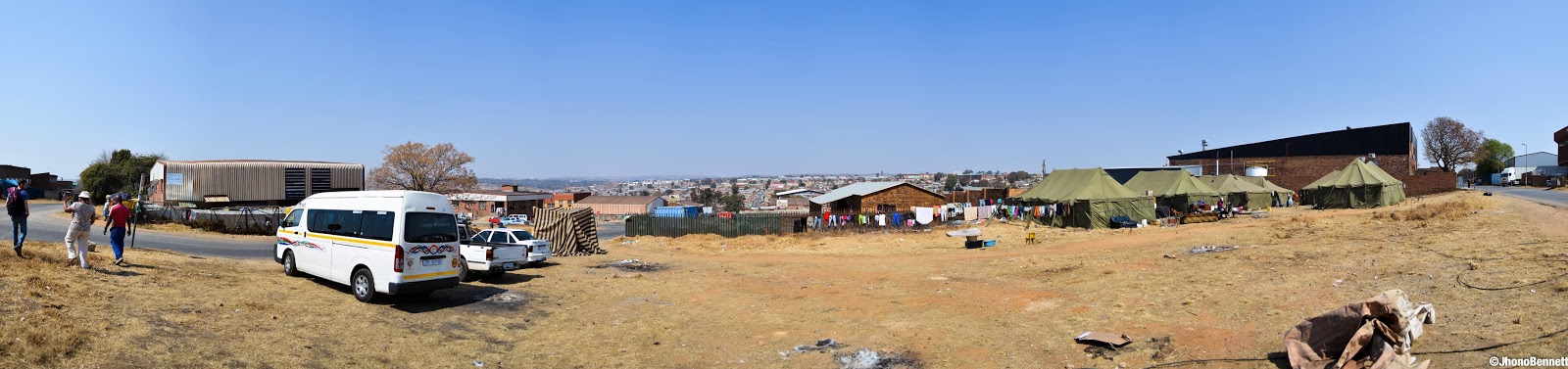
A piece of government owned land was chosen by the MWCC and several army tents were donated by donors to the NGO.
These tents were an emergency solution to the temporary housing of the 65 most vulnerable families in the eviction. The names of each person was registered in the court order and were awarded temporary occupation by the court on site until the City of Johannesburg responded. This was crucial as 1 week later Johannesburg experienced a rare snow storm that plunged temperatures to freezing overnight.
Permanently Temporary Solutions & The (in)formal Studio – November 2012 – February 2013
In the background to the eviction and court battles, the professionals and academics who had been involved in the studio were working on developing a more permanent housing solution to show the City of Johannesburg alternatives to addressing some of the major issues in Marlboro South.
The architect’s discussing a possible government owned site with the MWCC
This solution was to be part of a larger body of work, including the student’s design work, that would make up a travelling exhibition to showcase these types of engagements and projects to a larger audience.
One of the major outputs was a participatively developed housing scheme that would re-house residents of the MWCC in a safer, more incremental pattern that worked with current spatial typologies and land use.
These possible layouts were work-shopped with various MWCC members and residents and developed into a larger development plan.
The tools used for this larger development design, were used to attempt to negotiate a temporary solution for the tent dwellers who were occupying a different parcel land.
The 65 families were engaged on several occasions to develop an accepted layout for the City of Johannesburg to adopt in accordance with the court order.
This smaller temporary plan was put together through CORC and submitted to the City of Johannesburg as part of the deliverable from the residents side.
As the weeks went by, and the City of Johannesburg missed its court ordered dates of engagement, and the tent dweller residents began making temporary adjustments to their tent home, including a cooking area and other social spaces.
The walls get higher…
To date the tents are still up and residents are still waiting for the City to keep up its ordained mandate as local factory owners build higher walls and grow more angry at the situation.
The (in)formal Studio Exhibition – April 2013
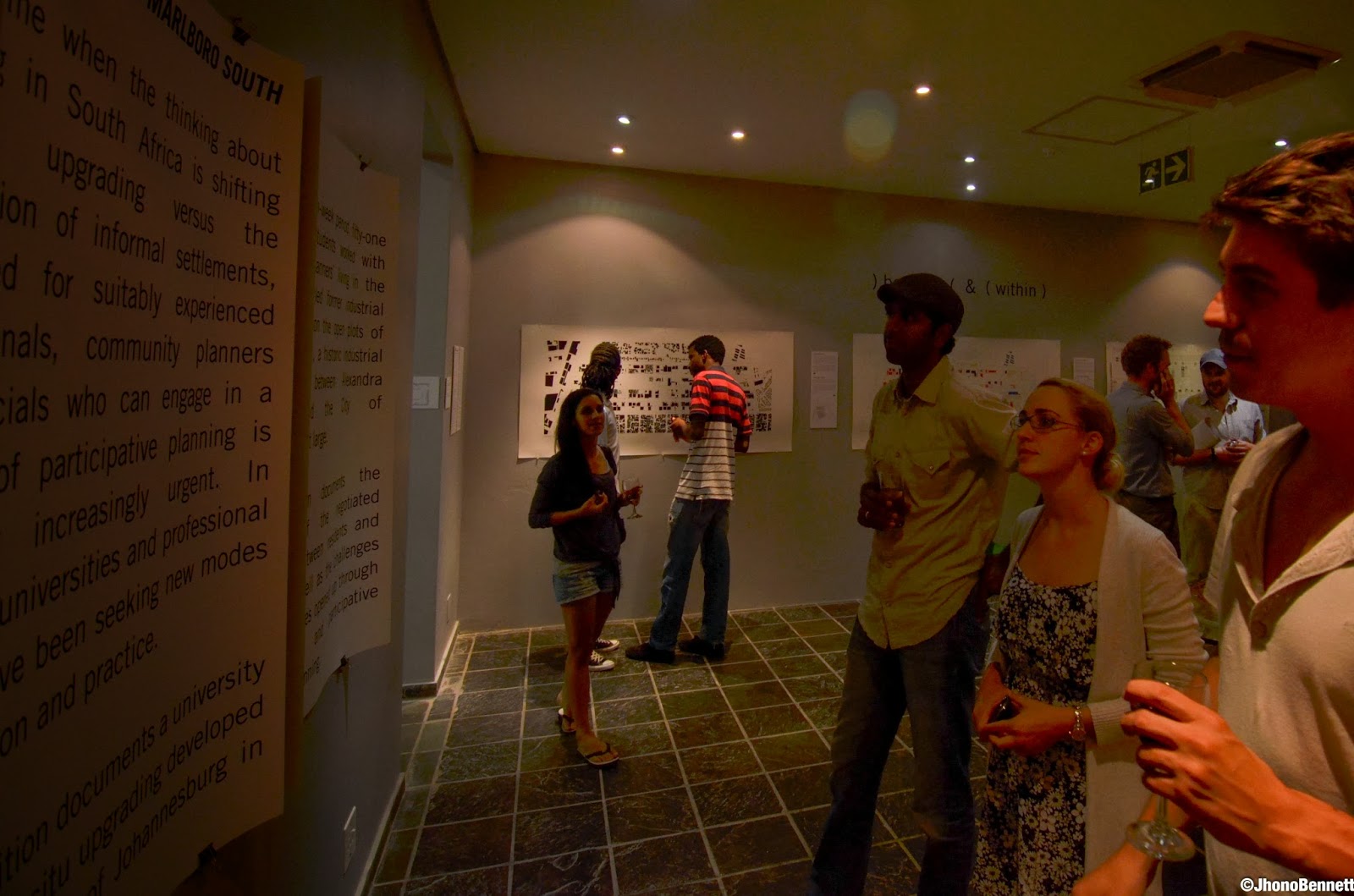
“An exhibition covering the entire project was opened in the Goethe gallery in February 2012.
Rather than delivering defined solutions this exhibition delivered on portraying and celebrating human engagement across a divide of one of the most unequal cities in the world. It recorded the contradictions and discomforts but also the tremendous potential which exists in seeing, and acknowledging each other as part of the solution.” Anne Graupner, 26.10′ South Architects
Directed by Lungelo Mntambo & Tolo Pule of DeLite and edited by Nadine Hutton of 2point8
MWCC members recieving their public recognition at the screening in Marlboro South
MWCC member presenting the introduction at the official Exhibition Opening
Post Exhibition Work – May 2013
I have recently left my position at CORC to pursue a focused socio-technical role alongside the NGO, looking more at developing role for spatial design students and pre-professionals.
Quite soon after my departure the SASDI the NGO, by a chance meeting with a non-profit social group in Cape Town, was offered the opportunity by another non-profit group of being a solution to potentially house the 65 families living in the tents nearby in Marlboro South
The conditions were that the those effected should benefit from this donation and the project should not just house, but also socially develop the inhabitants. The SASDI, the MWCC and the newly formed (in)formal Studio collective are currently working on this.
Academics, professionals, NGO and CBO discussing the oppurtunity
Reflection – July 2013
This summary has taken me almost a year to complete. Looking back at the role I played in the social development process has been quite difficult as the notable differences in the situation of those I worked with has not changed much on the ground – although larger scale shifts in approach and thinking have happened higher up in the governance structures.
The role of anyone in an NGO supportive role, let alone someone with an architectural background, is extremely difficult. Having to work across many cultural, economic and social backgrounds while supporting other people’s processes to capacitate without falling into the temptation of short cutting important and tiresome methodologies and just doing it for people is a taxing mental challenge.
I had many sleepless nights (in my own comfortable bed, that looked over Marlboro South in the distance) during the eviction feeling utterly useless in the face of such a huge destructive force. These concerns stayed with me during my time at the NGO as the issues facing these initiatives are so complex and overwhelming that is often drains you of your resolve.
What eventually led me to step out of my position at the SASDI was the realisation that the role spatial designers (architects, planners, some engineers) can play in these processes is niche – but crucial. While it’s difficult to make changes to the large picture, I felt my role could be much more effective in my own ‘community’ of spatial design students and pre-professionals. By being involved from this position I could make the difference I wanted by first bringing these practitioners into these spaces they would not normally work in, and by developing additional ways of acting, thinking and intervening in such situations.
I am still involved with the South African Shack Dwellers International Alliance in Johannesburg, working with the organisation on various projects and assisting in the support of their new socio-technical staff. I now sit part time at the University of Johannesburg and Pretoria while focussing on the role that the 1:1 Student League and recently developed 1:1 – Agency of Engagementt in socio-technical spatial design in South Africa.
Broadly, Architect’s (in South Africa at least), are trained to translate the requirements of a client (in many forms), while taking into account as many factors (your own intuition and preferences included) into a technical product.
From my experience from working in complex developmental or advocacy environments this broad definition of the role of Architect, planner or engineer (Spatial Practitioner) as a ‘designer’ or ‘professional’ shifts more into a facilitative mode.
This position still requires the analysis, thinking and acting tools that the professional training gives, but calls on the practitioner to also transverse many different cultural, economic and disciplinary background with empathy, much patience and a willingness to let go of strategic aspects of control.
The role of socio-technical support is not to completely give into the complexity of social or development processes, but to look deeper and find the unseen connection between technical requirements and the larger picture while still meeting the needs of the individuals (or community) at hand.
This role of socio-technical support had me advising, documenting and facilitating the technical projects that make up the 6 rituals of the SDI:
the rituals in action
These projects were specific technical projects put forward by residents of various informal settlements in Gauteng that required intermediary technical support in their longer development goals and varied from tap fixtures to lighting solutions to meeting halls.
the constant contrasts of working in informal settlements
These projects are funded by a trust overseen by elected members of the SASDI called the Community Upgrade Finance Facility (CUFF). Residents are required to identify a project, work with the socio-technical professional to determine a design and a cost get this initial concept approved by the CUFF board, then save 10% of the project cost as a community to be able to begin implanting such a project.
This process is intended to bring residents together around a tangible output that benefits the community as a whole, and create a platform for the community to engage local council through demonstrating their organisation and mobilisation towards larger development goals in their future.
engaging community around CUFF projects
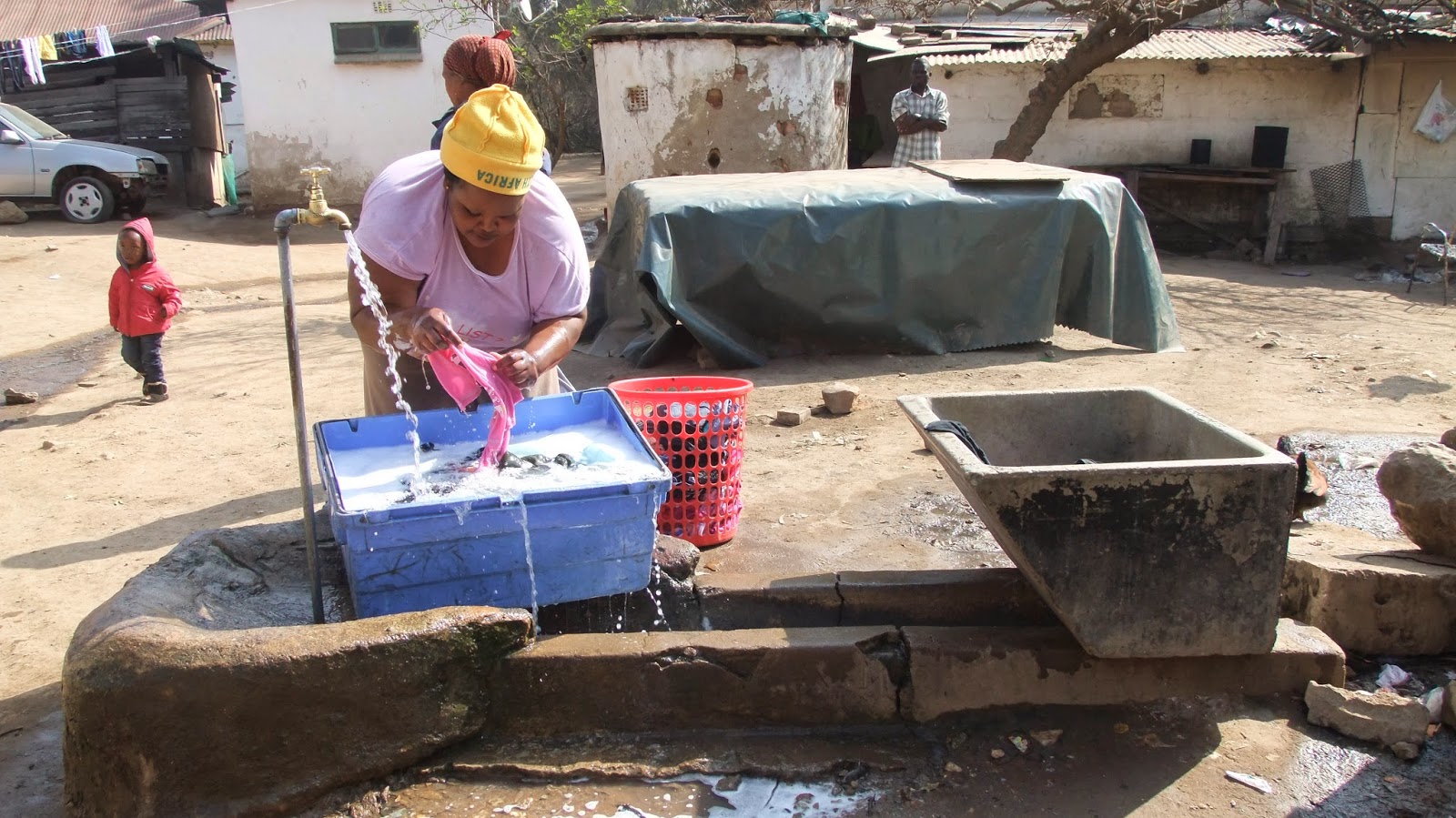
common need for water access
post eviction response
My year at the SASDI took me across a broad range of projects, and exposed me to the complex political and social difficulties involved in informal settlement development, as well as the working of such a large and reaching alliance of Non-Governmental Organisation (NGO’s) and Community Based Organisations (CBO’s) that make up the SASDI.
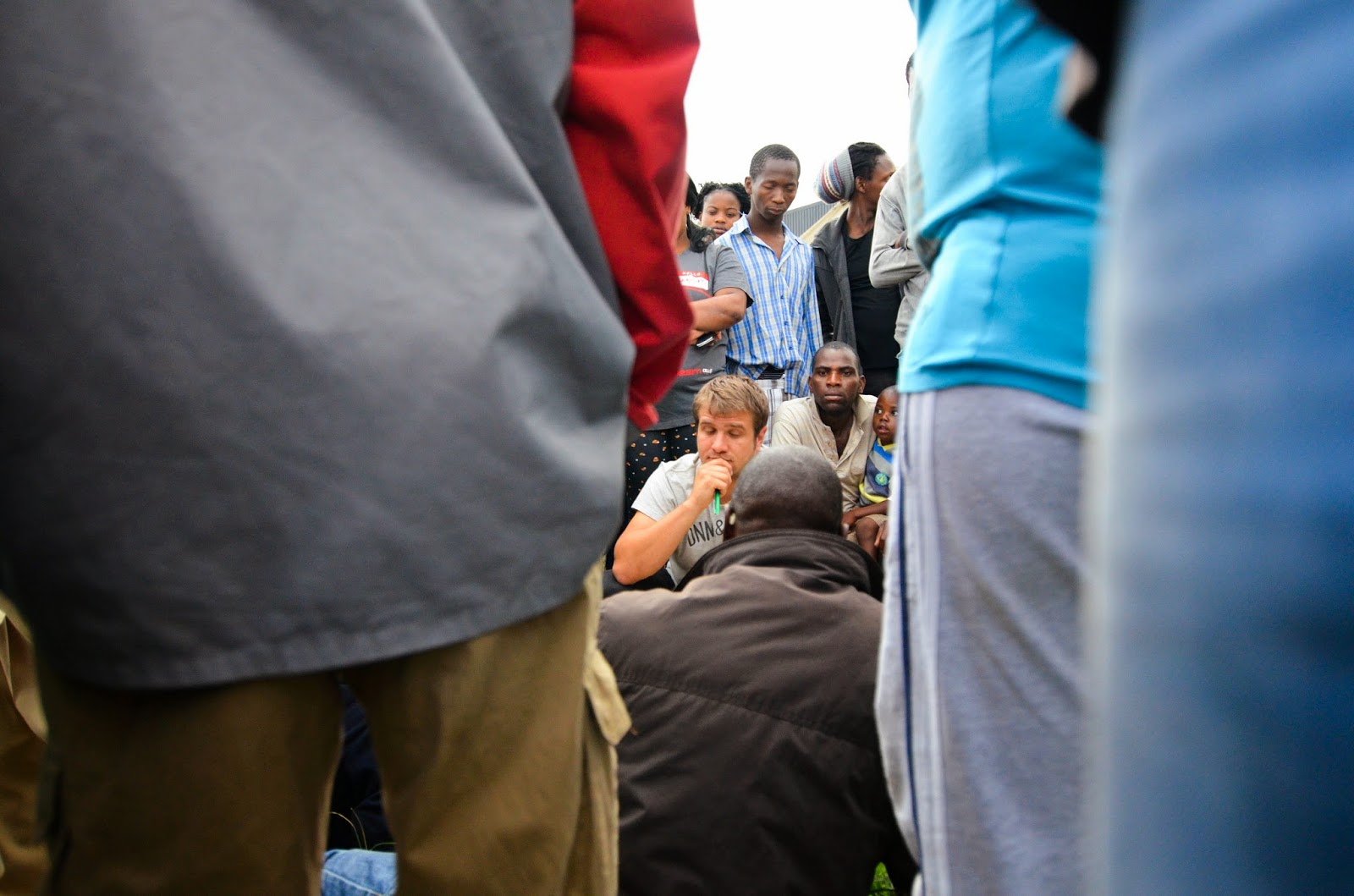
community meetings
informally squatted warehouses
temporary housing solutions
leadership meetings
eviction aftermath
current sanitation
I have recently, stepped out of the alliance, in order to better position myself outside the complex social and political working of such an organisation to be in order to provide the niche socio-technical support and capacitation of young professionals and students through the initiative 1:1 (1 to 1) -Agency ofEngagement while working at the University of Johannesburg as an independent researcher and part time lecturer.
As 1:1 we plan to not only work with the alliance and other indivuduals or organisations on specific socio-technical and research projects but also help facilitate students and young professionals to get involved with the SASDI and other NGO’s working in this sector in South Africa, while developing this additional role for Architects in South Africa.












































 This finding eluded to a much more complex and organised form of leadership and governance that exists in Mai Mai. Simultaneously, more intricate territories amongst the food court users were revealed as the chairs became a symbol of territorial control as users claimed ownership over various arrangements.






























































 Jhono Bennett