Co-Designing the Driver’s Seat: A call for an ‘Open’ Approach to Drawing Production in Spatial Design Practice: SOTL 2017

My first singular produced conference proceeding was for the 2017 Scholarship of Teaching and Learning (SoTL) in the South Conference held at the University of Johannesburg. I wrote a peice about the need for an opening up of how we make and ‘draw’ in regards to spatial design – with a focus on the artefacts we value in drawing production.
The full proceedings are avaliable here: http://www.sotlinthesouth.co.za/images/SOTL_2017_Proceedings.pdf

Abstract:

“The question of what the architect is actually doing … raises questions about authorship. Is the architect a creative author with the will to produce a specific work, or do the conditions imposed on him inevitably result in something interchangeable, something that could as easily have been produced by someone one else?” (Reidijk, 2010, p20) This inherent contravention of authorship, summarised in the prologue of Reidijk’s collection of writings in Architecture as Craft, brings to light a crucial aspect of the built environment’s process of production; rarely is a building or a space solely brought together through an individual’s vision and efforts. As a rule, the built spaces occupied by society are the result of multiple forms of agency and ownership working together at different levels. While this co-productive nature of built space is well established through Open Building discourse, the nature of the design communication artefacts to which are trusted to carry the idea to be understood through remain largely ‘closed’ within the disciplinary boundaries of the designer and select group of building professionals. Nowhere is this closure more evidently seen than in technical output produced and commoditised by large scale design practices, such as urban and city design in South Africa. The author firmly stands by the belief that in order to allow for the true co-production of the South Africa built environment to take place equitably and efficiently, spatial design practitioners need to develop more ‘open’ approaches to the practice in the built environment – in particular to allow the design communication artefacts of their discipline to be co-owned and co-produced in the face of a rapidly urbanising world. In 2015 the author of this paper assisted in the running of UJ_UNIT2; a design-led architectural research unit housed in the master’s programme at the University Of Johannesburg (UJ). The research unit embarked on an exploration of new forms of design and building exposing the nature of agency through the levels that make up the South African built environment. This experience, combined with the author’s personal work in providing socio-technical support to the grass-roots international organisation Slum/Shack Dwellers International, provide the experiential reference to support the above stated belief. This paper will examine two projects conducted through the author’s own teaching and design practice that attempted to change the manner in which designer’s see and control design communication artefacts. A summary of these experiences will then be outlined through a call for design practitioners to develop their own means of sharing control not only in the spatial drawing artefact, but in the design itself. This is done with the hope of supporting a growing national movement that seeks to responsibly relinquish power through design in the aim of achieving social and spatial justice in South Africa

Citation:

Bennett, J. (2017) ‘Co-Designing the Driver’s Seat: A call for an “Open” Approach to Drawing Production in Spatial Design Practice’, in The Scholarship of Teaching and Learning in the South (SOTL) Conference Proceedings. Johannesburg, South Africa, ZA: Scholarship of Teaching and Learning in the South, 2017, p. 121. Available at: http://www.sotlinthesouth.co.za.
FOLIO Vol.1 PUPAE: Not a ‘No-Go’ Zone

FOLIO is a critical, creative and contemporary Journal of African Architetcure and a product of GSA Imprints, an initiative launched by the Graduate School of Architecture (GSA) at the University of Johanesburg.

Volume 1: PUPAE was launched in 2017 and comprises a collection of critical writing peices, photo essays and design research outputs.

View the first issue here: https://issuu.com/foliojournalofafricanarchitecture/docs/folio_issuu 

Myself and Sumayya Valley of Counterspace put together a short writing peice that was supplemented by a series of drawings created by Sumayya from a previous project we had completed in inner-city Johannesburg.

Upgrading Informal Settlement Book Chapter

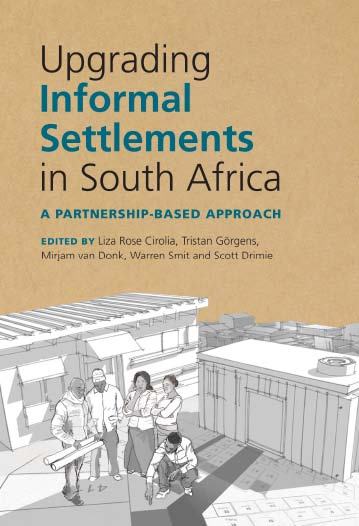
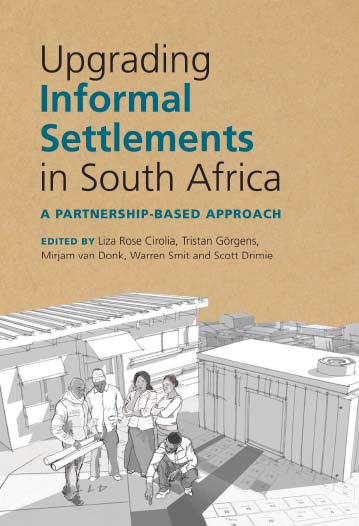
My master’s professor, Dr Carin Combrinck, and I co-authored a book chapter on the role of architects and architecture in the re-development of South Africa for a book project co-ordinated by the Isandla Institute, UCT and the African Centre for Cities. 
 

The book was published in December 2016 and our chapter was titled: 

Navigating hostile territory? Where participation and design converge in the upgrade debate

The abstract below:

The South African policy landscape regarding Human Settlement development reflects a progressive approach towards the in-situ upgrading of informal settlements. With the assistance of the World Bank and the Cities Alliance, the National Upgrading Support Programme (NUSP) was established in 2008 to facilitate the implementation of the Upgrading of Informal Settlements Programme (UISP) which is further underpinned by the 2009 National Housing Code Part 3 Volume 4: Upgrading Informal Settlements.
 
The policy intent is aimed at a holistic integration of informal settlements into the urban and socio-economic fabric of the greater metropolitan area with a strong focus on locally appropriate community participation (SA 2009:s 2(1)). Factors such as the careful maintenance of existing community survival networks as well as the harnessing of local knowledge and understanding of particular needs are given high priority in the development process (SA 2009:s 3(9)).
Consideration of these matters is directly translated into the approach to the proposed township layout of a settlement, which must be done in consideration of community needs, current land use and densities and designing to minimize relocation (SA 2009:s 3(10)). Even in terms of the stand sizes and layout, the Housing Code favours an understanding of the existing conditions:
Due to the informal layout of informal settlements it is not desirable to determine uniform or minimum stand sizes. Locally appropriate stand sizes should emerge through a process of dialogue between local authorities and residents. (SA 2009:s3(13))
 
In terms of the implementation of this process, the Housing Code makes allowance for the primary role players to be the state in its various functions. Resources are then included from the private sector by way of the professional services of engineers, town planning, land surveying, geotechnical services, Environmental Impact assessment (EIA) services and site supervision (SA 2009:s 2(5.3)). Along with the general provision for the housing process, the Act also allows for the establishment of a mediating body (Community Resource Organisations – CRO’s) that can offer a platform for technical assistance to the communities and financial accountability to the state. These can either be the municipalities themselves, Non-governmental organisations (NGO’s) or Community Based Organisations (CBO’s). The prerequisite is that they must be a legal entity through which the community may then apply for this funding.
 
As can be seen from the short description of the policies relevant to the upgrading of informal settlements, a holistic and progressive context is established where the potential exists for a well-balanced involvement of state, civil society (private sector built environment professionals) and beneficiary communities in the development process. Yet, rising dissatisfaction among the urban poor has resulted in an increased level of service delivery protests (Tissington 2011), indicating an uncomfortable disjuncture between such policies and their implementation.
This chapter focuses on two questions emanating from these policies: Firstly, given the apparently benign and progressive wording of these policies, wherein lies the Navigating hostile territory  disjuncture with their implementation? Secondly, do these policies describe a potential role for architecture in this discourse and if so, how? In consideration of these two matters, the chapter will investigate the potential role of young architectural professionals to engage in the context of in-situ upgrading of informal settlements.
 
Interviews conducted with Prof Marie Huchzermeyer (recognized publisher in the filed of informal settlement upgrade), Mr Steve Topham (director of NUSP), Prof Lone Poulsen (previous Dean of Wits School of Architecture) and Dr Mark Napier (previously of Urban Landmark and currently head researcher in Human Settlements at the CSIR) serve to situate some of the discussion in current discourse. Personal reflection on experiences in particular informal settlements further inform and contextualise the conclusions drawn in the chapter.

NUSP Incremental Building: Teaching Module

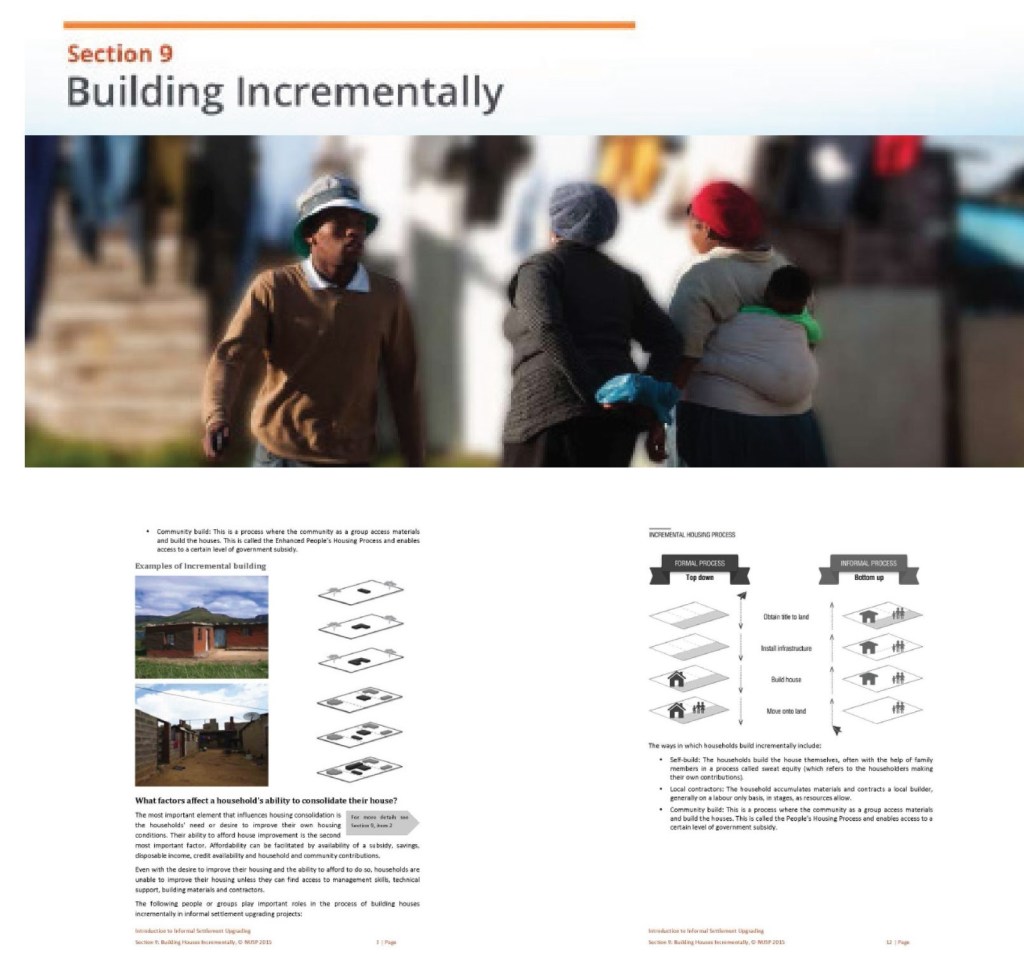
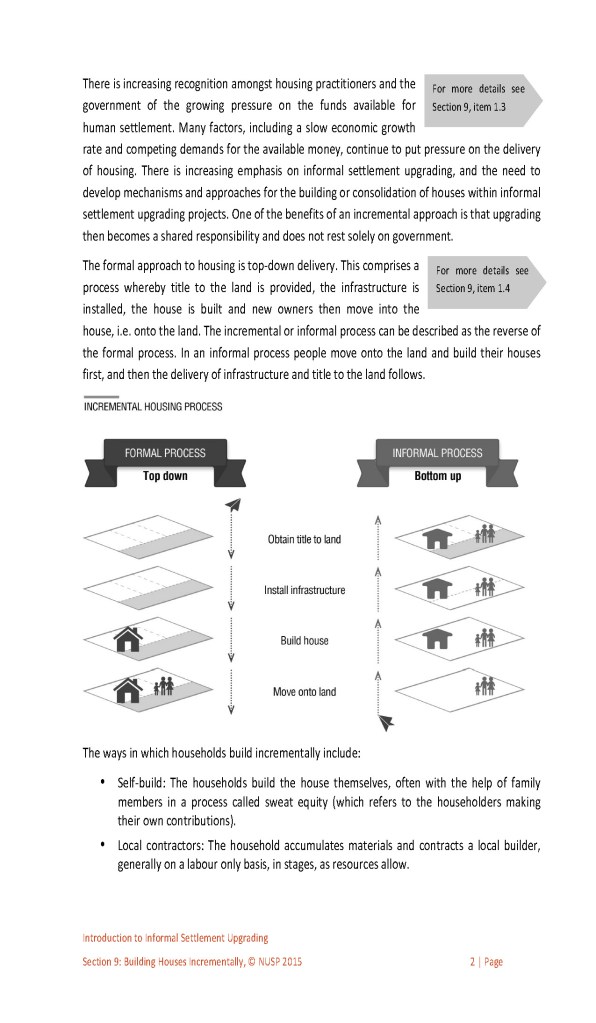
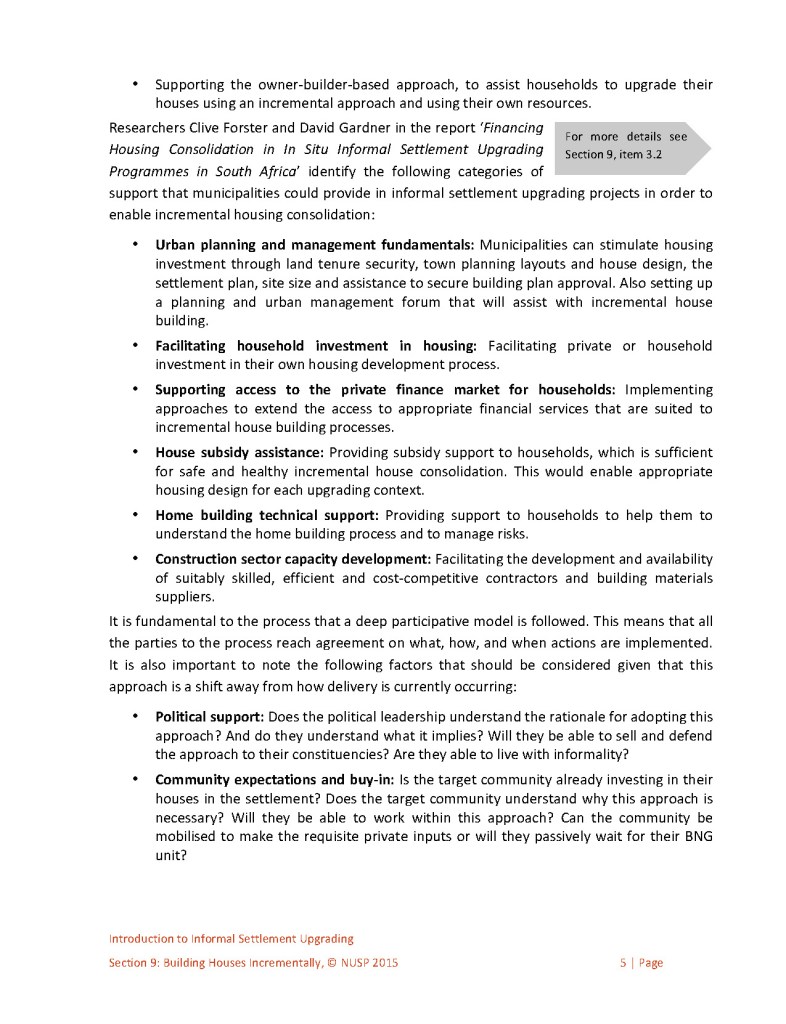
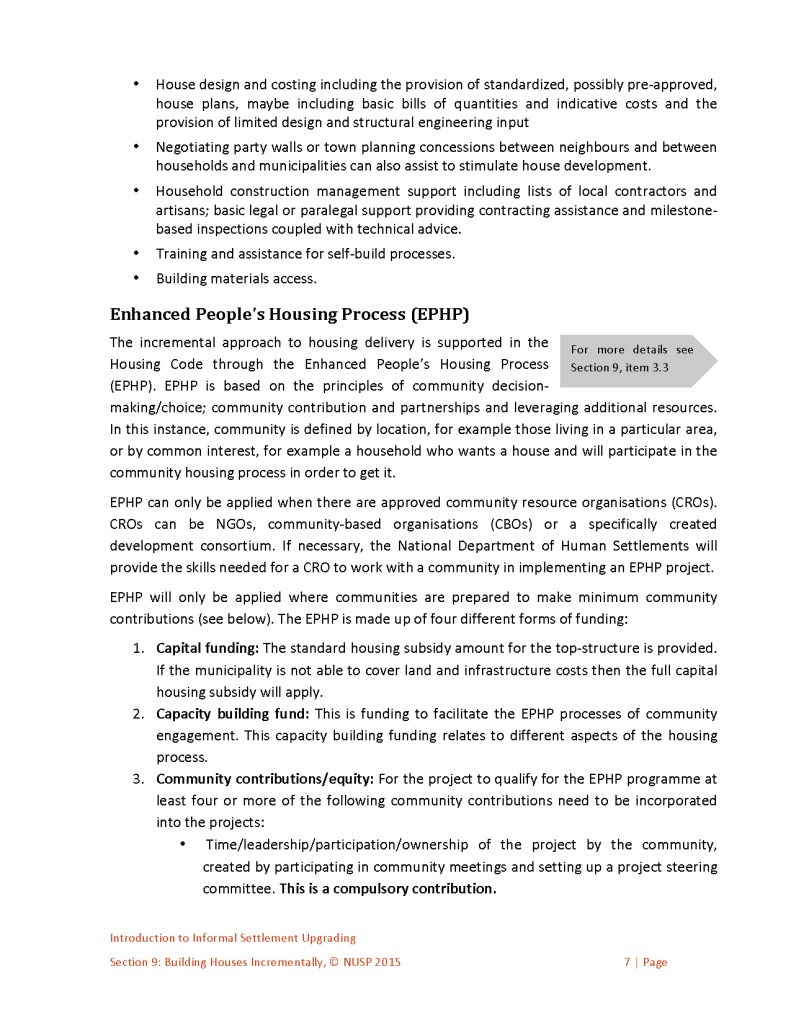
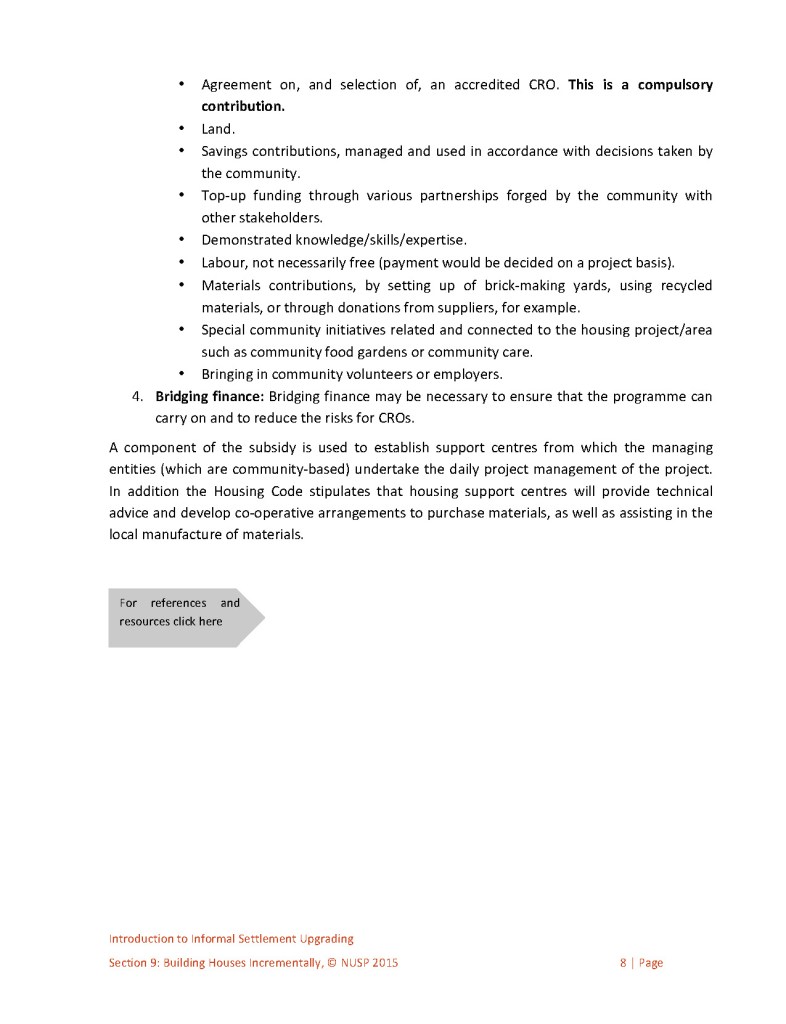
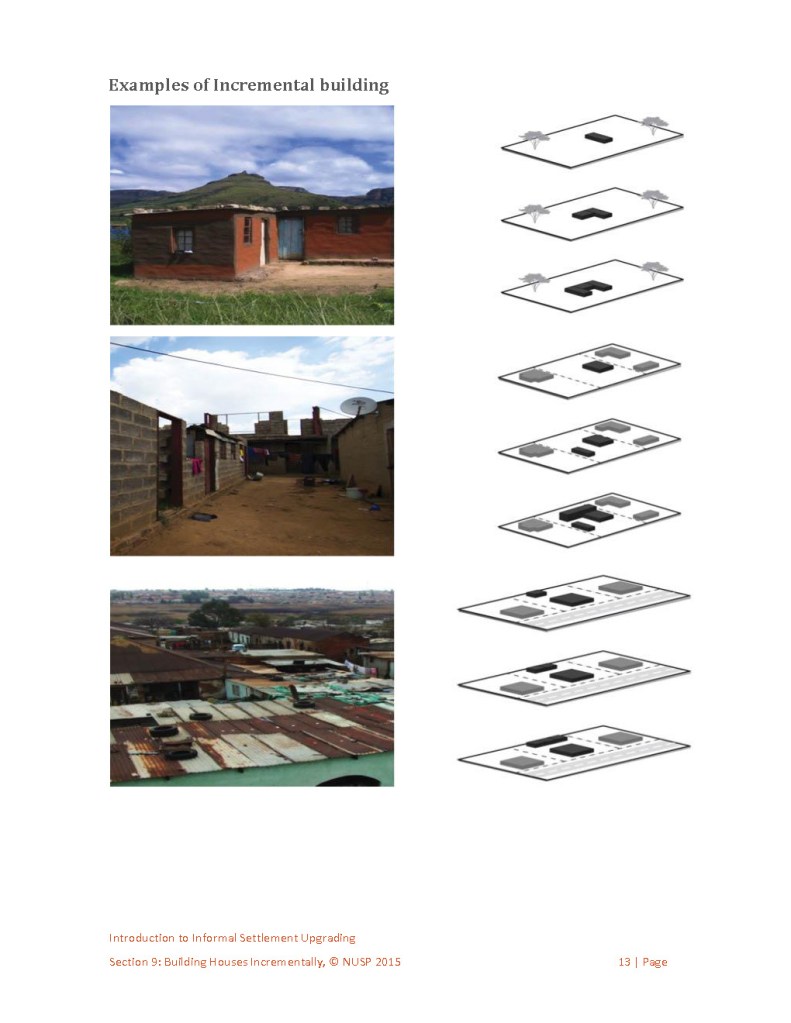
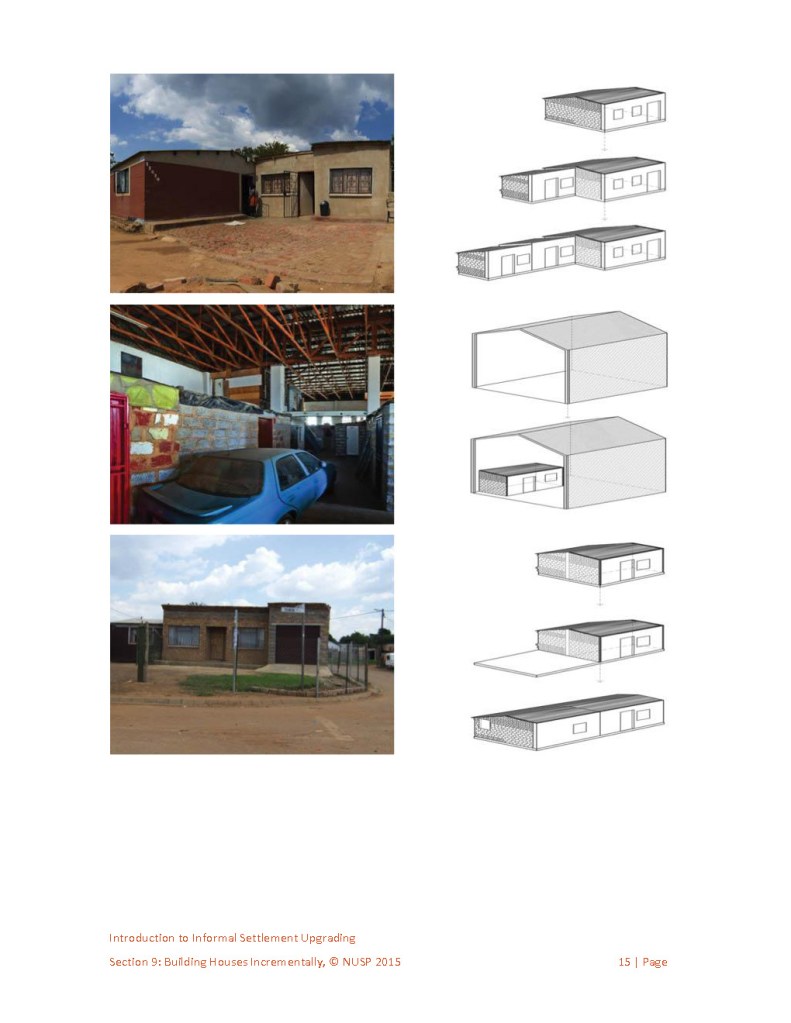
In 2013, through 1to1, I worked with BOOM Architects under Shisaka Development Management Services to write the incremental infrastructure module for the NUSP Socio-Technical Support Manuel for City Officials in Informal Settlement Upgrading for South Africa.


The Section 9 module visually unpacked the variables to consider when allowing for incremental upgrading in informal settlement development as well as requirements for technical allocation.

The full toolkit should be available online at: http://www.upgradingsupport.org

UIA World Congress 2014

XXV International Union Of Architects World Congress 2014

The 25th International Union of Architects World Congress of Architects, UIA 2014 Durban, will be held at the International Convention Centre in Durban from 3-7 August 2014. This is the first time that this Congress is being held in Southern Africa and we are expecting 6000 delegates from around the world. 
 
The International Union of Architects (UIA) organizes a World Congress every three years, and there have been 24 previous UIA Congresses. The UIA is a non-governmental organization accredited by the United Nations, and it represents professional associations of architects in 124 countries, and approximately 1,3 million architects worldwide. The UIA secretariat, located in Paris, is responsible for the Union’s management and general administration. 


The selection of the Congress host city is made six years in advance. At the UIA 2008 Torino Congress, the South African Institute of Architects (SAIA) won the bid to host this triennial World Congress with the support of the national Department of Public Works, barely nine years after SAIA’s post-Democracy readmission to the UIA.


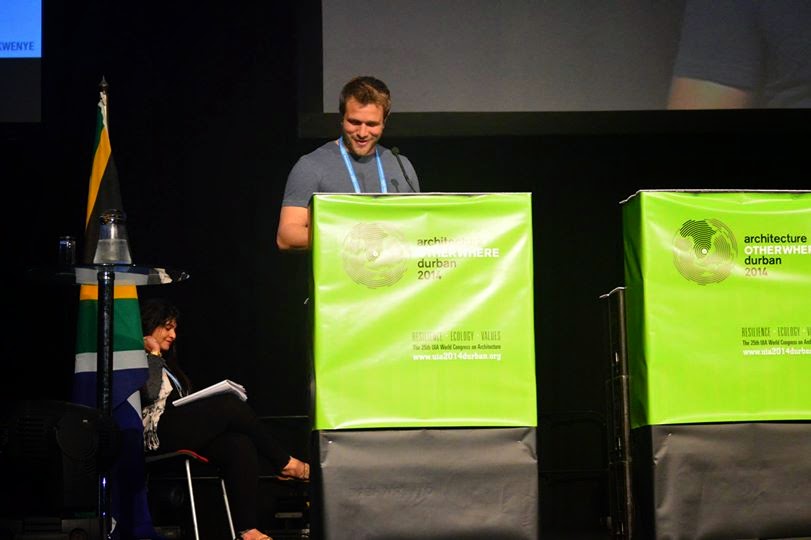
The UIA 2014 World Congress was held in my home town Durban, South Africa in August 2014, where I was honoured to be invited to participate on several platforms at the congress.

My involvement included; a speaker at the Opening Address of the Student Programme, a debater in the Student Debate, a Reviewer on the Scientific Committee and the initial researcher and member on the panel of Warwick Experts that advised the student competition.

During the congress, I presented a co-authored paper, as well as presenting my work in both the Global Studio Seminar and the Architectural Education Forum.

Architecural Education Forum – Education Otherwhere
Global Studio Seminar

CONFERENCE PAPER PRESENTED: 


Our understanding of architecture has significantly changed over time. Having been trainedin a post-modernist idiom in the eighties, one of the authors has witnessed the transformationof the profession and architectural design teaching over this time. Younger architects havebeen educated at a time of intense debates on relevance, justice and new professional values.They are now having to invent new roles for themselves and develop new methods of practiceas they navigate this relatively uncharted terrain.The teaching of architecture in general, and residential architecture in particular, has significantly changed over the years. Rooted in participatory design approaches and post-modern teaching pedagogy in architecture, this paper re-thinks the design studio, which isnow many times extended beyond the confines of the university campus, building metaphorical bridges between academia and communities.
 
The idea of catalysts is key in terms of achieving an intimate understanding of the settingswithin which students and staff operate and where project sites are located. Thinking in termsof catalysts influences processes of identifying potential community collaborators as well as potential project briefs and sites.Some individuals/groups are perceiv ed as “institutions” and champions within their communities: in the sense that they are known, respected, accepted and many activities seemto either be initiated by them, supported by them or revolve around them. Identifying theseindividuals/groups is paramount to the success of a project. 
 
These individuals/groups becomeagents of change. Planning and design interventions may either enhance or undermine thisagency capacity and the potential to institutionalise it. This concept is linked to previousresearch and writing on urban acupuncture and agency in the built environment. Identifying where interventions could take place, what kind of intervention and anticipatingthe kind of influence it would have on the surroundings is critical. Mapping existing energiesand forces in an area may provide indicators as to where input may have the most potential for triggering a variety of responses. 
 
That is after all the ultimate aim: to intervene where itwill generate a response thus allowing more agents to become actively involved in the formulation of the built environment. Key people/groups and small projects are thus seen as vehicles for collaboration,development and learning. This paper presents a process of engagement between the design studio and communities in a proposed framework for this particular component in theteaching of architecture. These generic concepts are reinforced through some case studiesand reflections on practice

The conference was a week long intense experience with an overwhelming programme, packed with inspiring speakers and inspired congress goers. It was great to see Durban experienced by such influential people and I hope the themes of ‘Otherwhere’ carry through long with those who attended.

Academic Paper: Critical Engagement in Informal Settlements: Lessons from the South African experience

Author(s):     Jhono Bennett & Dr. Amira Osman

BRISBANE 2013


Abstract:
This paper aims to present an approach to design thinking and teaching that takes the students and lecturers of design disciplines outside of the studio and university campus into contexts of deep complexity – informal settlements.
Conventional methods of architectural practice are deemed to be of limited use or value in informal contexts. These informally- and incrementally- developed contexts appear chaotic and of little architectural value at first glance but, when examined closer, intricate systems of decision-making and negotiation are revealed. The quality of spatial articulation that emerges could not have been achieved through formal planning and design processes. The informal process results in a distinctive spatial quality as well as complex and varied forms of ownership and habitation models.
The resultant fluidity and dynamism of these contexts offers critical lessons in design and the interaction between the different decision-makers/agents intervening at various levels of the built environment at any given time. As students and lectures engage with these contexts, employing tools such as structured mapping exercises, a better understanding can be achieved, as well as more appropriate design-decision making strategies for future interventions. By understanding the existing energies, activities and quality of routes, nodes and thresholds within these contexts, architects are better equipped to propose context-sensitive and sustainable solutions.
The intention is to better prepare students to engage in non-conventional professional practice – while the lecturers, and the institution to which they belong, are able to make meaningful contributions to a broader debate regarding the role of the profession and the professional in contexts of informality.
Through this process, it is also possible to provide much-needed services to identified vulnerable communities. However, the significance of the approach goes beyond that and involves the up-skilling of residents, the gathering of crucial data about the context, acquiring critical first-hand experience of the selected settlements; it also offers lessons on action research and knowledge on sustainable and socially-relevant technical solutions. The latter is achieved by identifying possible catalyst interventions, enabling the testing of development concepts through active build projects.
Key words: Design teaching, informality, non-conventional architectural practice, action research, and design/build.

Academic Paper: Architectural Design in Response to Vulnerable Networks

Title:        
 
Architectural Design in Response to Vulnerable Networks
Publisher/Conference Sustainable Human(e) Settlments: The Urban Challenge – ISBN: 978-0-620-54069-8


Author(s): Ida Breed and Jhono Bennett

JOHANNESBURG, SOUTH AFRICA 2012

 
Abstract:

This article maintains the importance of a contextual and humanist understanding for the design of public space through the incorporation of concrete and changing realities in the analysis of the urban environment. In an attempt to reach a greater understanding of the construction of space through social networks, qualitative fieldwork methods are used to document the flows of social process and physical matter in the immediate context of the two chosen sites for intervention. The importance of these networks for the design of built form and space are determined for each scenario.

The research underpins the design relevance in architecture (and contemporary urban life) of social activity, movement, temporality versus permanence (in form), and mobility versus fixity (in location). It places in question the traditional role and definition of architecture and their present relevance in the developing world. The result is an alternative set of considerations that define the architectural brief assuring: integration with the public realm; inclusion of emergent functions; and awareness of the importance of temporality and flexibility (with regard spatial structure and appropriation). The first case study is an urban industrial area and the second a peripheral, informal urban area. Both examples are situated in the city of Pretoria within the greater Tshwane Metropolitan Area.

Key words: Architecture; Urban Space; Emergence; Qualitative; Networks; Developing.


Academic Paper: The Design of Urban Form as Response to Elusive Patterns and Networks

Author(s):     Ida BreedMias Claasens and Jhono Bennett

FLORENCE, 2012

Abstract:


This article maintains the importance of a contextual and humanist understanding for the design of public space through the incorporation of concrete and changing realities in the analysis of the urban environment. In an attempt to reach a greater understanding of the construction of space through social networks, qualitative fieldwork methods are used to document the flows of social process and physical matter in the immediate context of the two chosen sites for intervention. The importance of these networks for the design of built form and space are determined for each scenario.


The research underpins the design relevance in architecture (and contemporary urban life) of social activity, movement, temporality versus permanence (in form), and mobility versus fixity (in location). It places in question the traditional role and definition of architecture and their present relevance in the developing world. The result is an alternative set of considerations that define the architectural brief assuring: integration with the public realm; inclusion of emergent functions; and awareness of the importance of temporality and flexibility (with regard spatial structure and appropriation). The first case study is an urban industrial area and the second a peripheral, informal urban area. Both examples are situated in the city of Pretoria within the greater Tshwane Metropolitan Area.
Key words: Architecture; Urban Space; Emergence; Qualitative; Networks; Developing.